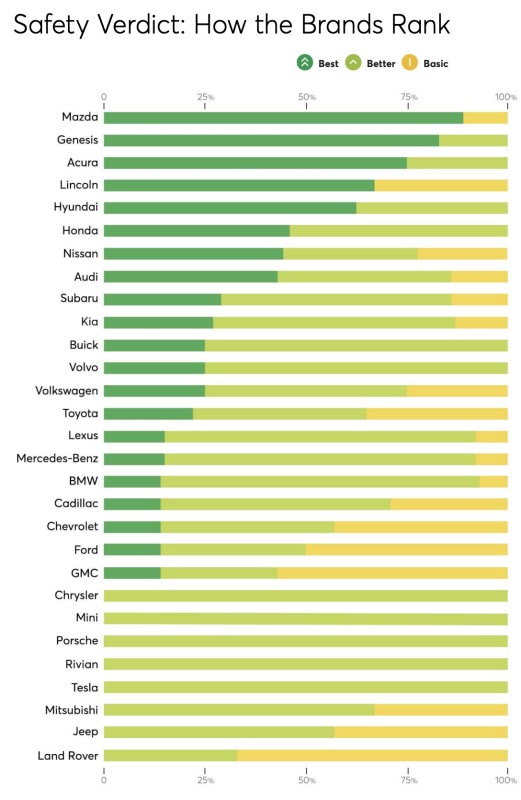
Mazda has emerged as the top-rated brand in the new Safety Verdict assessment by Consumer Reports. The newly released assessment is a comprehensive look at how safe modern vehicles are, including everything from crashworthiness to emergency handling, key driver-assistance technologies equipped as standard, and even a good usability rating for interior controls. Ultimately, the top brands do the best job of protecting you in a crash while helping you avoid one altogether. Mazda outperformed every other brand, including premium makes like Volvo that are often associated with top-tier safety.
A New Approach To Assessing Vehicle Safety
II
For years, vehicle safety was built exclusively around protecting occupants in a crash. However, there are many other aspects to engineering a safe vehicle, and Consumer Reports (CR) takes all those into account for its Safety Verdict.
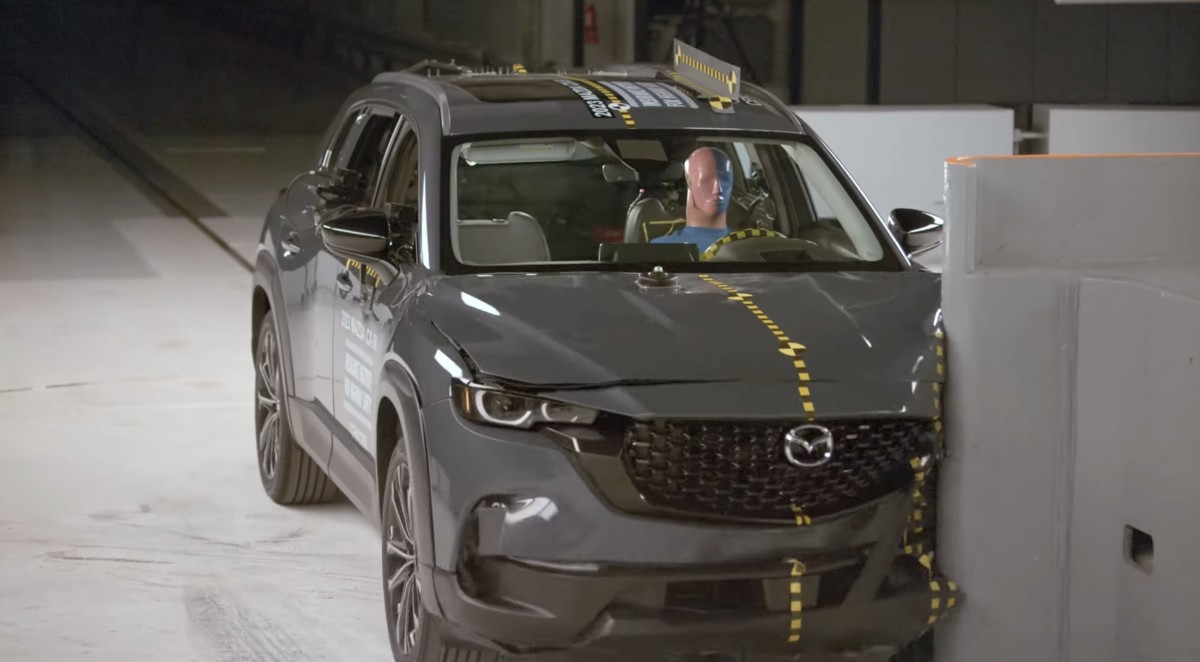
The “Basic” tier of safety involves vehicles meeting the National Highway Traffic Safety Administration’s federal motor vehicle safety standards. Things get much more involved in the “Better” tier, where CR assesses aspects like routine handling and braking tests, a Good or Acceptable rating in the small-overlap front crash test run by the IIHS, and at least an Acceptable rating in the side crash test. This category also considers whether front- or all-wheel drive are standard, as this can make for safer handling in ice, rain, or snow.
C
Vehicles with a curb weight of at least 2,500 pounds are scored higher, as lighter cars are at an increased risk in a crash. Ironically, Mazda still outperformed other brands despite its MX-5 Miata being one of the few vehicles with standard rear-wheel drive and a curb weight of under 2,500 lbs.
In the “Best” safety tier, CR considers the following:
- How distracting infotainment systems and controls are
- Whether auto emergency braking, blind-spot warning, and rear cross-traffic alert are standard
- A Good rating for the side crash test
- At least an Acceptable rating in the moderate-overlap front crash test
Zac Palmer
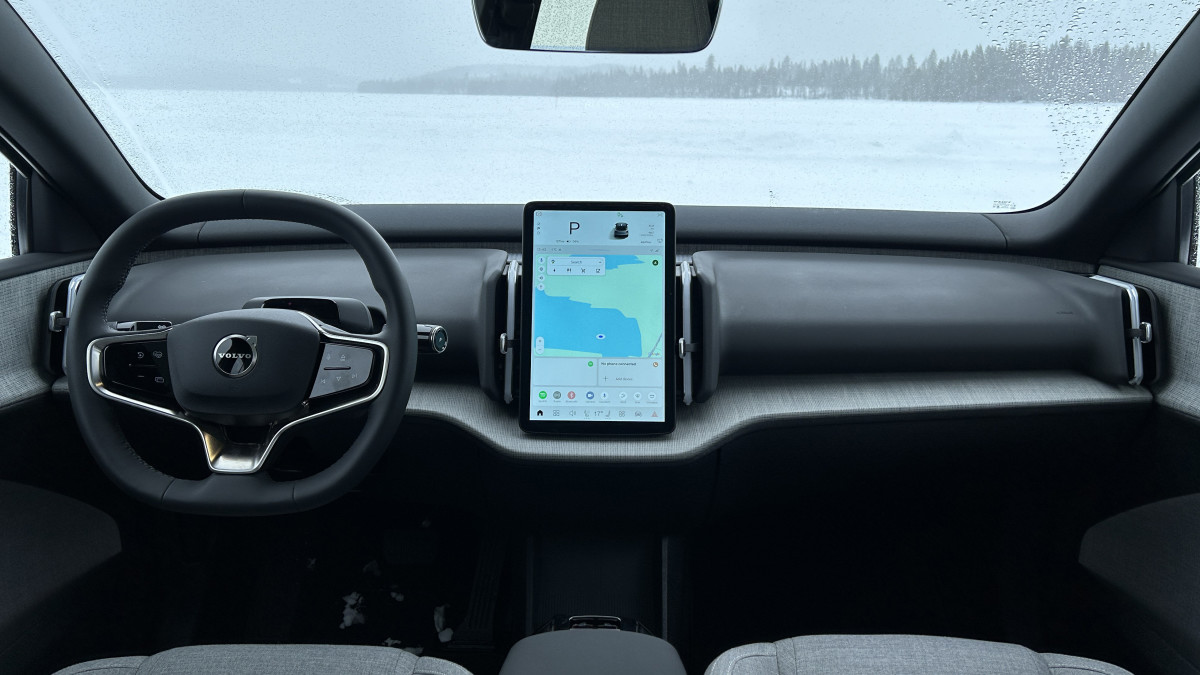
Tesla and Volvo, for example, score well in crash tests but ranked poorly in the study due to their distracting interior controls.
“A safe car has predictable handling and braking in everyday driving and emergencies, controls that don’t distract you, technology that can prevent a crash in the first place, and a design that protects occupants if a crash occurs,” said Emily A. Thomas, PhD, associate director of auto safety at Consumer Reports.
Mazda Enjoys Another Safety Accolade
Joe Santos
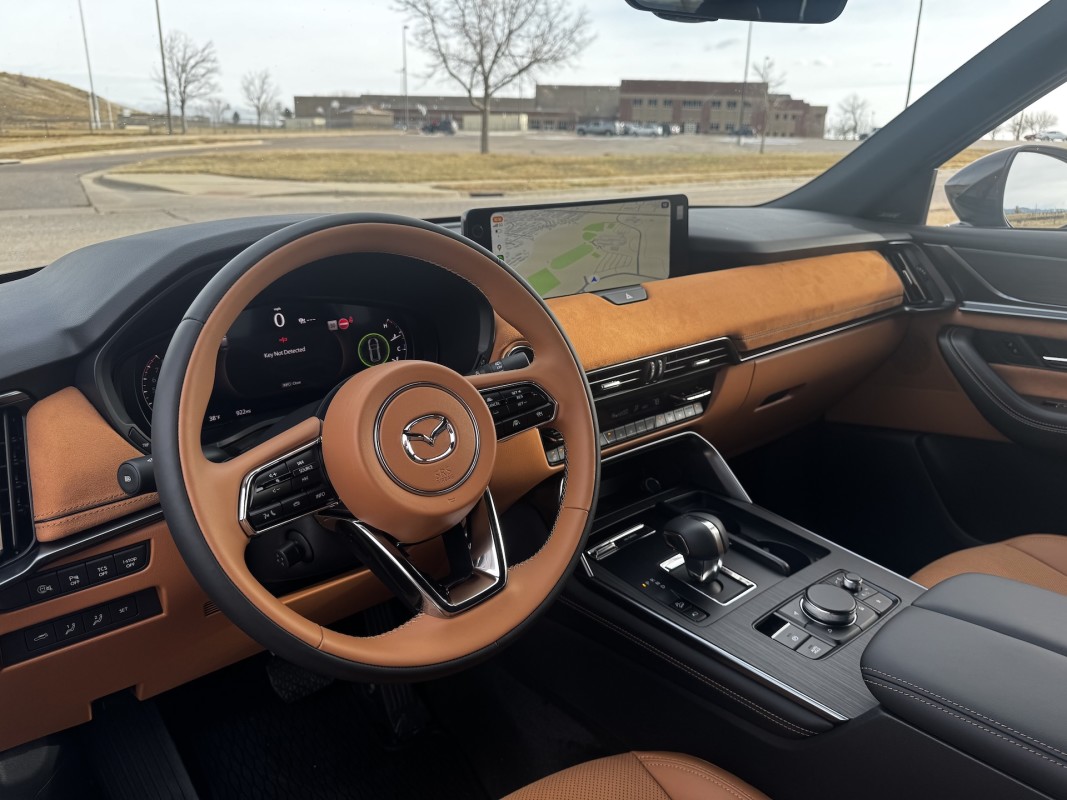
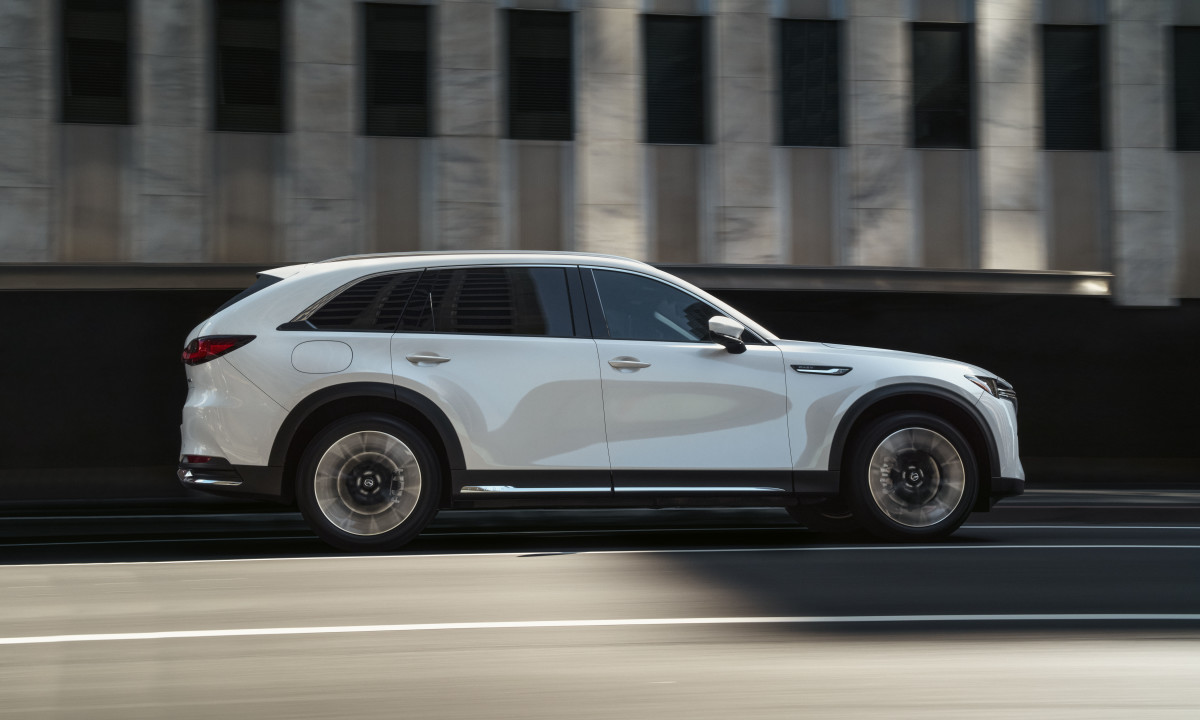
For a while now, Mazdas have set themselves apart from the competition with exemplary safety standards. Its human-centered safety philosophy has helped it attain an almost complete set of Top Safety Pick+ awards from the IIHS—the agency’s highest rating. A model like the CX-70 SUV has no holes in its safety package, with the IIHS and NHTSA both reporting near-perfect scores for the crossover.
“Safety is foundational to Mazda’s engineering philosophy, and we are honored that Consumer Reports has recognized our unwavering commitment to helping protect drivers, passengers, and everyone who shares the road,” said MNAO Director of Vehicle Safety Jennifer Morrison. “This recognition reflects the work of our global engineering teams to integrate advanced safety technologies and outstanding vehicle dynamics into every model we build.”
One does wonder if the all-new CX-5 will continue this stellar reputation when it arrives. It’s the first Mazda in the U.S. to adopt a much more screen-heavy user interface, something that CR criticized Volvo and Tesla for.
Mazda was followed by Genesis, Acura, Lincoln, and Hyundai in the rankings.
Related: Inside Mazda’s Safety Philosophy: Why Driver Support Matters More Than Automation
Our Take: Safety Ratings Done Right
CR’s new Safety Verdict is a more realistic overview of the safest vehicles you can buy. As cars become more advanced and lifesaving technologies are democratized, it’s crucial for safety tests to evolve at the same rate.
A plethora of safety equipment can be overshadowed by a vehicle that’s needlessly distracting from behind the wheel. And, while large vehicles are perceived as safer, they can increase the odds of you getting into a crash in the first place, as they’re typically harder to stop and control in emergency situations. Furthermore, if Mazda—a mainstream brand with generally affordable vehicles—can include key safety tech as standard, there’s no reason why other brands should still be listing features like blind-spot warning as options.
The Safety Verdict effectively takes into account all these aspects and penalizes automakers for prioritizing one aspect of safety while neglecting another. Ultimately, that helps all of us make better vehicle choices based on safety standards.