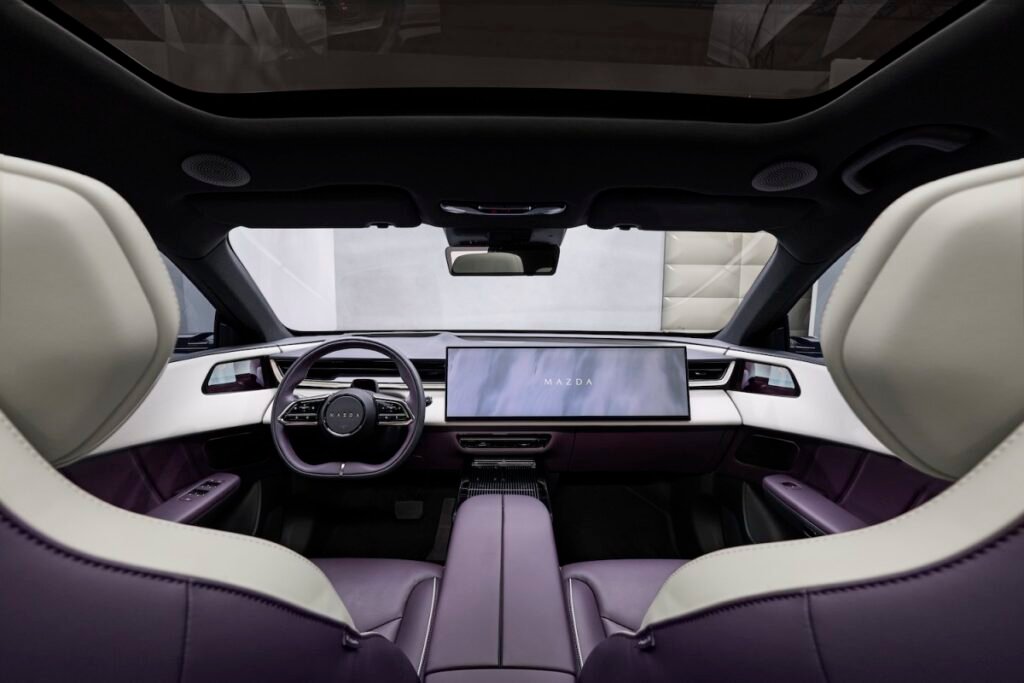
Enormous screens are dominating the interiors of new cars, and the trend doesn’t seem to be abating anytime soon, though some automakers are exploring better alternatives. It appears that Mazda isn’t one of the automakers considering anything but big screens, with Mazda Motor Europe Design Director Jo Stenuit telling Autoweek that large screens provide more flexibility and may even contribute to a better driving experience. He told the Dutch publication that large screens create more opportunities “to display things more clearly,” not necessarily to show more things at once. With the CX-6e, a crossover that we won’t get in the U.S., there’s a huge 26-inch screen, and based on Stenuit’s comments, such expansive displays may come to other Mazdas before long.
Mazda Says Bigger is Better
Earl Lee/Autoblog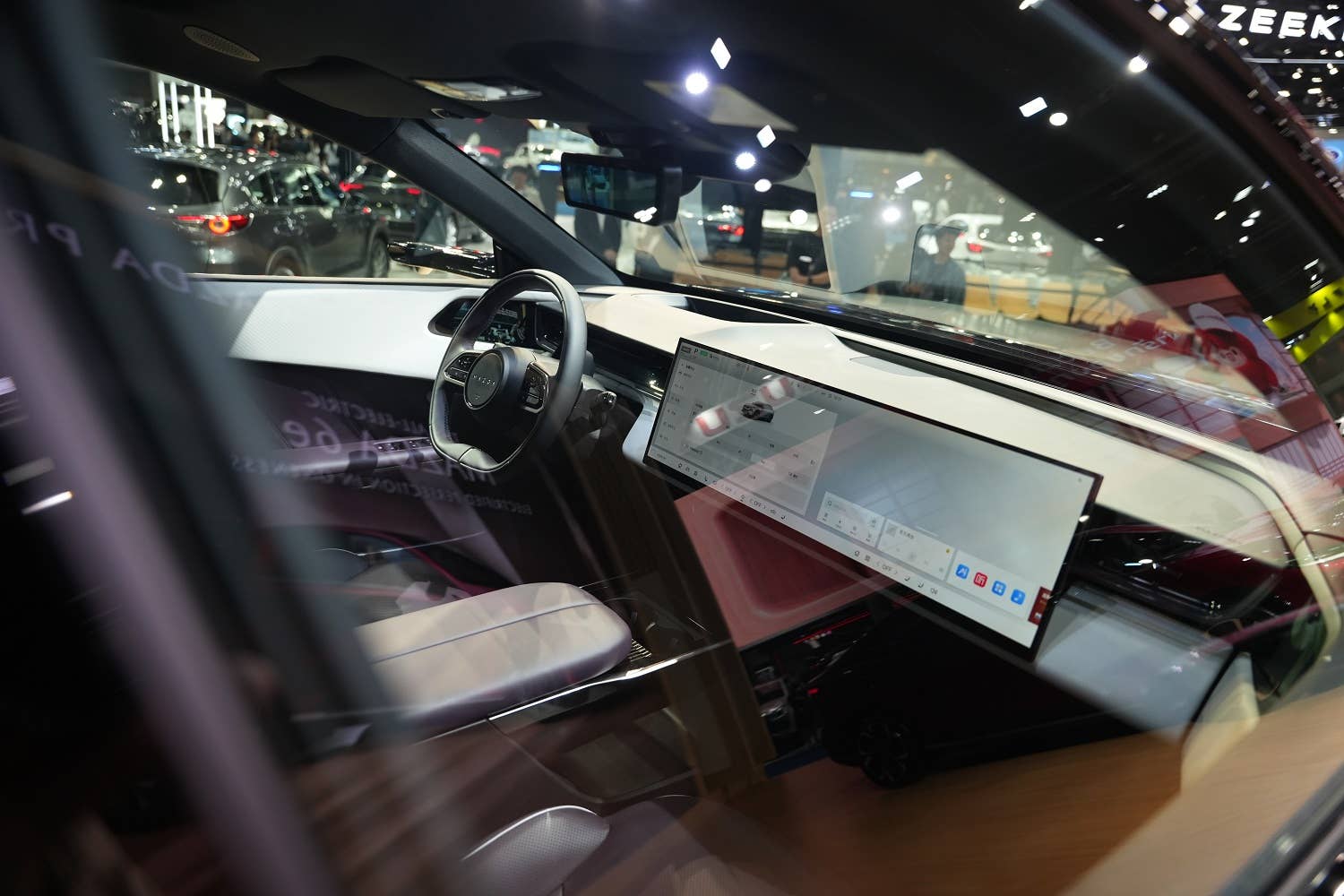
Mazda has always had uncluttered dashboards with integrated gauges, but now, that’s changing. Stenuit argues that having a screen extend in front of the passenger brings the passenger into the driving experience, adding that instead of having any gauges in the CX-6e, Mazda has installed a large head-up display, which he says is “much more important than an instrument cluster.” Basically, if the important driver info can be clearly conveyed through a high-quality head-up display, says Stenuit, “you don’t need gauges because you can concentrate better on the road.”
Related: Mazda Defends CX-5’s Giant Touchscreen After Fans Complain
Granted, if the information is exactly where you expect it to be when you need it, and if it’s clearly displayed, then the combination of a screen and head-up display can reduce how long your eyes are averted from the road—a belief BMW seems to hold—but given how customizable these displays can be, there are doubtless still risks.
Autoblog’s Take
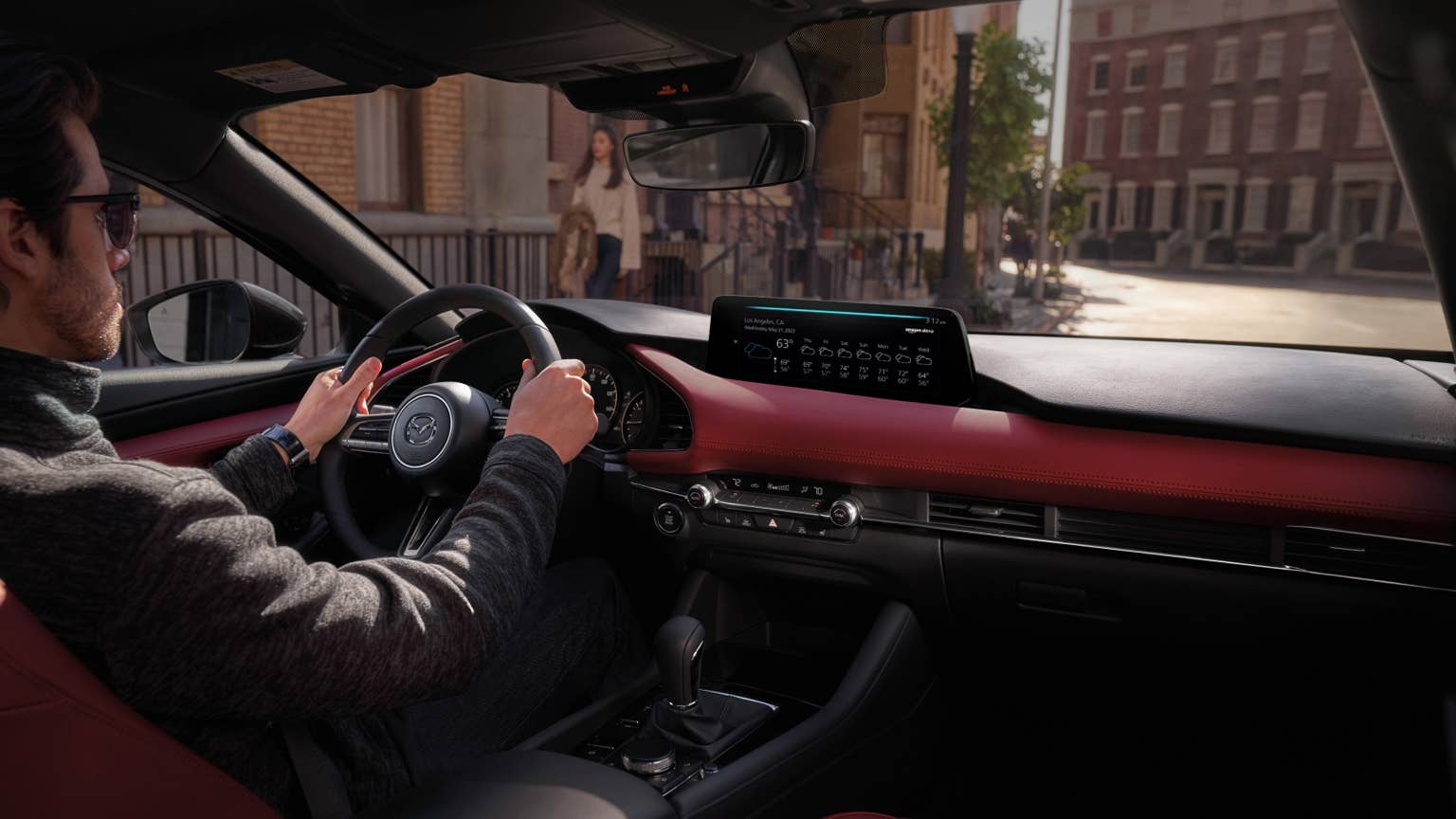
Stenuit’s comments indicate that Mazda hasn’t opted for larger screens because of cost, but because it thinks this way of interacting with the car is better overall. Speaking of the driving experience in relation to Mazda calls to mind the MX-5 Miata, and the current ND isn’t saddled with an enormous screen. Its cabin is simple, easy to understand, and driver-focused. Hopefully, given that Stenuit was talking about a vehicle based on Chinese underpinnings, the next Miata won’t be falling in line with the CX-6e’s interior setup, but it looks like most Mazda interiors will start to look more generic in the coming years, with fewer physical interaction tools. Whatever the justification, there’s no doubt that inerfaces which allow one to adjust settings or get information without diverting both their hands and gaze at the same time carry risks. Stenuit closed the interview by saying that the next car he’s working on will be finished by the end of the year, so we expect to get a better idea of how Mazda interiors will evolve before long.