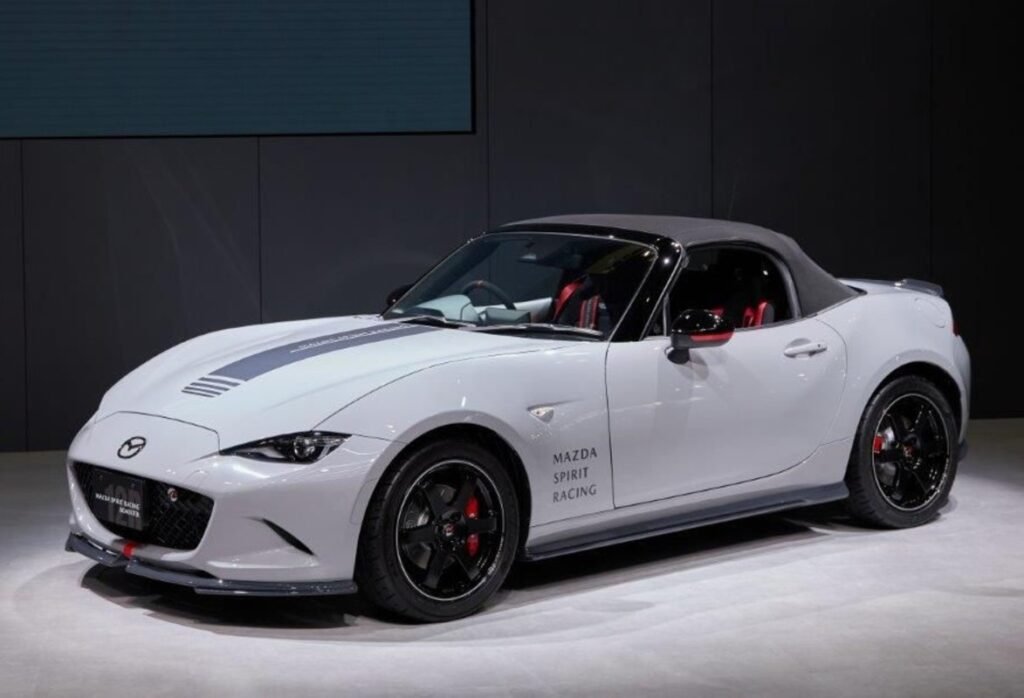
Mazda Spirit Racing Enters Production With the MX-5
Mazda has officially taken its Spirit Racing performance sub-brand from concept to production, and it has done so with the most fitting platform possible: the Mazda MX-5. As reported last October, the Mazda Spirit Racing Roadster (its JDM name) marks the first mass-produced vehicle to wear the Spirit Racing badge, a division created to transfer Mazda’s motorsport experience directly to road cars. Until now, Spirit Racing projects had largely been limited to modified show cars and endurance-racing concepts.
Interest was immediate. The range-topping Roadster 12R, limited to just 200 units and offered via lottery in Japan, reportedly attracted close to 9,500 applicants. That level of demand instantly positioned the 12R as one of the most sought-after modern MX-5 variants ever produced.
More telling, however, was the reaction to the standard Spirit Racing Roadster. Limited to 2,200 units and sold on a first-come, first-served basis, it also sold out almost immediately, Japan’s Best Car reports.
Focused Hardware, Not Just a Badge
Both Spirit Racing variants are based on the ND-generation MX-5 and share a 2.0-liter naturally aspirated SKYACTIV-G inline-four, paired exclusively with a six-speed manual transmission and rear-wheel drive.
In the standard Spirit Racing Roadster, output is rated at approximately 184 horsepower, while the 12R benefits from revised cooling and tuning to push output closer to the 200 hp mark. Numbers aside, the philosophy remains intact: keep weight low, throttle response sharp, and driver involvement front and center.
The standard Spirit Racing Roadster features Brembo brakes, Bilstein dampers, a reinforced tunnel brace, and aero components developed through Mazda’s Super Taikyu endurance racing program.
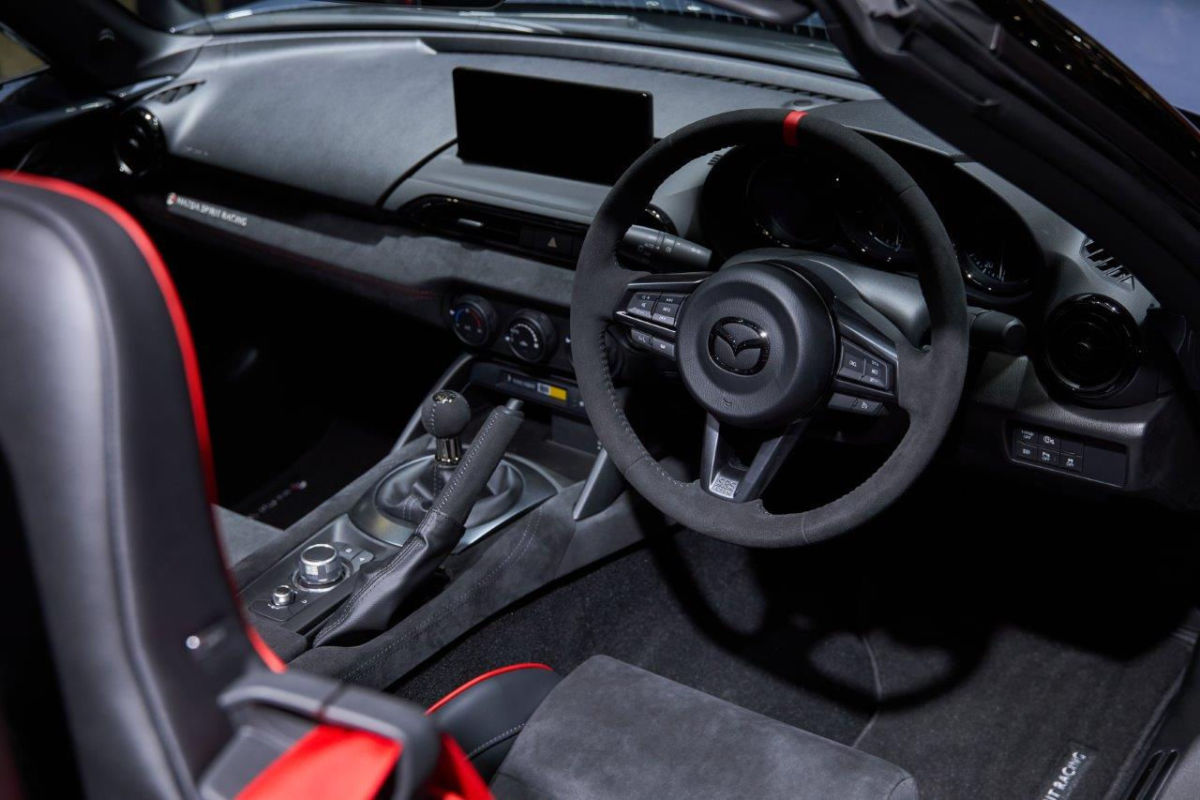
Inside, Alcantara trim and sport-focused seats create a more purposeful cabin. The 12R builds on this foundation with forged RAYS wheels, REcaro full bucket seats, a serial-numbered engine cover, and a soft-top roof, positioning it as a factory-prepared track car rather than a cosmetic special. Pricing reflects the exclusivity: around $35,000 for the Spirit Racing Roadster and a jaw-dropping, $50,000 for the 12R, both sitting well above the standard MX-5 but still within enthusiast reach.
Mazda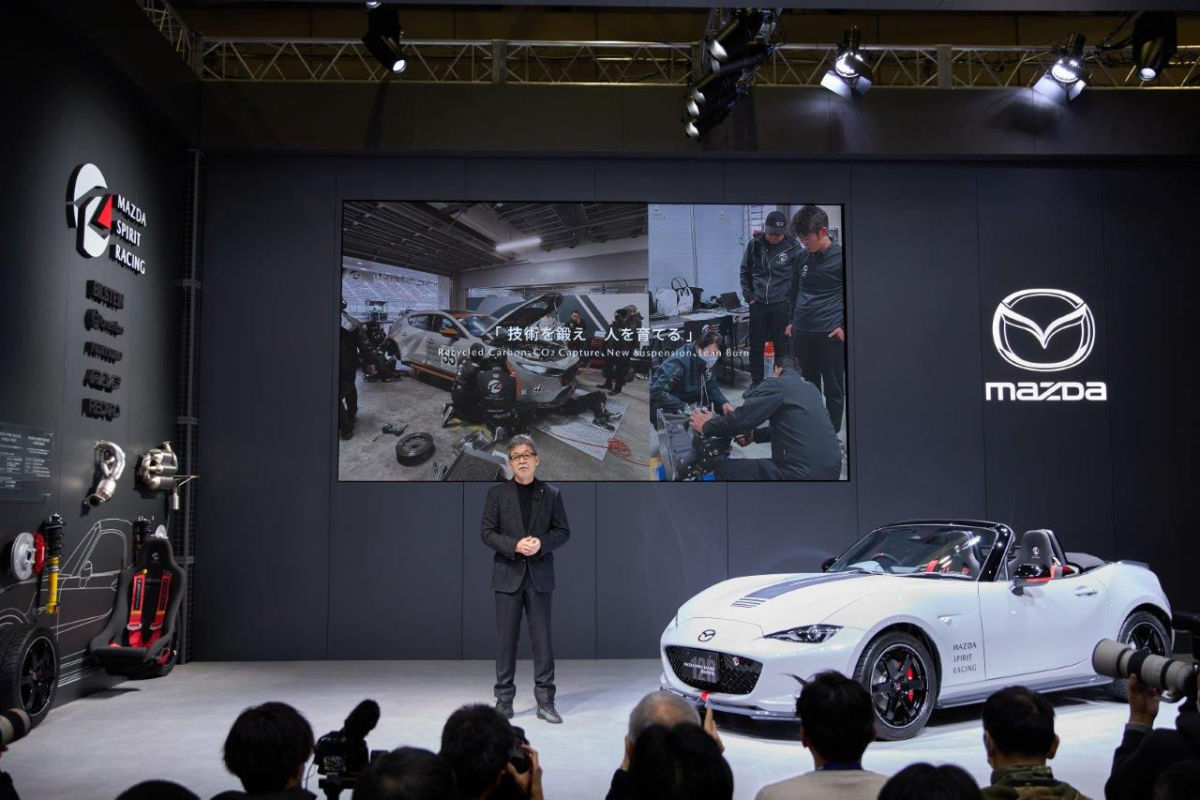
What This Means for Mazda and Enthusiasts
With both versions now sold out, Mazda has effectively confirmed there is strong demand for lightweight, analog performance cars, even in a market increasingly dominated by electrification and digital interfaces. The Mazda Spirit Racing MX-5 is about refining a proven formula with motorsport-informed hardware and a clear sense of purpose. That approach appears to have resonated deeply with buyers.
Mazda has yet to confirm whether the Spirit Racing Roadster will be offered outside Japan, and the extremely limited production numbers cast doubt on broad global availability. Still, the instant sell-out sends a clear signal that the Spirit Racing project is a viable production brand with real credibility. If this MX-5 is the template, Mazda’s future performance cars may prioritize balance, feel, and authenticity over raw numbers, and that may be exactly what today’s enthusiasts are asking for.
Mazda