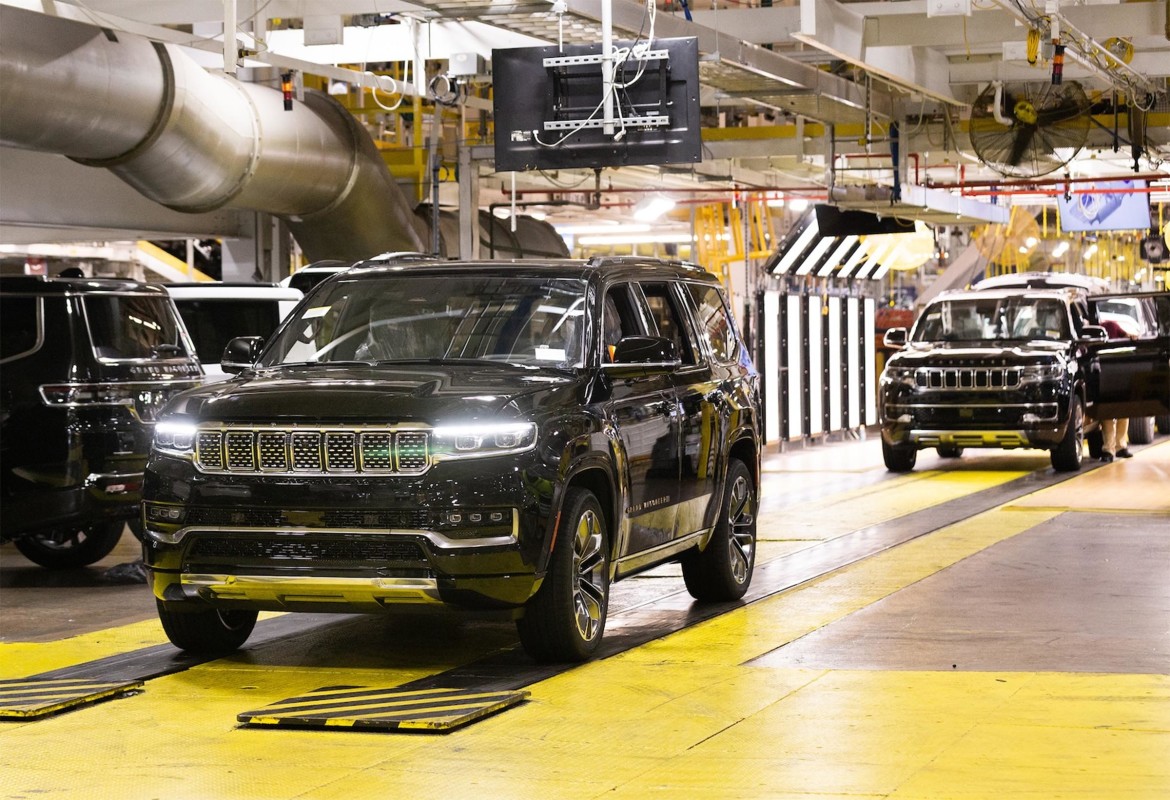
Stellantis is counting on the updates it’s made to the 2026 Jeep Grand Wagoneer to revive weak sales of the high-line SUV – but potential buyers may have to wait for a while to take delivery due to a fire at a supplier plant that’s putting production on hold until November 3.
Jeep’s Warren, Michigan assembly plant is the latest factory hit by a fire at a Novelis aluminum plant in Oswego, NY. Three Ford factories have also been idled, including one producing the profitable Lincoln Navigator and Ford Expedition models.
Things could get a lot worse for the industry in the coming weeks, however. Firing back at Pres. Donald Trump’s trade war, China has put severe restrictions on some critical rare earth minerals desperately needed by the auto industry. And it is also stepping into a dispute over semiconductors that could create a chip shortage similar to the one that created chaos across the auto industry during the pandemic.
Towering Inferno
Ford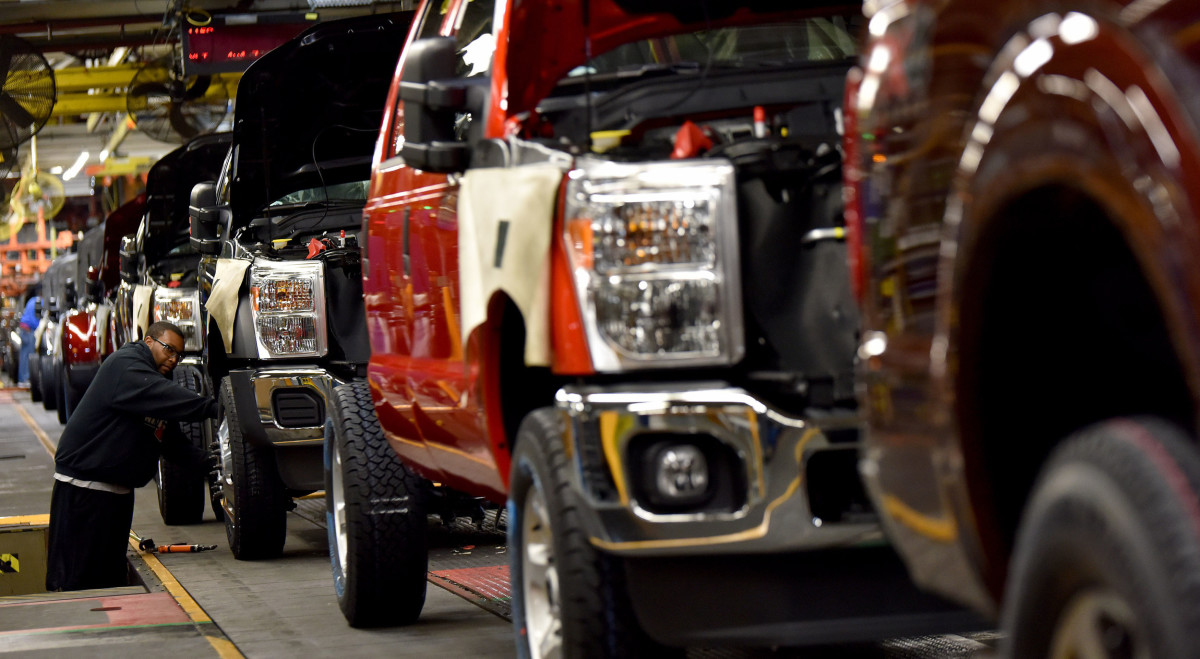
The Jeep plant was forced to close due to a lack of refined aluminum provided by a Novelis plant after a fire took out a major part of its plant in Oswego, 25 separate fire departments spending 13 hours to extinguish the blaze. Novelis is the largest recycler of aluminum in the U.S., and the facility is the largest of its kind in North America. The NY plant provides 40% of the aluminum sheet used by the U.S. auto industry and still other suppliers could soon face shortages.
Ford had previously announced it would idle operations at three plants. It didn’t provide details but those reportedly include the big Kentucky Truck Plant near Louisville is one of those impacted, affecting production of the high-profit Lincoln Navigator and Ford Expedition models, while the nearby Louisville Assembly Plant was also hit.
Part of the problem is that there’s less aluminum being brought into the U.S. right now because of a 50% tariff on foreign sources of both that metal and steel enacted by Pres. Trump earlier this year.
Tariffs Compound the Problems
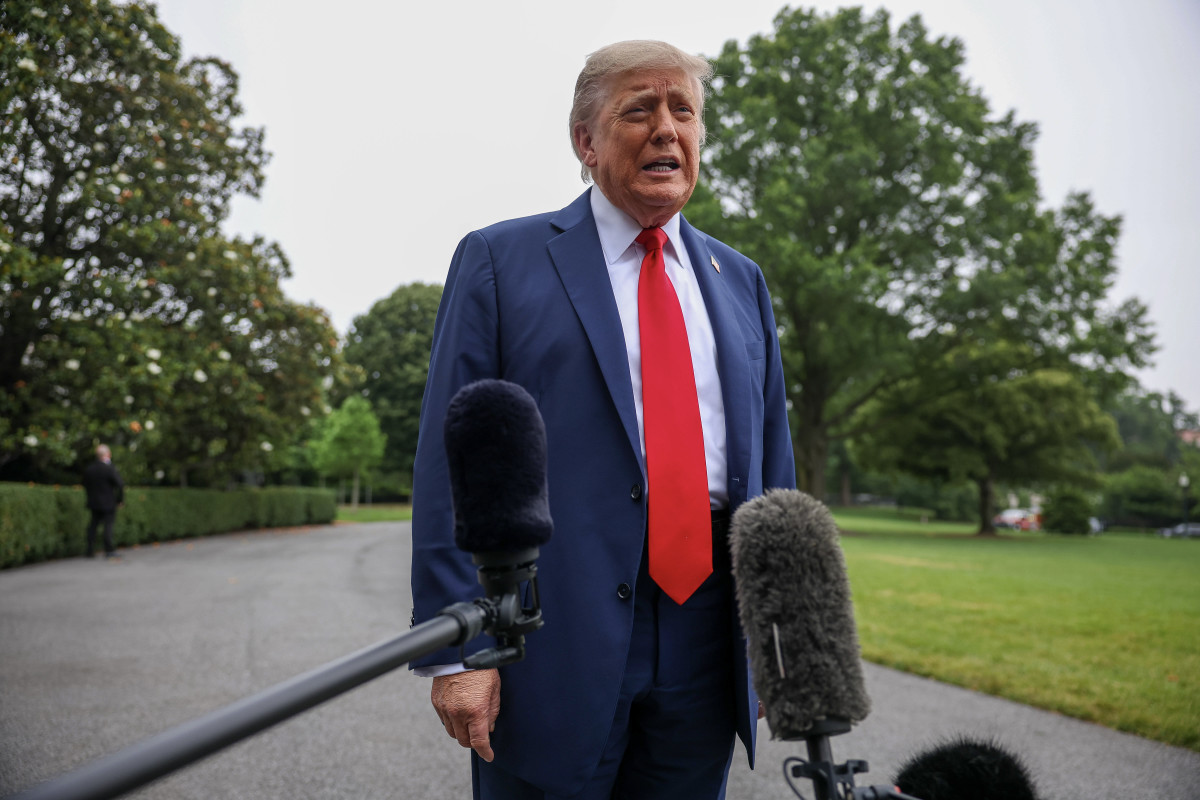
The Trump trade war as further complicated problems for the auto industry, according to various industry officials. Automakers and suppliers are under heavy pressure to shift manufacturing back to the U.S., but are reluctant to make any moves while the administration repeatedly changes the rules of the game.
“We have to make decisions that play out years, and sometimes decades (into the future),” lamented Rivian CEO, RJ Scaringe. “And that’s hard to do when trade policies are unclear and frequently changing. There are a lot of things we can’t predict.”
China Fights Back

The Trump trade war has taken particular aim at China, saddling much of the goods it sends to the U.S. with tariffs of at least 100%. The Beijing government hasn’t taken that lightly and is firing back in a number of ways. For one thing, it has put severe limits on exports of rare earth metals that are essential components of high-efficiency electric motors. That’s a particularly serious issue when it comes to EV manufacturing, but every vehicle uses electric motors for things like climate control systems, windshield wipers and power seats.
Now, China could trigger the sort of semiconductor shortages that created a global crisis for the auto industry during the COVID pandemic – leading manufacturers to collectively trim millions of vehicles from production, while racking up billions of dollars in lost sales.
The latest problem was set into motion when Chinese-owned chip manufacturer Nexperia was taken over by the Dutch government. Nexperia is a major supplier of automotive semiconductors. But the Beijing government has now banned exports of the company’s Chinese-made chips – about 80% of its total output. If the stalemate isn’t resolved soon it could lead to the same sort of crisis that saw manufacturers as diverse as Ford and Ferrari forced to idle production lines.
Things Could Get Worse

Adobe stock photo
“The auto industry, long built on global supply chains, now finds itself at the mercy of a single nation’s industrial policy,” Michael Dunne, a longtime China automotive industry consultant, wrote in a newsletter last week. “This is no longer just an automaker’s problem. It is a question of economic security, industrial survival, and strategic independence.”
The potential for parts and material shortages only complicate the headaches for an industry already struggling to keep with Trump’s tariffs. They’ve already resulted in an estimated $11 billion in added costs for the industry, just for autos and auto parts imported from Canada and Mexico, according to a study by the Anderson Economic Group.
For the moment, consumers have largely escaped the brunt of the crisis, said analyst Stephanie Brinley, of S&P Global Mobility. But they could soon find themselves facing a double whammy, with some products in short supply, even as vehicle prices start to rise, automakers passing on higher tariff costs.