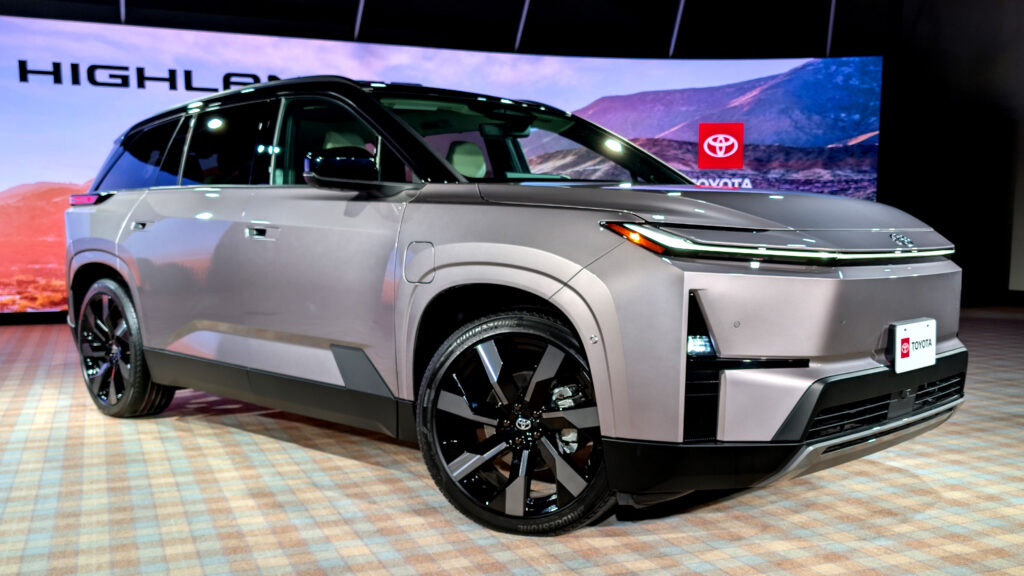
- Toyota’s 2027 Highlander is electric only with no gas option.
- Two trims launch later this year with up to 320 miles range.
- New platform brings larger dimensions and improved packaging.
For over twenty years, the Toyota Highlander has quietly been a heavy hitter. It’s never been wildly flashy, it’s never pretended to be an off-road giant, and yet, it’s been one of Toyota’s most important family haulers. Even with the arrival of the larger Grand Highlander that siphoned off some spotlight (and a fair share of sales), the original has held steady as a central figure in the lineup.
Read: Subaru’s Next SUV Is Big, Electric, And Very Toyota
Now, for 2027, the brand is tearing up what seemed like a tried and true formula for something much bigger and far bolder than ever before. This all-new Highlander is an EV aimed squarely at the heart of the mid-sized market.
QUICK FACTS
SWIPE
Again, this isn’t just a new generation of the Highlander. It’s like a train switching tracks altogether. Buyers can’t get a gas-powered version, no matter how much they pay. That alone makes this a huge shift but Toyota didn’t stop there. This new SUV arrives with a new platform, larger proportions (color us shocked), and more technology than ever before.
Bigger And Bolder
Photos Stephen Rivers/Carscoops
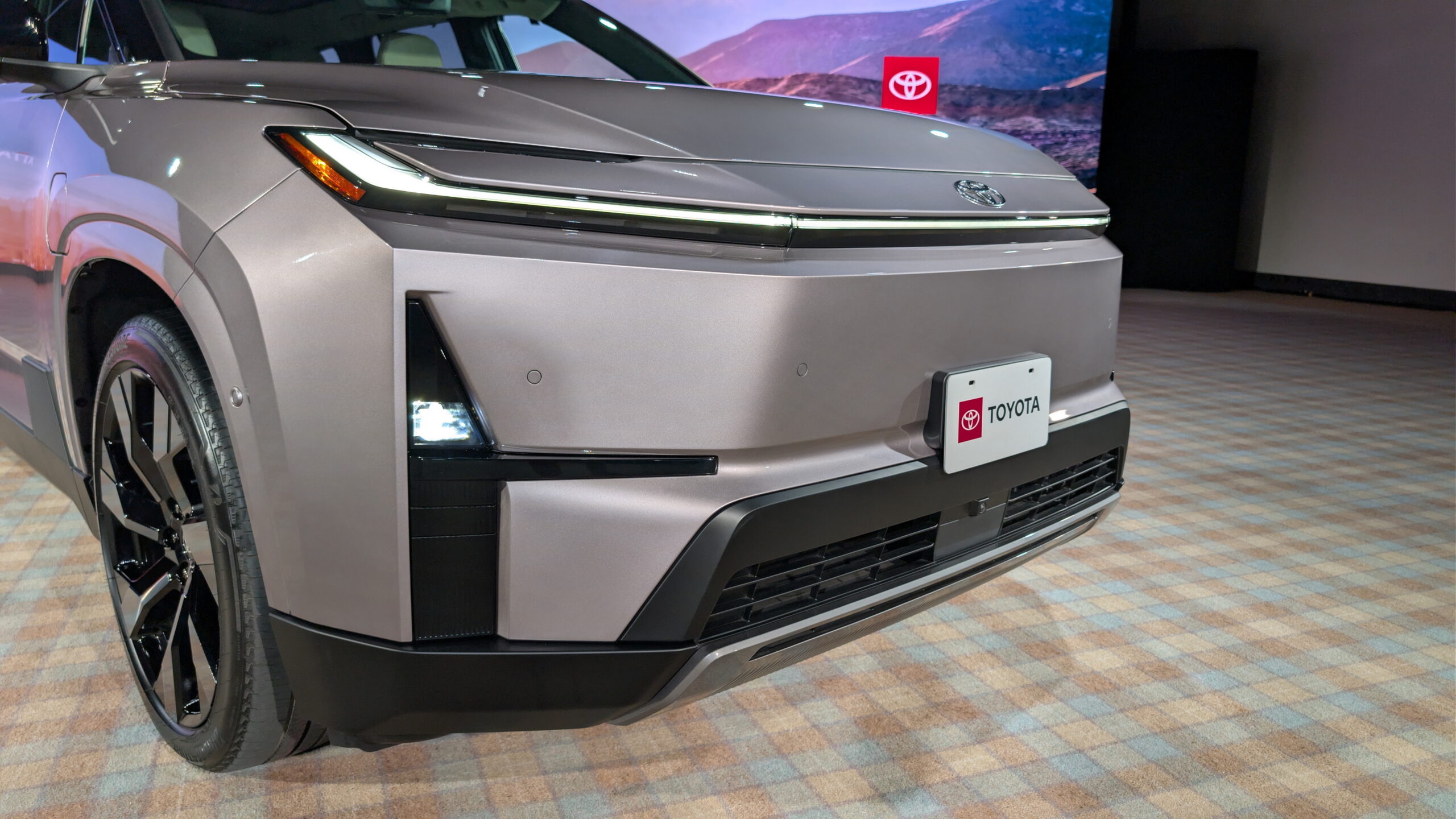
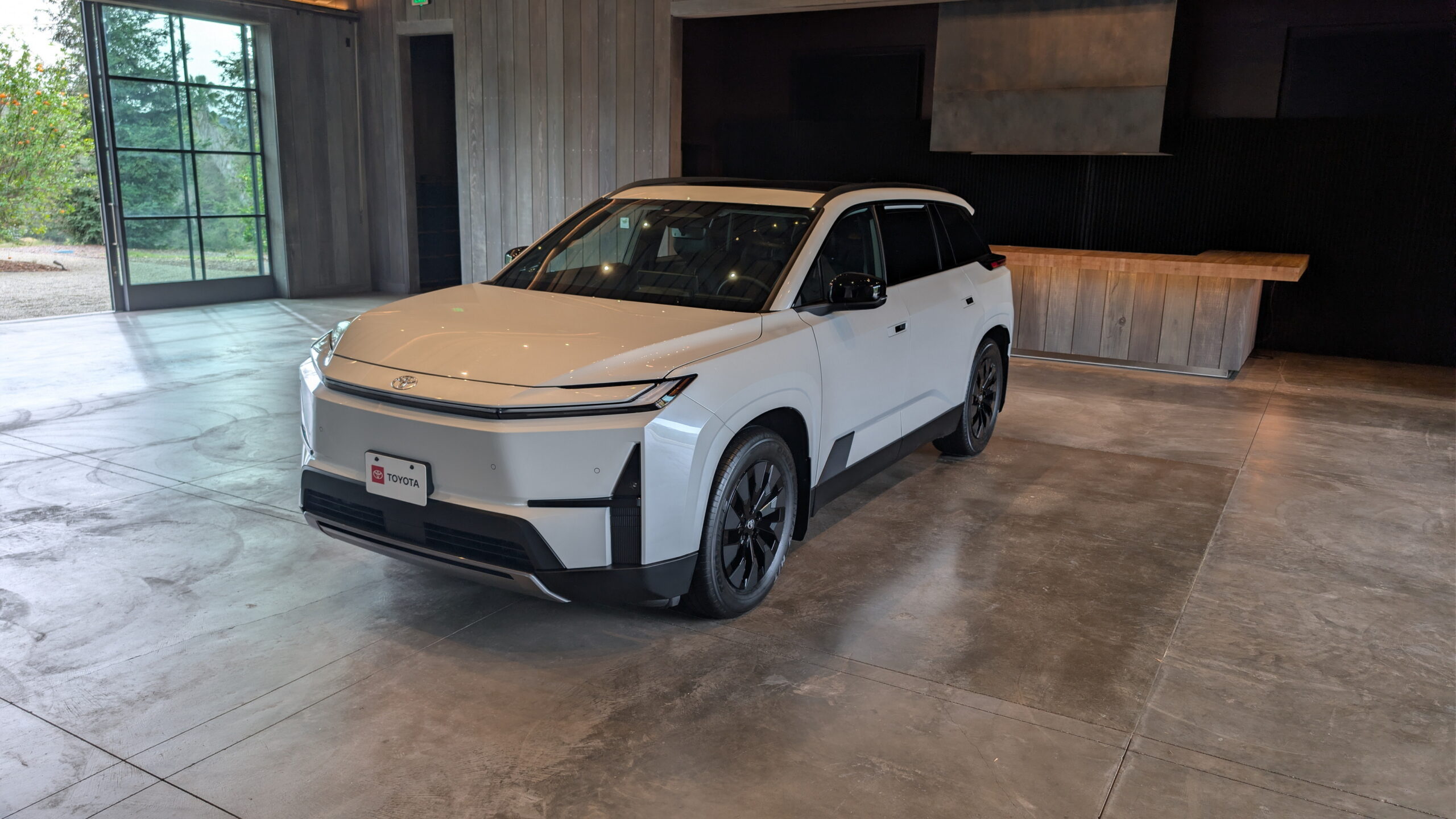
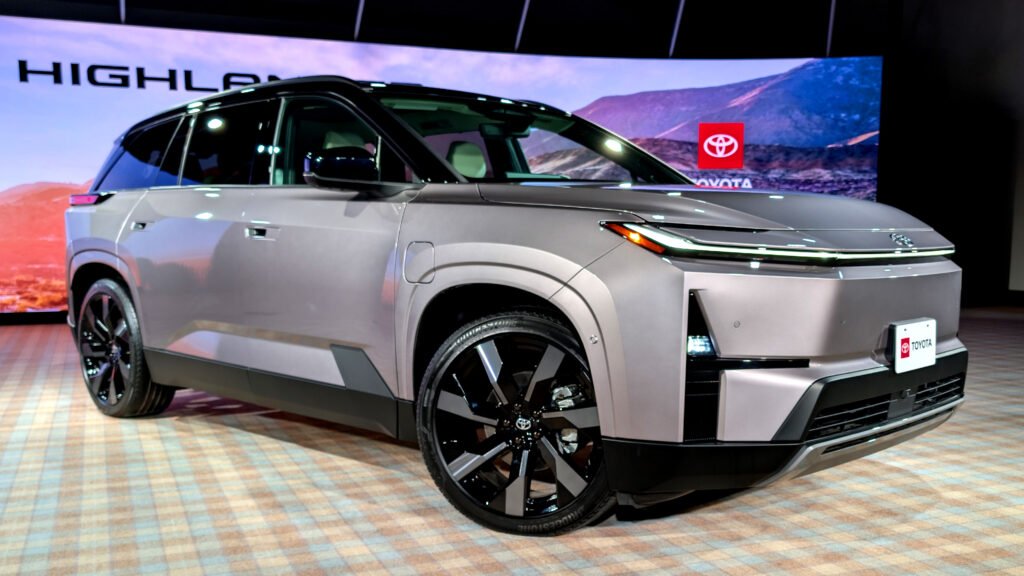
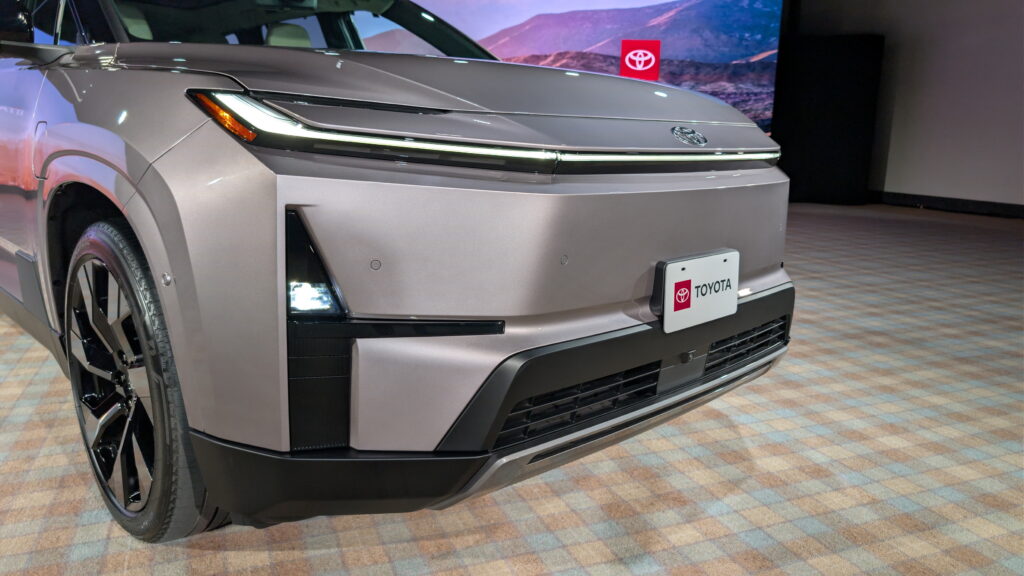
Visually, the new Highlander leans heavily into the new styling that we’ve seen from the brand in recent years. Who would’ve guessed that the Prius would spark a styling revolution? Nevertheless, that’s what’s happened, and the hammerhead front-end has slowly moved from Toyota’s most famous hybrid to the BZ line and now to the Highlander. In this case, that equates to an aerodynamically slippery front end, slim LED DRLs, flush door handles, and broad fenders.
More: Toyota’s Most Forgettable SUV Outsold Mitsubishi’s Entire Lineup
It’s also considerably larger than the last-gen Highlander. Overall length jumps to 198.8 inches (+3.9 in.), width to 78.3 inches (+2.3 in.), and height to 67.3 inches (-0.8 in.). More importantly, the wheelbase now stretches to 120.1 inches (+7.9 in.). Don’t forget that the very first Highlander had a wheelbase of 106.9 inches (2,716 mm).
Photos Stephen Rivers/Carscoops
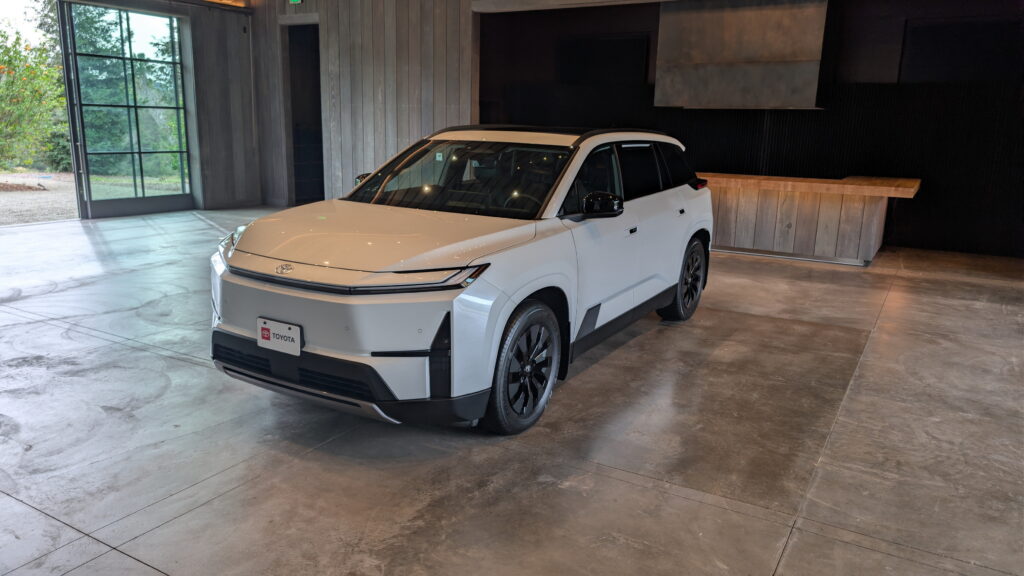
The two share little more than a name at this point. That said, the roofline is lower than the outgoing version. Combining that lower roof with a longer and wider body provides a planted stance.
Toyota says those revised proportions weren’t just about aesthetics. The longer wheelbase allows for a roomier cabin, easier third-row access, and better overall packaging for the battery underneath. Ultimately, it’s all about how the car shuttles passengers, so let’s dive into that interior space.
Cabin Acoutrement
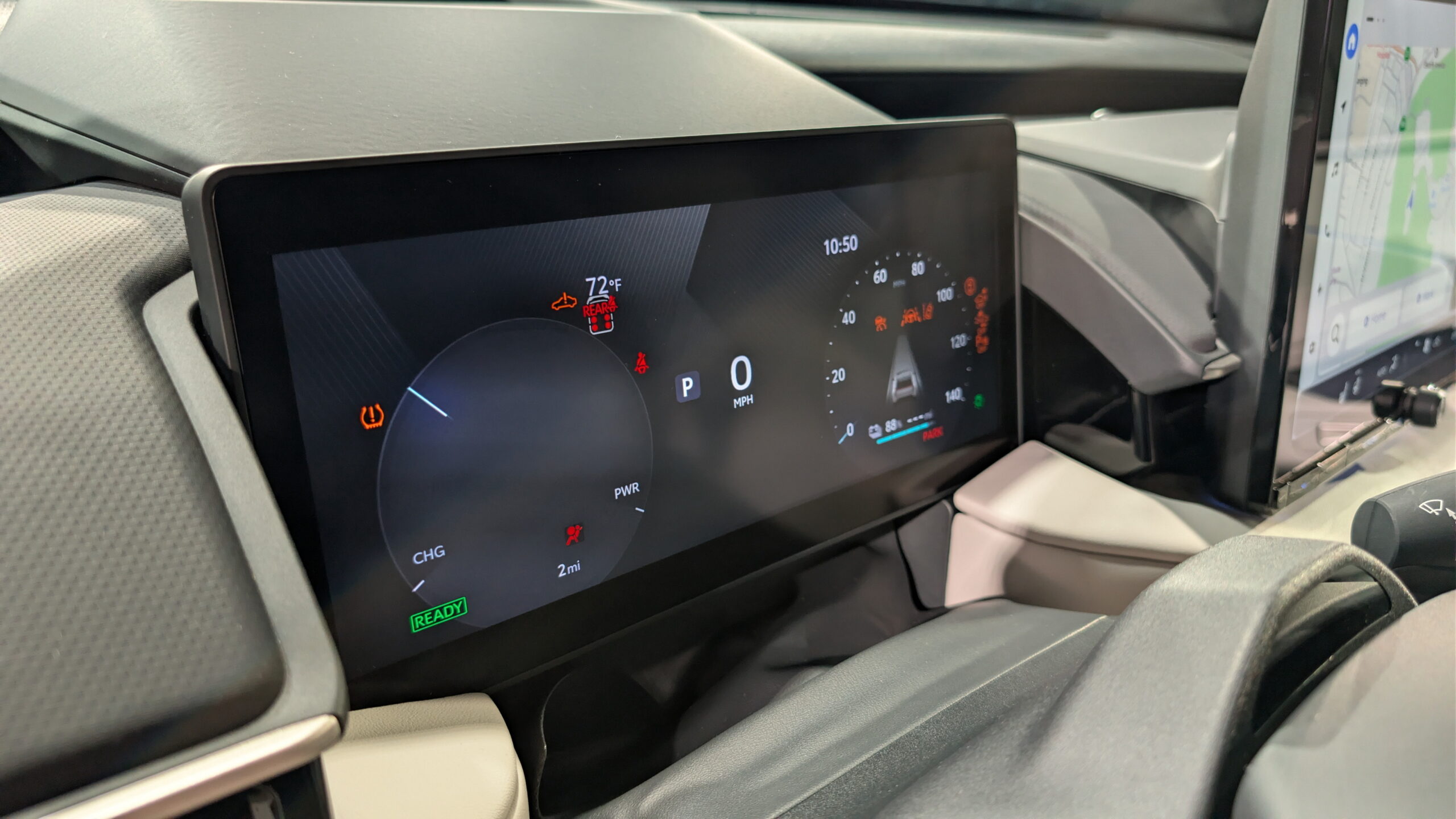
From the front seats, what stands out most is that this Highlander feels more elegant and straightforward. Everything is centered around a 14-inch infotainment system and a 12.3-inch digital gauge cluster. Thankfully, Toyota includes physical buttons and switches for vital functions like climate controls.
Both trims come standard with SofTex upholstery, heated front seats, customizable ambient lighting with 64 colors, and Toyota’s latest multimedia system. A panoramic glass roof is available on the base XLE trim and standard on the Limited. It’s the largest ever fitted to a Toyota.
Photos Stephen Rivers/Carscoops
In the second row, things are pretty stellar as well. Captain’s chairs are standard. Buyers of the XLE AWD can choose an optional bench to increase seating from six to seven. Perhaps the boldest claim from Toyota is that the third row can comfortably fit adults.
Review: The Toyota Grand Highlander Is A Jack Of All Trades, Master Of Some
After sitting in it myself, I can say that short adults might find it perfectly livable. No question, it has some nice features like USB-C ports, climate vents, and the flexibility to recline the backrest a little. That said, please don’t try to carry around taller folks back there for very long.
Photos Stephen Rivers/Carscoops
Toyota lists cargo space at 45.6 cubic feet (1,292 liters) with the third row folded and 15.9 cubic feet (450 liters) with it upright. For comparison, the gas-powered Grand Highlander offers over 57 cubic feet behind the second row and just above 20 cubic feet behind the third. So while the new EV Highlander is spacious, it’s not quite as roomy as its larger sibling.
Power And Range
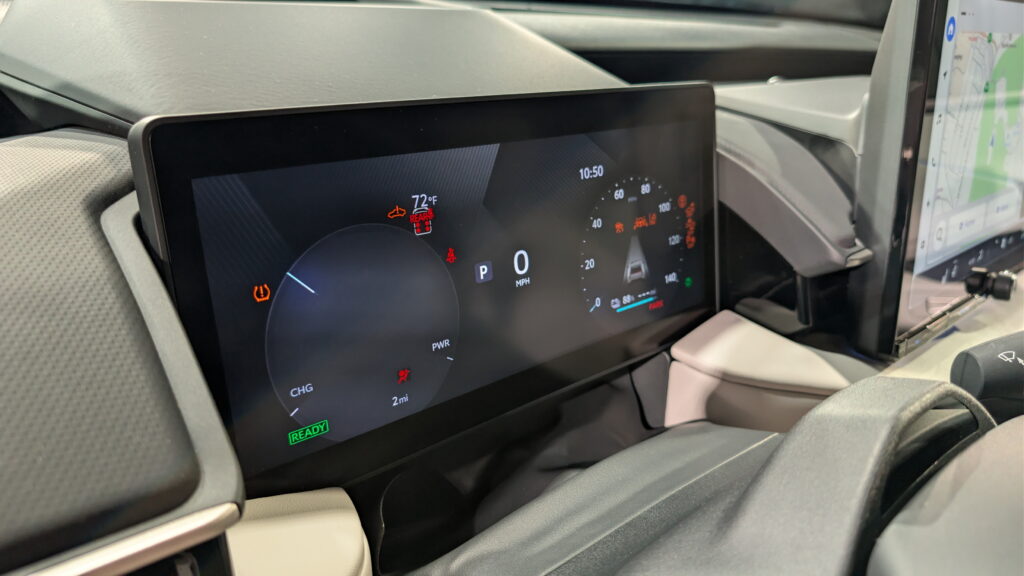
While all 2027 Highlanders use an electric powertrain, buyers do have a few options on that front. Toyota will offer a front-wheel drive XLE with a 77.0 kWh battery and 287 miles of range as the base model. It offers just 221 horsepower and 198 lb-ft of torque.
Above that is an AWD XLE with the same battery and 270 miles of range, but buyers can also spec a larger 95.8 kWh battery to acquire up to 320 miles of range. Those who opt for the Limited trim get both the larger battery and AWD standard, along with the same 320-mile range.
Read: Toyota Just Swapped Its ‘Car Guy’ CEO For An Accountant
Performance varies by configuration. AWD models deliver up to 338 horsepower and 323 lb-ft of torque, while FWD versions make 221 hp and 198 lb-ft. Paddle shifters control regenerative braking, and AWD models add features like Multi-Terrain Select and Crawl Control—yes, even on an EV.
Charging hardware includes a standard NACS port for DC fast charging, with Toyota estimating a 10–80 percent charge in about 30 minutes under ideal conditions (which is a very important qualifier). A dual-voltage home charging cable is included, along with battery preconditioning and Plug & Charge capability.
Tech And Safety
Toyota has long led the way with regard to standard safety tech, and the Highlander gets to continue that legacy. It’s the debut vehicle for Safety Sense 4.0. It bundles updated driver aids, including pre-collision braking, adaptive cruise control, lane-tracing assist, and proactive driving assist. The Limited adds Traffic Jam Assist, Advanced Park, a panoramic view monitor, and lane change assist.
Of all the big new tech features, vehicle-to-load might be the most likely to fly under the radar. It allows the car to power external devices, such as power tools at a job site, or to act as a backup power source during an outage. That’s a really beneficial feature for a family SUV trying to stand out.
What’s Left?
Toyota still hasn’t allowed us to drive it, though we have good reason to believe it’ll be a positive experience. More on that in the next couple of weeks. For now, we know that sales begin late this year, but we still don’t have pricing.
Normally, we’d make pricing the biggest key to success here, and no doubt, it’ll be vital. That said, the EV market in America is cooling off. Federal tax incentives are gone, and plenty of brands are backtracking or ditching EV goals altogether. For Toyota, putting this big a name on this EV says that it has a lot of confidence in how it’ll sell.
It certainly helps that production will take place in the U.S. at Toyota’s Kentucky facility, with the battery sourced from North Carolina. That should eliminate much of the concern over tariffs and help to keep prices low. That said, it would be shocking to see this thing start at under $50,000.
Is a price above that figure attractive enough in this market? Only time will tell. If it’s lower than that, it’ll probably sell well despite the market thanks to one of the most recognizable names in the segment.
Photos Stephen Rivers for Carscoops