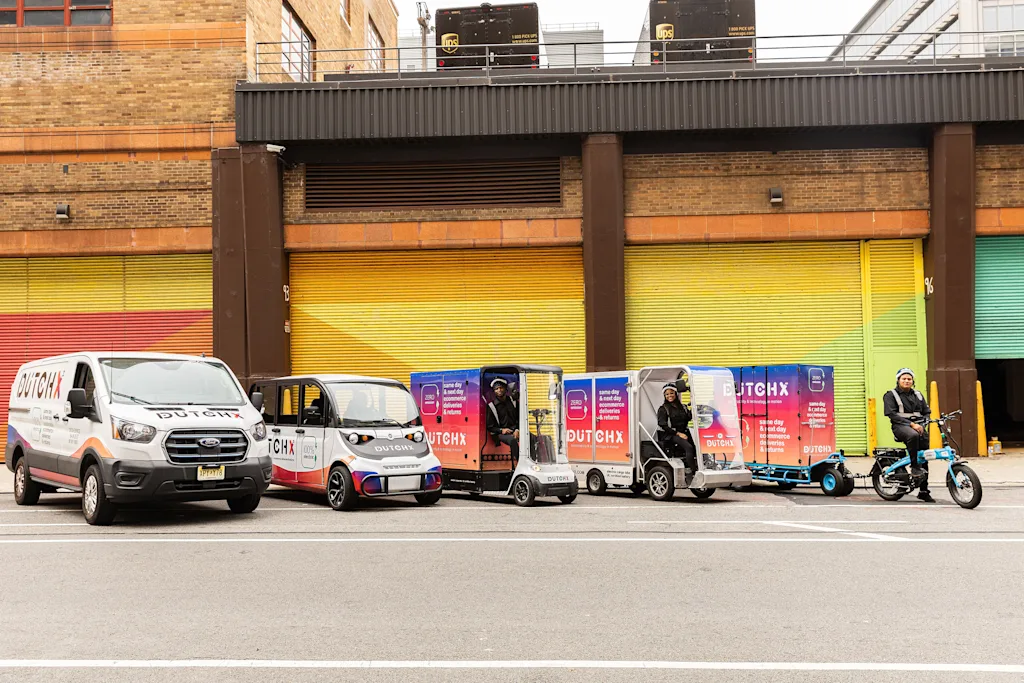
Marcus Hoed, a Dutch immigrant who founded the New York-based shipping company DutchX in 2013, was always intrigued by the possibilities of biking—specifically cargo bikes—to fill in the same-day shipping gap in urban logistics. For the last few years, the company has billed itself as a zero-emissions shipper: a fleet of electric-powered vans that traverse roadways and bridges while cargo bikes handle the last few miles of a package’s journey.
But starting last December, DutchX found a way to dramatically cut delivery times. Typically, shipping from its Brooklyn Marine Terminal sorting facility to Midtown West would take about 75 minutes, after navigating over a bridge or via a tunnel under the East River. But now, using a ferry, the firm can do the same trip in a third of the time.
“We don’t need to drive a van into Manhattan, we don’t need to deal with parking challenges, and we don’t need to pay the fee for congestion pricing,” he says. Instead, goods are dropped off at Pier 70 and loaded directly onto a bike that can navigate Manhattan’s busy streets.
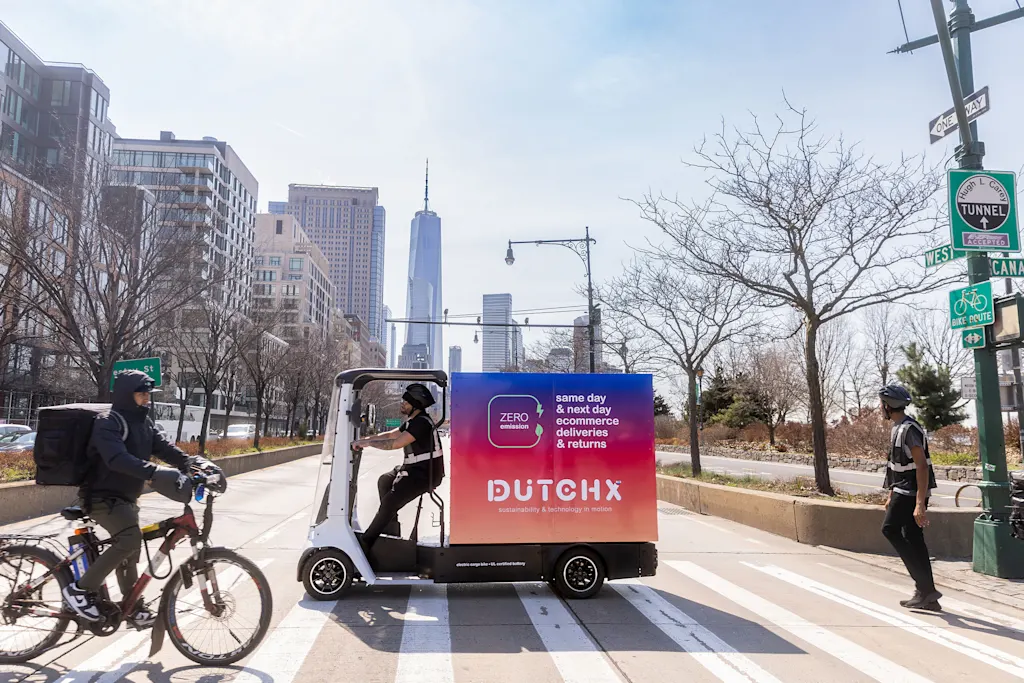
DutchX’s ongoing trial is just one facet of a plan pushed by New York City to revolutionize everyday freight transport by revisiting the potential of the city’s vast network of waterways. The Blue Highways program seeks to modernize water-based shipping across the city—including turning the Brooklyn Marine Terminal into an all-electric marine port—and divert much of the 90% of city freight traffic that moves into and through the city by truck.
It’s a stark example of coming full circle. Trade in New York City once took place on bustling piers and waterfronts that have now become the home of upscale apartment buildings and urban parks. The Blue Highways initiative believes the waterfront can once again become a key part of the transit system, ideally with clean power and with many fewer cars, vans, and trucks.
The trial on Pier 79 is part of a suite of investments the city is making in creating water-based transit options for freight shipping. Piers and shipping depots have been, or will be, retrofitted for more of this water-based delivery, and ideally, future stages of the program will invest in electric charging for battery-powered boats. Currently, there are some emissions savings by eliminating idling vans and grouping together shipments on boats, but the road map includes plans to add electric boats in 2027.
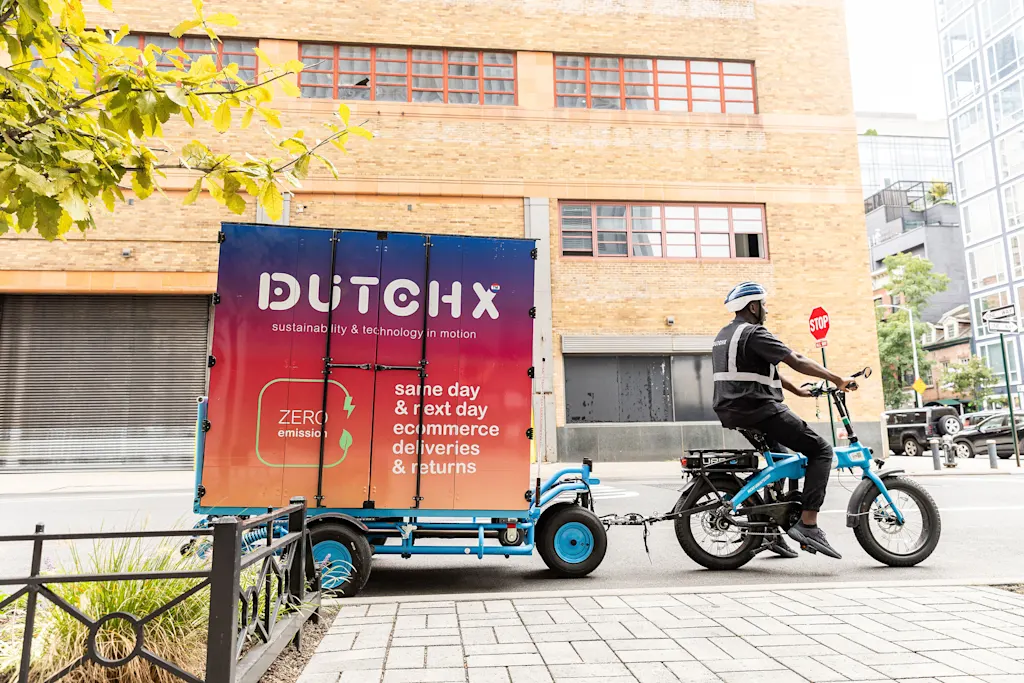
This concept comes at a time when cities are battling rising traffic and congestion from e-commerce deliveries, and shippers and consumers seek out lower- or zero-emission options for shipping. Hoed says that his firm—which has five hubs across the city and 272 bikes—ships a lot of smaller consumer goods, such as perfumes or fashion items, but there’s also more and more interest in zero-emission deliveries from bigger companies delivering furniture and electronics.
Sections of the city packed with industrial warehouse and shipping sites, such as Hunts Point in the Bronx, have cascading impacts on the city’s traffic and pollution, says Joy Gardner, executive director of the not-for-profit Empire Clean Cities. And these overloaded roadways lead to congestion and increased diesel pollution from trucks. Transitioning this traffic to other sources, especially bikes and boats, can lessen that burden. Hunts Point, for example, welcomes more than 15,000 trucks a day, and the surrounding public school students have the city’s highest asthma rate.
The city has done a good job of exploring and laying out a cleaner transition for Blue Highways, such as trialing so-called renewable diesel made from recycled fats and oils that creates 50% less emissions, and eventually expanding charging infrastructure for ports and piers. A public-private partnership overseen by the New York City Economic Development Corp. and the New York City Department of Transportation, Blue Highways announced its long-term vision in October 2025 and has identified more than two dozen sites. The program will include shipping wholesale food and beverages by barge from the Hunts Point Food Distribution Center. (A few trial runs have already been staged.)
“Not every delivery in the city may be able to move by water, and it’s going to take a while to figure out some of the logistics. But it is one of many tools that I think the city can utilize to decarbonize,” Gardner says.
Hoed says he’s still evaluating the impact of the Blue Highways trial. He’s certain at this point that while the boat-and-bike method delivers faster times without raising the price of shipping, he’s not yet sure if it decreases cost, or if there are ways to achieve even more efficiency with additional practice. Currently, the company makes the run once a day on weekdays, departing from Brooklyn at 10:30 a.m. on a boat that can hold the equivalent of 45 vans.
Hoed says he doesn’t see a world where this pilot stops, because it’s delivering results for his company. “Congestion costs companies like ours a lot. I’m not even talking about traffic. Those hours in traffic jams cost us a lot in terms of wages.”