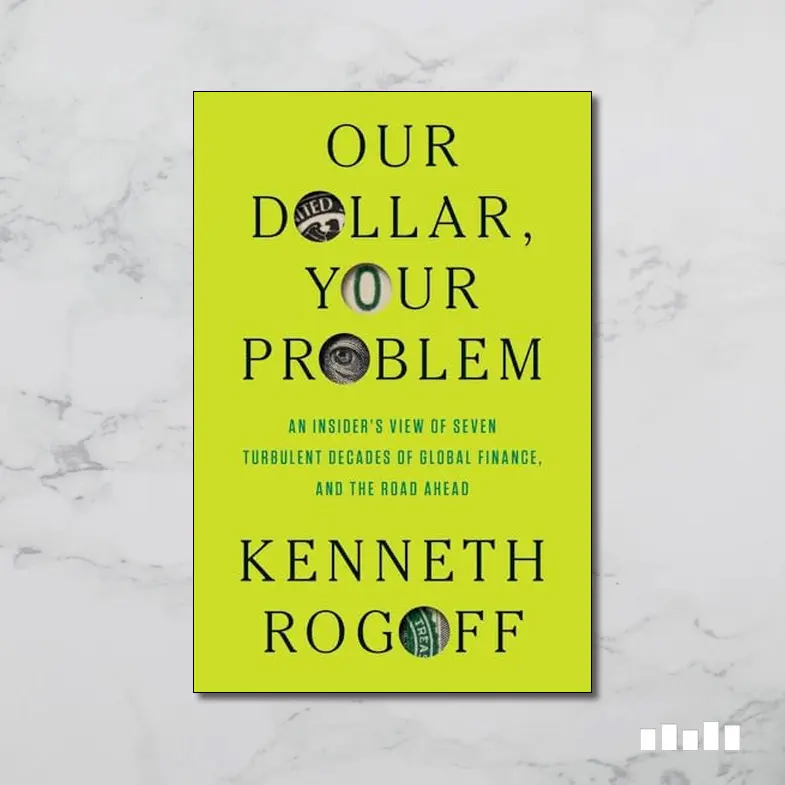
In an era marked by geopolitical tension, rising public debt, and shifting global alliances, Our Dollar, Your Problem arrives as a deeply relevant contribution to debates on international finance. Written by renowned economist Kenneth Rogoff, the book offers a sweeping historical narrative of the U.S. dollar’s ascent while questioning its durability. Rogoff’s central argument is clear: the dollar’s supremacy, though formidable, is neither inevitable nor permanent.
Combining historical analysis, policy insight, and forward-looking speculation, the book provides both scholars and general readers with a nuanced understanding of how currency power shapes global economic stability and instability.

Overview of the Book’s Core Argument
At its heart, the book traces the rise of the U.S. dollar as the world’s principal reserve currency and explores the structural forces sustaining it. Rogoff contends that the dollar’s global position rests on a combination of economic strength, institutional trust, geopolitical influence, and a degree of historical luck.
However, he challenges the widespread assumption that this dominance will persist indefinitely. Instead, he argues that monetary hegemony historically shifts over centuries, and the dollar is simply the latest in a sequence of leading currencies.
The Human Journey
The book thus reframes the global monetary system as dynamic rather than static and showcases an evolving structure shaped by politics, crises, and institutional credibility.

Historical Context: Lessons from Past Monetary Empires
One of the book’s strongest features is its historical breadth. Rogoff situates the dollar within a lineage of dominant currencies, from Spain’s silver-backed monetary power to Britain’s pound sterling. Each, he notes, eventually declined under economic and political strain, illustrating the cyclical nature of financial leadership.
He also examines key post-war milestones such as the Bretton Woods system, which formalised the dollar’s central role in the global financial order. The historical narrative underscores a crucial insight: transitions between reserve currencies tend to be gradual and marked by long periods of coexistence rather than abrupt collapse.
By grounding contemporary debates in history, Rogoff effectively challenges alarmist predictions of an imminent “dollar crash” while still acknowledging long-term vulnerabilities.
Why the Dollar Still Dominates
Rogoff explains that the dollar’s endurance is rooted in deep structural advantages. These include the size and openness of U.S. financial markets, the rule of law, and the global trust placed in American institutions. The currency’s role as a safe-haven asset allows the United States to borrow more cheaply and finance deficits in its own currency, an “exorbitant privilege” that no other country fully enjoys.
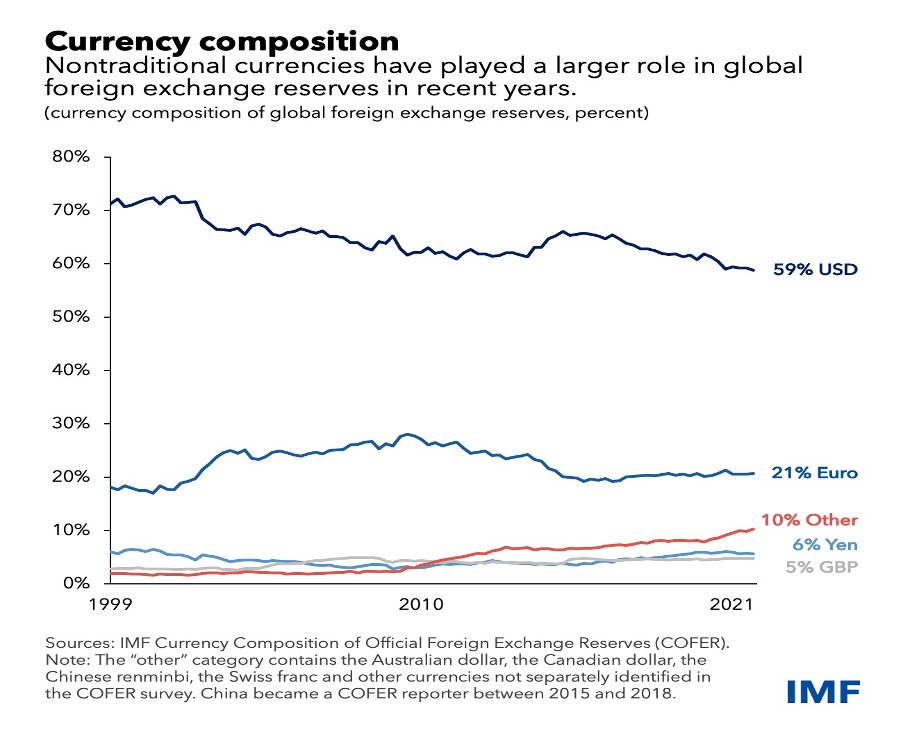
Additionally, the book highlights how central banks worldwide hold large dollar reserves as protection against crises, reinforcing the currency’s network effects and self-reinforcing dominance.
This analysis demonstrates that the dollar’s power is not merely economic but institutional and geopolitical.
Threats to Dollar Supremacy
While Rogoff dismisses the idea of a sudden replacement, he identifies several long-term risks. The most significant, he argues, is the rapid growth of U.S. public debt and the political difficulty of fiscal reform. Persistent deficits could erode confidence in U.S. assets and lead to higher interest rates or financial instability.
The book also explores external challenges, including the rise of China, the euro’s partial success, and technological innovations such as cryptocurrencies and digital currencies. Yet Rogoff concludes that none of these alternatives currently possesses the institutional depth and credibility required to dethrone the dollar.
Ultimately, the greatest threat comes from within: policy mismanagement, political polarisation, and declining institutional trust.
Implications for the Global Economy
Rogoff emphasises that dollar dominance has global consequences. Because so much trade and finance is denominated in dollars, U.S. monetary policy decisions ripple across emerging and advanced economies alike. A shift in Federal Reserve policy can trigger capital flows, exchange-rate volatility, and debt crises abroad.
He predicts that the future monetary order is likely to become more multipolar, with several currencies sharing influence rather than a single hegemon. This transition, if poorly managed, could bring higher volatility and more frequent financial disruptions.
The book, therefore, functions not only as history but as a warning about the fragility of global financial architecture.
Strengths of the Book
- Historical Depth: Rogoff’s long-term perspective places current debates in context, making complex macroeconomic issues accessible.
- Policy Insight: Drawing on his experience as a former IMF chief economist, he provides insider perspectives on decision-making processes.
- Balanced Tone: The book avoids sensationalism, presenting both the resilience and vulnerabilities of the dollar with nuance.
- Together, these elements make the work both intellectually rigorous and readable.
Limitations and Critiques
Despite its strengths, the book is not without limitations. Some readers may find its scope overly broad, occasionally sacrificing analytical depth for narrative sweep. Others argue that its forecasts remain cautious rather than offering concrete policy prescriptions.
Additionally, because the book emphasises structural forces, it sometimes underplays the role of unpredictable geopolitical shocks that could accelerate change. Nevertheless, these critiques do little to diminish its overall contribution.
Conclusion
Our Dollar, Your Problem ultimately serves as both a historical account and a cautionary tale. Rogoff does not predict the imminent fall of the dollar; rather, he argues that complacency about its dominance is misguided. The currency’s future will depend on the United States’ ability to maintain fiscal discipline, institutional credibility, and global cooperation.
For students of economics, policymakers, and anyone interested in the future of global finance, the book offers a compelling reminder that monetary power is as much about trust and governance as it is about economic might.
In this sense, Rogoff’s message is both sobering and constructive: the dollar’s reign may continue for decades, but its longevity is not guaranteed, and the choices made today will shape the international monetary system of tomorrow.
Written by – Purnendu Bhowmick
Edited by – Rubina
The post “Our Dollar, Your Problem” – Concise Book Review appeared first on The Economic Transcript.