Aeonium succulents are one of many types of beautiful desert plants that are easy to grow. Within this variety, there are also variations to choose from. Today, I want to talk to you briefly about some popular aeonium succulent types you can add to your garden.
What are Aeonium Plants?
The aeonium genus consists of many different aeonium species. These plants come from the Canary Islands as well as East Africa, and grow best in similar climates.
Most of these plants consist of a rosette shape that grows from a long or short stem. They also go by the name tree houseleeks and are very popular container plants for small gardens.
Where to Grow Aeonium Succulent Types in the US
Aeonium succulents grow best in warmer climates. These plants do well growing in USDA Hardiness zones 9, 10, 11, and 12. Aeoniums can also be grown indoors in colder climates, as long as they have plenty of sun.
Some Aeonium Succulent Types
Below are some different types of aeoniums for succulent enthusiasts to add to their collection. You may have some or these, or find ones that you want to add to your own collection!
Aeonium Arboreum ‘Zwartkop
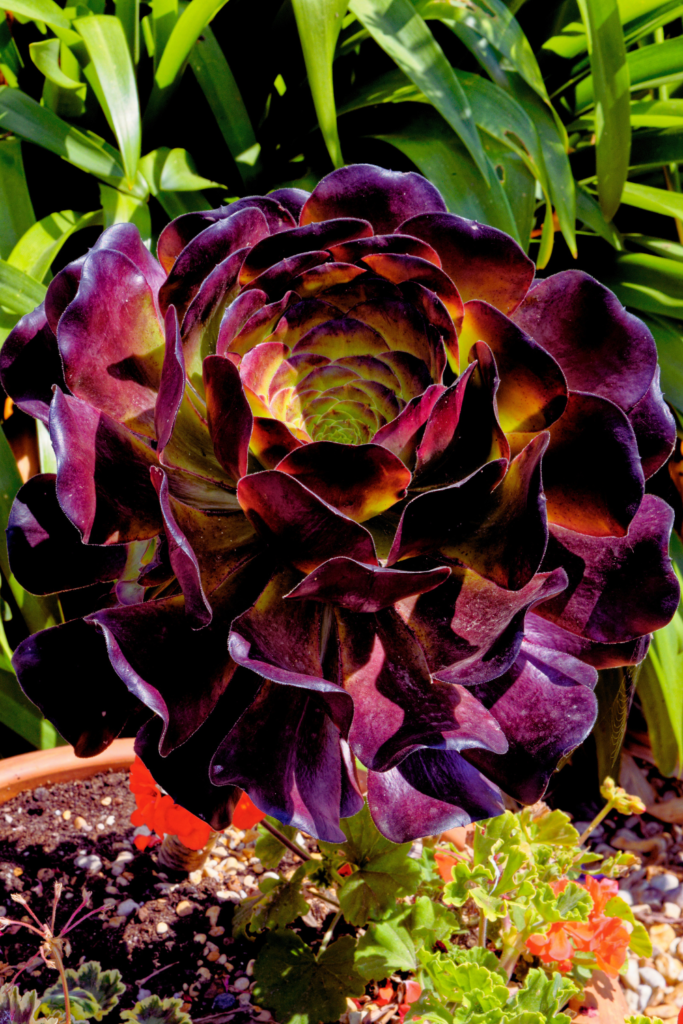
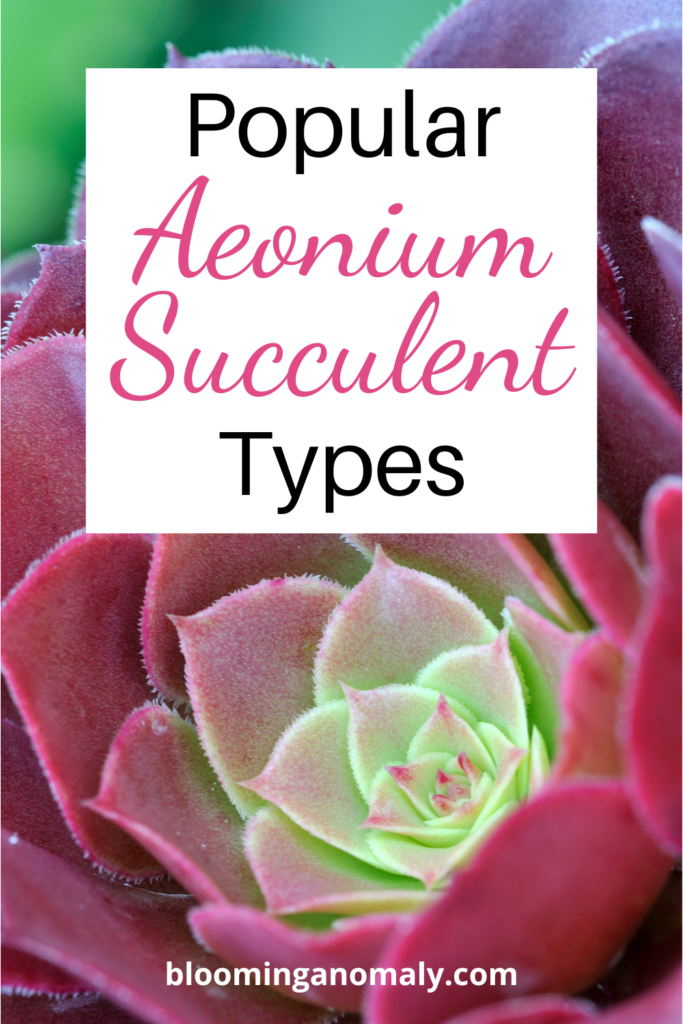
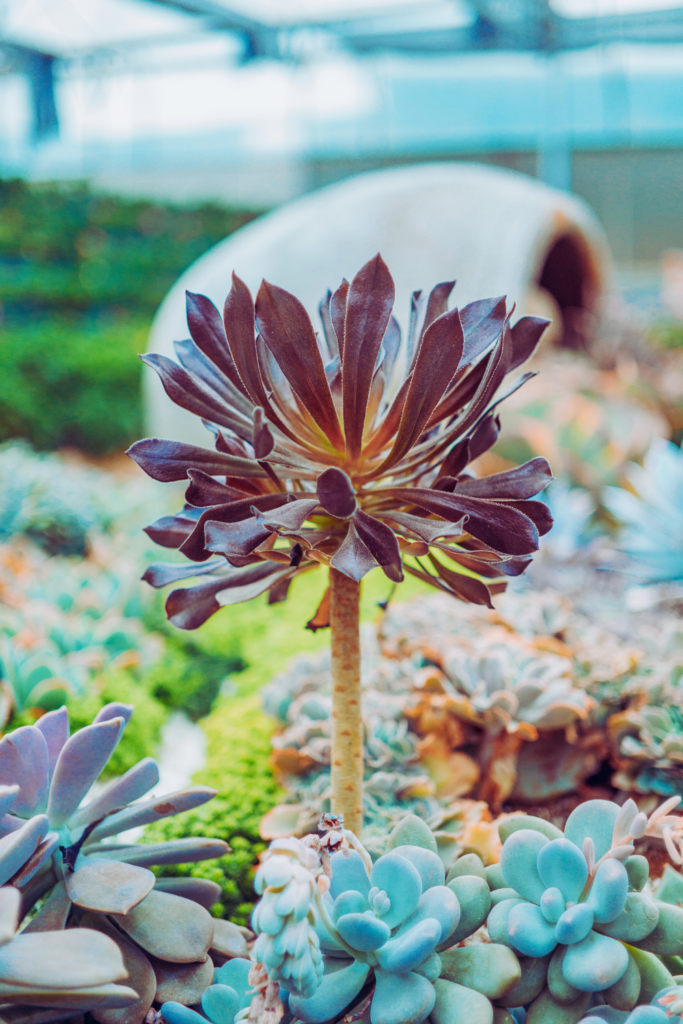
Aeonium Arboreum ‘Zwartkop is also known as the Aeonium Black Rose. These plants have a light green center and turn almost black on the outer rim. Some look almost black in the sun.
The stems of the aeonium zwartkop can grow long, making the plant look similar to a flower. These plants really stand out with their dark leaves when paired with succulents in lighter colors.
Aeonium Haworthii
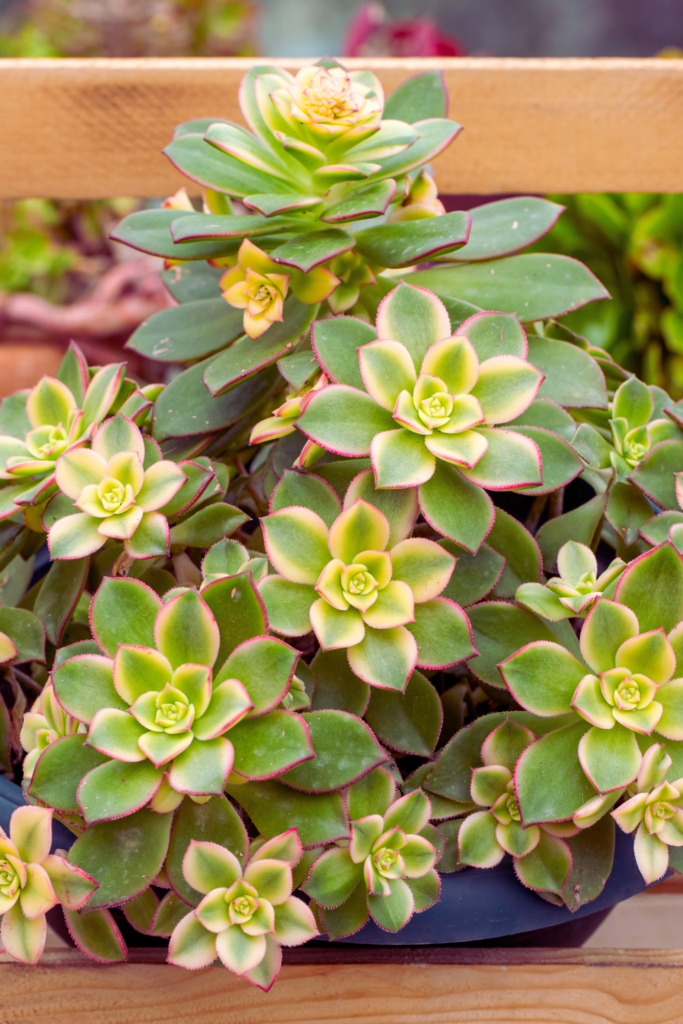
The Aeonium Haworthii, or Pinwheel, has green, fleshy leaves with pink at the tips. Some look completely green, while others have green, lime green, and pink stripes spreading outwards on each leaf.
These plants grow 1-2 feet wide and high, making them great for container and smaller gardens.
Aeonium Canariense
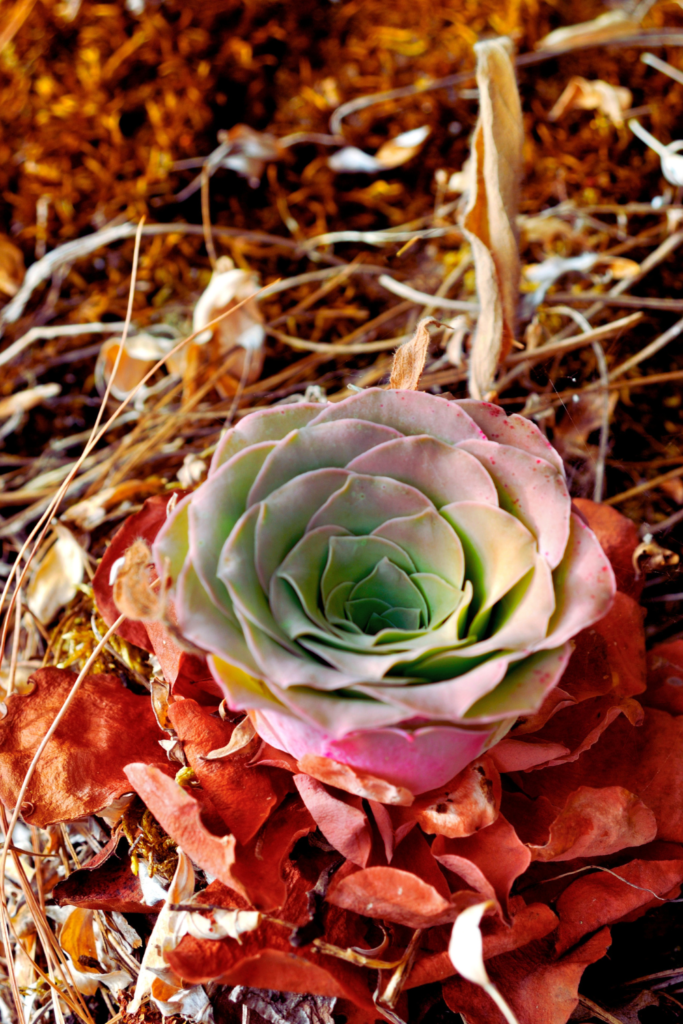
The Aeonium Canariense also goes by the name Canary Island Aeonium. The Aeonium Canariense grows large rosettes that can mature to 6-12 inches in diameter.
These plants start off green, then turn a dark pink in the sun. This aeoium will grow as large as the pot it is in, making it a very adaptable plant.
Aeonium Gomerense
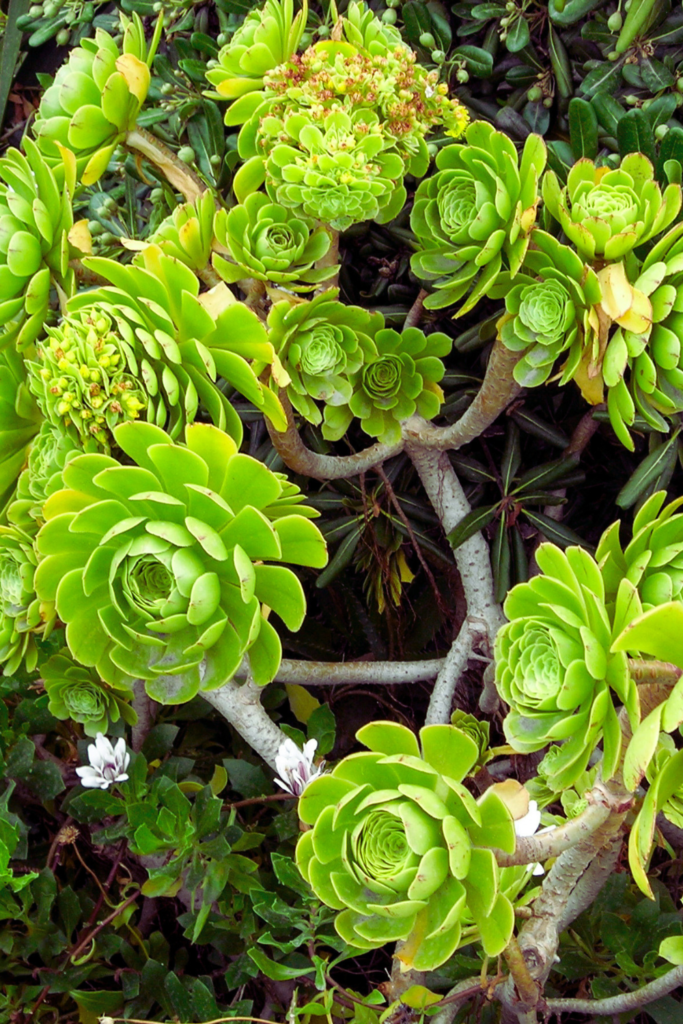
The Aeonium Gomerense is a branching shrub that grows flat and open rosettes. Their fleshy leaves are green with red edges. The stems can grow up to four feet tall and 11 inches wide in the Mediterranean climate. These succulents produce small, white flowers.
Aeonium Decorum
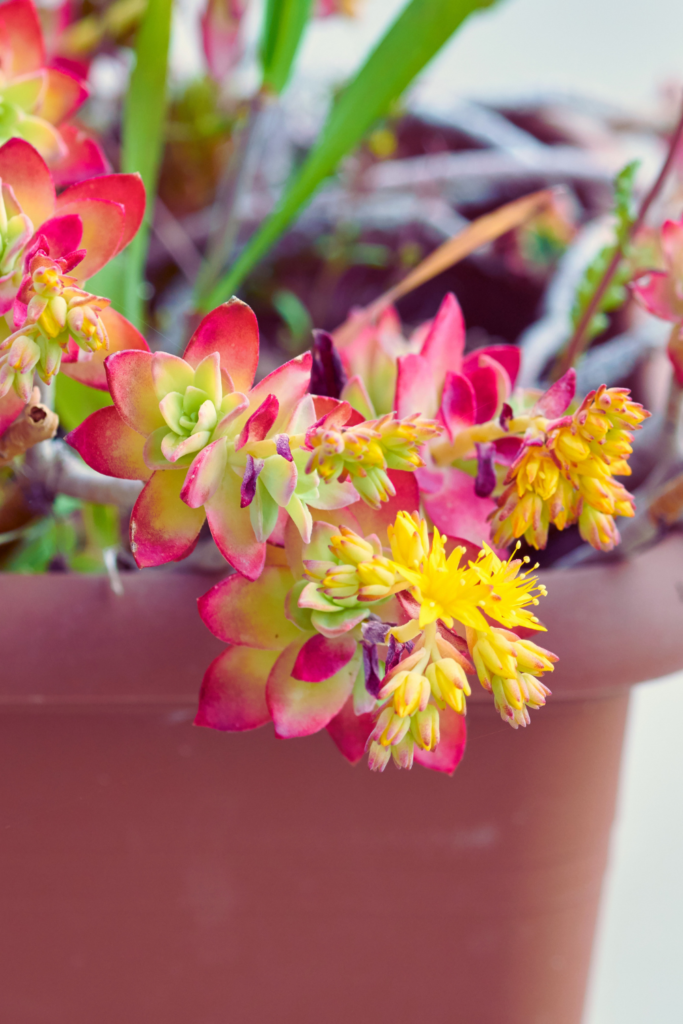
The Aeonium Decorum is also called the green pinwheel. While the center of the rosettes is indeed green, the edge of the plant can turn red in the sun.
These hardy plants grow 1-2 feet wide and high. Pink flowers bloom in the late spring to be enjoyed for a short time.
Aeonium Sedifolium
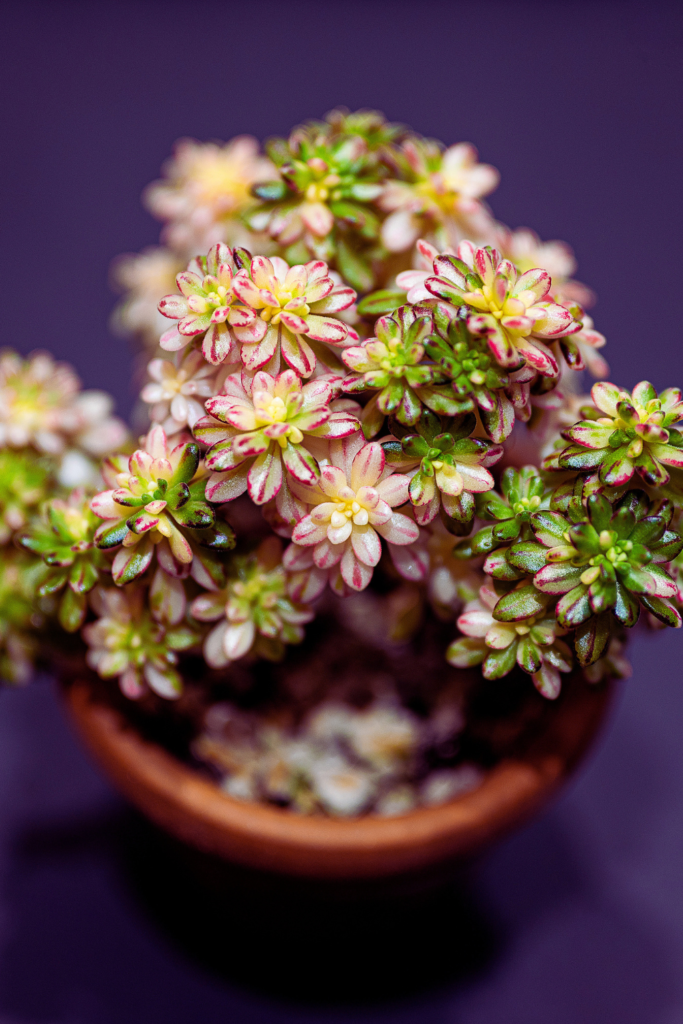
The Aeonium Sedifolium, or Dwarf Aeonium, only grows up to six inches tall and one foot wide. The small rosettes are about a half inch wide and look light green with red stripes. Yellow flowers shaped as stars bloom in the springtime.
Care Guide
Here are some expert care tips to keep in mind when growing the tree aeonium. While individual plants may vary in care, most aeonium plants require the following proper care to stay healthy and thrive for a long time in your garden.
Soil
Aeonium succulents prefer well-drained soil to thrive. Fast-draining soil that is porous is what these plants prefer. A cactus and succulent mix works well, and a variety of this well-draining soil can be found online and at local garden nurseries.
You can also make your own soil by combining potting soil or sandy loam with pumice, perlite, or gravel. Another option is combining a 50/50 mix of potting soil and succulent mix.
Water
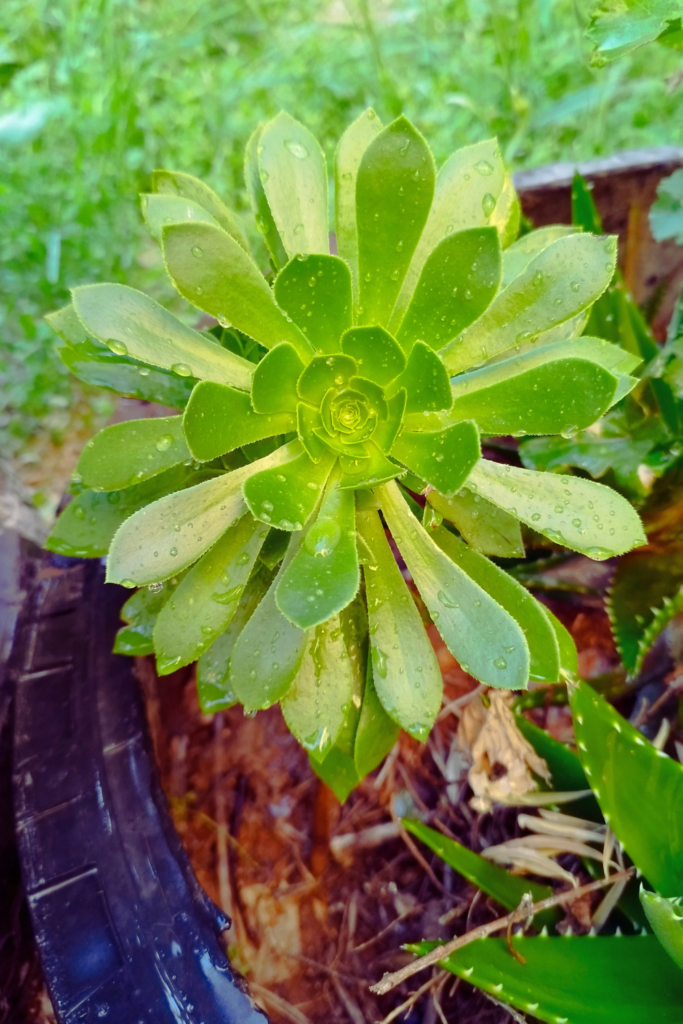
Since Aeoniums are originally from dry climates, they don’t need as much water as other plants. Aeoniums need to be watered around once a week when they are growing during the spring and fall.
Water when the top 2-3 inches of soil are dry. During the hot summers, they are dormant, so water about once a month.
Sunlight
Aeonium plants prefer partial sunlight and full sun. They grow well in morning sun and afternoon shade. Too much direct sunlight in the afternoon can burn aeonium leaves. If you prefer your aeoniums with darker leaves, slowly introduce more sunlight so they don’t burn.
If you are growing your aeonium succulents indoors, make sure they are placed near a window so they get plenty of sunlight. They need bright, indirect light for 4-6 hours a day to sustain their color and shape.
You can also purchase a grow lamp to keep your desert plants from getting leggy if there is no sunny place for them indoors.
How to Propagate
These resilient plants are easy to navigate, as many succulents are. The best way to propagate aeoniums is with stem cuttings. Find a healthy rosette and cut the stem. Let the stem callous for several days, then place in well-draining soil that is a little moist.
The best time to propagate your plant is during the spring or fall when it is growing. Be patient, since it can take a cutting several months to grow strong roots. I would have several cuttings at the same time, since some don’t make it.
I also like having several cuttings at once versus one only, in case that one does not grow roots.
Diseases
These plants don’t have many diseases, due to surviving and adapting to desert conditions. All types of aeonium are susceptible to root rot. Root rot is caused when there is excess water at the base of the plant. Fungal infections can also occur due to the plant getting too much water.
Designing a Garden with Aeoniums
There are many ways to design a garden with aeonium succulent types. You can mix and match different varieties in rock gardens for a low-maintenance area. Combining lavender, ornamental grass, and other plants with similar growing requirements are great to grow with aeoniums.
The striking rosettes of these plants look great as container plants, especially for those who don’t have much space to garden. For a low-budget garden, place a few different varieties of slow-growing aeoniums in a plastic pot.
Aeoniums make great container plants for a small space, since they don’t need much space for their roots. These plants only grow as large as the pot they are in. If you are just starting off, a dwarf aeonium in a small pot is a great way to begin.
I personally love mixing and matching aeoniums with other types of succulents. Succulent gardens are a great way to enjoy a variety of desert plants in one area. You can purchase a ready-made succulents box from many retailers or create your own succulent collection with your favorite desert plants.
Aeonium Succulent Types
As you can see, there are many aeonium succulent types to choose from. This genus of succulent plants is a great way to start a succulent collection, or add to one you are already growing.
I highly recommend adding an aeonium flower to your garden for its striking beauty and low maintenance. I hope you enjoy these in your garden, whichever you choose!