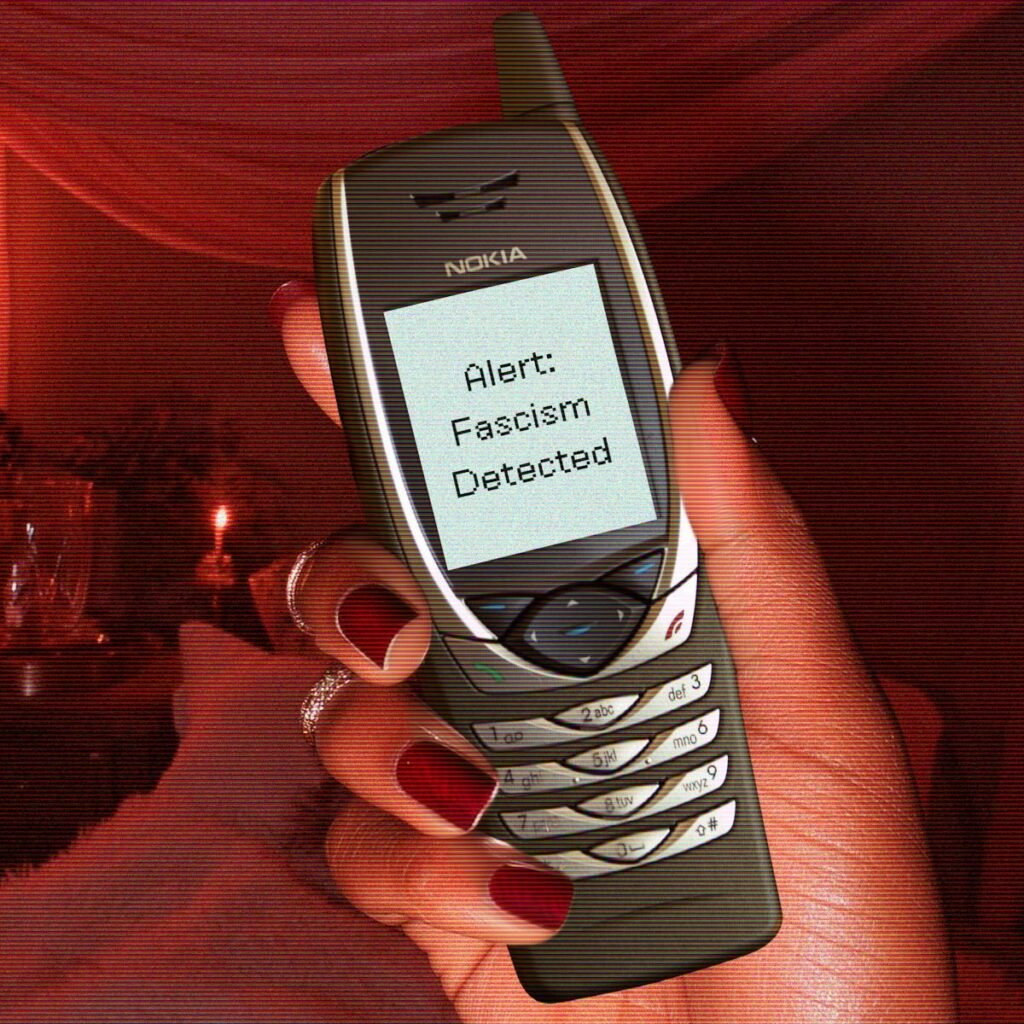
Every day you wake up, check your phone, and are assaulted by a new horror. Federal agents are disappearing people off the streets, our public health policies are being rapidly dismantled, and there’s a general sense that nothing is going to get better anytime soon. So yeah, when the end of the day rolls around, you’re lying in bed next to your partner, and you both know this is normally when you’d jump each other’s bones, no wonder it’s a little difficult to get it up.
While some Americans may be feeling this overwhelming sense of danger and uncertainty for the first time, marginalized communities and people of color have lived this way for many, many years. So have most women. For example, if you’re a woman in the sandwich generation who is figuring out how to care for her mother while worrying about her child’s newly diagnosed learning disability and what to make for dinner again, you were likely overwhelmed and turned off prior to the fall of democracy. It’s just the cherry on top.
Dr. Mindy DeSeta, PhD, certified sexologist and sexuality educator at Hily Dating App, has seen more couples in her office in the past two years whose intimate lives have been impacted by politics. Either they’re on opposite sides of the aisle and bickering over headlines, or one or both of their sex drives has plummeted. This happens because feeling threatened (even existentially) triggers a fight-or-flight response in our brains.
“Any type of crisis or environment that makes us feel unsafe or threatened, even just emotionally, is going to spike your central nervous system — that’s basically your fight or flight mode. And right now with everything becoming so personal and people being so polarized, we are living in a heightened nervous system state,” DeSata says. “Any time we’re in a fight-or-flight state, it’s going to naturally decrease our libido. There’s nothing necessarily wrong with the libido. When the world feels unsafe, your body is going to prioritize survival over pleasure.”
“You can’t be turned on in a space of always looking out for danger, always being hypervigilant,” says Dr. Joy Berkheimer, PhD, LMFT, a sexologist, marriage and family therapist, Black rights activist, and sensual yoga teacher.
This is why women are often the ones with lower libidos than men in heterosexual relationships. “Women live in that heightened state all the time when they’re dealing with managing a house, managing kids, managing their schedule, the kids’ schedule, all these daily tasks,” DeSata says. “With that, your libido will just decrease. And a lot of women go to this place of, ‘What’s wrong with me? My partner is saying they would like more sex. Why can’t I get there? I just genuinely don’t have the desire for it.’”
The thing is, women are not curmudgeons who never enjoyed sex. Often, we’re as troubled by our missing libidos as our partners — we also miss desiring. But in the list of things to do and worry about, it just never really ranks. That said, if you are in a place where you want to get your libido back, here’s what these experts advise.
On Your Own
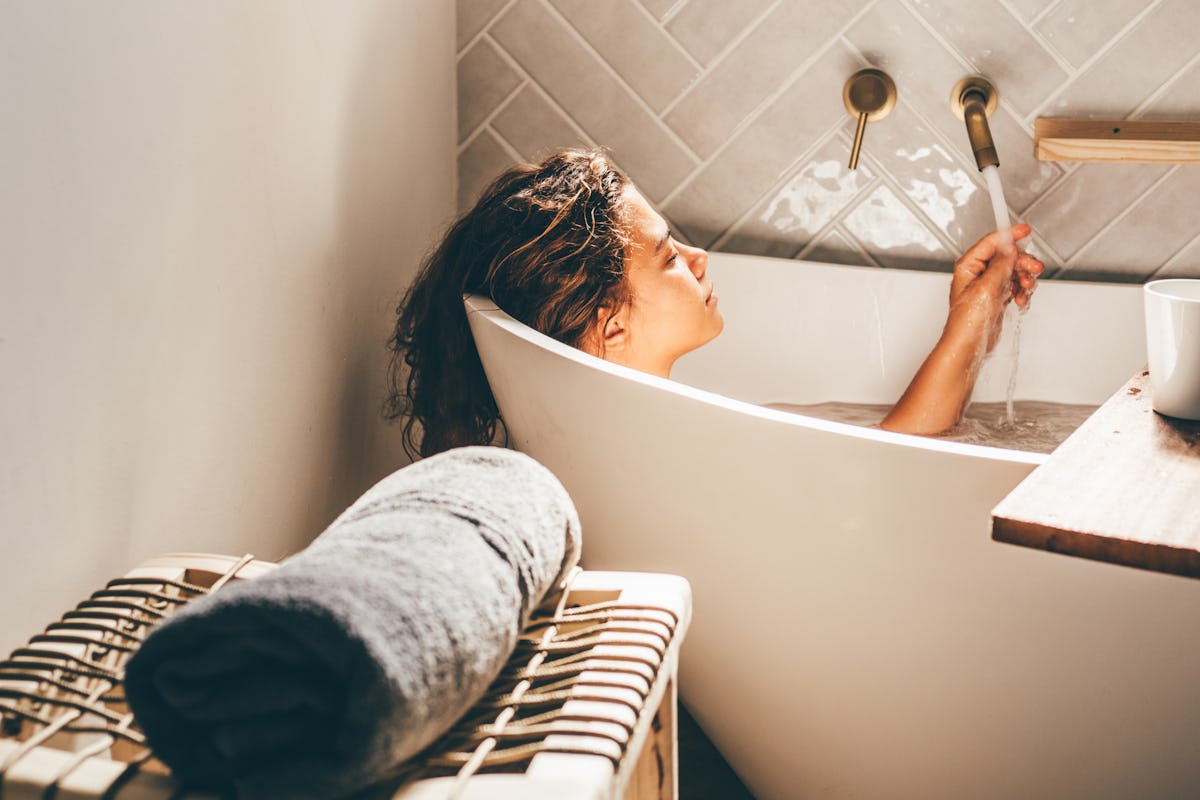
It’s important to take time alone to regulate your nervous system, and not in an annoying self-care Instagram post kind of way. “We need to be able to take space on our own where we allow ourselves to just be with our bodies again and actually recalibrate what a feeling even in our body means,” Berkheimer says.
This is why women are often the ones with lower libidos than men in heterosexual relationships. “Women live in that heightened state all the time when they’re dealing with managing a house, managing kids, managing their schedule, the kids’ schedule, all these daily tasks,” says certified sexologist Dr. Mindy DeSeta.
In her sessions as a sensual yoga teacher, Berkheimer asks her clients to tune into what their breath feels like inside their bodies, then how it feels when they breathe out and it whispers over their chests. Doing this routinely helps them feel more in control of their bodies and minds.
You could even use self-pleasure as your regulation activity of choice. “It doesn’t have to be sensual, but it also doesn’t have to not be sensual,” she says. “It’s one of the most powerful ways, I would say, to breathe your way back to trusting your body. When we’re in this space of, ‘When am I going to get turned on?’ it’s like, ‘What’s wrong with me?’ Being able to tap back into knowing that your body is still a well of pleasure on your own and trusting that again is going to be able to reconnect us to want to explore with other people.”
It takes about two hours to relax the mind, “shifting out of crisis, work, survival, hustle mode, and into a more relaxed state,” DeSata says. Unfortunately, that doesn’t mean 10 minutes of meditating and an hour and 50 minutes of doomscrolling — that’s two hours of actively regulating your nervous system. Find things that signal to your body it’s safe and time to calm down: think hot showers, working out, stretching, deep breathing, meditating, or taking a walk.
“What we’re trying to do is shift out of the fight-or-flight mode into a calmer state where desire naturally can show up again,” she says.
As A Couple
For starters, lower the bar.
Going forward, we’re not thinking “it’s sex or it didn’t happen.” “What I see happening in my couples is they go to a place of, ‘OK, we have to have sex, or we should be having sex.’ But that can seem like a monumental task when you’re in that heightened fight-or-flight mode. That pressure alone will naturally kill your libido,” says DeSata.
Instead, think about what makes you both feel intimately connected. Cuddling, hand holding, kissing, massages — these all have a place on the menu of options to be intimate without going all the way.
“Start smaller and make it more doable. You have to find a way that feels more manageable and approachable to open up the door. ‘We’re just going to cuddle for 10 minutes, or we’re going to do a back rub or a makeout for 10 minutes,” says DeSata.
Sharing intimate moments that don’t lead to sex actually increases the likelihood you’ll get there over time.
“Normalize touching your partner’s arm when they’re speaking or saying thank you in a way where maybe I give you a hug,” Berkheimer says. “Incorporate intimate and sensual touch that doesn’t have to lead to something else. ‘I can receive this, and it doesn’t mean that I have to do something else. I’ve just received something that feels beautiful, and I want to move more towards it. I wasn’t pressed.’ So the more you cultivate safety between the two of you, the more your nervous system regulates. Safety is what leads to desire.”
It takes about two hours to relax the mind, “shifting out of crisis, work, survival, hustle mode, and into a more relaxed state,” DeSata says.
Set boundaries about when & where you discuss the news.
If the news is breaking your heart, rehashing it may not help. DeSata also says our spaces soak up our energy, so if you’re constantly talking about the day’s headlines in bed, you’re saturating your safe place with unsafe vibes.
Figure out what your partner needs taken off their plate. Do it without being asked.
“A lot of my female clients tell me that one of the biggest turn-ons they have is when their partner helps them clean up the kitchen at the end of the night. That helps them check out of mommy hustle mode and into my sexuality and arousal mode,” DeSata says.
Read up on arousal styles, especially if it feels like one of you is always initiating.
“You can have someone who has spontaneous arousal, or you can have someone who has responsive arousal,” DeSata says. “Spontaneous really just means it kind of just pops up in their brain, and their body responds to it and they become turned on. Responsive is when they respond after an initiation has already started. The foreplay is how they get in the mood; they respond to the sexual experience starting.”
Most women have the responsive arousal style, she notes.
Read up on embodiment.
Again, communities of color are not new to feeling oppressed and under siege. This is a great time to turn to educators of color for lessons on what Berkheimer calls embodiment — connecting with our bodies and tuning in to their sensory and emotional experiences. In past classes, she has turned to dance as a way to help clients reconnect with their physical selves.
“A lot of marginalized cultures have tapped into that because we needed to survive something already,” Berkheimer says. “I think more people are going to get more tapped into embodying because, quite frankly, what we all feel is very much powerless. The only power comes with being able to completely be in control of your body, your residence.”
So maybe right now you think about your libido and getting your groove back, and you cannot possibly be bothered to care. That’s OK. When you’re ready, regulating your nervous system and tuning into your body will likely confer a host of benefits — maybe among them you’ll find you feel a little spark of longing you haven’t felt in some time.