Editors’ Vox is a blog from AGU’s Publications Department.
While the rocky planets of our solar system started forming at the same time, their divergent evolution led to varied surface environments and potential for habitability. A new article in Reviews of Geophysics explores the geological and tectonic evolution of the terrestrial planets in our solar system and how they have influenced long-term habitability. Here, we asked the authors to give an overview of how the rocky planets formed, what characteristics of these planets are important to study, and what factors are key for habitability.
In simple terms, how did the rocky planets in our solar system form? What are the main similarities and differences in how they evolved? What were the main factors that caused divergent evolution?
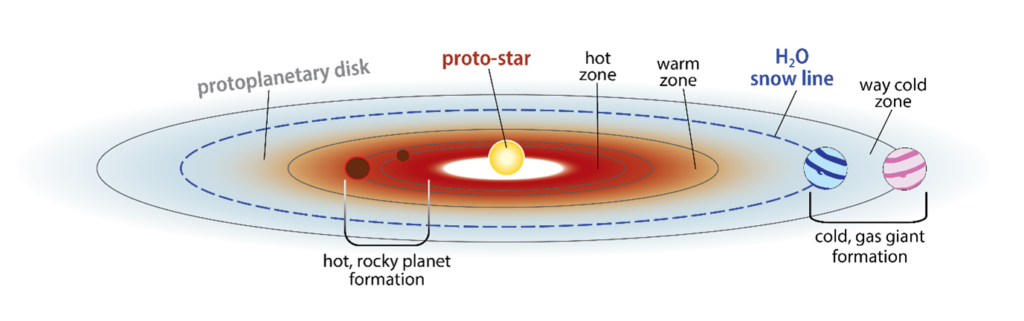
The rocky planets of our Solar System — Mercury, Venus, Earth, and Mars — formed about 4.5 billion years ago from the collapse of a molecular cloud. Most of the cloud’s mass gathered at the center to form the proto-Sun, while the remaining material flattened into a rotating protoplanetary disc of gas and dust. Within this disc, temperature differences led to the formation of the inner, warmer, rocky planets and the outer, cooler, gas and ice giants (Figure 1).
Early in their histories, the terrestrial planets likely experienced intense heating from impacts and radioactive decay, producing global magma oceans. As these cooled, heavier elements sank to form metallic cores while lighter materials formed silicate-dominated mantles and crusts—a process known as differentiation. Volatiles released during this stage degassed to the surface, forming early atmospheres (Figure 2). In this sense, their earliest evolution was remarkably similar.
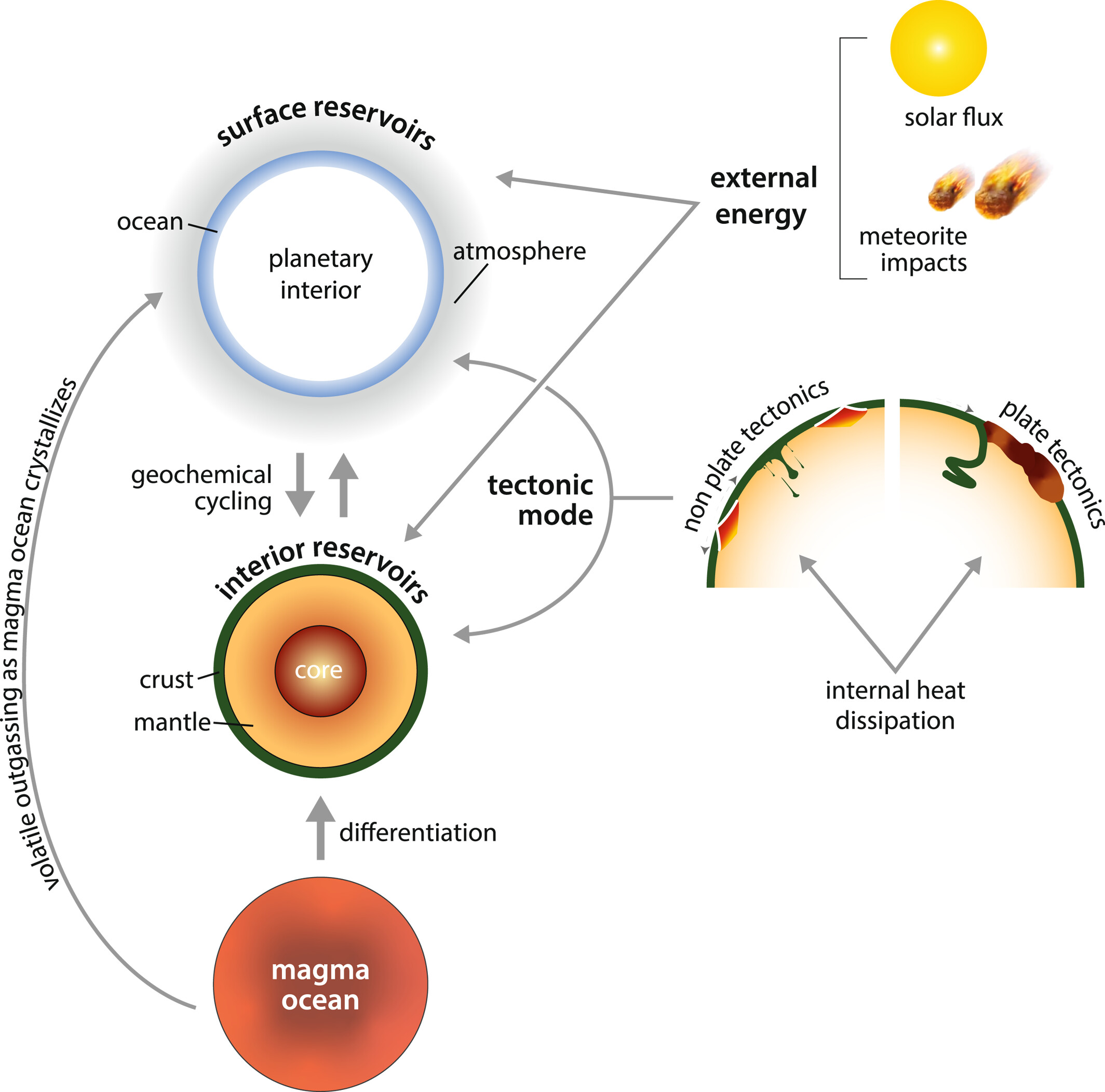
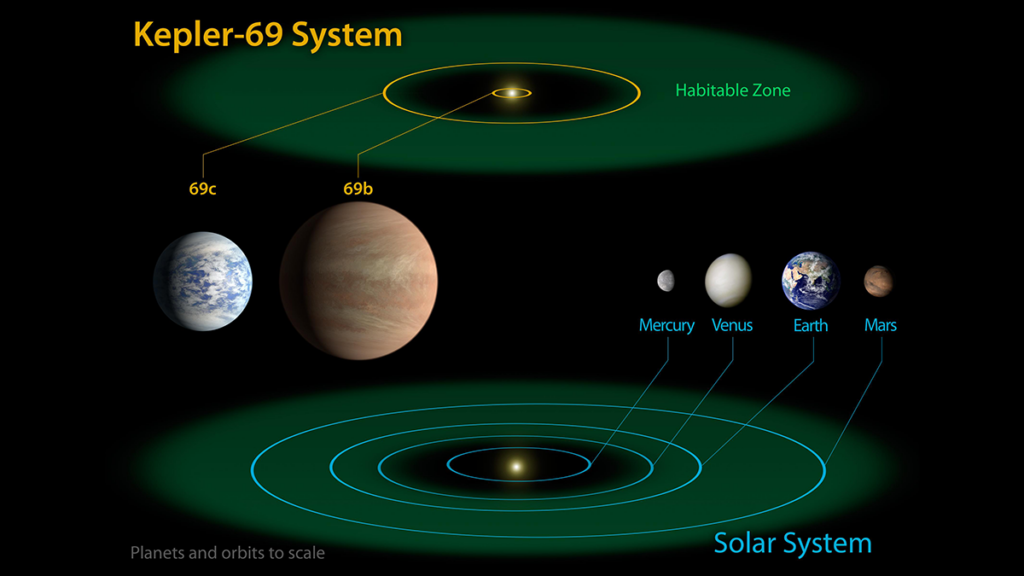
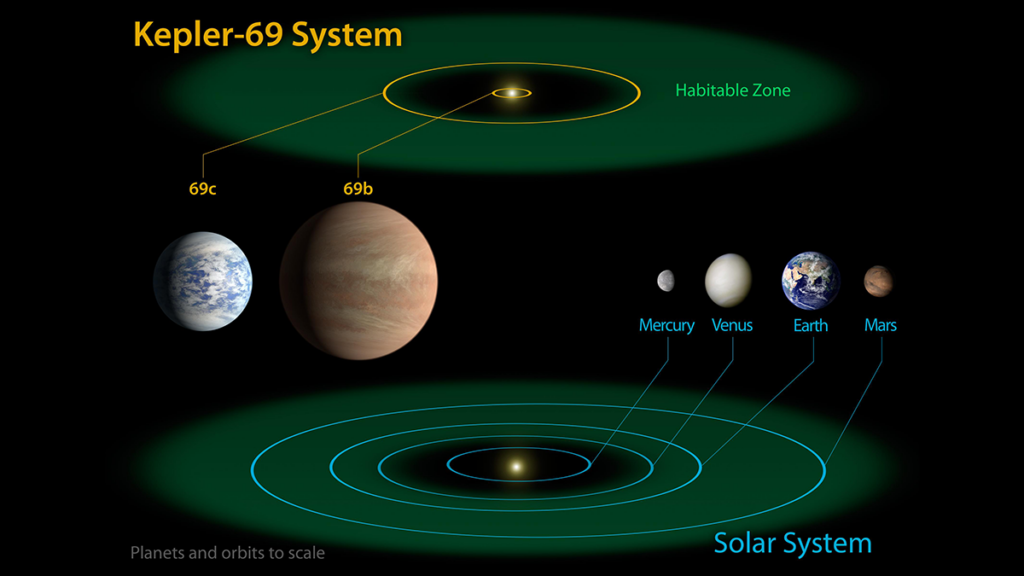
Post magma-ocean stage, their evolutionary paths diverged in geological evolution, tectonic regimes, and habitability. Differences in distance from the Sun, planetary size, internal cooling, degassing histories, and continued meteorite and planetesimal bombardment produced the contrasting geological environments, tectonic regimes, and surface conditions observed today.
What different characteristics of the crust are studied to understand planetary evolutionary history?

Key characteristics of planetary crusts include their age, composition, and hypsometry. On most terrestrial bodies, crust formed very early—within a few hundred million years after crystallization of their magma oceans. One exception is Venus, where much of the crust appears relatively young (largely < 750 million years ago (Ma)), although older crust may survive in the planet’s highlands. A similar contrast exists on Earth, where oceanic crust is young (mostly < 200 Ma), while older components are preserved exclusively within continental terranes (Figure 3).
In terms of composition, the bulk of terrestrial crusts (except Earth’s) are predominantly mafic. Mercury, the Moon, and possibly Mars preserve remnants of crust formed during magma-ocean crystallization, but much of their crust — like that of Venus — formed later through decompression melting of the mantle.
Earth is distinctive in having two crustal types with contrasting age distributions, compositions, and hypsometry. Oceanic crust is young, mafic, and dense, producing subdued topography and lying largely beneath the oceans. Continental crust is intermediate to felsic in composition, formed through interaction of mantle-derived melts with older crust, and its lower density and great thickness allow it to stand above sea level.
These differences in crustal age, composition, and elevation ultimately record how each planet cooled, recycled material, and evolved through time.
What can magnetic fields reveal about planetary evolution?
Magnetic fields provide important clues about the evolution of planetary cores. For example, Earth has a magnetic field generated by convection in its liquid outer core, and the rock record suggests it has existed throughout much of Earth’s history (since at least ~3.8 billion years ago). Mercury also possesses a magnetic field, although it is weak—less than 1% the strength of Earth’s. In contrast, neither Mars nor the Moon has a global magnetic field today, however, analyses of rocks and meteorites derived from these bodies indicate that both generated magnetic fields early in their histories. On Mars, this dynamo appears to have operated before ca. 3.8 billion years ago, whereas on the Moon it persisted until roughly ca. 3–2.5 billion years ago. Magnetic fields reduce the loss of atmospheric particles to space and shield planetary surfaces from solar radiation, helping preserve atmospheres, oceans, and habitability.
What are “tectonic modes” and what do they tell us about terrestrial planets?
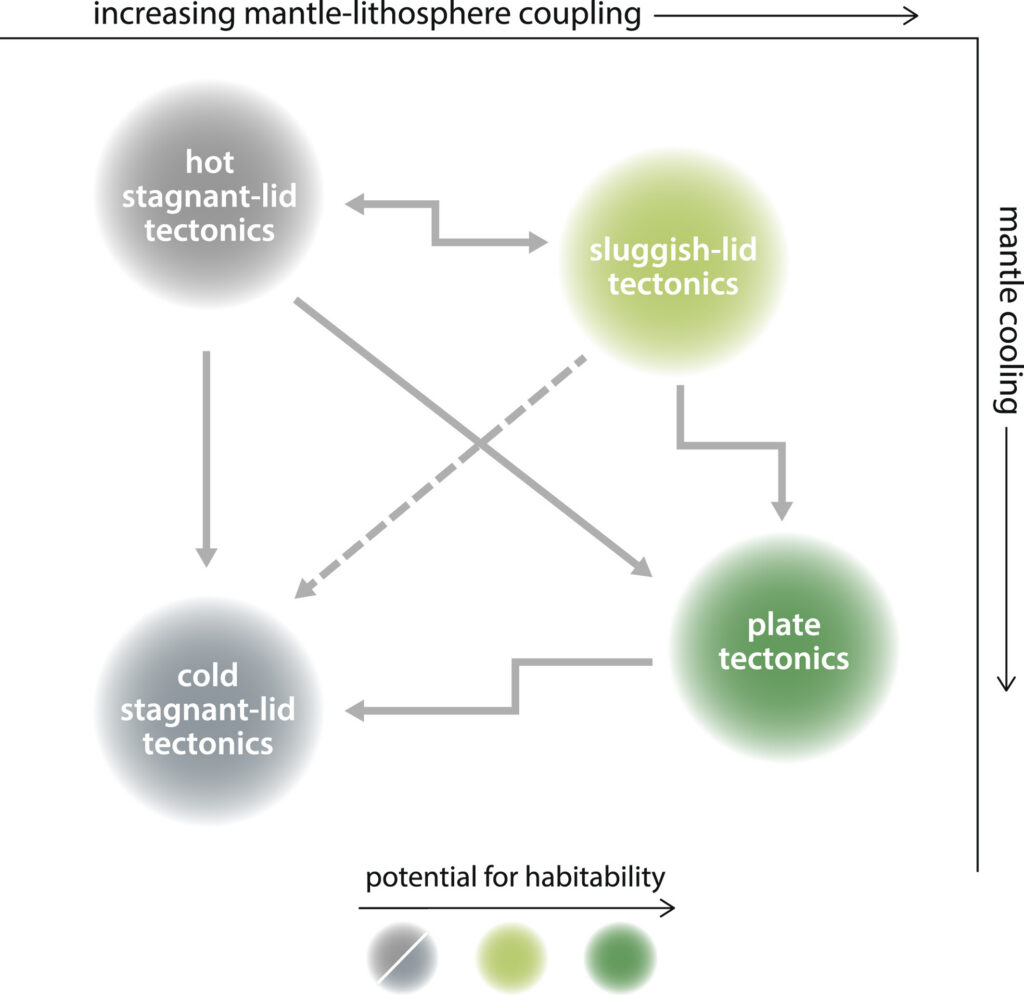
Tectonic modes express the mechanism by which a planetary body loses internal heat. There are two end-member types: stagnant lid and mobile lid (Figure 4). In stagnant-lid mode, there is little or no mechanical coupling between the lithospheric lid (the crust and the uppermost rigid mantle) and the underlying convecting mantle. Internal heat is mainly lost by conduction through the lid. Volcanism can provide additional heat loss, producing a hot stagnant lid, whereas a cold stagnant lid lacks significant magmatic activity.
Mobile-lid modes involve coupling between the lithosphere and the underlying convecting mantle. In plate tectonics—a type of mobile-lid mode—lid mobility is primarily driven by recycling of oceanic lithosphere (i.e., subduction). Another type is sluggish-lid tectonics, where lid’s lateral motions are driven by traction from the convecting mantle. In this case, lithospheric recycling may be dispersed and episodic because extensive magmatism weakens the lithosphere mechanically.
Mars, Mercury, and the Moon likely evolved within stagnant-lid regimes, transitioning from hot to cold lids. Earth operates in a plate tectonic (mobile-lid) regime today but may have transited through earlier hot stagnant-lid and sluggish-lid modes. Venus may represent a mixed state, with stagnant-lid behaviour in the lowlands and more localized sluggish-lid activity in the highlands.
What key characteristics of a planetary environment are necessary for habitability?
Habitability depends on several key factors such as the presence of a suitable solvent—typically liquid water, an adequate supply of nutrients (e.g., CHNOPS – Carbon, Hydrogen, Oxygen, Nitrogen, Phosphorus, and Sulfur), including bioessential trace metals, a suitable physical environment (temperature, pressure, and chemical conditions such as alkalinity), and a source of light or chemical energy.
Among all known planetary bodies, only Earth currently sustains a habitable and inhabited surface environment. This uniqueness stems from its active plate tectonics, strongly bimodal topography (oceans and continents), and an oxygen-nitrogen (O₂–N₂)-dominated atmosphere that allows liquid water to persist at the surface. These features together foster a “Goldilocks” planetary state: they regulate long-term climate through the carbonate–silicate cycle, stabilize atmospheric composition (e.g., CO₂ levels), sustain surface water reservoirs, and promote weathering of emergent felsic crust that releases bioessential elements. This geological combination maintains environmental stability over billions of years, enabling life to evolve, diversify, and occupy a wide range of ecological niches, ultimately producing the rich phylogenetic complexity observed on Earth today.
How does our understanding of the factors influencing Earth’s habitability help us to assess the habitability of exoplanets? Why does this matter?
Earth is the only known inhabited planet, and its evolution provides a critical template for understanding habitability—both within our solar system and on rocky exoplanets.
Life on Earth likely originated early (>3.8 billion years ago (Ga)) under non–plate-tectonic regimes such as stagnant or sluggish lids. These modes appear sufficient to create transiently habitable environments, where episodic magmatism and limited lithospheric recycling supported localized geochemical cycling and nutrient fluxes, albeit discontinuously in space and time. Early Mars may have experienced similar conditions, suggesting that life can emerge without plate tectonics.
However, sustaining habitability over billions of years—and enabling complex life to evolve—requires processes that non–plate-tectonic regimes cannot provide. Plate tectonics drives continuous lithospheric recycling, maintains long-term nutrient fluxes, regulates climate through the carbonate–silicate cycle, preserves surface water reservoirs, and stabilizes atmospheric composition. Magnetic fields generated by convecting cores further protect atmospheres from erosion by the solar wind. Without these mechanisms, habitable conditions are often discontinuous, eventually leading to loss of oceans or atmosphere, as likely occurred on Mars and Venus.
Studying these processes on Earth helps identify the key factors that may support exoplanet habitability, including distance from the star, planet size, tectonic activity, atmospheric evolution, surface water, and energy and nutrient availability. Yet the diverse outcomes among terrestrial planets show that even with detailed knowledge of planetary processes, evolution can remain unpredictable, underscoring the challenges of inferring habitability on exoplanets.
—Peter A. Cawood (peter.cawood@monash.edu;  0000-0003-1200-3826), Monash University, Australia; and Priyadarshi Chowdhury (0000-0001-7544-7331), National Institute of Science Education & Research, India and Homi Bhabha National Institute, India
Editor’s Note: It is the policy of AGU Publications to invite the authors of articles published in Reviews of Geophysics to write a summary for Eos Editors’ Vox.
Citation: Cawood, P. A., and P. Chowdhury (2026), Terrestrial planets guide our search for habitable exoplanets, Eos, 107, https://doi.org/10.1029/2026EO265011. Published on 19 March 2026.
This article does not represent the opinion of AGU, Eos, or any of its affiliates. It is solely the opinion of the author(s).
Text © 2026. The authors. CC BY-NC-ND 3.0
Except where otherwise noted, images are subject to copyright. Any reuse without express permission from the copyright owner is prohibited.