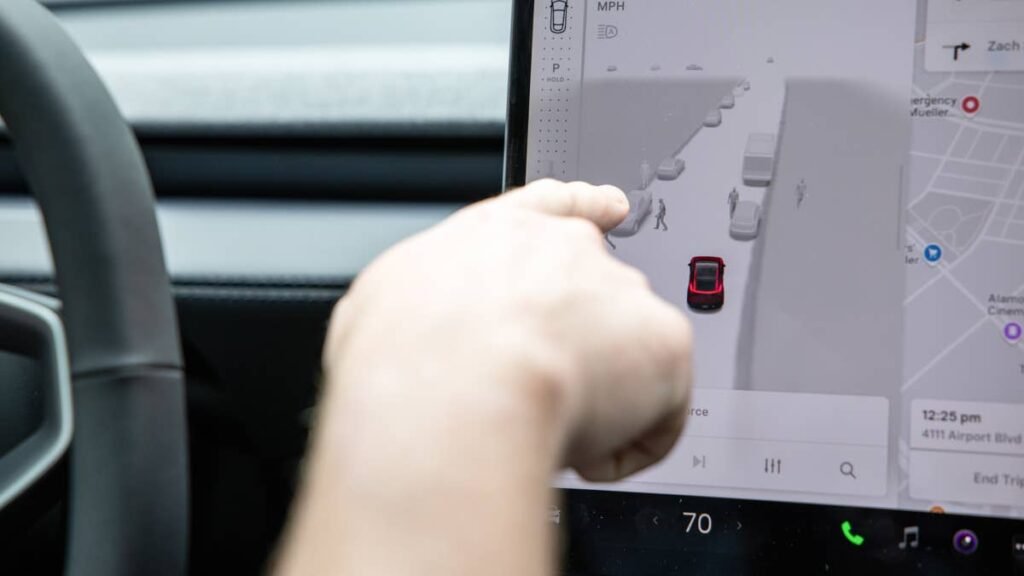
Tesla is cracking down hard on owners who used FSD enabler hacks to illegally unlock Full Self-Driving in countries where the software remains unapproved. The company has begun remotely disabling FSD capabilities on affected vehicles across Europe, China, Japan, South Korea, and the UK, amongst other countries. While every Tesla ships with the FSD hardware baked in, software activation remains tied to regulatory approval. Outside the United States, FSD has not received full approval in most markets due to varying safety standards, data privacy requirements, and local traffic laws.
That gap created an opportunity. Hackers in Poland, Ukraine, and elsewhere began distributing modules that plug into the CAN bus to geo-spoof the car, and silently unlock the full FSD suite, including advanced navigation, Autopark, and Summon. In China alone, over 100,000 owners have reportedly installed such modifications to gain access to FSD. The devices, typically priced between $700-$2,000, had spread quickly before Tesla moved to respond.
FSD v14.3 Raises the Stakes
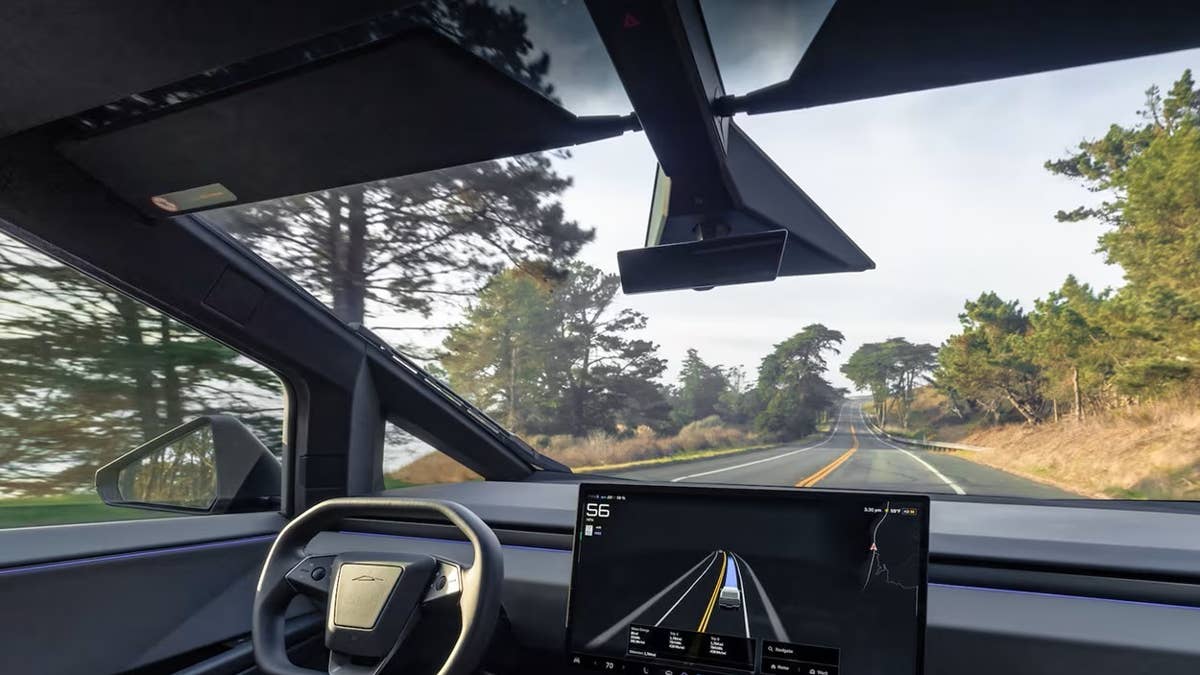
The timing of Tesla’s crackdown is no coincidence. FSD v14.3 recently began rolling out, representing a foundational rebuild of the system’s AI architecture. The update rewrites the AI compiler, delivering a 20% faster reaction time. Not to mention a completely overhauled neural network vision encoder that improves performance in low-visibility conditions, one of FSD’s biggest issues so far. The reinforcement learning stage has also been upgraded, targeting harder training examples sourced from Tesla’s global fleet.
This is the update Musk called “the last big piece of the puzzle.” With v14.3 pushing FSD capability to new heights, and v15 built on a large AI model with roughly 10 times more parameters on the horizon, Tesla has a serious incentive to ensure only verified, approved users are running these systems. Unauthorized activations are more than just a legal liability, with which Tesla has its hands full already; they are a safety risk.
Tesla’s Response and What It Means for Owners
Tesla launched an enforcement campaign, sending in-car notifications and emails warning that unauthorized modifications violate its terms of service, compromise vehicle safety systems, and expose cars to cybersecurity risks. Vehicles detected using the hacks have had FSD capabilities remotely disabled without refund. In some cases, owners report permanent bans, even where they had legitimately purchased the software package to use in the US before transferring their Tesla out of the country.
Getty Images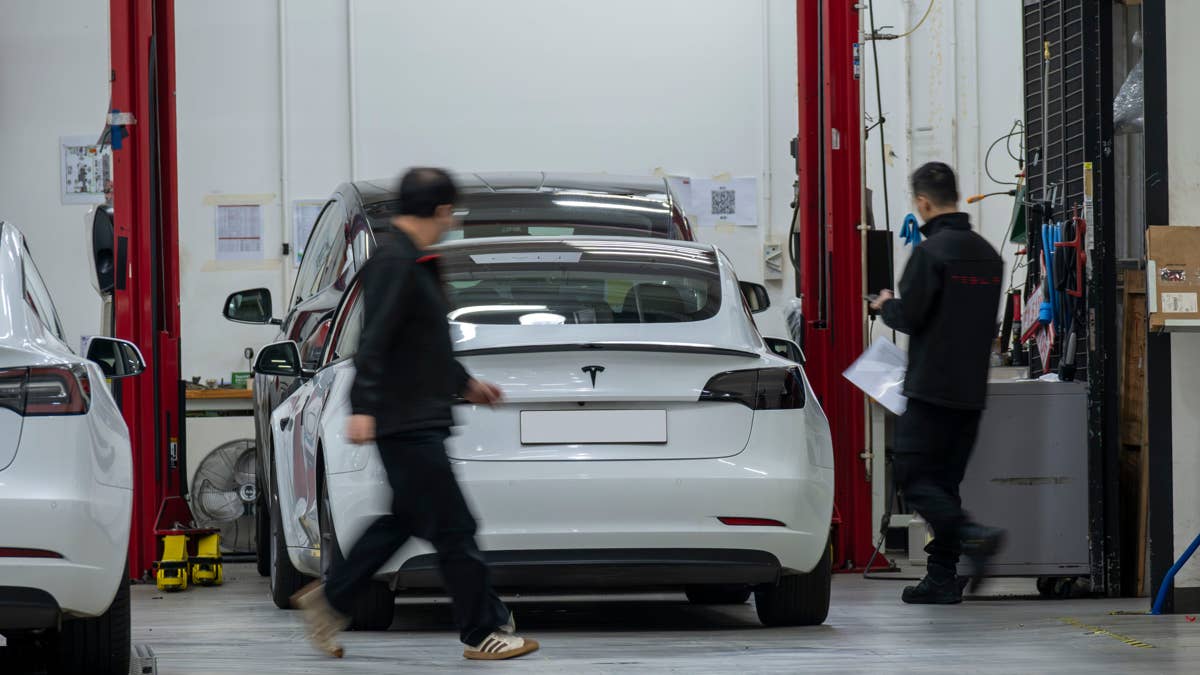
This is not the first time Tesla has used its over-the-air capabilities to lock out owners who strayed outside official channels. The company has a long-standing pattern of remotely restricting features on vehicles that underwent unauthorized repairs or modifications. Owners who had independent repair work done on their cars have faced the prospect of being locked out of the Supercharger network entirely, sometimes weeks after the vehicle was already back on the road. Third-party performance modules, like those that replicate paid software upgrades at lower cost, have also triggered in-car warnings after Tesla software updates detected their presence. Tesla has always framed these controls as a safety measure. The FSD crackdown fits that same argument, just with much higher stakes attached.