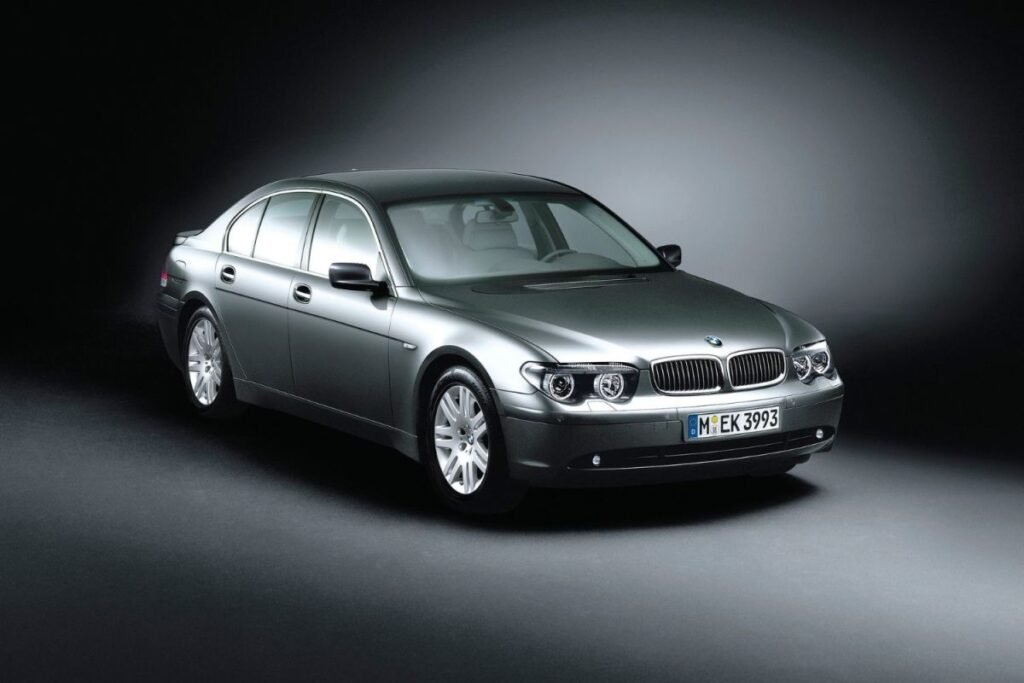
The E65 Turns 25
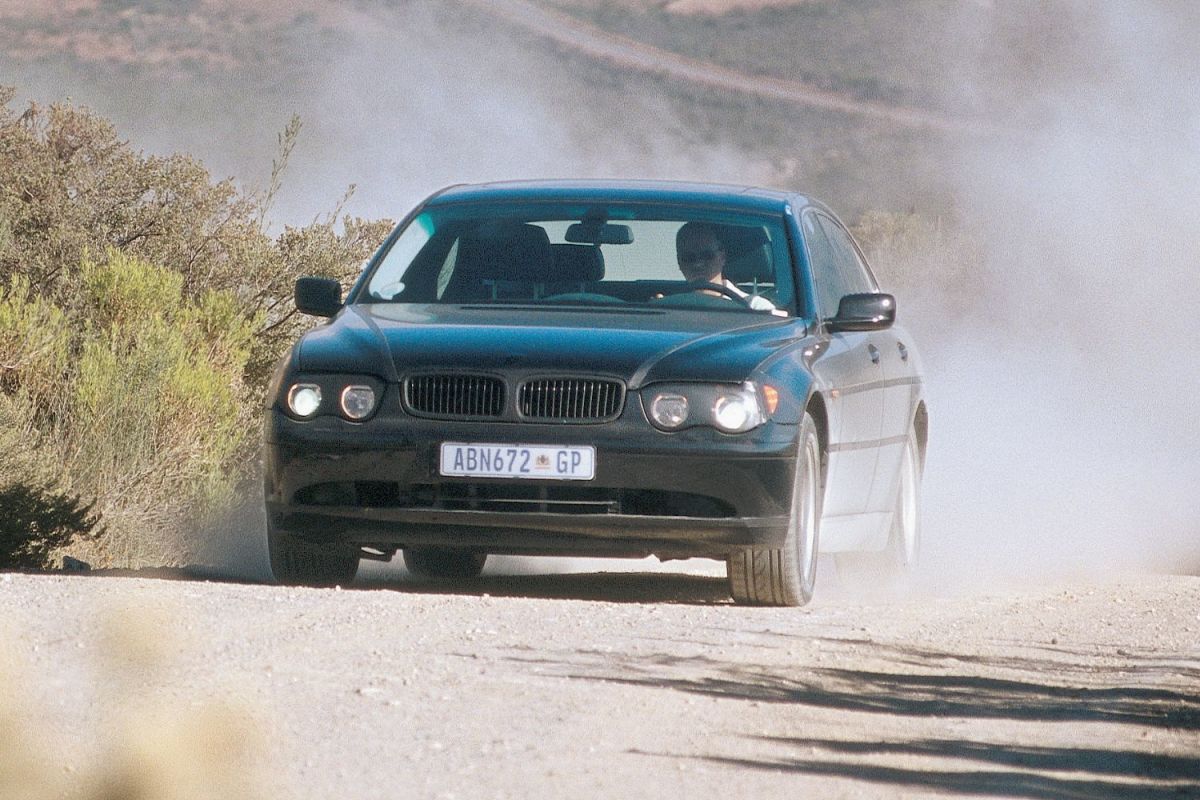
Believe it or not, the E65 BMW 7 Series is now a quarter-century old. Hugely controversial when it was new, we still remember the headlines and stories surrounding its design. Magazine and internet archives would lead you to believe that the sky was falling over at BMW, and the car was pretty much the chariot of one of the four horsemen of the apocalypse.
There was a great deal of emotion when the fourth-generation 7 Series was first revealed. BMW diehards at the time weren’t just disappointed, they were that and angry. It even reached a point where BMW’s design chief at the time, Chris Bangle, was receiving death threats from the brand’s fanatics. It’s one thing to dislike a design, but threatening the person who didn’t even directly pen the car isn’t cool.
But over the years, the bold and daring choice that BMW made started paying off, and the car itself gained respect. It’s still polarizing, but it left a huge impact and a strong legacy that would influence not just BMW’s future designs, but a huge chunk of the entire automotive industry.
BMW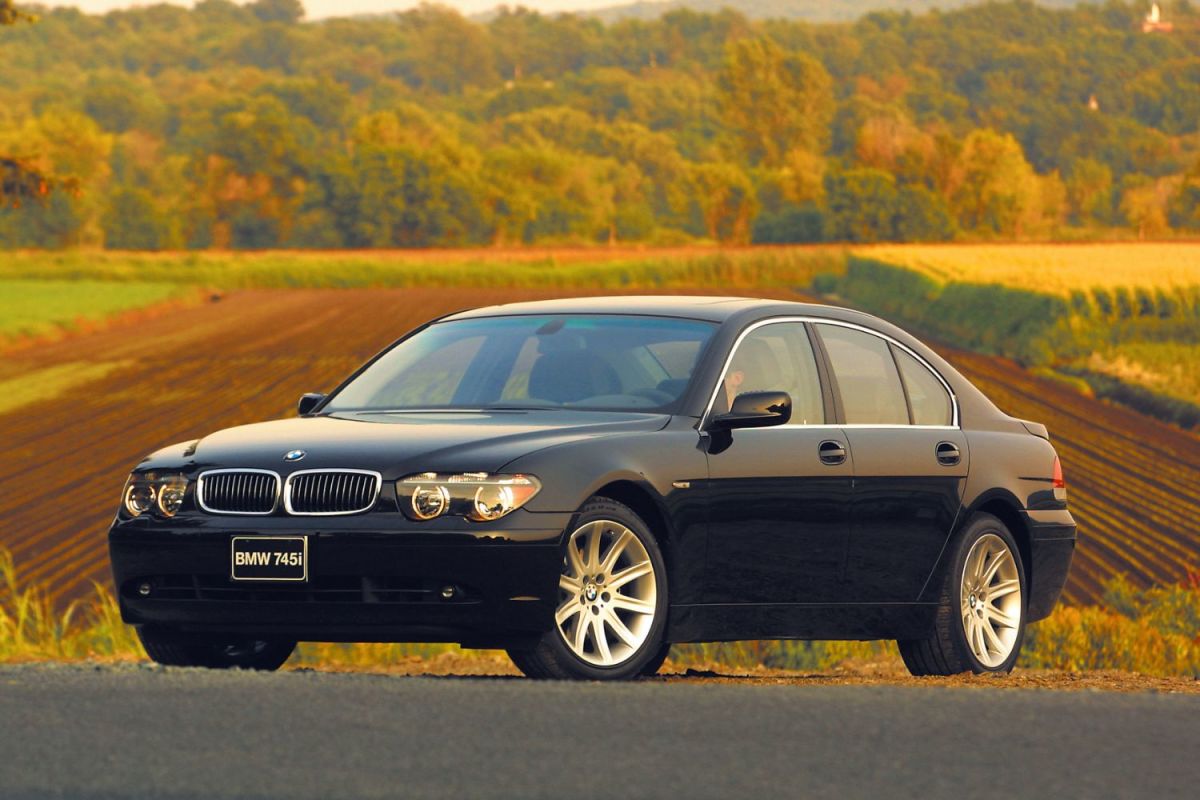
Bangle Didn’t Totally Design It
To say Chris Bangle drew a lot of flak for the E65 is a gross understatement. At the time, it was understandable, but it doesn’t justify the violence directed at the man. The E65 succeeded the elegant and timeless lines of the much-loved E38. That generation of the 7 Series was penned by Boyke Boyer under the guidance of Claus Luthe.
For the E65, Adrian van Hooydonkwas responsible for the exterior design, and Bangle oversaw the entire project. Of course, Bangle was the one who faced the people as he was the design lead at the time. BMW could’ve easily thrown him under the bus, and it was reported that sales plummeted by 60 percent in the car’s first full year of production. The thing is, Munich backed him as the company wanted a more revolutionary approach to design.
BMW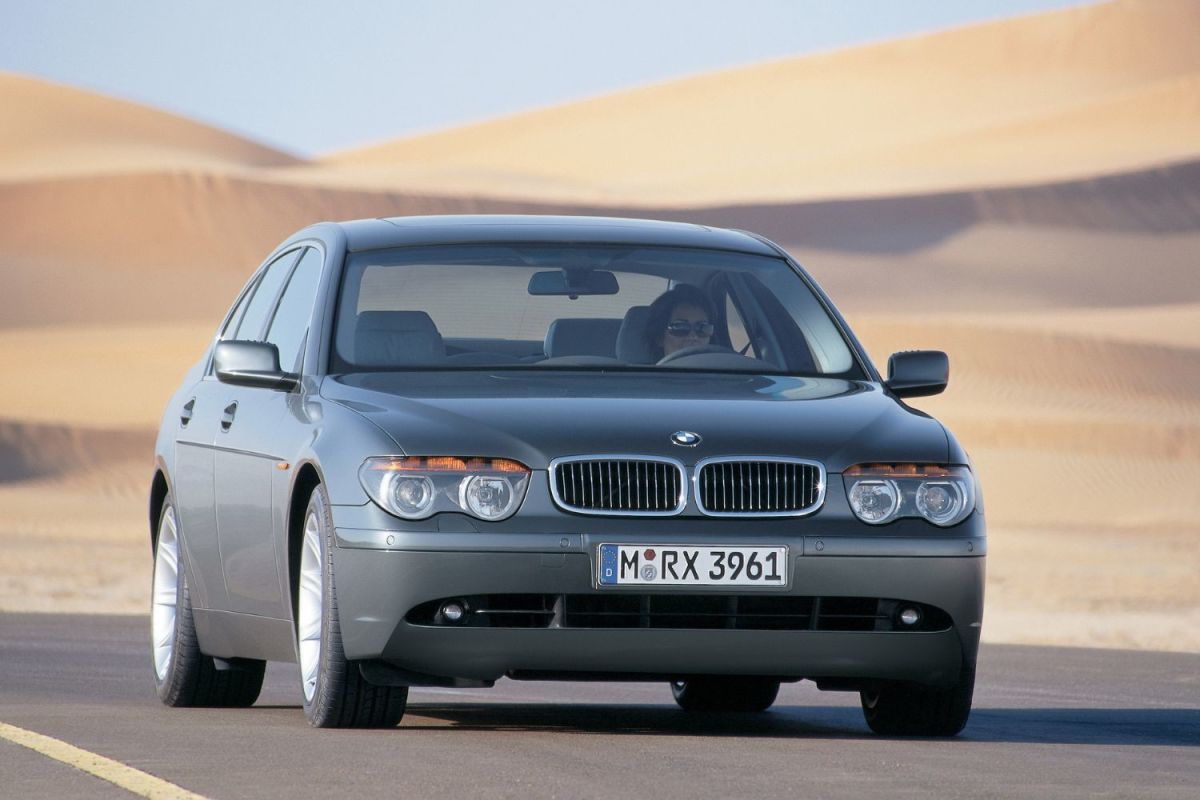
Flame Surfacing
The introduction of the E65 marked the end of BMW’s conservative (but timeless) redesigns, as it looked absolutely nothing like its predecessor. It was striking, avant-garde, and attention-grabbing on purpose. The complex curves that appeared on the car were dubbed flame surfacing, and it wasn’t coined by Chris Bangle. Legend has it that it was actually coined by a motoring journalist. As to who exactly it was remains unknown.
At the front, you have those ‘spooked’ headlights with the turn signals mounted above the ‘corona rings’ that are better known as ‘angel eyes.’ The hood surface had strong but subtle lines that led into the kidney grilles, while its flanks had deep character lines. But it was at the back, where all those acute angles intersected, that the most controversy arose. The term ‘Bangle Butt’ referred to its two-layer rear end, which lacked the hallmarks of traditional BMW design.
BMW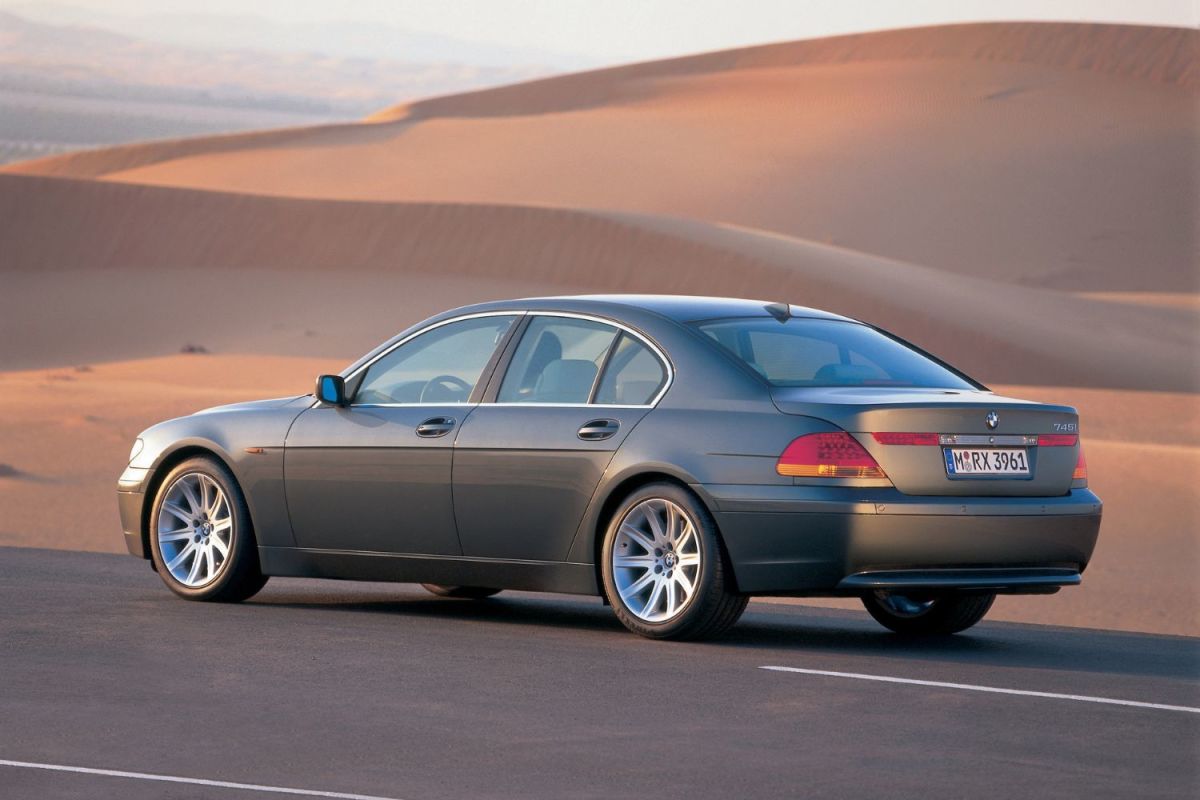
Wait ‘Til You Step Inside
But say you’re able to stomach the look at the time, you had to prepare yourself for the shock and awe of the interior. Again, it was a massive departure from the E38, and you now had a dashboard screen. A good chunk of the functions were moved to the iDrive system. Yup, this is where it all began for modern infotainment systems.
Another first was the raised center console, and the center stack wasn’t angled towards the driver as it had been over the past three generations. Also, the E65 was one of the first production cars to feature an electromechanical gear selector and an electronic parking brake. It freed up more room in the cabin, and coupled with the car’s larger dimensions, it was expansive in there. It even had a pop-out keypad for the onboard telephone.
At the time, iDrive was criticized for being obtuse and hard to operate. Then again, this was totally new territory, so there was bound to be a learning curve, albeit an extremely steep one. The reason? It was that scroll wheel and the functions on the screen.
BMW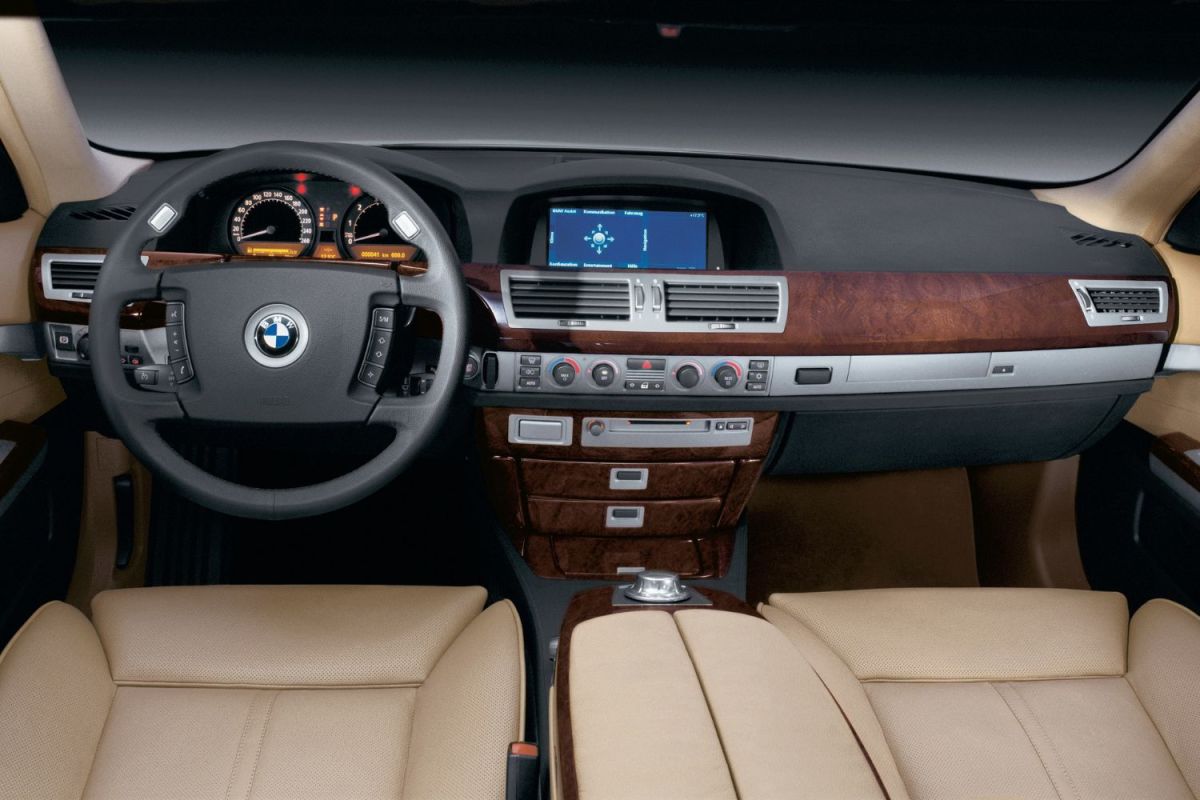
Course Correction
Sales were initially slow for the fourth-gen 7 Series, but picked up quickly as people got used to it. It was then revamped in March 2005 for the 2026 model year to address the initial criticisms leveled at it. The updated version was the first BMW model to use the term LCI (Life Cycle Impulse) for facelifted models.
The front end had a simpler set of headlights, the grille was widened, and the bumpers were reshaped. The sides were still identical to before, but the rear received a major overhaul. Its taillights were extended to fill in the blank spaces on the trunk lid.
Apart from the exterior changes, the iDrive system was simplified. It finally received supplementary hard buttons for those who inevitably got lost in the layers of sub-menus in the pre-LCI models. The interface was also enhanced to make it easier to use and interact.
BMW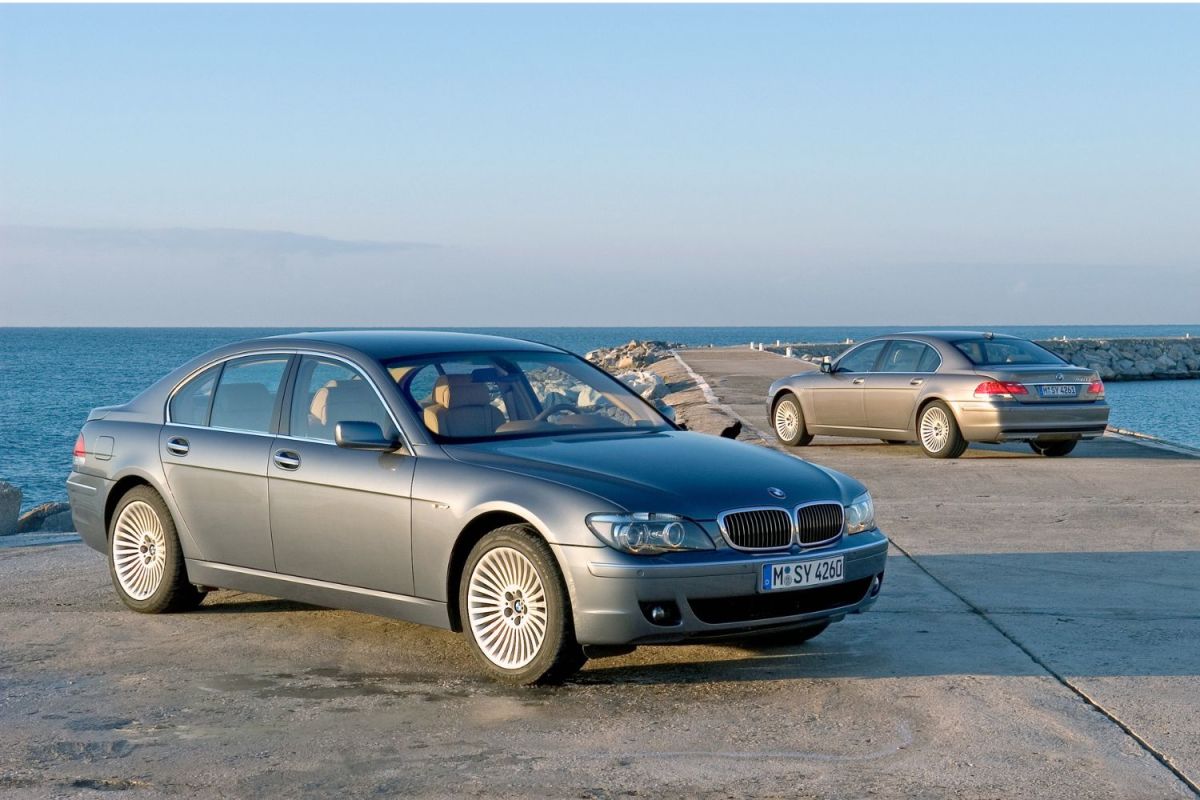
Legacy and Influence
Production of the E65 7 Series spanned from mid-2001 to late 2008. By then, its rivals, namely the Audi A8 and the Mercedes-Benz S-Class, had undergone comprehensive redesigns. The A8 of that era was conservatively styled beside the 7 Series, but Audi had started giving it a bolder look by adding that ‘goatee’ in 2005. The same year, the S-Class got more intersecting lines on its body for the new generation, and even a more subtle version of the ‘Bangle Butt’ at the back. The E65’s influence had started creeping in by then.
Its rivals also ended up with scroll wheels in their respective infotainment systems. More functions started to be integrated into the screen, and even the S-Class adapted a similar electromechanical gear selector. Even Lexus, the brand that shook up the Germans in the first place, started doing its own take on iDrive with the mouse-like Remote Touch system. Several years later, Mazda started putting scroll wheels in its cars, too. It’s nearly impossible to find a car without an infotainment system these days, and the system we know today was first seen in the E65.
BMW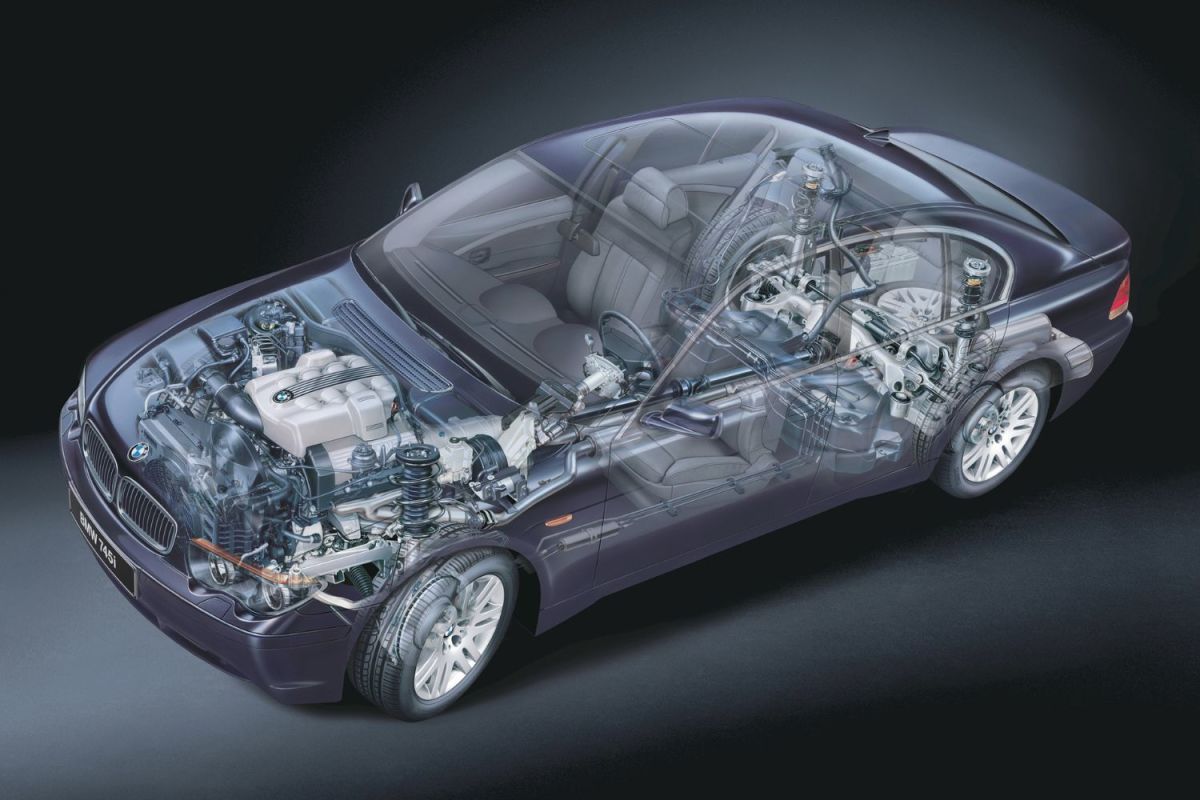
From the mid-2000s through the 2010s, we also started seeing non-luxury marques become bolder and more angular in their designs. The Japanese started getting in on it with cars like the Camry and Accord from 2007 and 2008, respectively. The South Koreans also hopped on the trend, and if you need proof of that, just look at Hyundai‘s designs from 2010 until now. If anything, the E65 emboldened automakers to take even greater risks with design, inside and out. It set a precedent for many design trends that were formed in the 2000s that eventually made their way into the 2010s.
If you look at an E65 today, the design still holds up, especially the LCI versions. The same could be said of other Bangle-era models, such as the E60 by the late Davide Arcangeli and the E90 by Joji Nagashima. BMWs from that time were bold, yet somehow timeless, which is a huge achievement in itself. The company entered an era of relatively conservative designs after that, but then doubled down on bolder and somewhat controversial designs in the last couple of years. As BMW enters a new era with the Neue Klasse models, it’s as if history is repeating itself after a quarter century.
BMW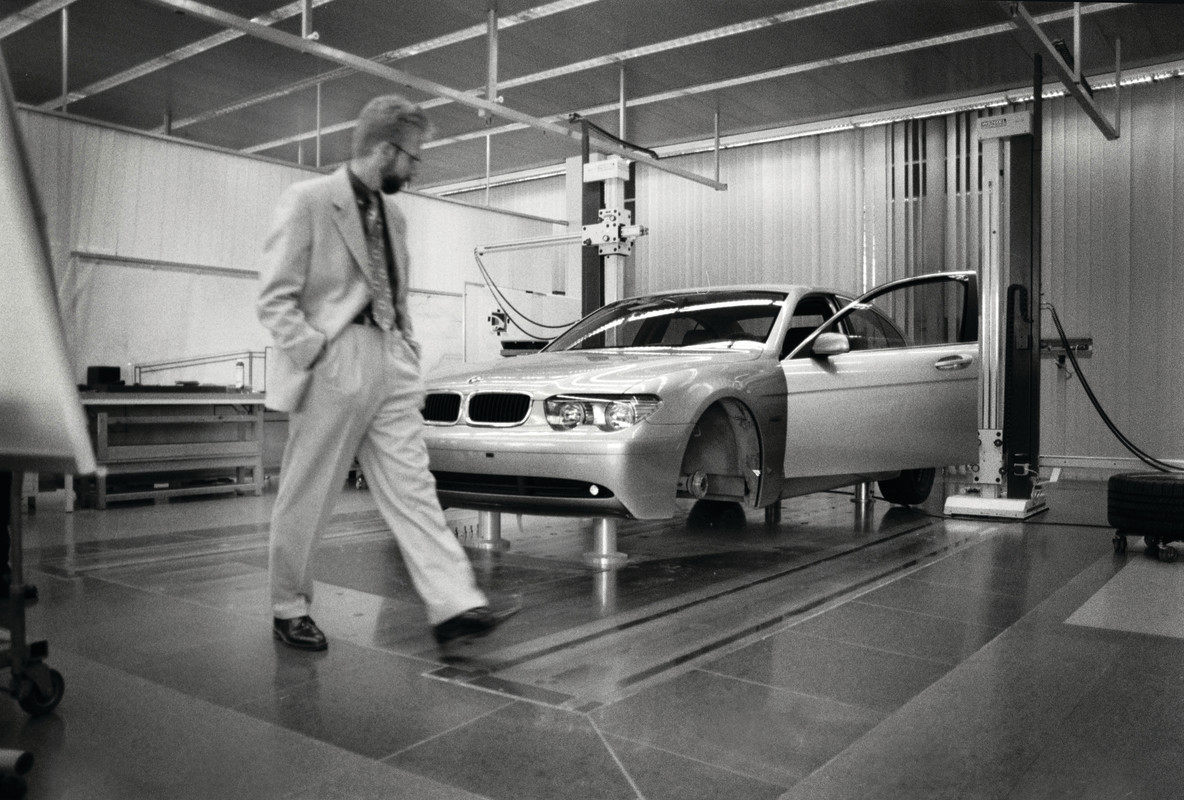
BMW