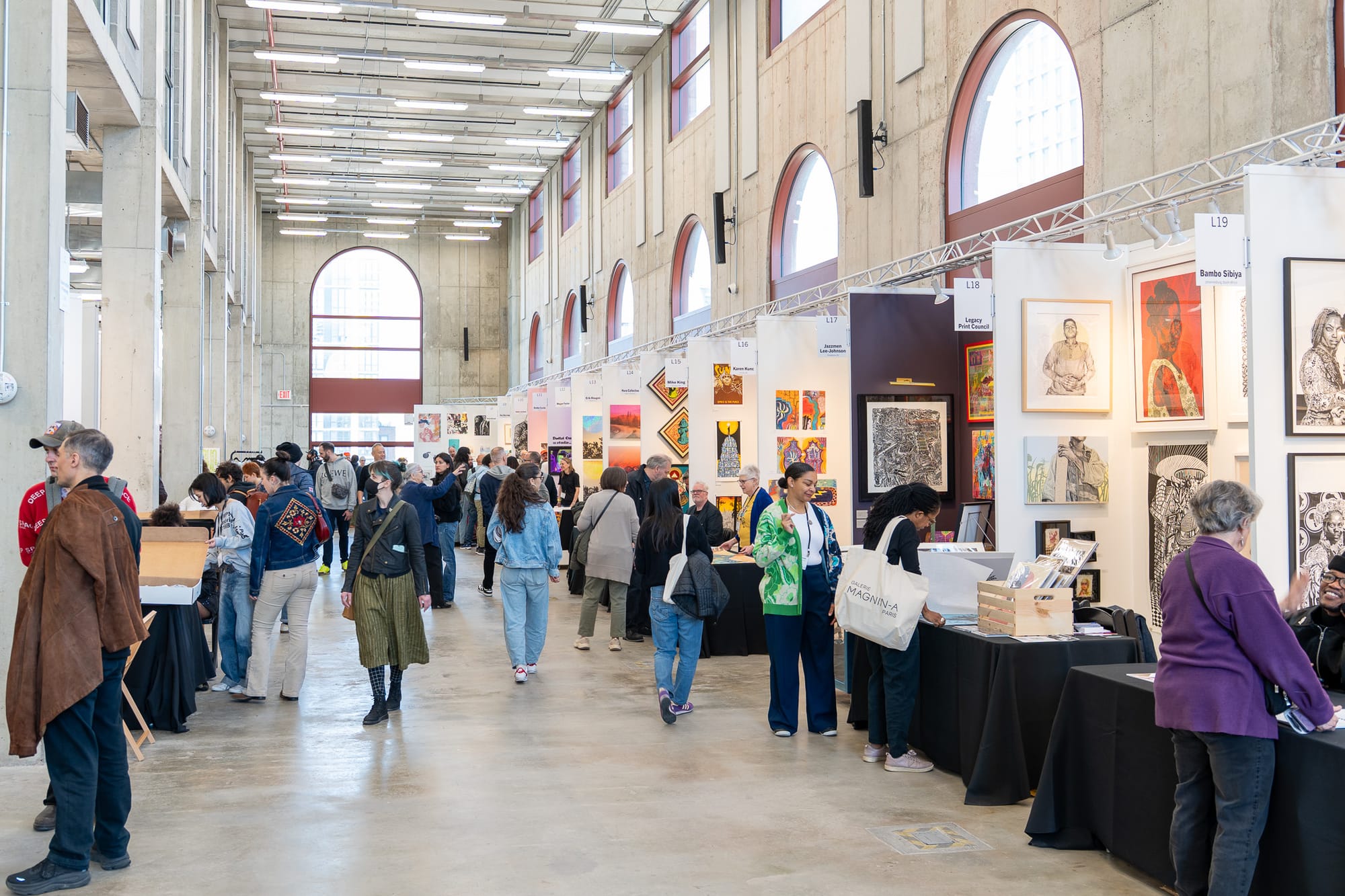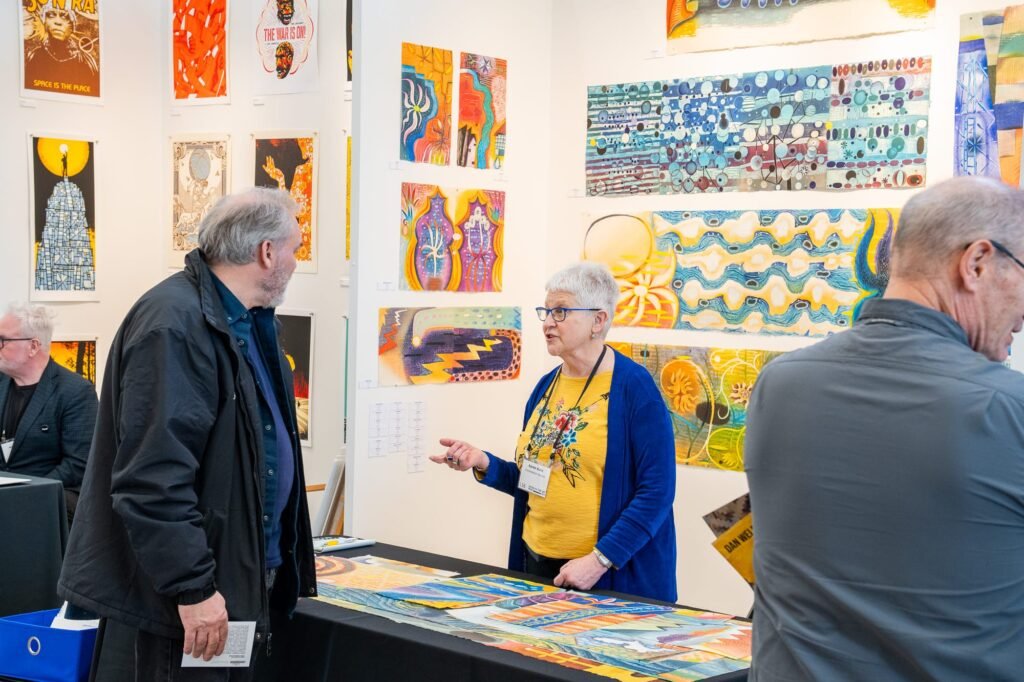
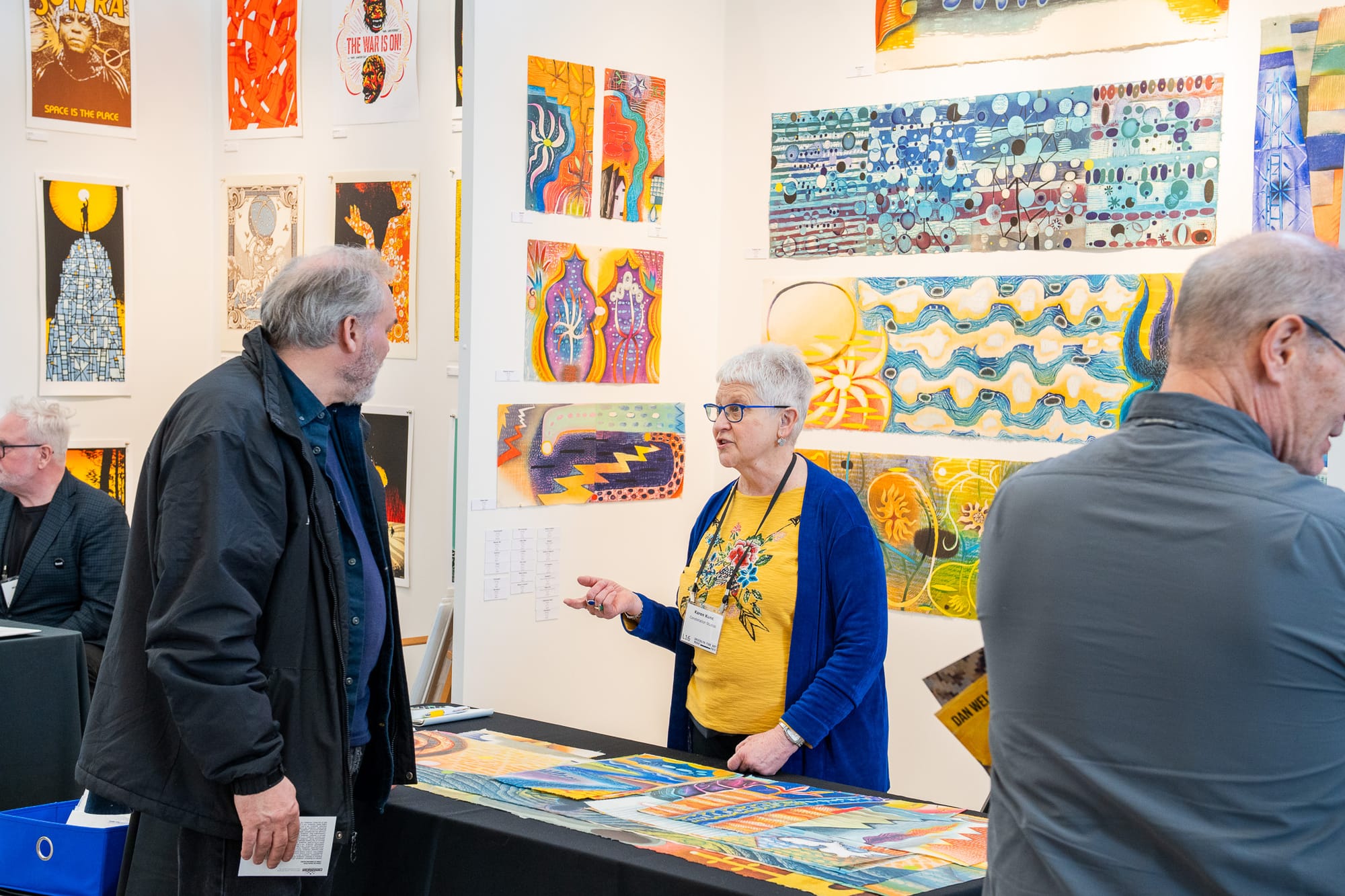
Since attending the inaugural edition of the Brooklyn Fine Art Print Fair (BFAPF) at Powerhouse Arts last year, I’ve been eager to witness how this young event evolves in real time. Braving New York’s spring art fair season for a second year, BFAPF is anchored by a global community rooted in passion, partnership, and an inextinguishable fervor for pushing the envelope.
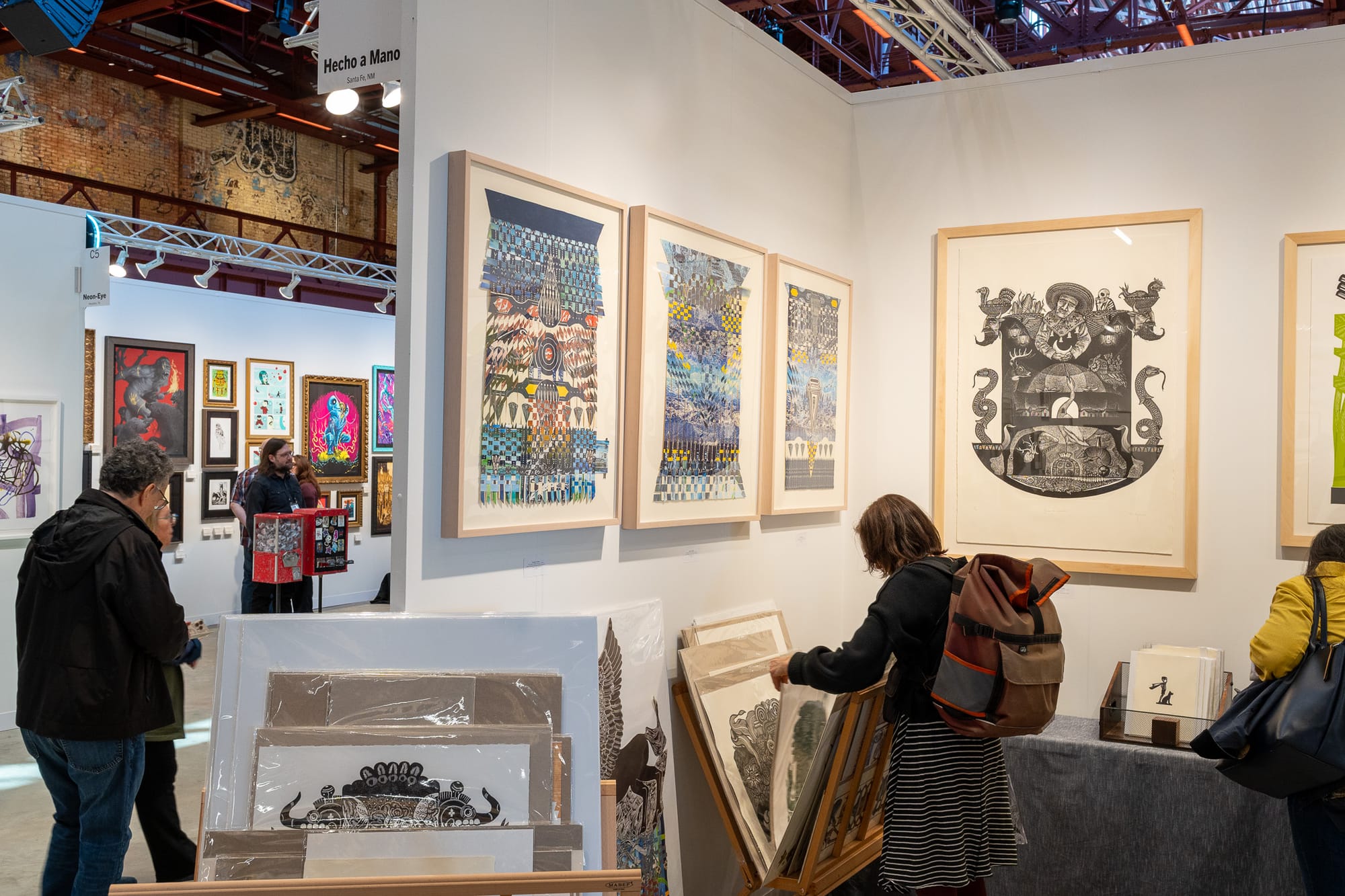
Open through Sunday, April 12, the second iteration of BFAPF has expanded to include over 60 local, domestic, and international exhibitors including independent print shops, prominent publishers, academic printmaking departments and clubs, self-represented artists, and established galleries. A mix of returning participants and debut exhibitors, a curatorial focus on both timely and timeless work, and experimental mixed-media practices expanding the horizon line of printmaking made the fair feel simultaneously fresh and familiar.
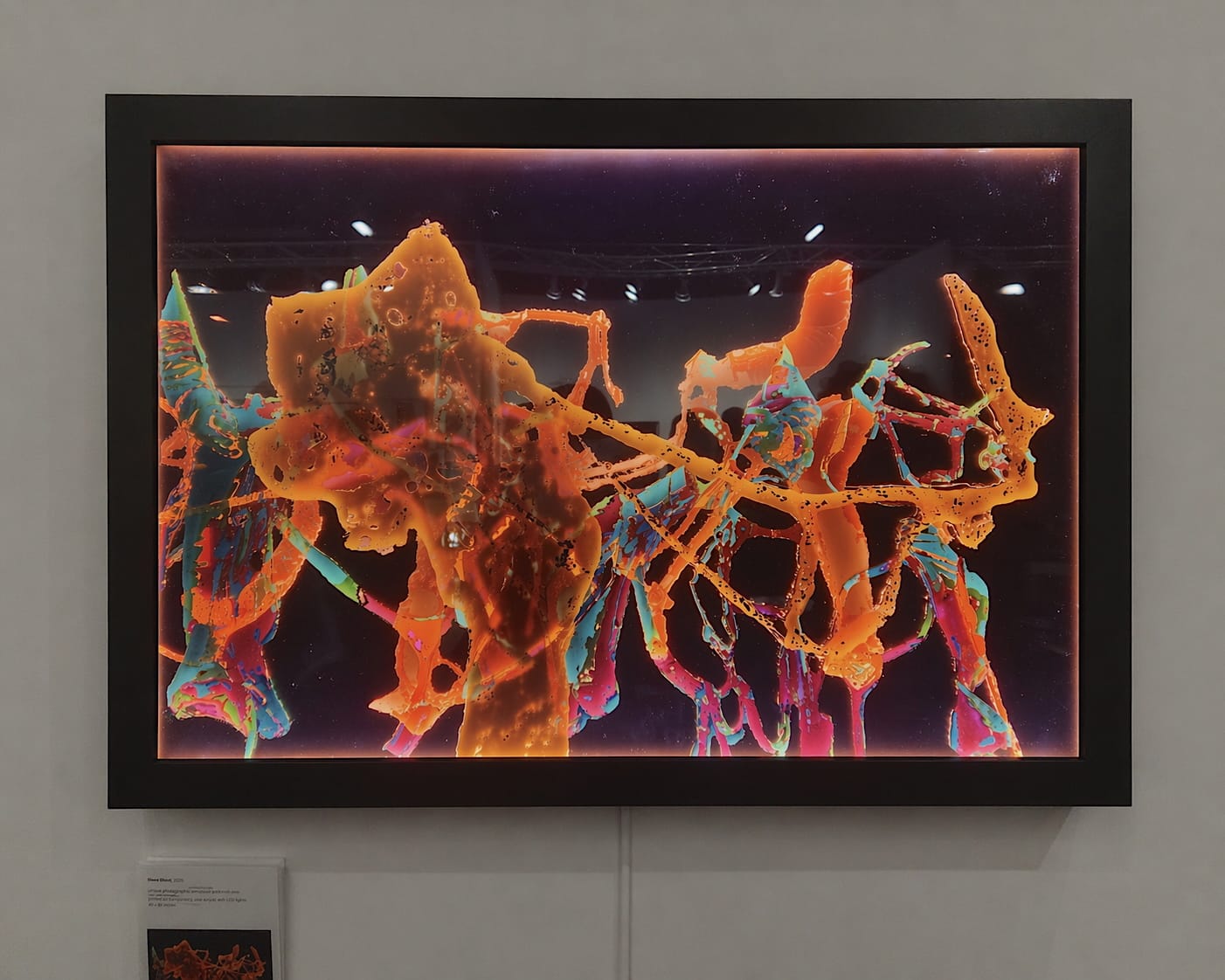
Like a literal moth to a lamp, I gravitated toward a curiously glowing display at the Shoestring Press booth. Conceptualized by Gaelyn and Gustavo Aguilar of TUG Collective, executed by Shoestring Press’s Allison Carter-Beaulé, and custom-framed by the team at Griffin Editions, “Shape Shift” (2026) is a layered screenprint on several sheets of plexiglass illuminated by an LED light.
The collective told me that the work, which is part of an ongoing series begun this year titled Don’t Forgive My Hands, was inspired by veteran and poet Yusef Komunyakaa’s Warhorses (2008) — a collection of poems trying to capture how humans have weaponized objects for violence.
The source image depicted men on horseback with their steeds fashioned in heavy combat equipment, though the horses themselves have been removed from the composition. Of the men’s bodies, only the appendages remain, emphasizing that they’re the instruments harnessing horsepower and developing technology to enact harm.
Comprised of eight layers of plexiglass, the work invokes the Seventh Generation principle — a Haudenosaunee philosophy rooted in considering the impact your choices will have on the well-being and sustainability of the seven generations that will succeed you.
“That eighth layer is what’s left up to us as individuals engaging with this piece,” Gaelyn told me. “This is a piece that is dealing with history. What is the responsibility that we as individuals are going to take to make sure that this history is not erased? What are the choices we are going to make to prevent the perpetuation of violence?”
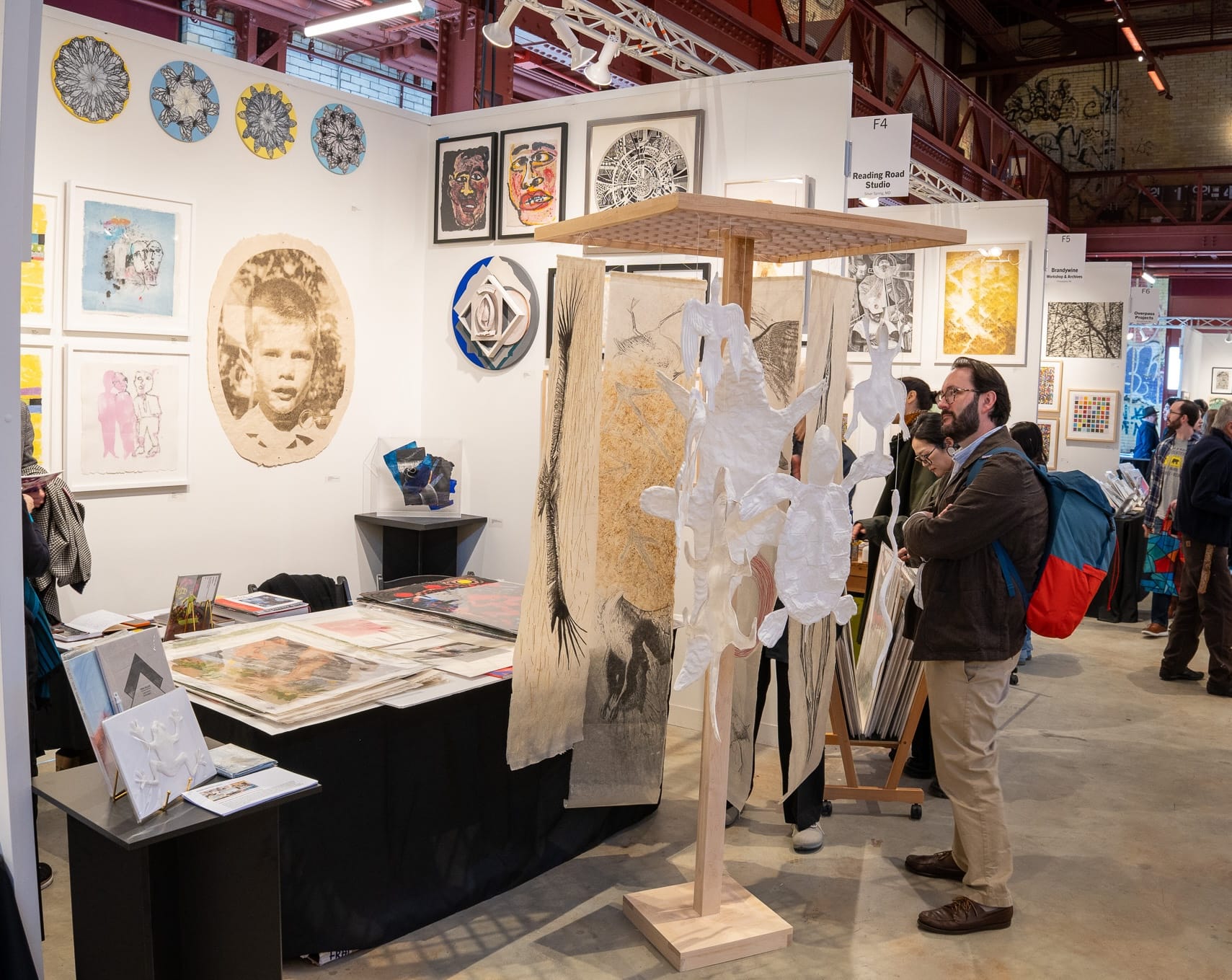
Equally salient, both visually and conceptually, were Maryland sculptor June Linowitz’s molded abaca paper renditions of extinct and critically endangered animal species. Hanging ominously at the edge of the booth for Reading Road Studio, based in Silver Spring, Maryland, Linowitz’s dangling paper sculptures “ are meant to look like trophy rugs or roadkill,” as she put it, made in response to the loss of biodiversity worldwide.
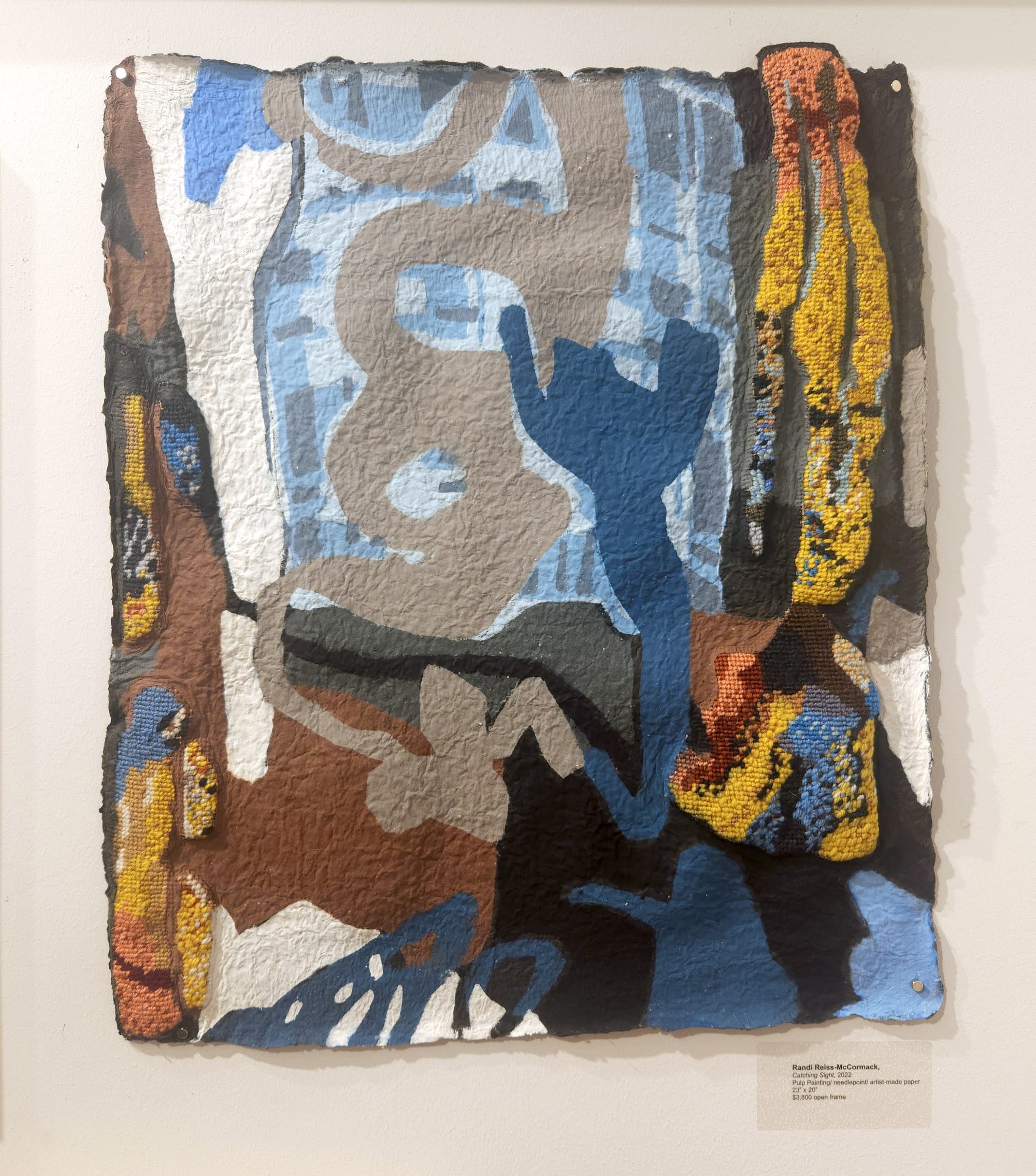
Artist and curator Helen Frederick, who opened Reading Road in 2016, told me it was the studio’s first time presenting at the fair and noted that it was a “very strictly juried event” this year. Frederick brought a variety of mixed-media prints and paper art that expanded my understanding of the craft’s limits, including Randi Reiss-McCormack’s paper pulp paintings with needlepoint adornments.
Book art and the science of paper are highlighted during this year’s BFAPF, which I appreciated, as I’ve often found paper to be relegated as a mere substrate during most fairs … including Art on Paper.
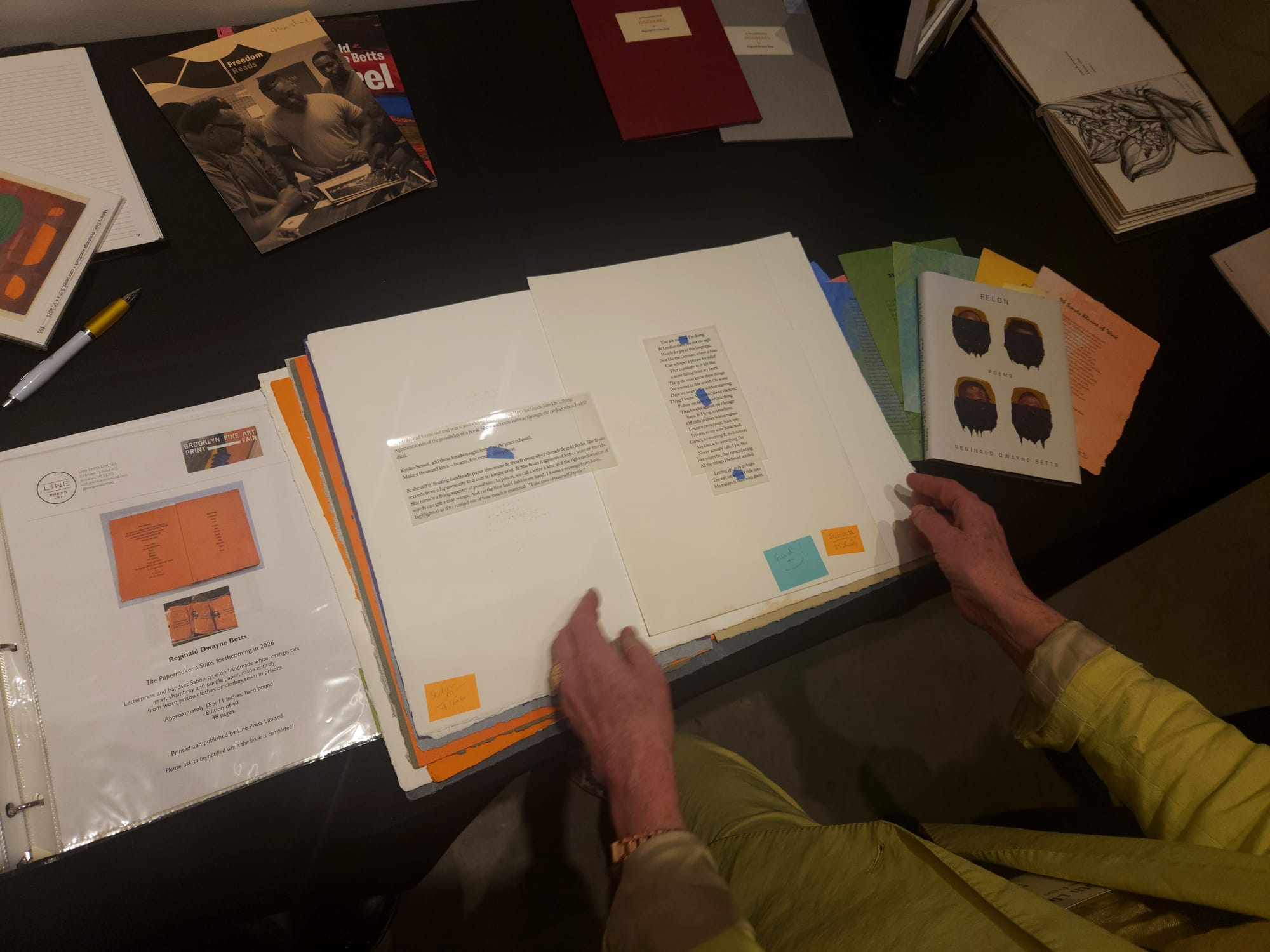
The makings of The Papermaker’s Suite (2026), a new collaboration between master printer Ruth Lingen and Reginald Dwayne Betts, a 2021 MacArthur Fellow and a practicing lawyer focused on prison reform advocacy, stood out to me the most. At the shared booth between Lingen’s Line Press Limited and Brooklyn Inc., the master printer paged through the blank sheets that she made from socks, sweatpants, towels, and other used materials sourced from Betts’s incarcerated friends. Betts’s poetry was affixed to different pages on printed acetate, soon to emblazon the macerated fabrics associated with the formerly incarcerated writer’s own time in the system.
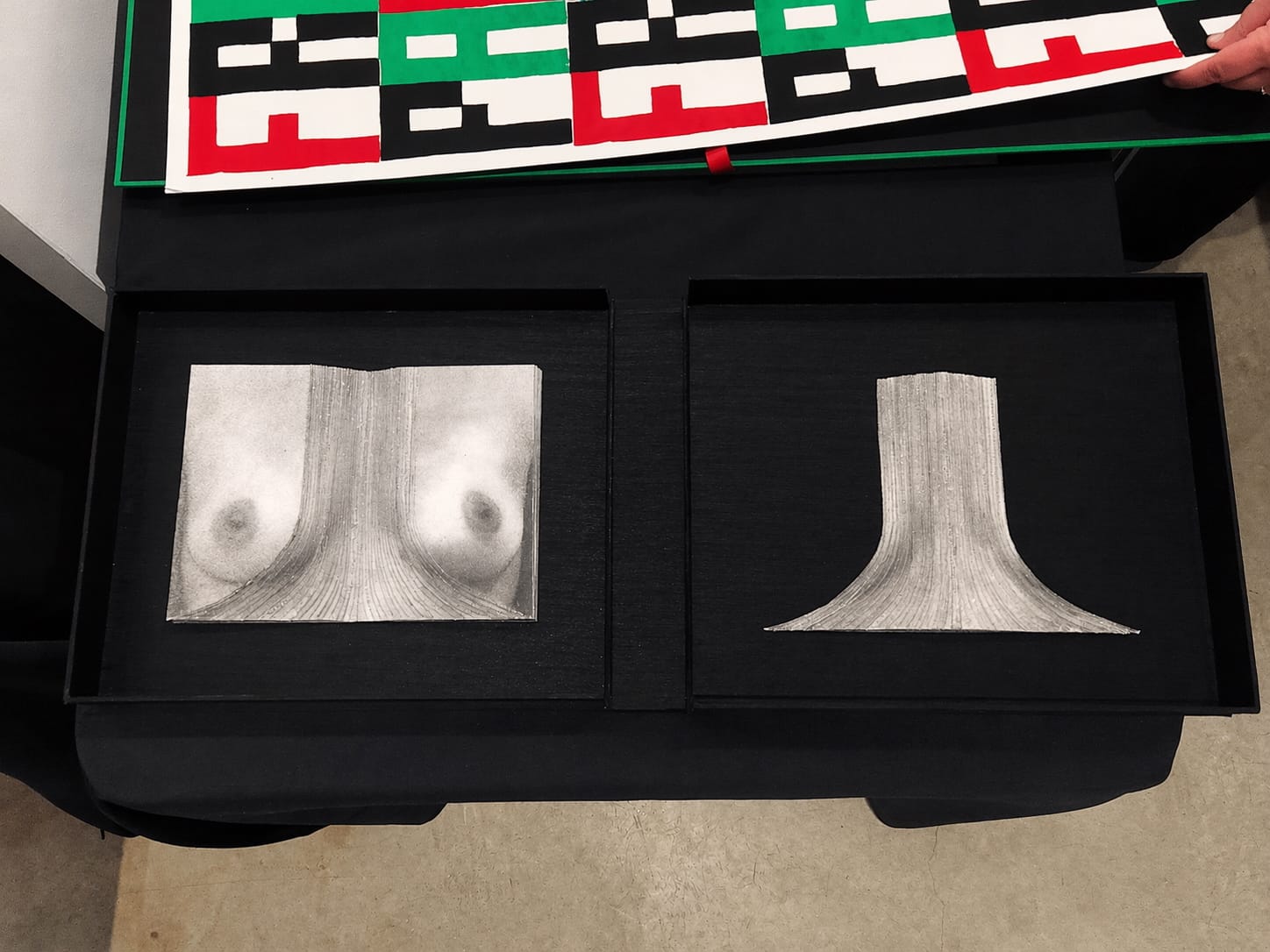
On the opposite table was Iranian-American artist Golnar Adili’s “A Thousand Pages of Chest in a Thousand Mirrors” (2024), simultaneously functioning as a book and a diptych. From a stack of prints depicting her breasts, the artist carved out the valley between them and glued that excised paper together, forming a shape that resembles the sloping silhouette of the Azadi Tower in Tehran. The excised “flesh” nestles back into Adili’s body when the book is closed, making her chest whole again.
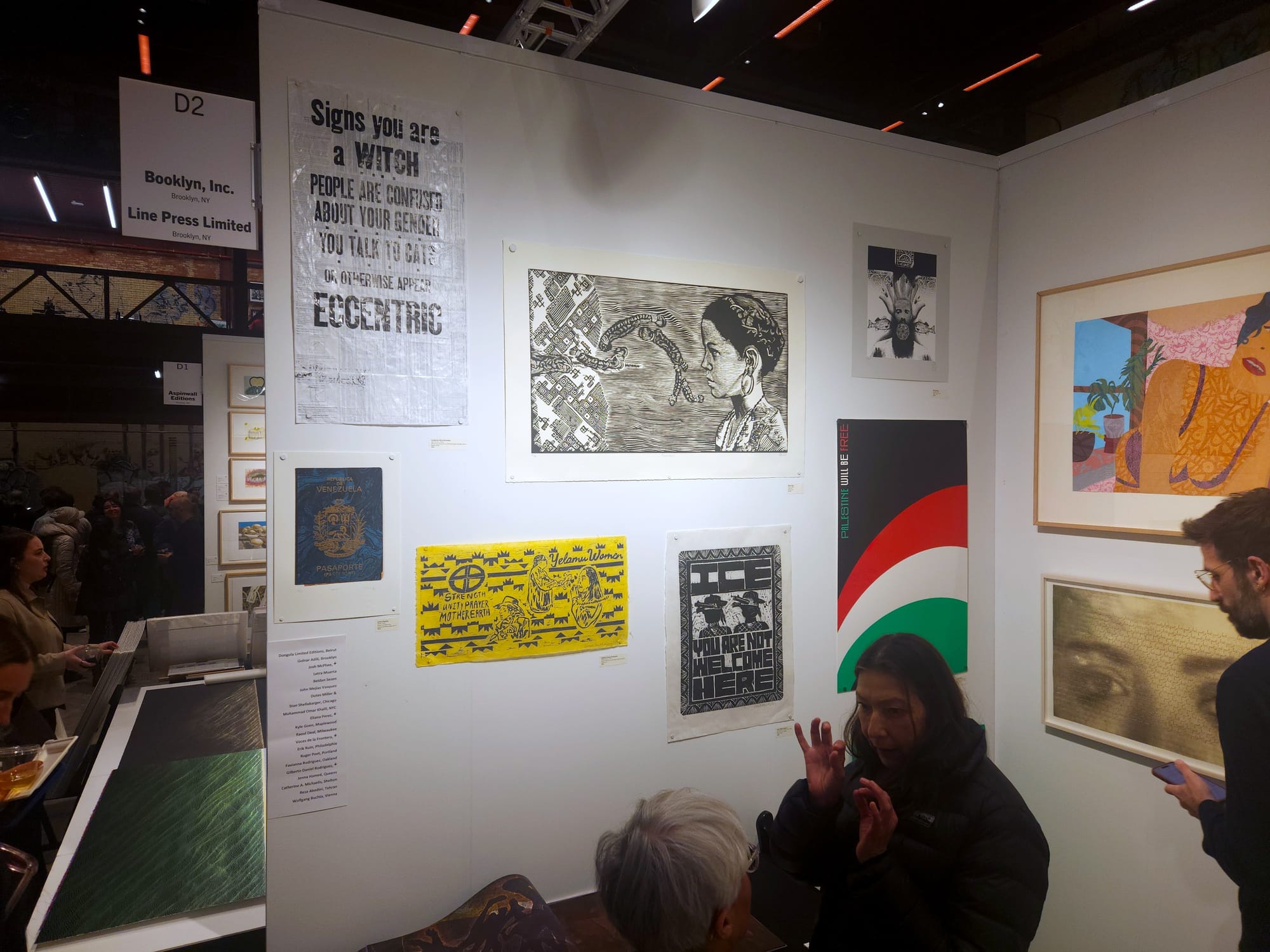
Shaking off any initial caution from last year’s beta test, the BFAPF has charged forward and made itself a space to showcase the radical history and present of printmaking. Work about Palestinian liberation, Venezuelan national pride despite American intervention, and protest art about ICE were front and center at the Brooklyn Inc. side of the booth.
While I loved that the independent sellers’ booths had walls for their displays this year, I wished that they and the academic departments were more integrated with the other fair exhibitors, as they were in the inaugural edition. That sense that they were equally as important as larger commercial publishers made the event feel special.
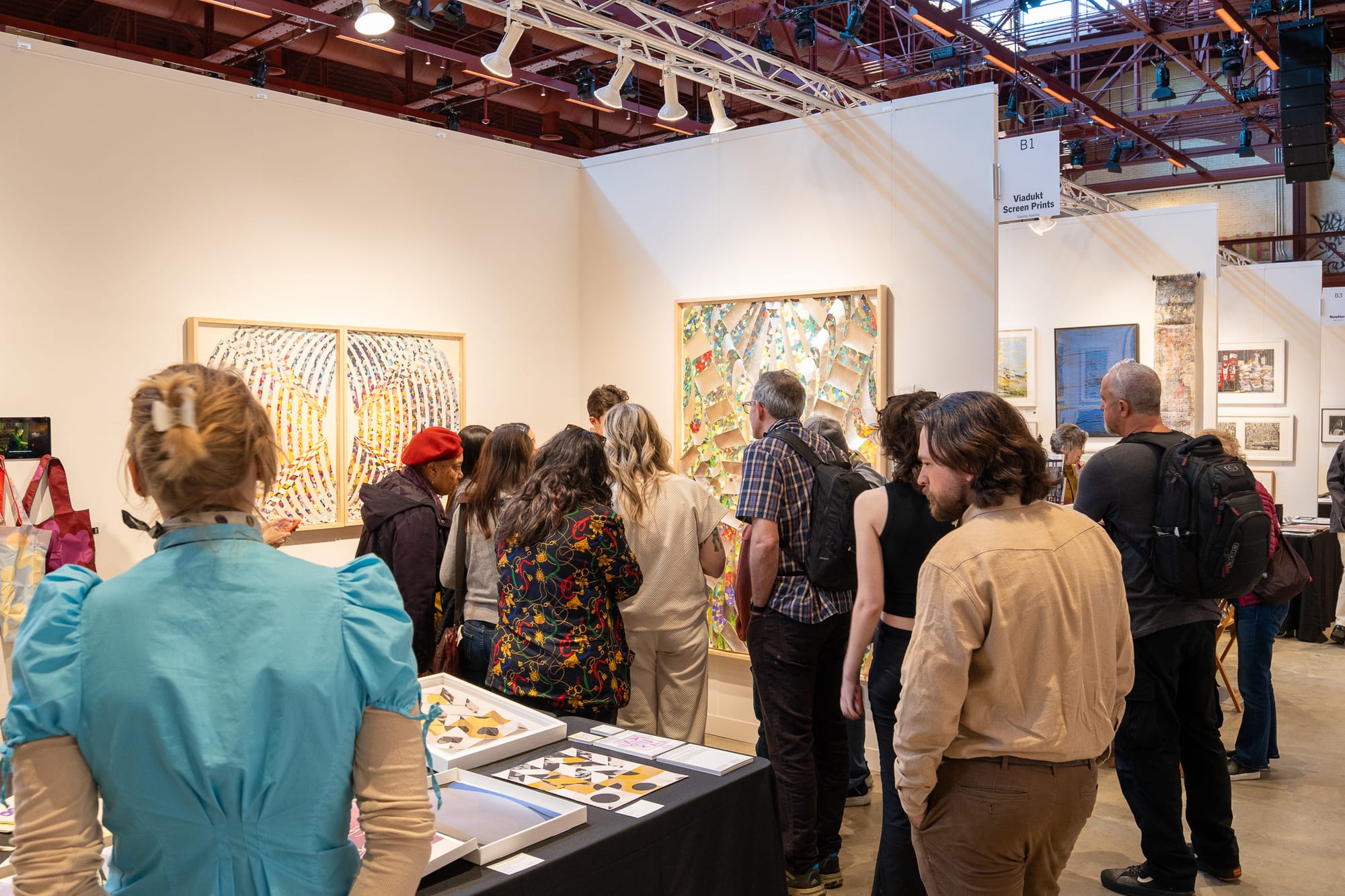
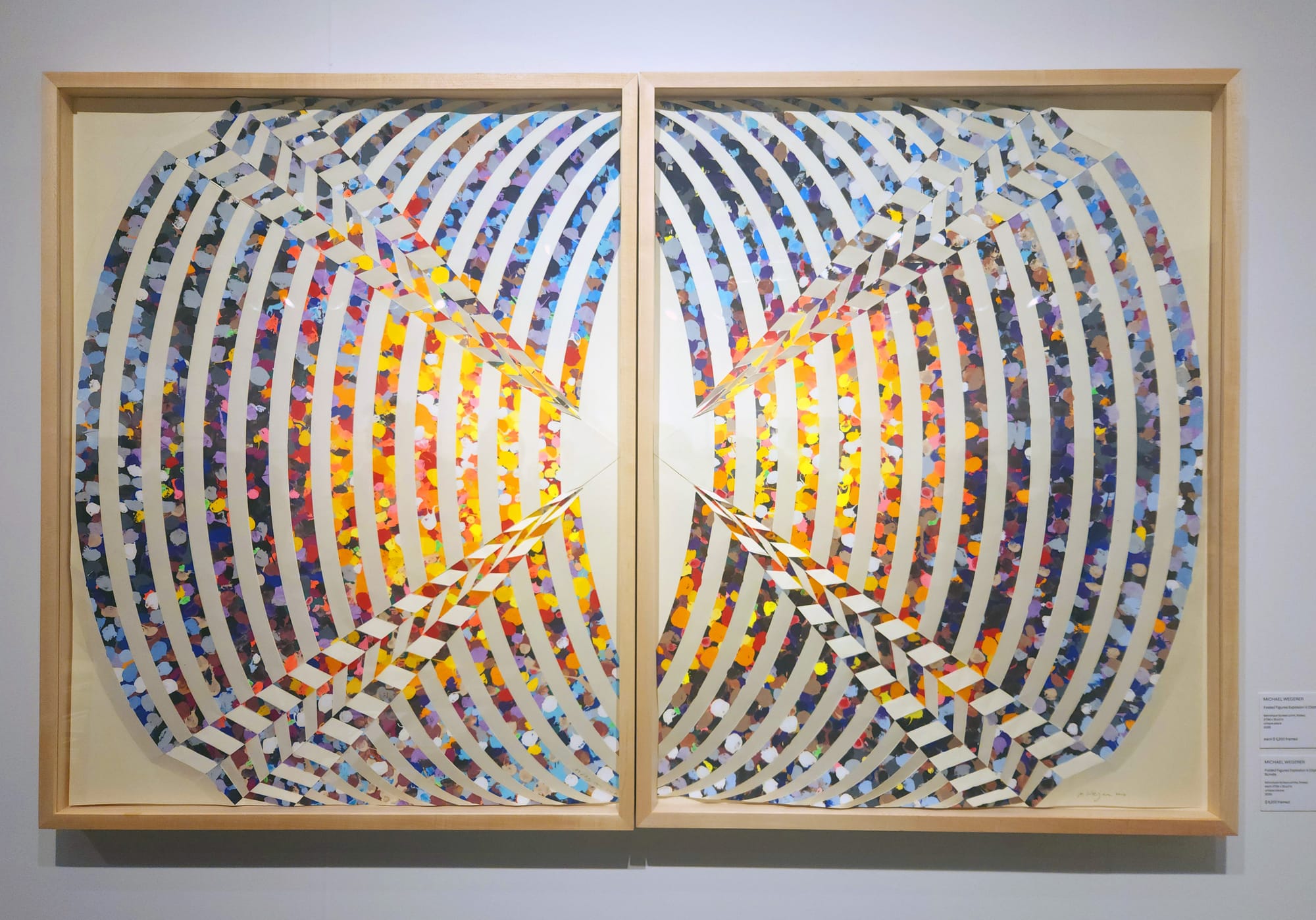
Nevertheless, the number of return exhibitors was as heartening as the fair’s growth. At Austria’s Viadukt Screen Prints booth, I asked Michael Wegerer how he felt about the fair this year.
“There’s a reason we came back,” he said.