When Ordinary Becomes Iconic
On the surface, the Ford Crown Victoria was as ordinary as it got. Yes, it has a V8 and rear-wheel drive, but it had zero performance intentions whatsoever. Besides, the reason it had those was that it followed the tried-and-tested recipe for traditional, full-size American sedans that rode on a ladder-frame chassis.
It’s a dinosaur, and a relic from days gone by. The fact that its chassis wasn’t changed from the Carter to the Obama Administration tells you just how old it was until it was ultimately retired in 2011. And yet, the ‘Vic is a well-loved car with legions of fans from coast to coast, and even around the world.
Of course, the most well-known version of the Crown Victoria was the one made from 1998 to 2011. That’s no surprise, given that every police and taxi agency had these in their respective fleets back in the day. It was the de facto cop car and taxicab, and its headlight pattern was permanently etched in everyone’s minds. It gets all the attention, yes, but there’s one version of the ‘Vic that we say deserves a little more love and appreciation.
Ford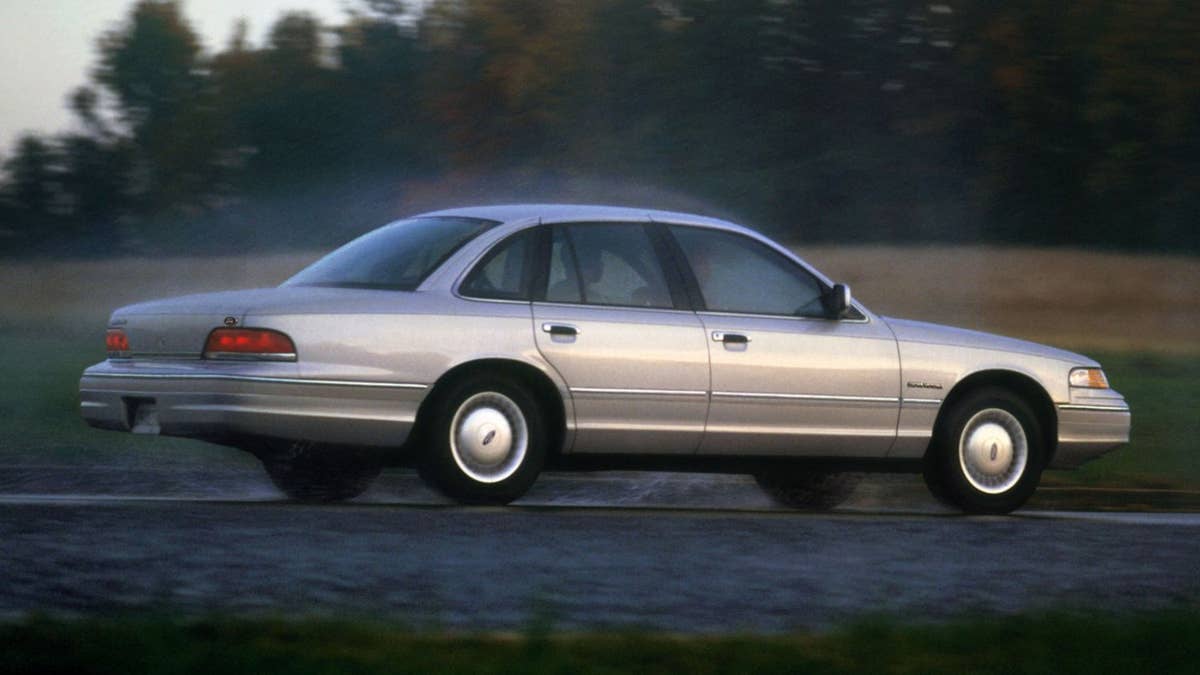
The Aero Vics of the ’90s
The name Crown Victoria was first used in the ’50s as the Fairlane Crown Victoria. It was used for only two model years, from ’55 to ’56, and the name would return in 1980 as the top trim level on the now-downsized Panther-platform Ford LTD. In 1983, all full-size LTDs were renamed LTD Crown Victoria to differentiate them from the smaller midsize versions, a designation that lasted until the model was retired in 1991.
In 1992, the LTD prefix was dropped to usher in a new era of full-sized Ford sedans. Now just called Crown Victoria, it was a radical departure from its boxy predecessor. Carrying the internal code of EN53, its arrival came in at the right time, too, as General Motors overhauled its range of full-sized B-Body models that consisted of the Chevrolet Caprice, Buick Roadmaster, and the often-forgotten Oldsmobile Custom Cruiser.
Ford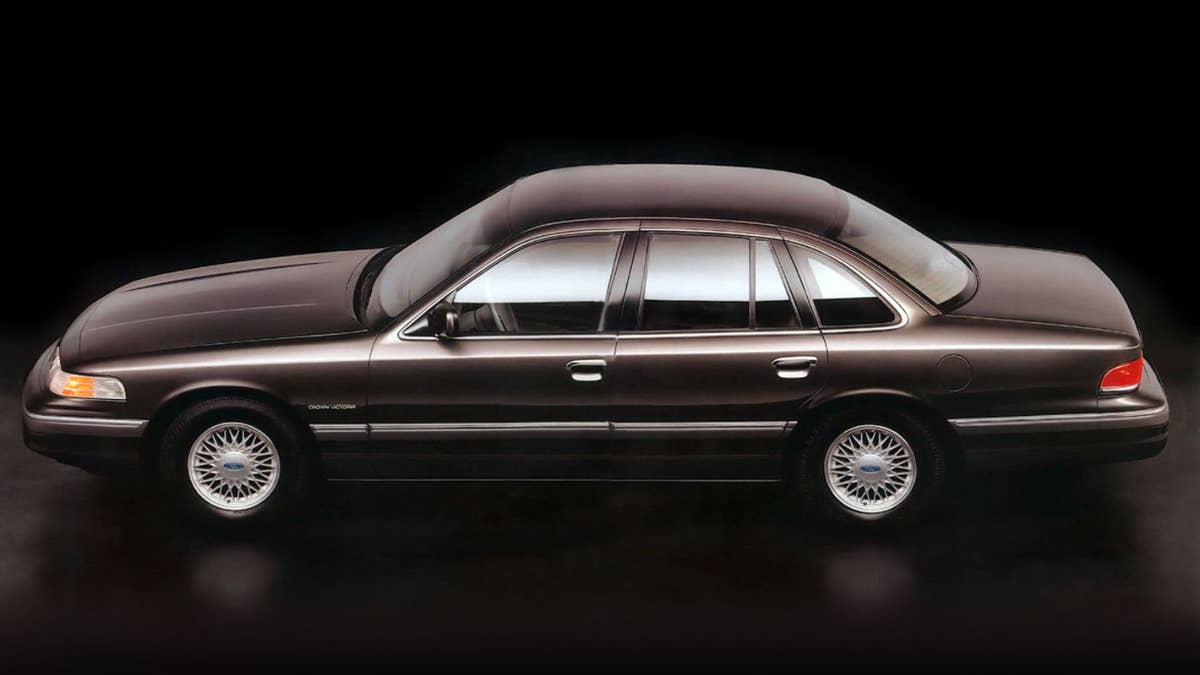
A Gamble that Paid Off
The early ’90s were an interesting time for traditional large American cars. It was initially thought that both Ford and GM wouldn’t build these body-on-frame sedans past the ’90s, but sales proved strong enough through the ’80s to keep them on the road a little longer. Both companies made big gambles on design, each taking vastly different approaches.
In the case of the Crown Victoria, it picked up where the Taurus left off, with a smooth, aerodynamic design. It’s that very reason why these were called the Aero Vics, and design elements from its smaller sibling were pretty evident. It had a six-window arrangement, slim headlights, and the no-grille look that automakers tried to make a thing in the early-’90s for the sake of aerodynamics.
Despite criticisms of the rather blank-looking nose, the first full year of Aero Vics sold well for its class. If anything, its redesign was better received than the Chevrolet Caprice, although we think both look great now. Maybe it’s the rose-tinted glasses.
Ford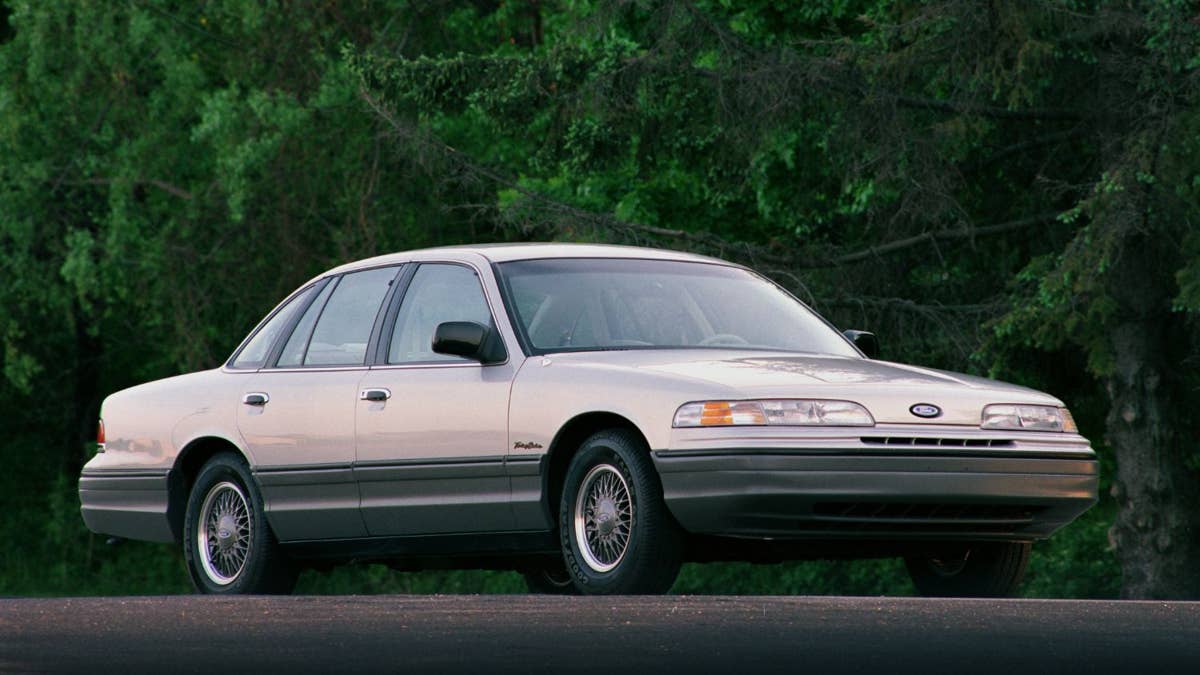
The Specs
Although the looks are very ’90s, its chassis dates back to 1979. The Panther platform was a response to GM’s downsized B-Body models from 1977. While the frame was, indeed, the same, Ford did more than enough changes to the chassis to make it drive and ride like a more contemporary vehicle. That same frame would continue to receive updates even after this generation was replaced.
Its new engine was a big deal, too. For the most part, the LTD Crown Victoria came with a 5.0-liter V8 with 150 hp in its final iteration. There was also a 5.8-liter option with, hold on tight, 180 hp, typically reserved for law enforcement applications. The new Crown Vic (as well as the Mercury Grand Marquis) benefitted from the new 4.6-liter Modular V8, and despite the smaller displacement, made more power right out of the box with 190 hp.
Okay, it’s not a lot of power by today’s standards, and it’ll easily be dusted off the line by a modern-day Honda Civic. But one has to remember that power ratings were far more conservative over 30 years ago. Still, if 190 hp wasn’t enough, a dual-exhaust option bumper that up to 210 hp. As for trims, there were base, LX, and, for 1992 only, the Touring Sedan. Of course, there was also the Taxi Package and Police Interceptor.
Ford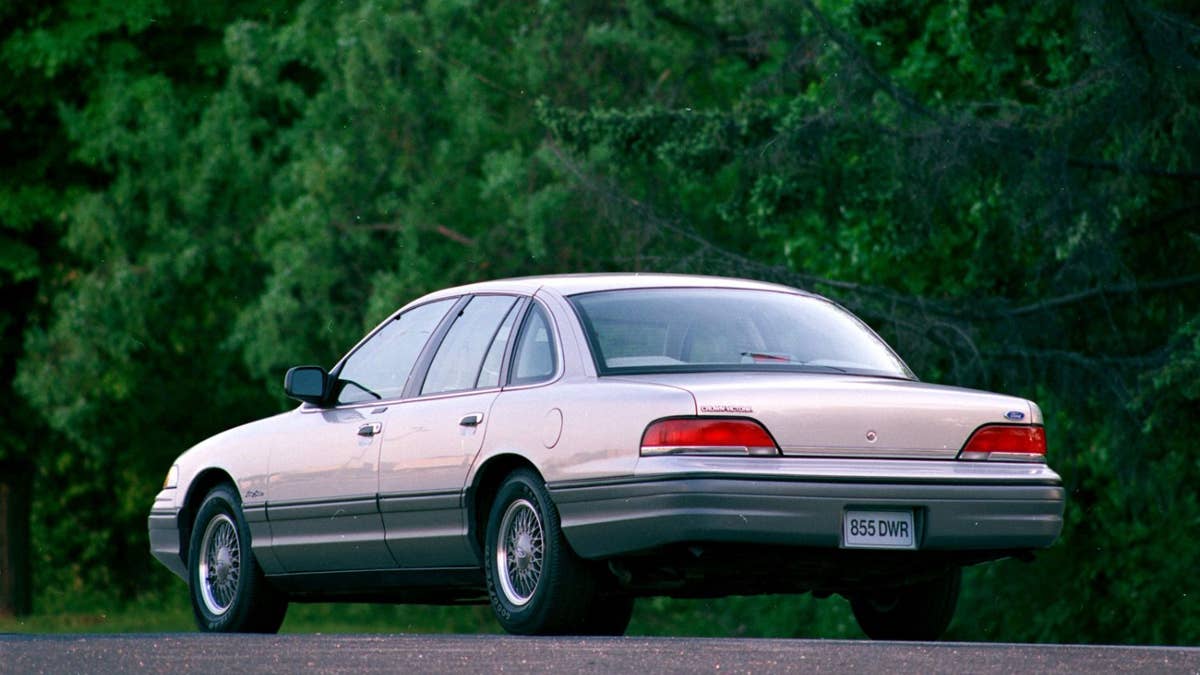
Constant Updates
Crown Victoria buyers who aren’t cab drivers or police officers are typically more conservative. Hence, in 1993, Ford added a grille to the car to address those who didn’t like the look of the first batch of models. At the rear, it also gained a reflector above the trim piece. Oh, airbags and cupholders were added, too.
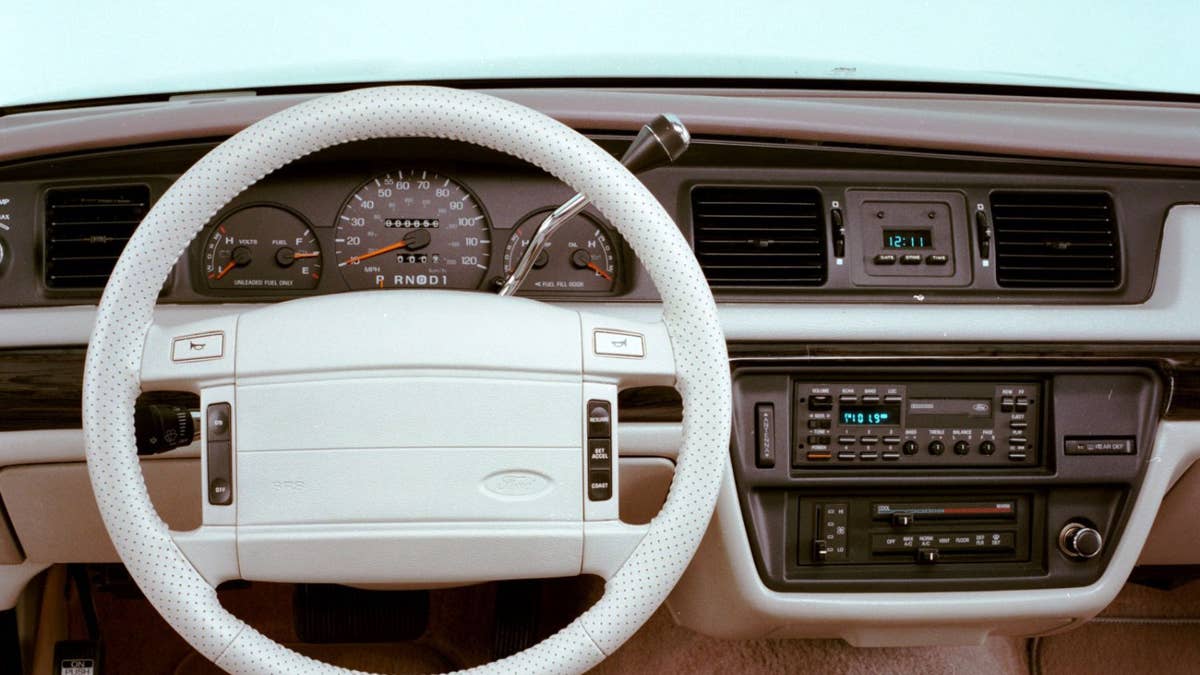
However, there were far greater changes made for ’95. Its interior was now aligned with the Grand Marquis, and the dashboard would remain largely unchanged until the end of the Crown Victoria’s production. Towards the end of ’95, it also received a new four-spoke steering wheel that better integrated the airbag. The front grille was revamped, along with a much larger set of tail lights, a repositioned license plate holder, and new wheel designs.
’96 saw a minor bump in torque ratings. Both single- and dual-exhaust models received an additional 5 lb-ft, with ratings of 265 lb-ft and 275 lb-ft, respectively. Horsepower, however, remained the same at 190 hp for single-exhaust and 210 hp for dual-exhaust versions.
Ford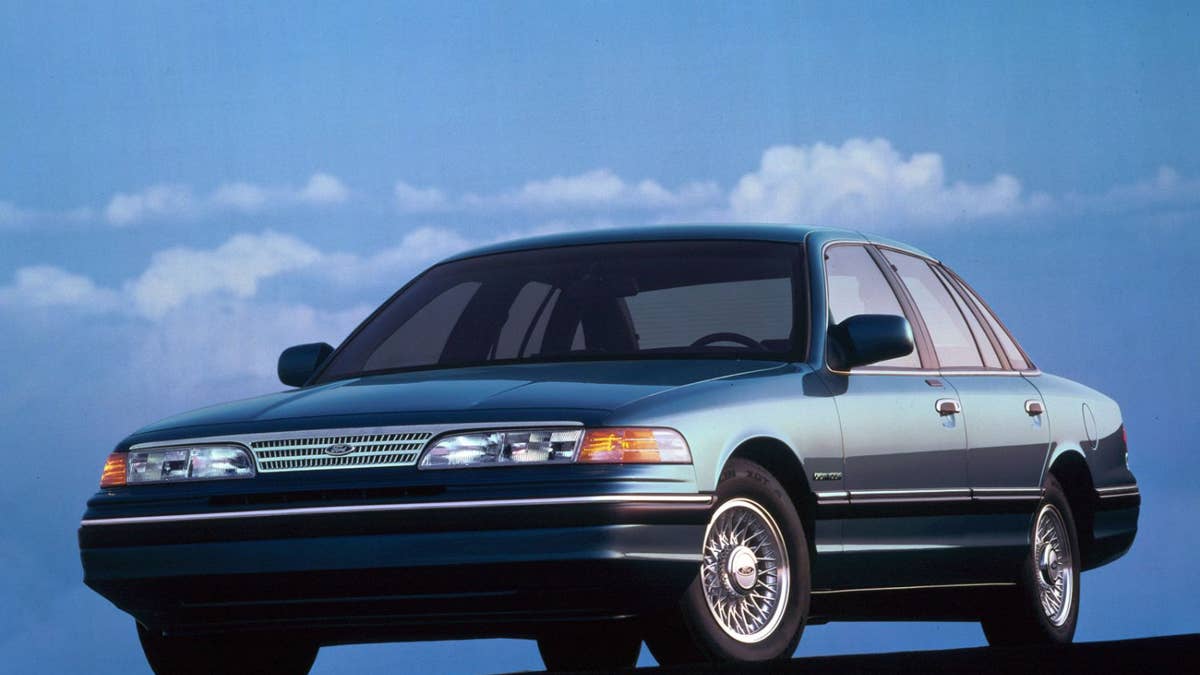
Why Was it (Mostly) Overlooked?
It’s not that the Aero Vics sold poorly. For the most part, it consistently sold over 100,000 units throughout its production from 1991 to 1997. Total production was estimated at 630,000 cars over its life. But perhaps the biggest problem of the first standalone Crown Victoria was the lore surrounding the Chevrolet Caprice from the same era.
The last (real) Caprice’s legacy was practically built upon the 5.7-liter LT1 engine. Despite being introduced later in its life, it boosted the car’s image, and the Impala SS further elevated its status. Law enforcement waxed lyrical about it too, relegating the Crown Victoria of the early to mid-90s as ‘the other cop car.’ The Aero Vic briefly had its moment in the sun in 1997, after the Caprice was discontinued a year prior, but by then, the newer, now more familiar version of the Crown Vic was about to arrive for 1998.
Still, if that version of the Crown Victoria flopped, the legacy of that name might be entirely different today. It wouldn’t be held in the same reverence, and there wouldn’t be repeated calls to bring it back. The Aero Vics walked so that the second-gen Vics could run and establish themselves as an icon.
With Ford planning to bring back sedans at some point, perhaps there’s room for a new-age Crown Victoria. For as long as it’s large and rear-wheel drive, we’re good with that – anything but bringing back that nameplate as a crossover.
Ford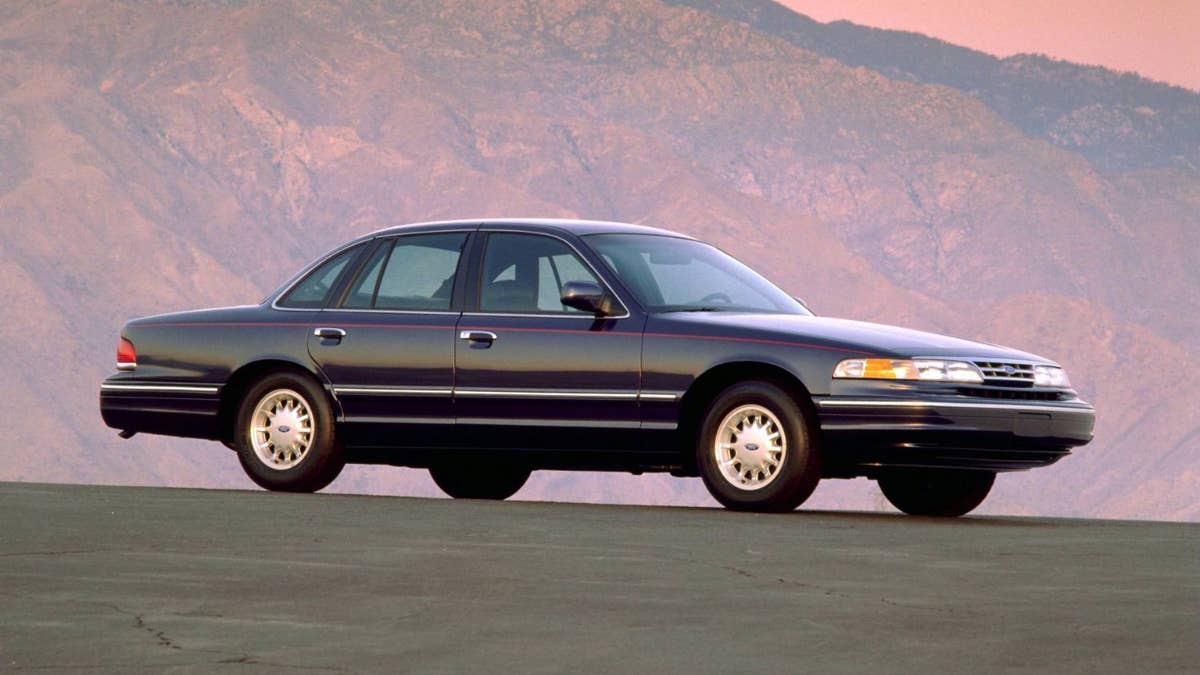
Ford