Research & Developments is a blog for brief updates that provide context for the flurry of news regarding law and policy changes that impact science and scientists today.
Tomorrow, the EPA will revoke the 2009 Endangerment Finding, finalizing a July proposal to do so, Press Secretary Karoline Leavitt said in a 10 February announcement.
Revoking the finding repeals the EPA’s authority to regulate greenhouse gas emissions and removes all greenhouse gas emissions regulations for vehicles, according to the EPA.
The Endangerment Finding is a scientific determination made by the EPA that greenhouse gases threaten public health. It is the legal underpinning for major U.S. climate rules under the Clean Air Act. Revoking the finding repeals the EPA’s authority to regulate greenhouse gas emissions and removes all greenhouse gas emissions regulations for vehicles, according to the EPA.
“I think it’s a historic low, frankly, for EPA to be taking this stance now,” Benjamin DeAngelo, a former EPA official involved in writing the 2009 finding, told POLITICO.
Leavitt called the planned finalization the “largest deregulatory action in American history.” She said the repeal of the finding would increase energy affordability and, especially, lower vehicle costs, allegedly saving Americans “$1.3 trillion in crushing regulations.” Businesses and groups prioritizing free markets support the administration’s claim, with the editorial board of the Washington Post writing that rescinding the Endangerment Finding will “end the federal government’s power over cars.”
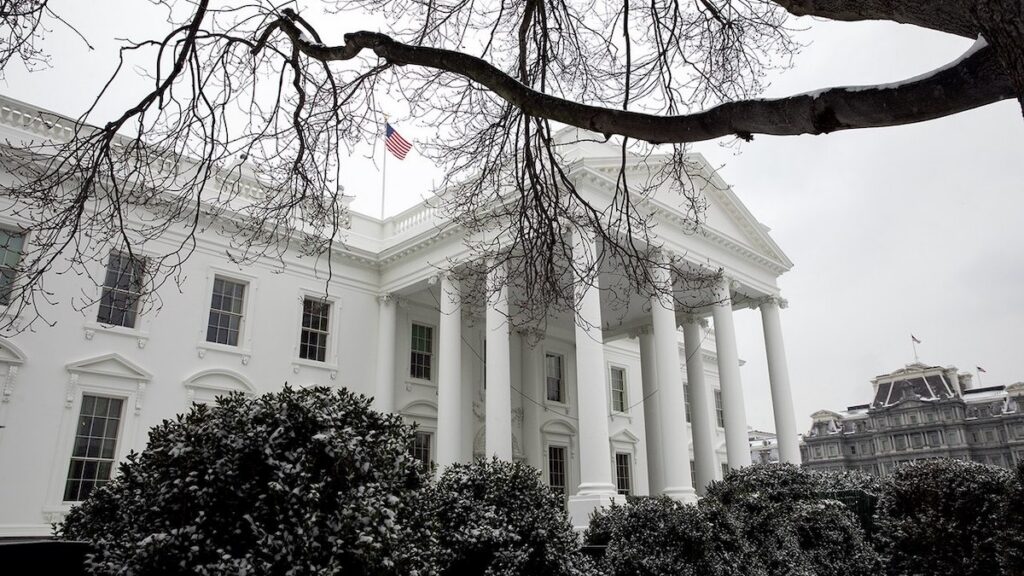
President Donald Trump and EPA Administrator Lee Zeldin will make the announcement to finalize the repeal on 12 February.
The EPA based its July proposal to revoke the finding on an Energy Department report written by five climate contrarians that downplayed accepted climate science. The National Academies of Sciences, Engineering and Medicine, an independent organization meant to advise the federal government on scientific matters, conducted their own review of the report and found that the 2009 Endangerment Finding was “beyond scientific dispute.”
The science supporting the Endangerment Finding “has only gotten stronger” since 2009, DeAngelo told POLITICO.
Related
• Trump EPA to Take Its Biggest Swing Yet Against Climate Change Rules
• EPA ‘Endangerment Finding’ Explained: 5 Facts About the Science and Health Risks
• Public Speaks Out Against EPA Plan to Rescind Endangerment Finding
• The EPA is Barreling Toward a Supreme Court Climate Showdown
• Get Involved: AGU Science Policy Action Center
In public hearings in August, hundreds of people, including children, scientists, doctors, parents, advocates, and members of Congress, spoke out against the proposal to revoke the Endangerment Finding. Many cited immediate health concerns, worry about the health and safety of future generations, and a fear that the proposal would accelerate environmental degradation.
The move by the EPA will likely be challenged in the courts—which may be one reason the Trump administration has pushed its finalization through so rapidly, according to The New York Times. Legal scholars say the current, conservative-majority Supreme Court is more likely to uphold decisions supporting deregulation while Trump is still in office.
The administration wants “to not just do what other Republican administrations have done, which is weaken regulations. They want to take the federal government out of the business of regulation, period,” Jody Freedman, director of Harvard Law School’s Environmental and Energy Law Program, told The New York Times.
—Grace van Deelen (@gvd.bsky.social), Staff Writer
These updates are made possible through information from the scientific community. Do you have a story about how changes in law or policy are affecting scientists or research? Send us a tip at eos@agu.org.

Text © 2026. AGU. CC BY-NC-ND 3.0
Except where otherwise noted, images are subject to copyright. Any reuse without express permission from the copyright owner is prohibited.