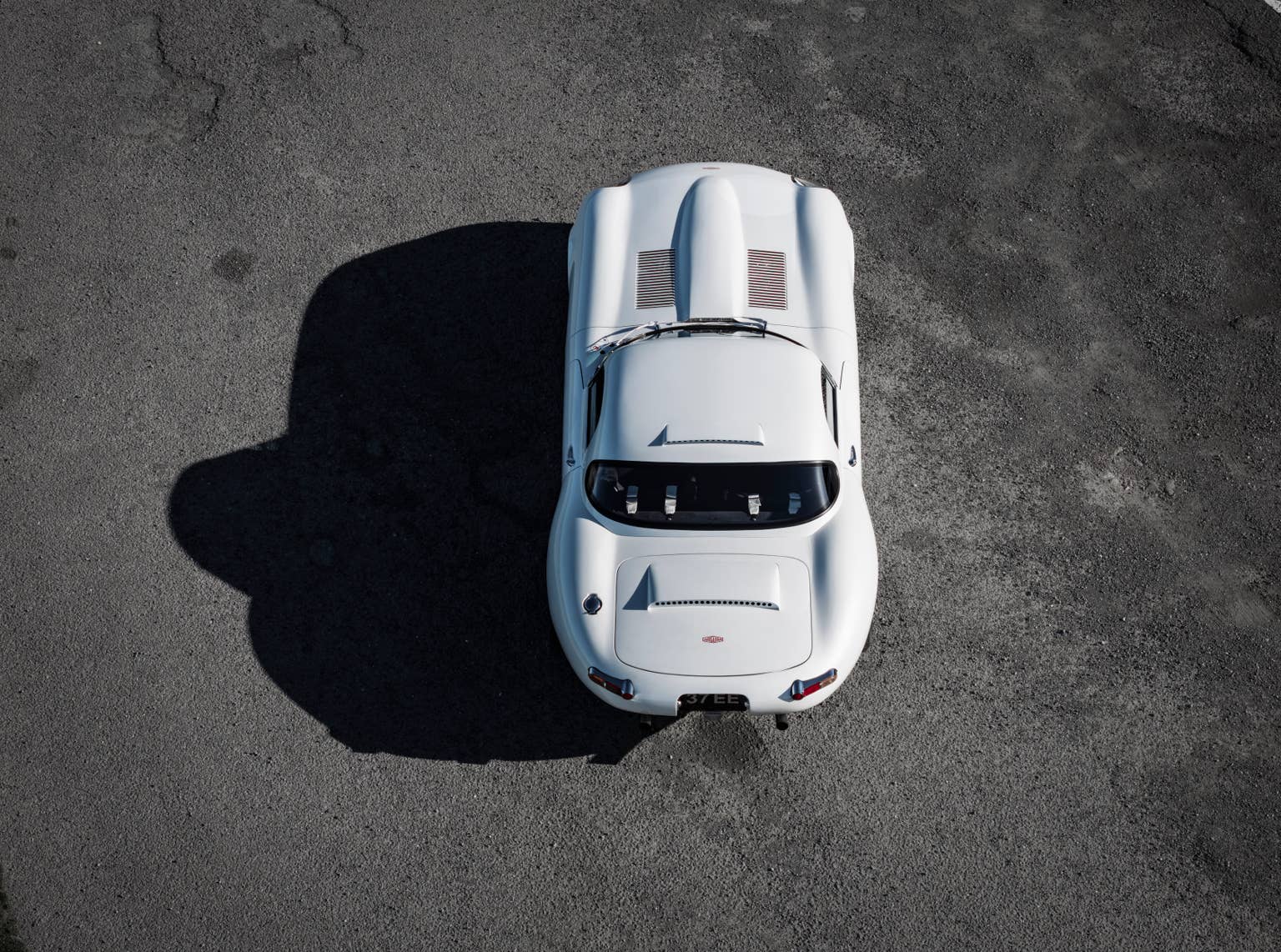
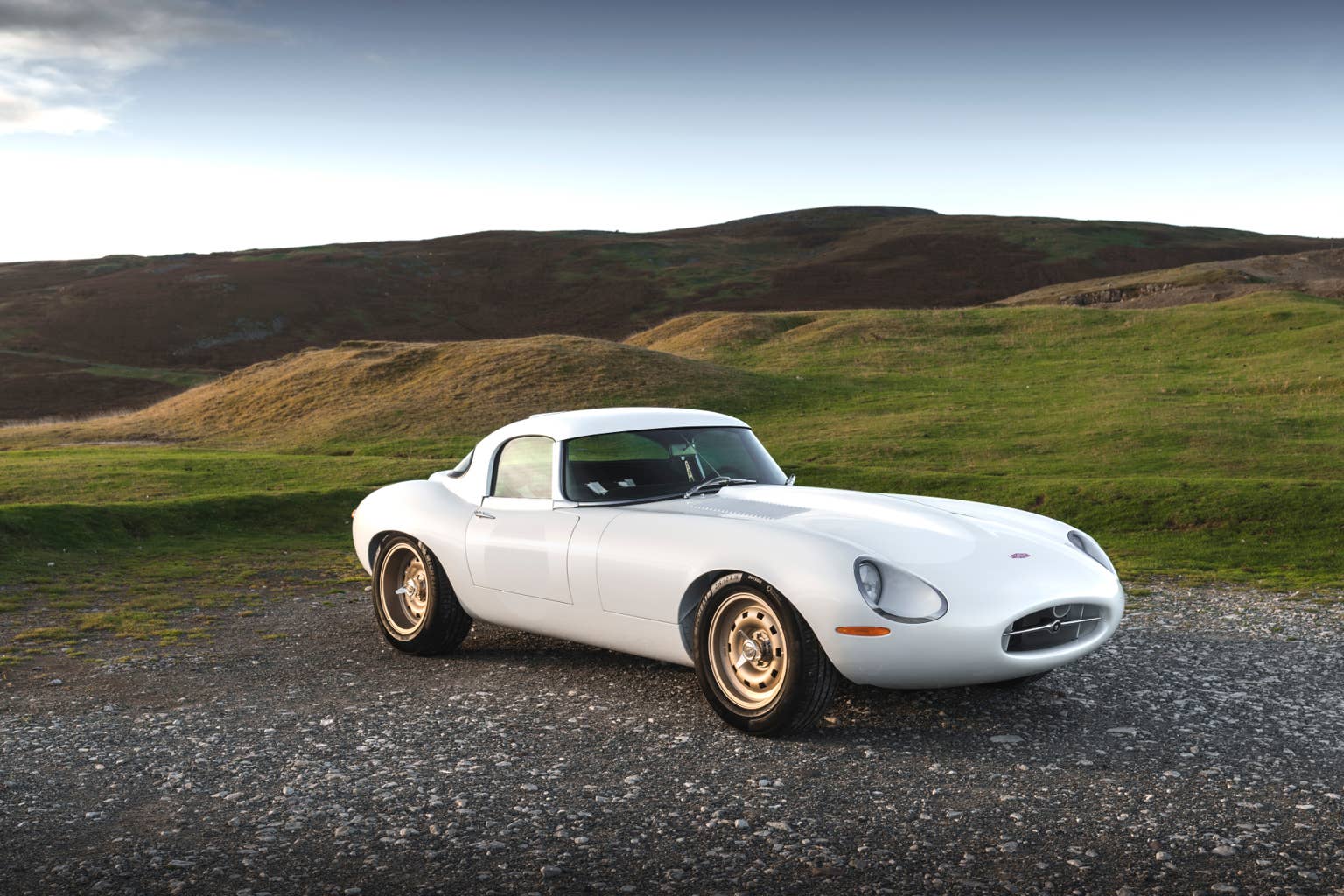
Eagle E-Types has unveiled its most extreme creation yet, the Lightweight GTR, a one-off that redefines what a reimagined Jaguar E-Type can be. Weighing just 975 kilograms with fluids and powered by a hand-built 4.7-liter wide-angle inline-six, the GTR blends historic purity with cutting-edge materials like titanium, magnesium, Inconel, and carbon fiber. The result is more than 430 horsepower per ton and a level of engineering detail unmatched by any other E-Type interpretation.
The project began as a client commission for a grand-touring E-Type that retained the spirit of the 1960s racers but could be driven daily. Eagle calls it “a road-legal GT capable of crossing continents with speed, comfort, and breathtaking style.” The client’s brief was simple: avoid the modern obsession with big, heavy cars and excessive electronics, and deliver something that feels truly alive.
Lightweight Engineering at Its Finest
Eagle’s focus on weight reduction borders on obsessive. Every component has been re-engineered, from the titanium wheel hubs and carbon-ceramic brakes to the bespoke magnesium gearbox casing. The suspension uses fully adjustable Öhlins dampers and revised geometry to sharpen feedback and balance, while the exhaust system, crafted from Inconel and titanium, saves several kilograms on its own.
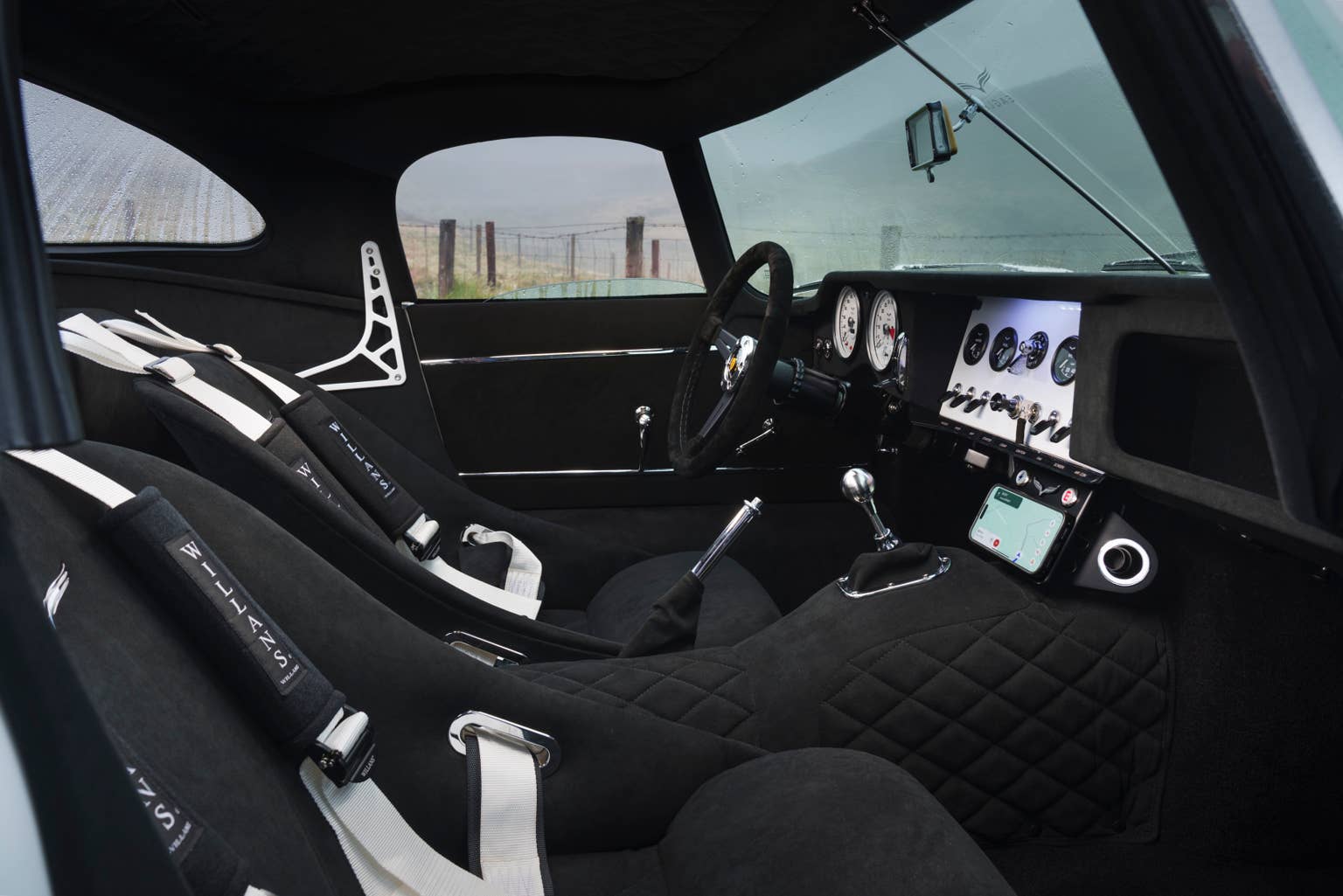
Inside, the cabin fuses luxury craftsmanship with race-car precision. Black Alcantara trim, lightweight aluminum seats, and four-point harnesses sit beside details like platinum-inlaid switchgear and a magnetic phone dock. Air-conditioning, heated glass, and sound insulation ensure it’s still suited to long-distance touring.
For those who love the timeless lines of the original E-Type, examples like the 1968 Jaguar XK-E Type show how the design continues to inspire. The Eagle GTR captures that same essence, just lighter, faster, and engineered for the modern world.
Heritage Meets Performance
Underneath the handcrafted aluminum bodywork lies an engine developed from the classic Jaguar XK-series straight-six, breathing through triple Weber carburetors and revving higher thanks to titanium connecting rods. The powertrain delivers instant throttle response and a soundtrack that blends vintage tone with modern precision.
The GTR also honors Jaguar’s 1960s racing heritage, when cars like the 1967 Jaguar XKE and the 1967 Jaguar XKE Series 4.2 Roadster defined the pinnacle of British performance. Eagle’s reinterpretation updates that legacy without diluting it, preserving the emotional connection that made the E-Type legendary while bringing its capabilities into the present day.
Why It Matters
In an era dominated by weight, complexity, and hybrid systems, the Lightweight GTR stands as a defiant statement. It’s not an EV, a hybrid, or a computer on wheels, it’s mechanical artistry designed to be felt. Paul Brace, Eagle’s design director, describes it as “the pinnacle of what we’ve learned over three decades of building E-Types, a car where every gram and every detail serve the experience of driving.”
The Eagle Lightweight GTR may never see mass production, but that’s not the point. It exists to prove that true driver engagement and beauty never go out of style. For collectors, it’s the ultimate expression of the E-Type’s legacy, one that shows what’s possible when craftsmanship meets obsession.