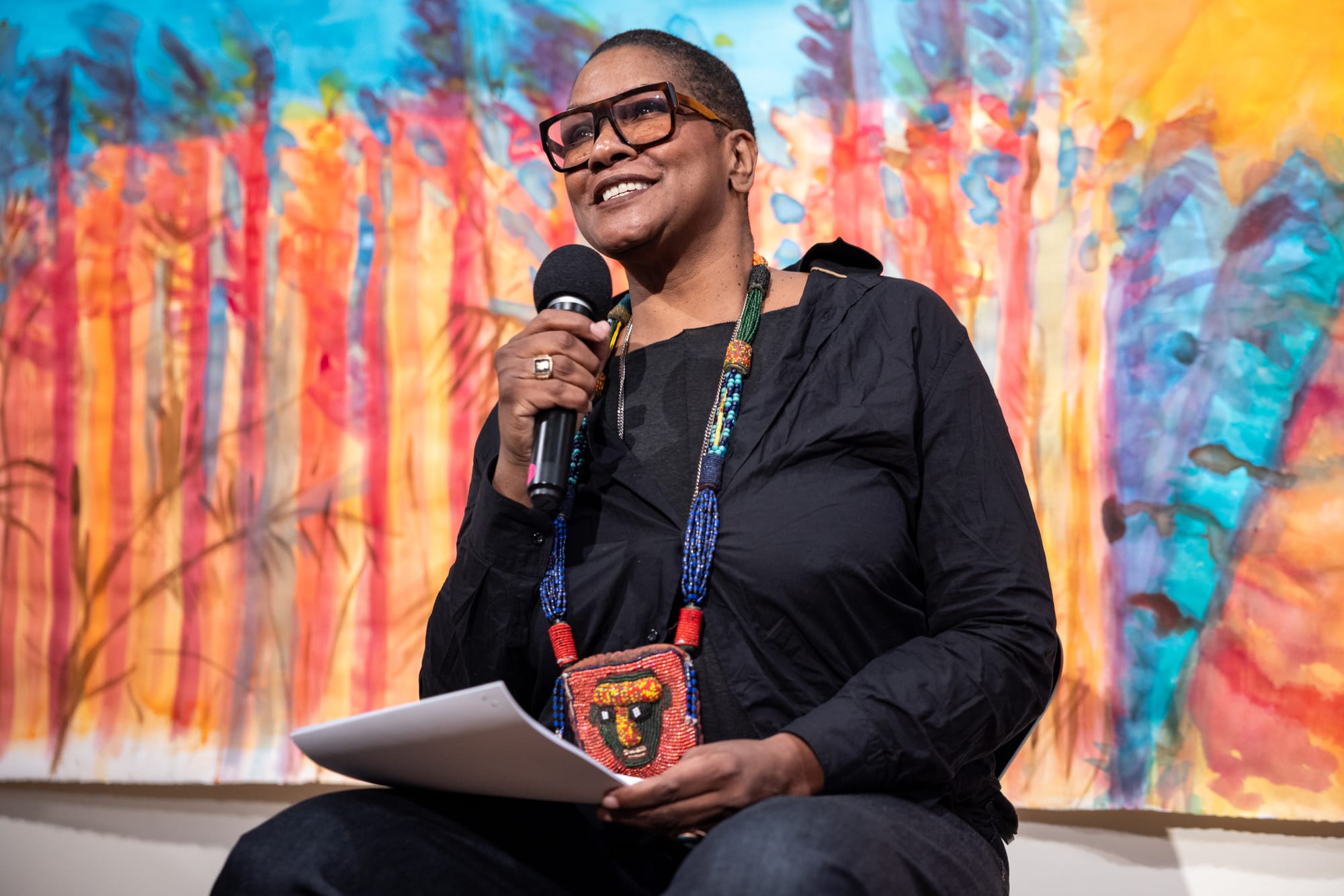
The poet and painter Pamela Sneed reads a poem in which she dreams she meets all her friends in urgent care. A packed room is gathered around her inside Sacred and Profane, her exhibition with the visual and performance artist Carlos Martiel at the Leslie-Lohman Museum in SoHo. The Leslie-Lohman, the first institution of its kind in the world, has recently become a haven for the elevation and preservation of art by and for an “us” that has been subject to unrelenting and escalating political attacks. Who are we? Lesbian. Gay. Bisexual. Transgender. Queer. Questioning. Intersex. Plus. Black. Brown. Indigenous. People of Color. Sneed: “We are all in urgent care.”
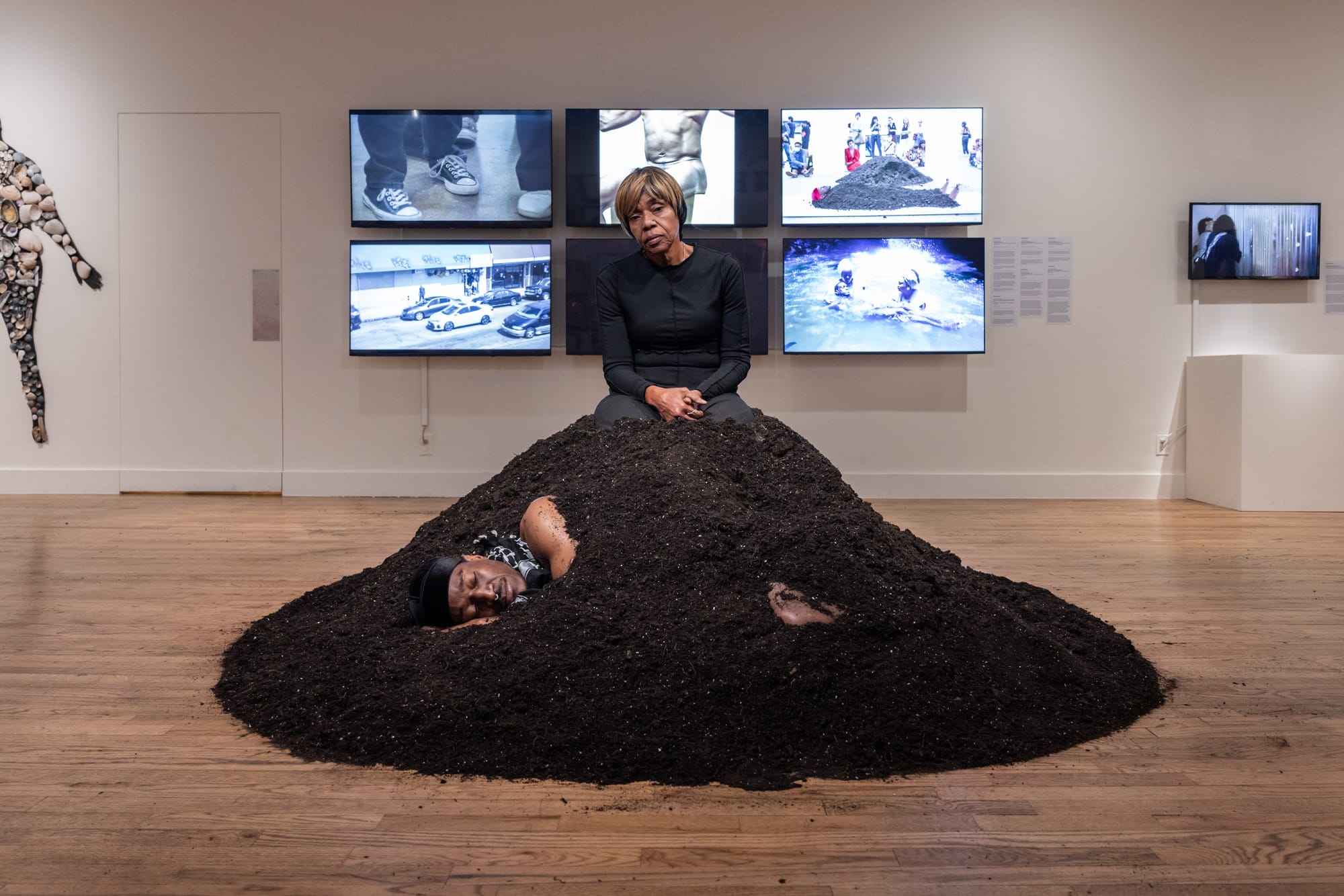
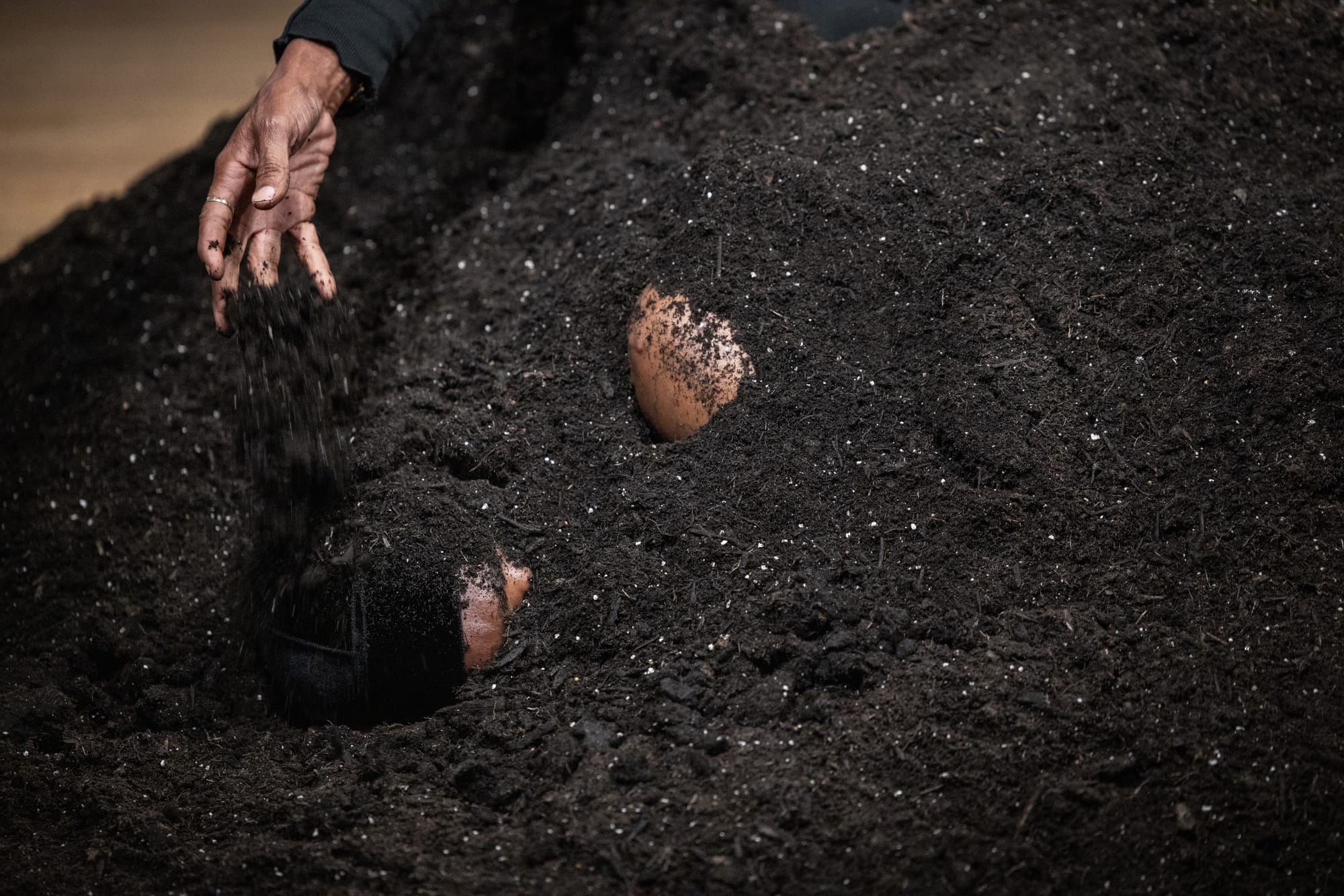
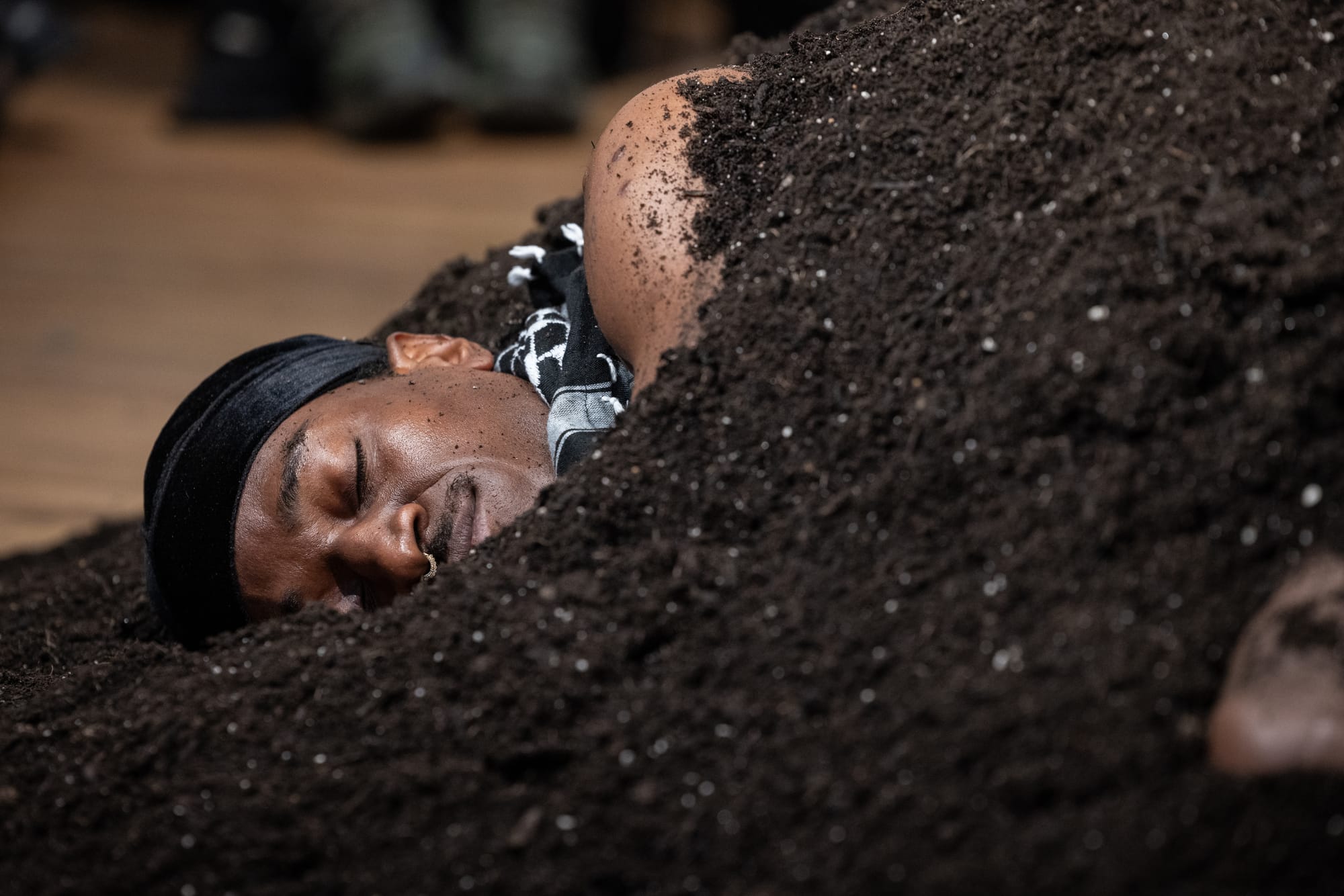
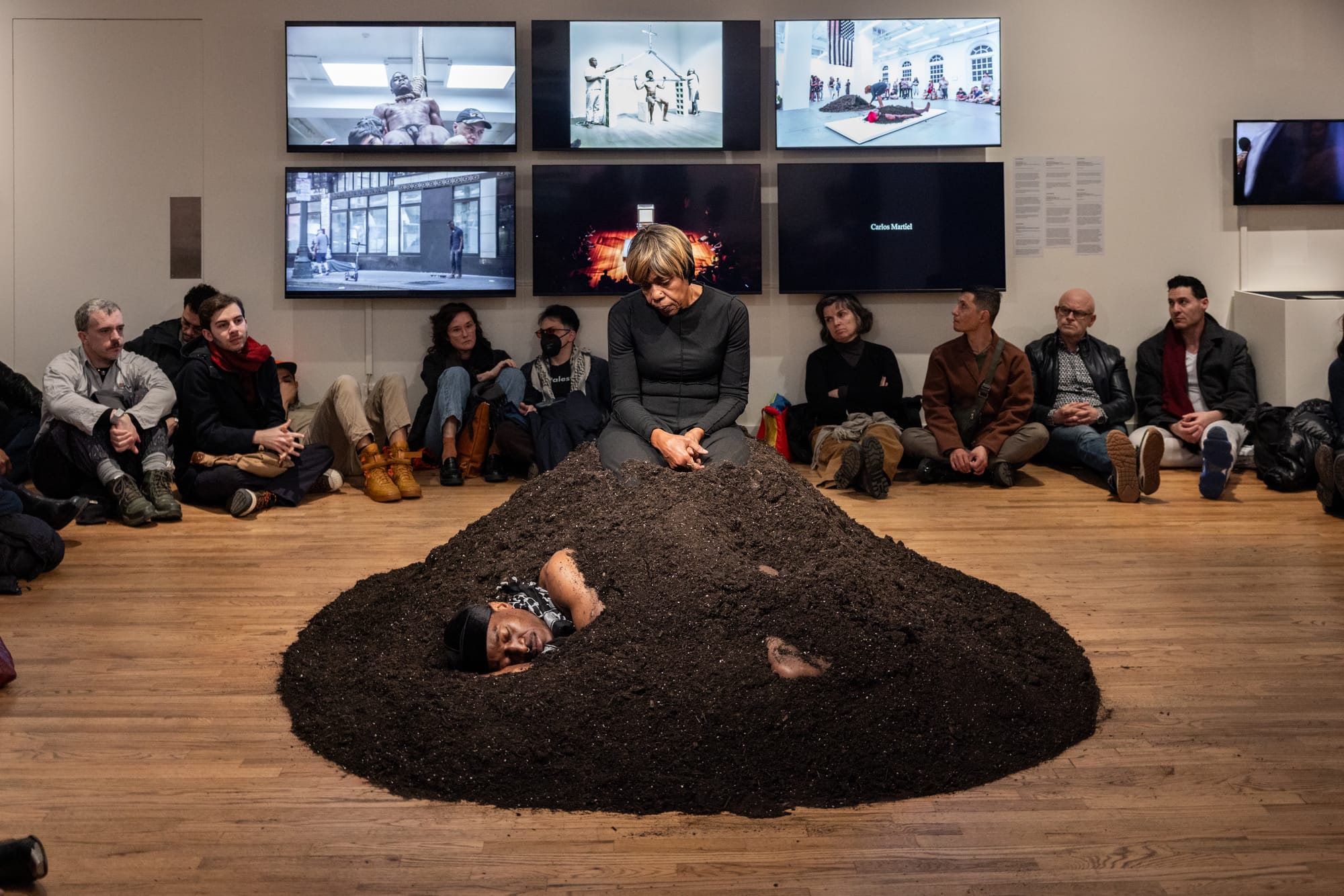
Sneed reads on a double bill with a performance by Martiel in which the latter is covered almost entirely in a mound of earth, just edges of a face exposed, at the center of the small gallery. The artist’s mother sits atop the mound, motionless, gazing at her son, in an image that distills not only the decades they’ve spent together but centuries of Black maternal grief at the premature death of sons and daughters at the hands of both state and extralegal violence. The audience continues to file in until the room is full of breath, and waits and fidgets. Nothing happens until, after a duration that cannot be measured by a clock, the body gets up and leaves. He is naked except for a black and white keffiyeh around his neck. His mother follows.
The piece is called “No Resurrection.” We are no longer in urgent care. We are at the burial plot, improvising a collective wordless ritual for grief. As the crowd begins to mix and mingle, awaiting the reading to follow, I notice that two people are sinking their hands in the soil. There is no resurrection, but there is this improvised ceremony that exhumes the dead. “Humus” (soil, earth) from the Latin and, before that, from the Proto-Indo-European root word for earth: *dhghem. From that root shoots other tendrils, such as the words “human” and “humility.” From this site of gathering, in which we who have been refused our status as fully human in turn refuse that violent hierarchy, and imagine and build and enchant other modes of being human, we found a place for ceremony.
I recently moved back downtown, exploiting a brief post-pandemic loophole. A true believer and a performance die-hard, I returned for the “downtown scene.” Even if it was on life support. Even if it was in the morgue. Even if it had been wholly denatured by the uptown and out-of-town and world market financialized flows of art commerce (that, after all, had always subtended whatever artist worldmaking emerged in SoHo lofts, Greenwich Village piers, and cruising grounds under the Brooklyn Bridge). The performance scene at Leslie-Lohman — as this evening with Sneed and Martiel indicates — is one example of an institution figuring out how to collect art while connecting with the basic needs of a living community of artists and arts workers now dispersed across the five boroughs and beyond. Sneed and Martiel form an intergenerational and transnational collaboration that evokes the queer museum as a time and place that subverts the slavemaster clock and cisgender architecture.
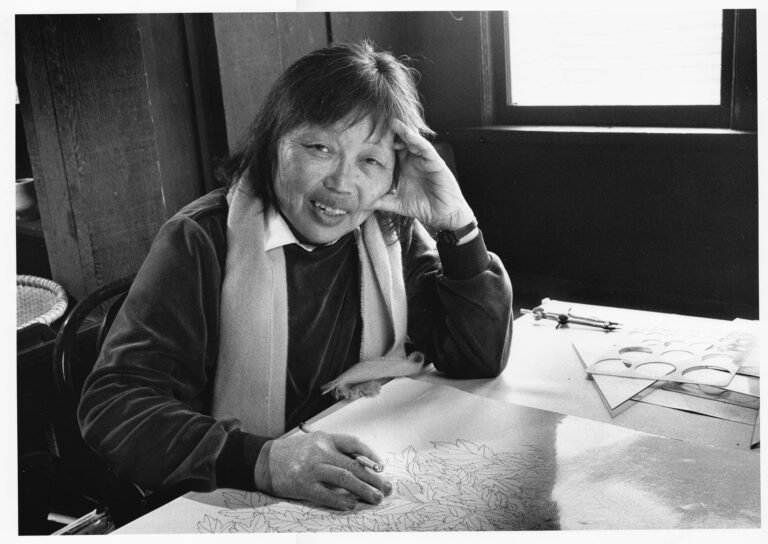
The work on view in the gallery is itself a bridge from an artist residency Sneed and, subsequently, Martiel, held on Fire Island, in which Sneed probes that island’s role in the slave trade and slavery, a history that she is exhuming even as BIPOC history nationwide is being actively erased. Silhouettes float on gallery walls, adorned with shells and other reliquaries.
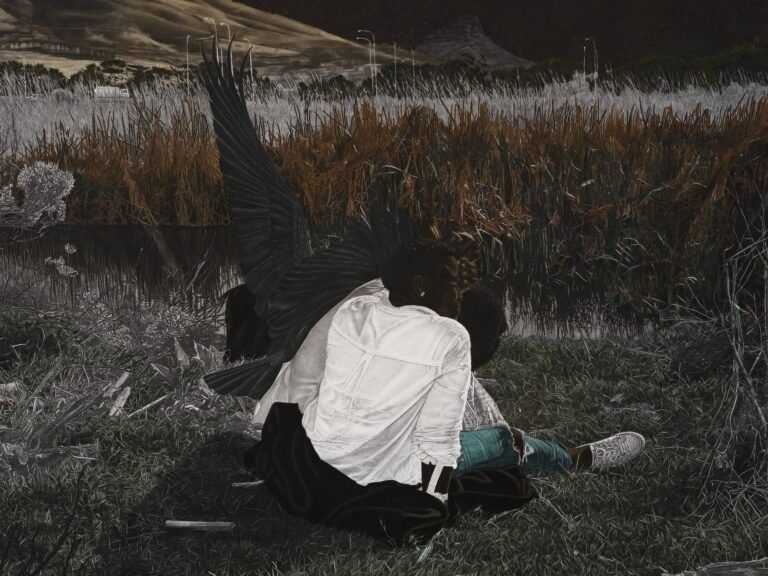
Some months earlier, in this same space, Joshua Obawole performed a piece entitled “Waves” wearing, as the artist told me, “ocean water and human hair to bridge the ruptures left by the transatlantic slave trade — acts of remembrance made material.” Obawole performed as part of a stand-out show of work by South African artist Athi-Patra Ruga’s Lord, I Gotta Keep on Moving, curated by Stamatina Gregory. Through the “residence time” of middle passage, as Christina Sharpe theorizes in her work In the Wake (2016), Black queer and trans artists on both sides of the Atlantic are alchemizing grief into ritual, ritual into performance, and performance into community, play, and riotous joy.
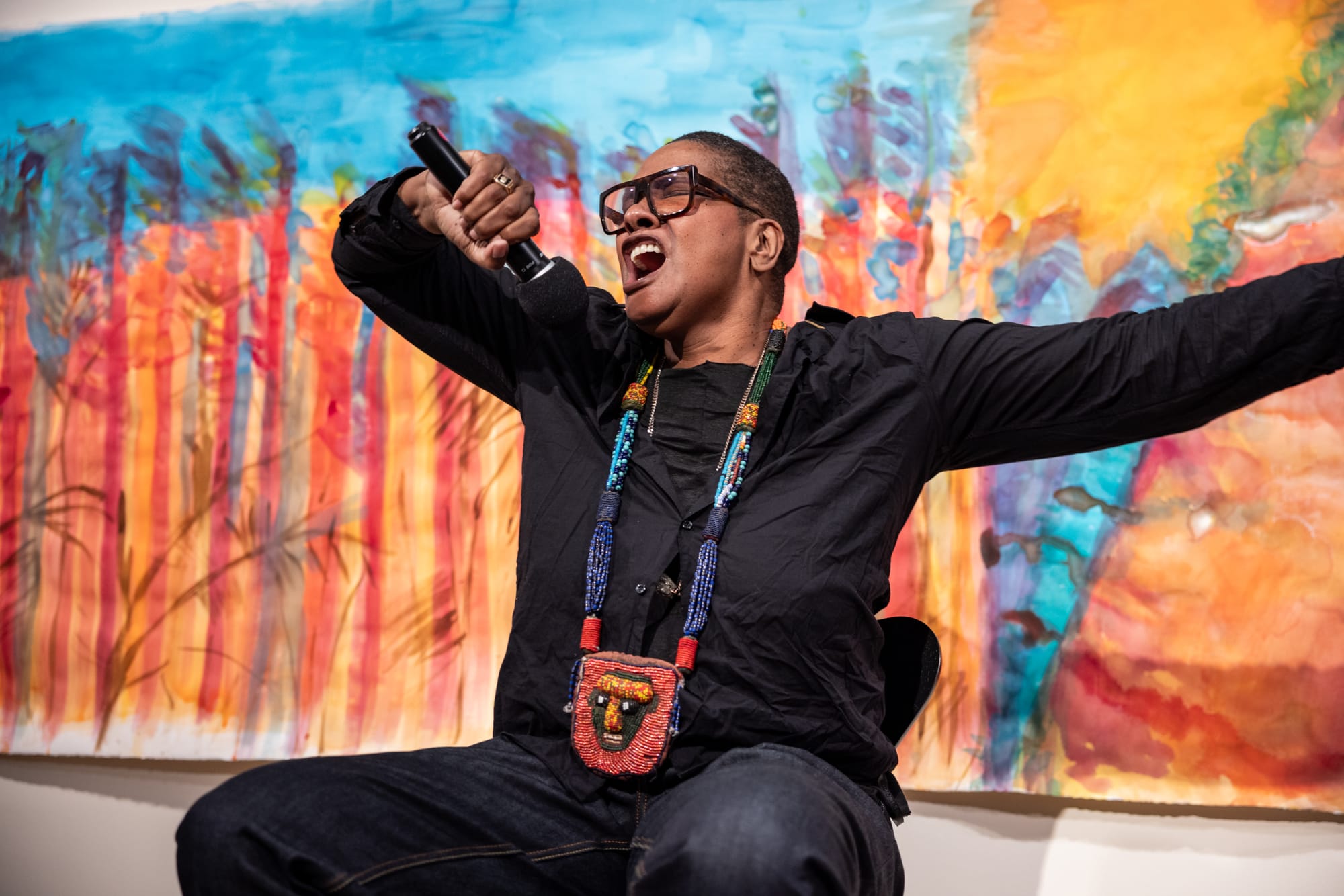
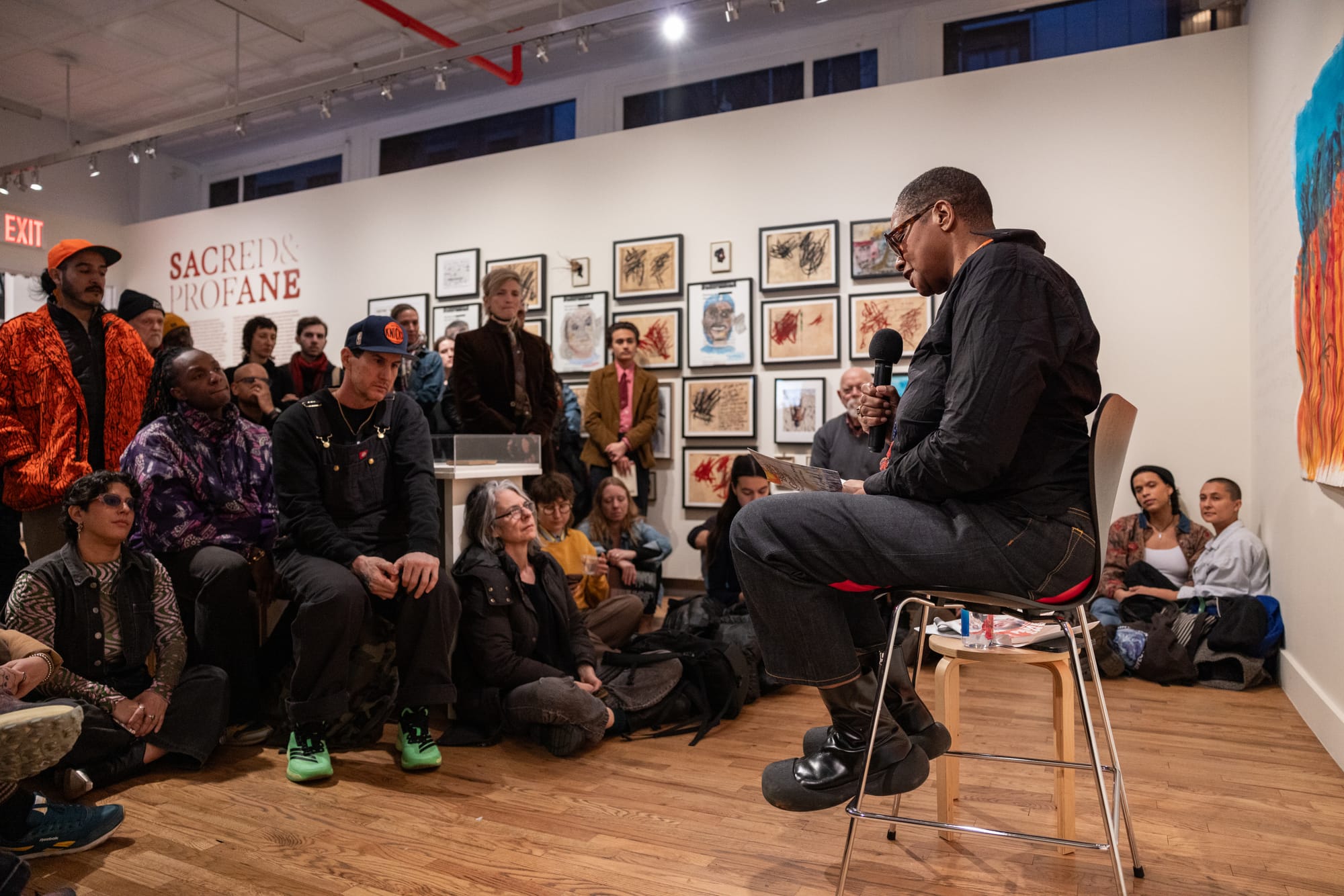
Why joy? I am a non-violent person, but I will go down fighting for joy. Shouting down joy, to paraphrase José Esteban Muñoz, is an easy move. Never easier perhaps than in these days. I don’t expect or require performance art to produce joy in myself or the performer; that would be absurd. And there is certainly a version of compulsory happiness (ranging from Blacks being told to “step lively now” to women being told to smile) through which masters seek to perpetuate their domination of slaves and serfs. The joy I am addicted to is obviously not this punitive joy but the collective joy that comes from being in a scene, which is also to say, of a scene.
What do I mean by “scene?” When I lost my uncle, a man who epitomized for me the poet Robert Hayden’s line about “love’s austere and lonely offices,” I almost missed his homegoing. I was half a world away. I did not think I could spare the time or cash. I helped others go in my stead. At the last minute, I changed my mind, moving my small heaven and earth to get to the site where I could touch his burial mound. The soil that I threw was joy.
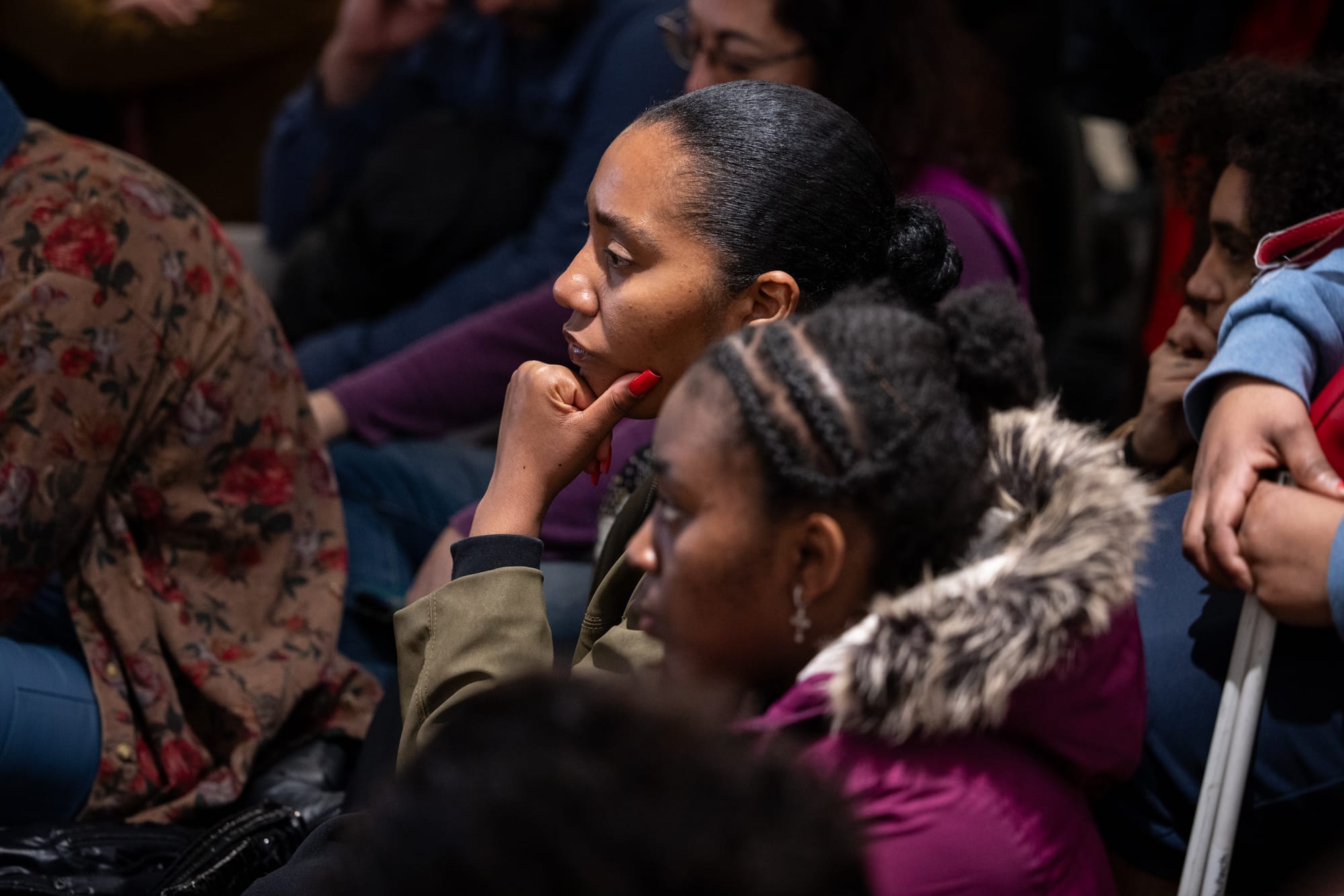
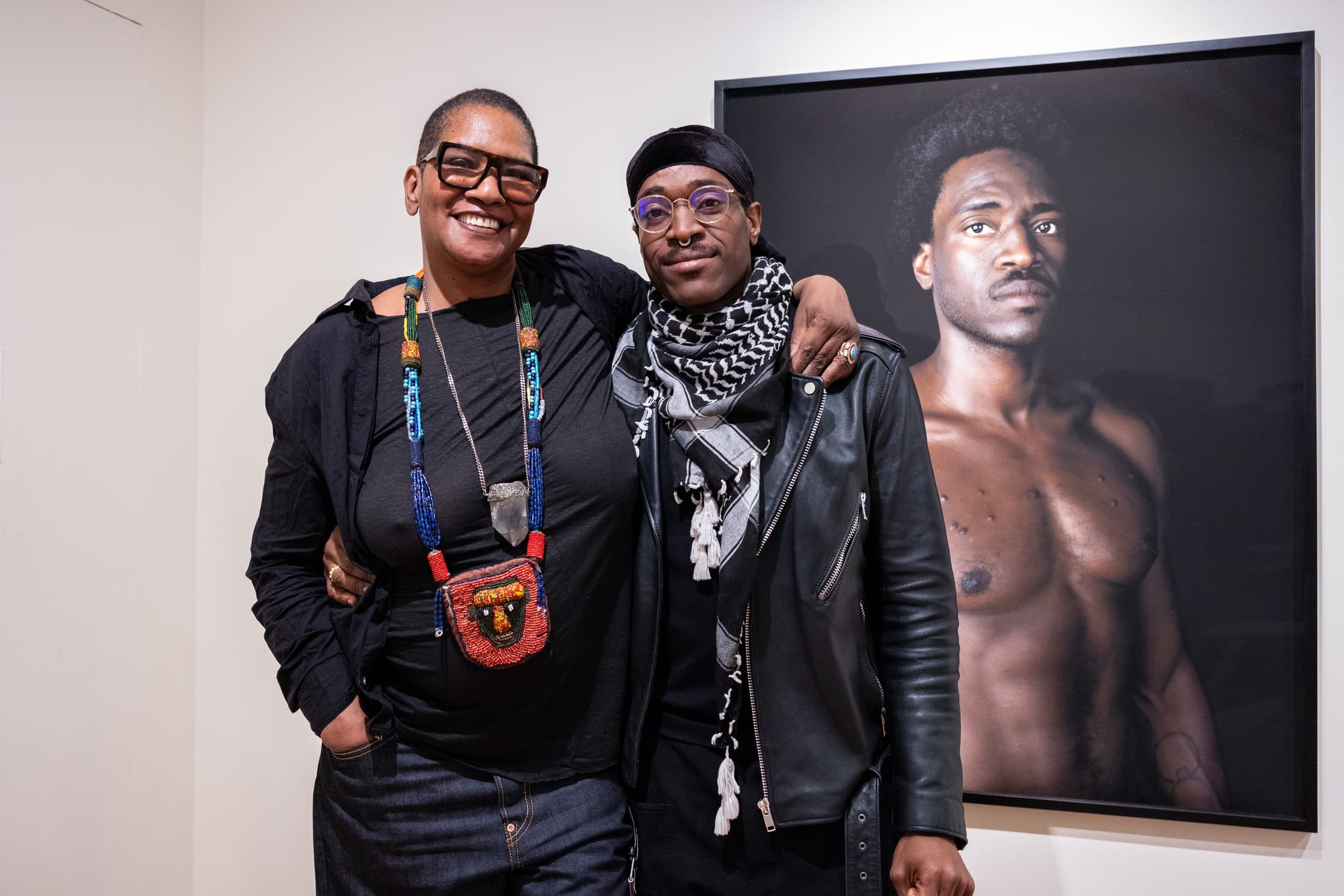
“We must take our dead with us to the battles that lie ahead,” Muñoz wrote in Disidentifications (2013), and I would add, we must take each other’s dead as well. The riotous joy we have and will witness in Black queer and trans performance — much of it activist — shares out personal and proximate losses into collective losses and radical acts of unrelenting joy. I close with the idea of a museum against museums, one that holds with humility (rather than hierarchical arrogance) the messy, fragile, angular socialities we build, break, and bend in a once and future “downtown scene.”
— For Agosto Machado (March 21, 2026)