President Donald Trump got the U.S. into a global economic and geopolitical mess with his Iran war. It was all predictable, except for one unintended consequence: Iran’s response in the region has demonstrated that the Pentagon’s traditional weaponry is not ready to fight the war of the future.
Instead of the heavy systems used by the U.S. military since World War II—missiles and ships that are expensive to design, build, and operate—this war is powered by swarms of mass-produced and oft-autonomous drones that can do the job cheaper and faster.
This is the U.S.’s first war of the future. It will mandate new strategy and technology. Fortunately for the U.S., there is somewhere to turn for that strategy and technology.
In February 2022, when Russia launched its full-scale assault on Ukraine, the Ukrainians quickly found themselves in need of a playbook for modern warfare. That playbook has been honed over the past four years—and Ukraine is now willing to share it.
Initially, the Russian offensive was foisted by courageous Ukrainian troops using traditional U.S. armament, including anti-tank Javelin missiles and high-mobility artillery rocket systems, or HIMARS, otherwise known as artillery for dummies. But soon Kyiv was compelled to find more effective ways to face its larger, better-funded enemy. Essentially, the Ukrainians had to build a whole new way of fighting from the ground up, scrambling to design and make a category of weaponry that has redefined the modern battlefield: brilliant, inexpensive drones.
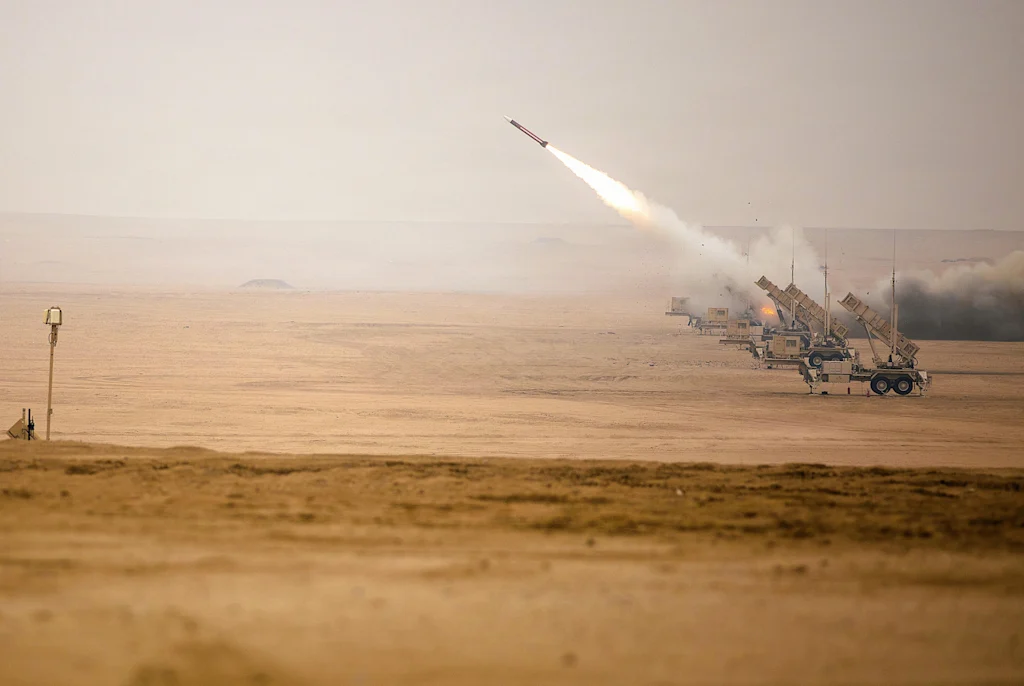
Now this is happening in reverse in the Middle East: The Pentagon’s brute-force approach has been countered by cheap, scrappy Iranian drones. The U.S. and its regional allies are defending themselves against $20,000 drones with Patriot missiles that cost $4 million per shot. A full Patriot system, by the way—including the launcher, radar, and control stations—costs roughly $1 billion. Meanwhile, Iran can launch its drones from a truck.
This economic equation is ludicrous, but the bigger issue is that there are not enough expensive missiles to take down the cheap drones. So the U.S. (along with the United Arab Emirates, Saudi Arabia, and other gulf allies) is turning to Ukraine—where Russian drone attacks are still a nightly occurrence—for help. They want to use Ukraine’s drone interceptors and learn how to fight against Iran’s Shahed drones.
It’s an ironic turn of events. Ukraine has been begging the U.S. to secure its skies for four years. Now it’s Washington begging for assistance from Kyiv.
Doesn’t the U.S. already have drones?
The U.S. has used drones for decades. The problem is that those drones were developed by the traditional military-industrial complex, whereas Ukraine changed warfare with off-the-shelf gadgetry.
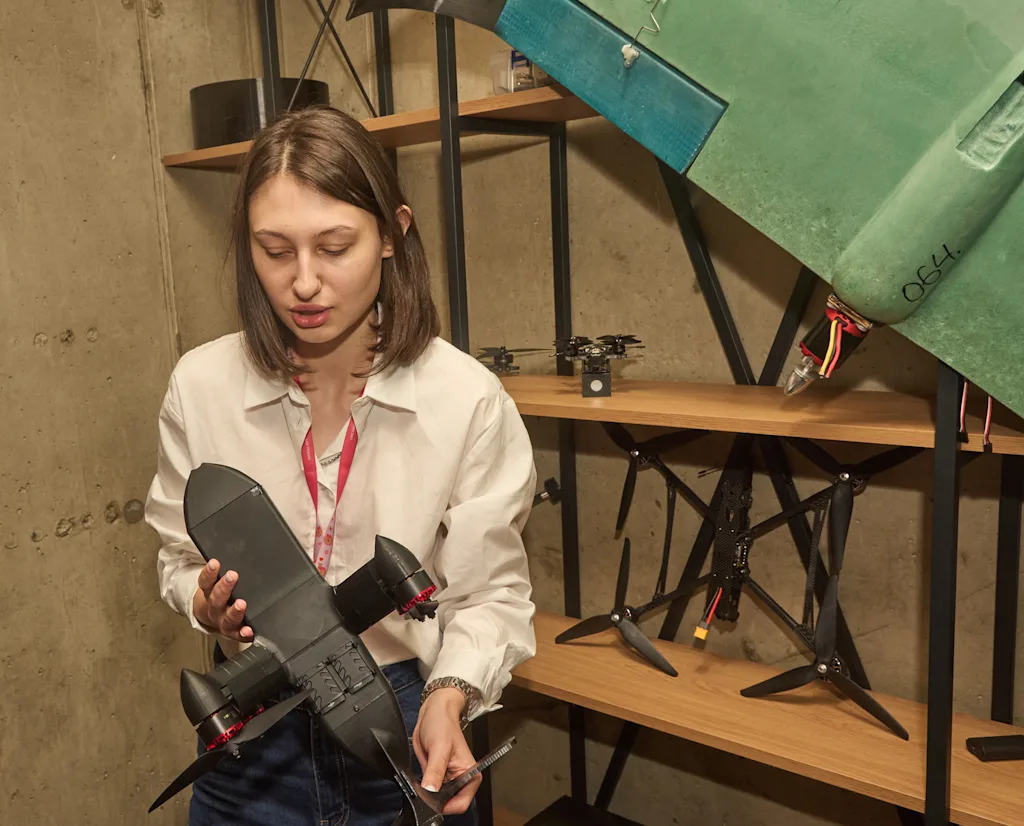
While large drones like the American Predator and the Reaper had existed since the early 2000s, Russia’s invasion forced Ukraine to build and deploy a very different type of drone. They needed a way to create lots of weapons that could fly and search for targets beyond enemy lines. They had to be modular so they could do different missions, from attack to reconnaissance. And they had to be very cheap.
Rather than huge bombers and missiles, now everything depends on engineering genius, modularity, and AI. Kateryna Bondar—a fellow at the Wadhwani AI Center at CSIS and an expert in defense, technology, and Ukrainian drone warfare—tells me that the roots of this revolution lay in the dirt.
“Ukraine has always been an agricultural country, and we use drones wildly in agriculture,” Bondar says over video chat. When Russia first invaded the Donbas region in 2014, Ukrainian farmers joined an underequipped army, bringing their commercial crop-monitoring drones with them. They quickly realized that instead of risking human life to look over a hill, they could just send a flying camera.
Saving lives is key in any war, but Ukraine, a country of 30 million people, is vastly outnumbered by Russia’s 140 million-plus population. “The goal of the Ukrainian military is to remove a human from the battlefield just to reduce and minimize the loss of human lives,” Bondar says.
The other motivation was to develop a strategy that could counter Ukraine’s economic disadvantage against Russia. It takes about $5,000 to $6,000 to fire a traditional 155-millimeter artillery shell. Using unmanned systems? “To basically kill one Russian [soldier], the cost is like $600,” Bondar notes. That cost references the price of a surveillance drone, the human operator’s time, and a kamikaze drone—a small, pilotless aircraft packed with explosives designed to deliberately crash directly into its target. Today, the Ukrainian military conducts 80% of its frontline strikes with drones.
A decentralized, modular machine
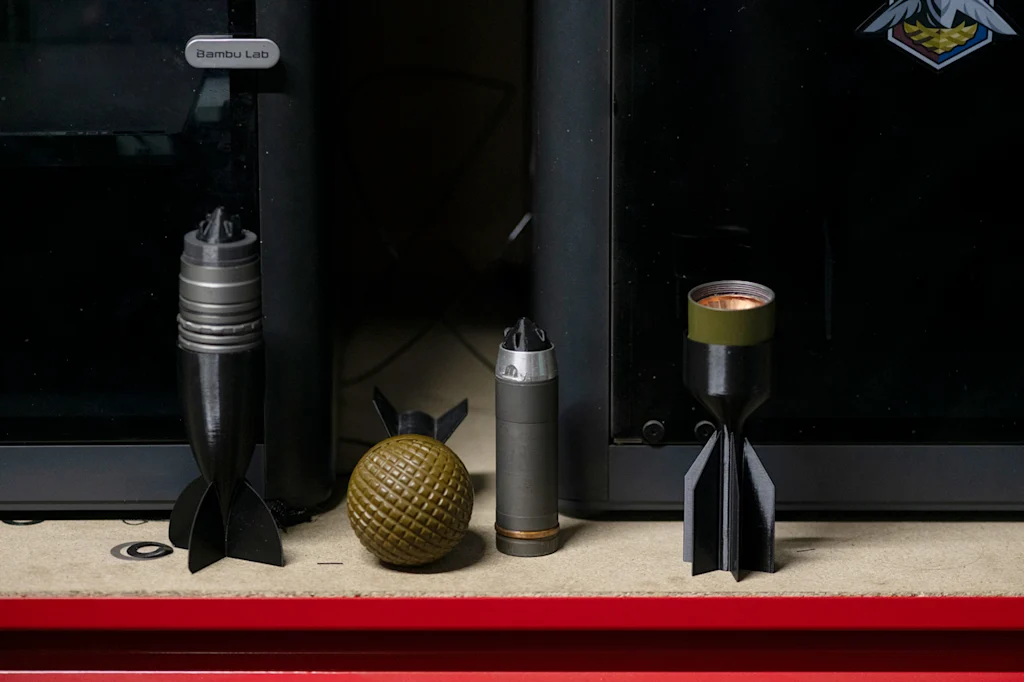
Ukrainian drones started out as off-the-shelf DJI Mavic camera drones dropping jerry-rigged grenades. According to a report in the Military Times, Aero Center, a Ukrainian manufacturer, started with a munition called Malyuk (which translates to “Baby”) that weighed just about 1 pound. The explosion of models has been nothing but phenomenal, growing from 70 in 2023 to more than 500 available today, from small, first-person-view quadcopters to large cruise-missile-like jet-powered units. Aero Center is now building medium-class drones that carry up to 22 pounds of explosives over roughly 15 miles.
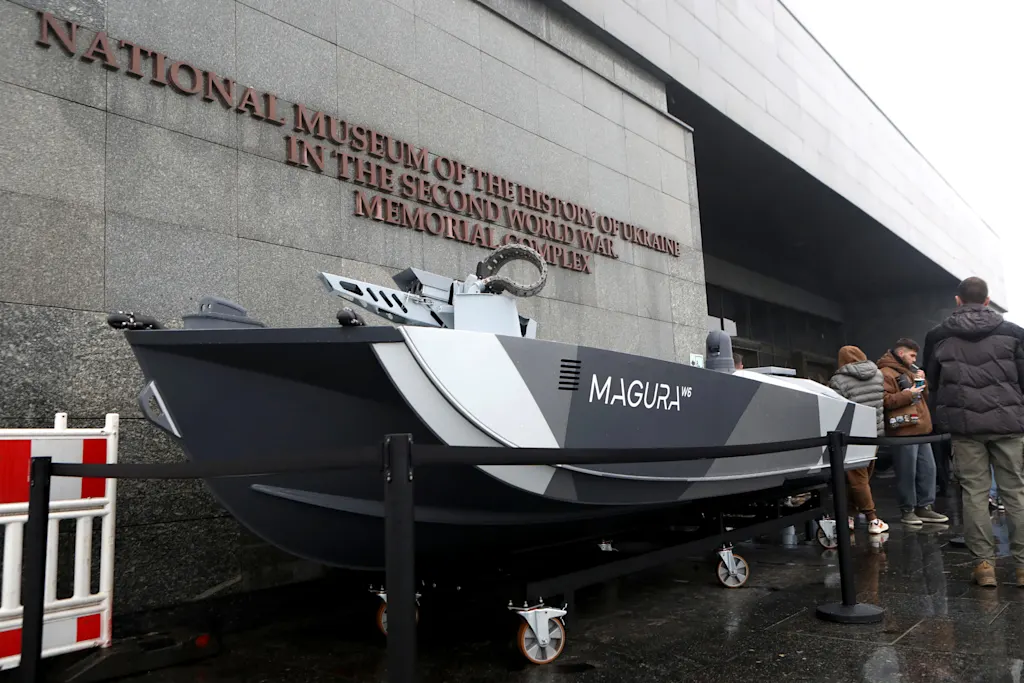
The same happened at sea, where Ukraine’s scrappy engineers packed civilian Jet Skis with explosives and remote navigation systems to hunt Russian ships with such great success that they forced the entire Black Sea fleet to retire into the Crimean port of Sevastopol.
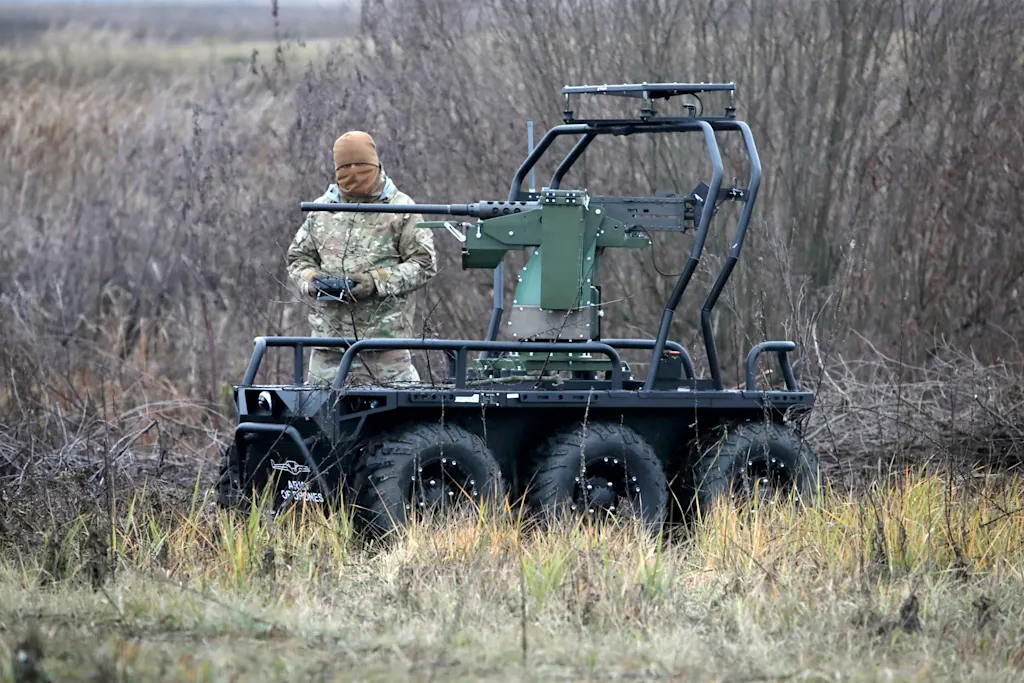
The key for their success is that most of these drones are modular and actually built-to-order on the battlefield, Bondar tells me.
Ukrainians couldn’t just build massive defense factories to churn out drones, because Russian missiles would instantly vaporize them. Instead, they divided the manufacturing process into stages. They distributed separate, small facilities across the country so “if one place undergoes a strike from Russia and gets destroyed, you don’t destroy the whole ‘factory,’” Bondar says.
Instead of buying a locked-down, $100,000 flying machine from a Western contractor, Ukrainian units acquire basic airframes and attach specialized loads for specific missions: GPS, chips for AI processing, cameras, fiber optics cable spools to avoid signal jamming, thermite loads (a chemical substance that burns through a tank’s armor), and explosive heads. It all depends on what they want the drone to do at any given time.
For the first year of the war, Ukraine’s drones decimated Russian forces. But Russia adapted with help from its allies to develop a counter-fleet of drones. China provided components. Iran sent Shaheds—the cheap drones targeting American and allied assets in the Middle East right now—and engineers to teach Russians how to build and operate them. That prompted an arms race that has pushed the technology to evolve at a breakneck pace, with Ukraine developing cheaper and more effective interceptors to destroy the Iranian-designed drones.
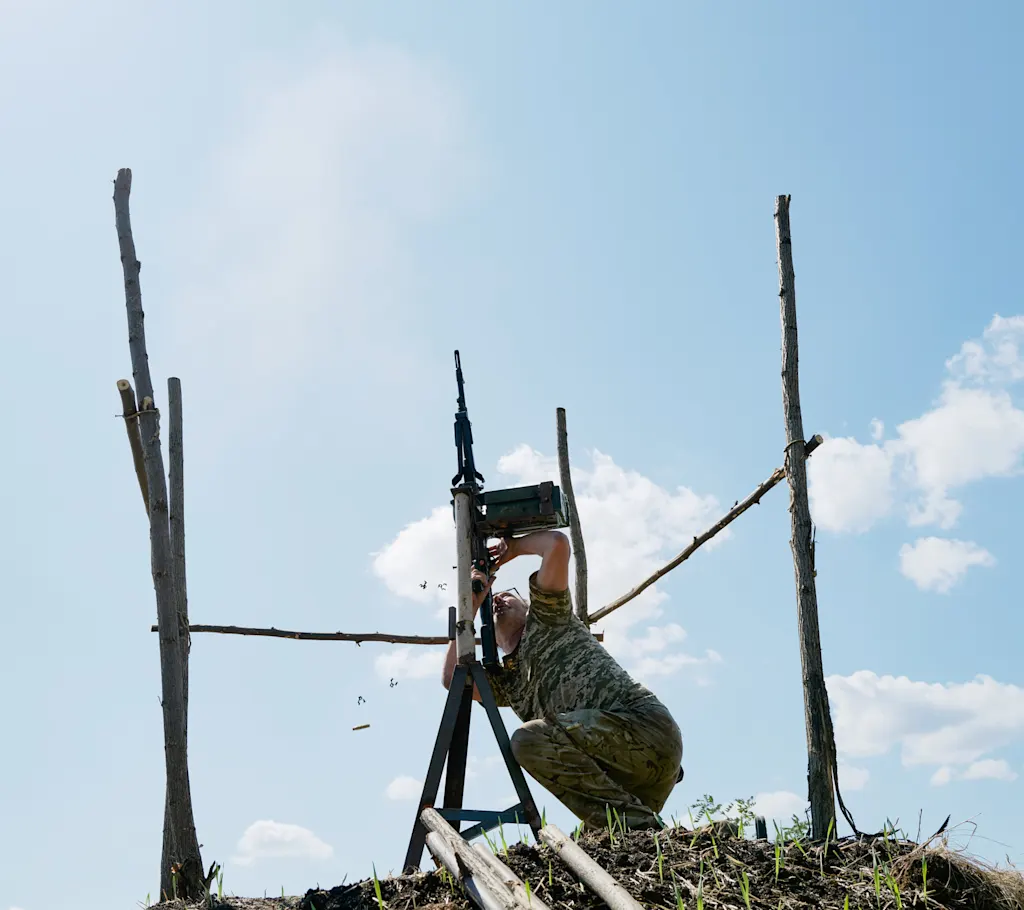
The bulk of Ukrainian interceptors are the Merops and Sting systems: small, semiautonomous flying robots designed to ram into enemy drones or explode right next to them in midair. They cost between $1,000 and $2,500 and are compact enough to fit inside a standard duffel bag. A Ukrainian-made Wild Hornets Sting drone costs $2,500, flies 195 mph, and has downed 3,900 enemy drones since May 2025.
Another model, SkyFall’s P1-SUN, features a 3D-printed modular body, costs just $1,000, and reaches speeds of 280 mph using computer vision and thermal imaging to hunt its prey in the dark. Last month alone, Ukrainian interceptors destroyed more than 70% of incoming Shaheds over Kyiv.
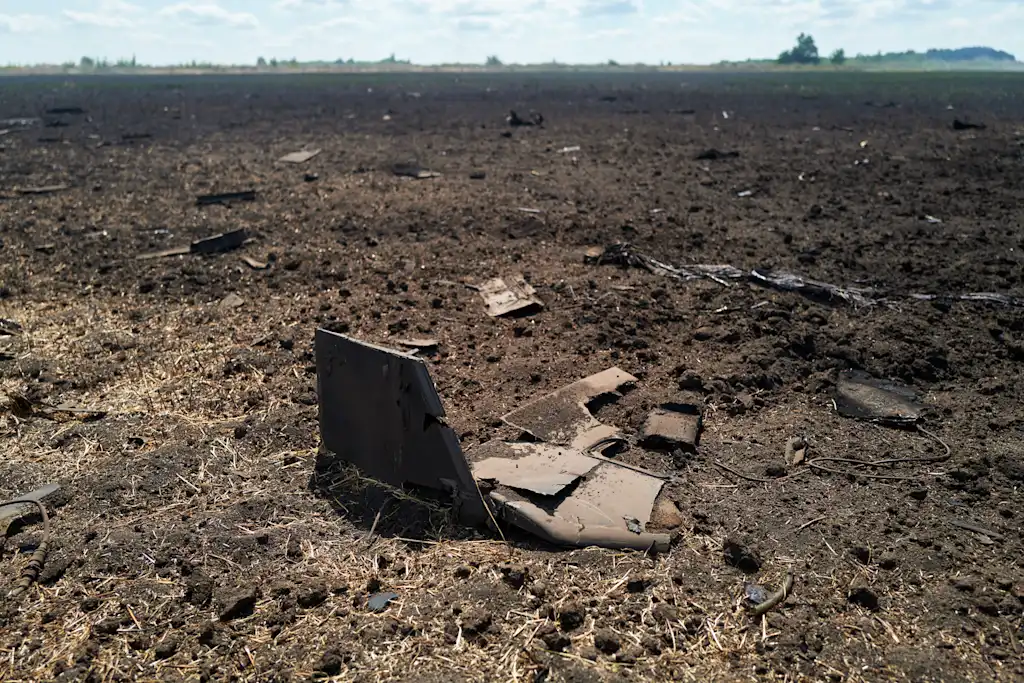
At the highest end of Ukraine’s drone fleet is the Octopus, built by Ukrspecsystems. It flies at night, cuts through electronic jamming at altitudes up to nearly 15,000 feet, and locks onto targets autonomously, ramming into them and exploding. It’s so effective that it’s now built under license by more than 15 Ukrainian manufacturers. And since November, it has been produced outside Ukraine, at a new factory in the United Kingdom. This deal marked the first time a Western government licensed a Ukrainian-designed interceptor for domestic production. Five NATO countries—Germany, France, Italy, Poland, and the U.K.—have since agreed to build on this precedent by jointly developing affordable interceptor drones of their own.

The rest of the defense world has been watching this open laboratory in awe. China, in particular, is radically altering its military structure. According to Bondar, China is no longer focused on traditional tanks or aircraft carriers. “They develop ground systems which are able to carry thousands of drones, for example, or they develop ships which are able to carry thousands of drones,” she says.
Now that exact same tactic is bleeding U.S. defenses in the Middle East dry. On February 28, 2026, the U.S. and Israel launched a massive assault on Iran. In just the first week of the resulting war, Tehran fired more than 500 ballistic missiles and nearly 2,000 drones at Israeli cities and at U.S. assets across 12 countries in the region.
Desperate call for help
The U.S. and its partners claim they are winning the sky, with officials saying that countries like Qatar and the UAE are intercepting between 93% and 97% of incoming projectiles. But despite these high interception rates, the sheer volume of the swarm means dozens of drones still slip through. According to a recent analysis by The New York Times, Iranian strikes have successfully damaged at least 17 U.S. military, diplomatic, and air defense sites across the Middle East.
High-value strategic targets hit include the U.S. Navy Fifth Fleet headquarters in Bahrain (causing an estimated $200 million in damage), Al Dhafra Air Base in the UAE, Ali Al Salem Air Base in Kuwait, U.S. Victory Base in Baghdad, and Al Udeid Air Base in Qatar. The swarms have even damaged the crown jewels of American air defense, striking components of the U.S. Terminal High Altitude Area Defense (THAAD) system and a $1.1 billion early-warning radar near Umm Dahal, Qatar. Imagine that: Cheap drones hitting the systems that are supposed to hunt them down.
Even civilian global hubs aren’t safe. On March 16, an explosive-laden Shahed-type drone successfully struck a fuel-storage tank just outside Dubai International Airport, sparking a massive fire, injuring four people, and forcing the temporary shutdown of the world’s busiest international airport.
But even if the U.S. could stop 100% of the incoming Shaheds, the financial equation would still be broken. If Iran forces the U.S. to spend $4 million on a PAC-3 Patriot missile to stop a drone that costs just $20,000 to $30,000, how is that a sustainable war plan?
This imbalance has forced the U.S. military to swallow its pride and request help from Ukraine, even after Trump stopped U.S. military and intelligence aid multiple times and personally denigrated Ukrainian President Volodymyr Zelenskyy. The Joint Interagency Task Force 401 (JIATF 401)—the Pentagon’s lead counter-drone unit—is currently scrambling to gather and deliver drone-killers to American troops participating in Operation Epic Fury.
A U.S. official told Forbes that JIATF 401 is helping organize “a rapid surge” of Merops interceptor drones to the Middle East to support the U.S. “JIATF 401 is leading the War Department’s effort to rapidly transfer critical counter-drone technologies, including low-cost interceptors, from Ukraine to the U.S. Central Command area of operations,” the official said.
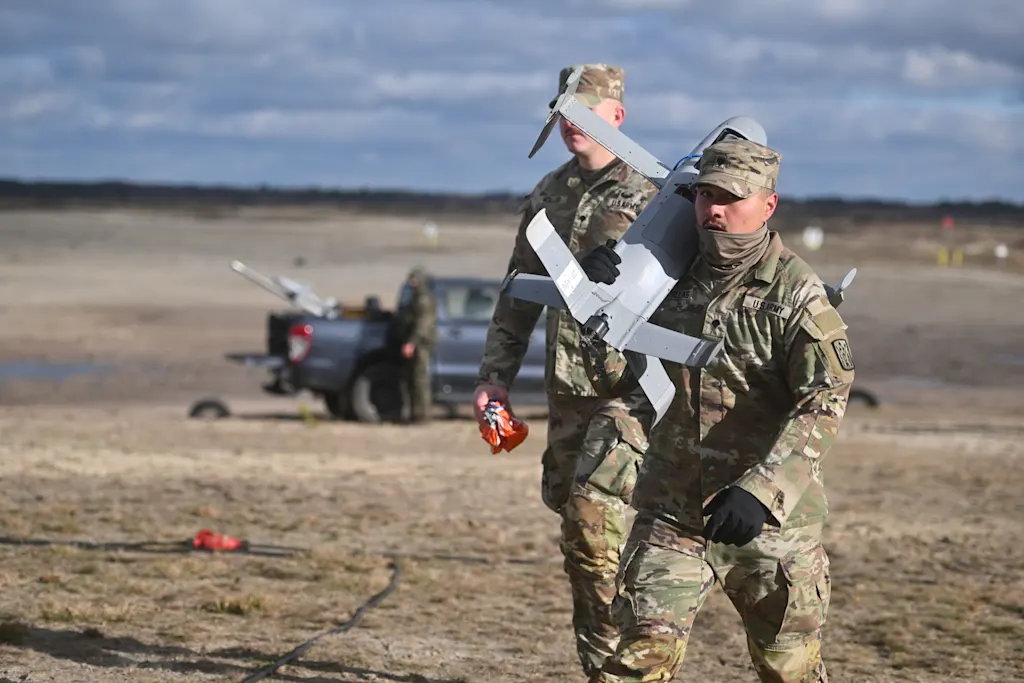
Merops is a kinetic drone interceptor—a robotic flying bullet that uses brute force to smash into its target. It’s agile to deploy: A crew of just four people can assemble and launch it directly from the back of a standard pickup truck or light tactical vehicle. Once in the air, the drone relies on AI—a digital brain that processes sensor data to make real-time targeting decisions without a human pulling the joystick—to autonomously track and strike incoming adversary drones like the Shaheds, knocking them down or obliterating them in midair.
A single Merops system costs about $14,500—several times the cost of some cheaper drone systems—but the math checks out. The Shahed drone it’s designed to thwart ranges from $15,000 to $30,000 depending on its payload. Merops has already proved highly effective against Russian versions of the Shahed, prompting NATO nations like Poland, Romania, and Denmark to adopt the system last year to protect their own airspace.
Time to change, fast
We are witnessing the rapid evolution of drone warfare. But a U.S. military that’s relying on $14,500 truck-launched robots exposes a glaring truth: The Pentagon’s legacy defense networks are fundamentally mismatched with modern combat.
Historically, the U.S. has relied on a layered, multimillion-dollar defense strategy using Patriot missile batteries and THAAD systems to smash into ballistic missiles, the latter in the vacuum of space just before they reenter the Earth’s atmosphere.
But these systems are financially ruinous against cheap drones. As Iain Boyd, an aerospace engineering professor at the University of Colorado Boulder, points out: “Because each interceptor costs several million dollars, it is a losing proposition to use such systems to destroy rockets that only cost $100,000.”
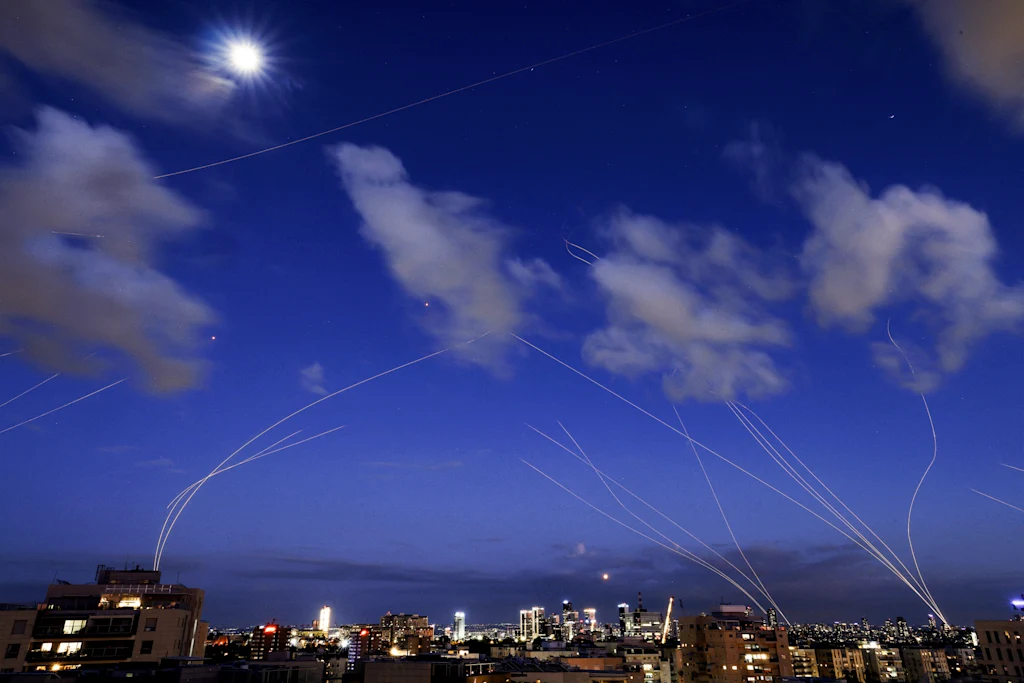
Just three days into the war with Iran, the U.S. and Israel had burned through 800-plus Patriot interceptor missiles—more than Ukraine received over four years from all its allies combined. By the end of the first week, Washington had spent roughly $4 billion on missile defense interceptors. Even fallback systems like the Navy’s Phalanx—an automated machine gun that spits out 4,500 rounds per minute—are flawed. At $30 a round, the defense sounds cheap, but it can empty its entire magazine in a mere 20 to 30 seconds.
Air defense needs to keep up with the pace of drone threats. The U.S. is experimenting with directed-energy weapons, like the Navy’s 60-kilowatt HELIOS laser, or high-power microwaves that shoot invisible waves of energy to short-circuit the electronic wiring of incoming missiles. Boyd notes that these technologies have an “infinite magazine,” meaning they can fire endlessly as long as they’re connected to an electrical power source. But those aren’t fully ready for mass deployment.
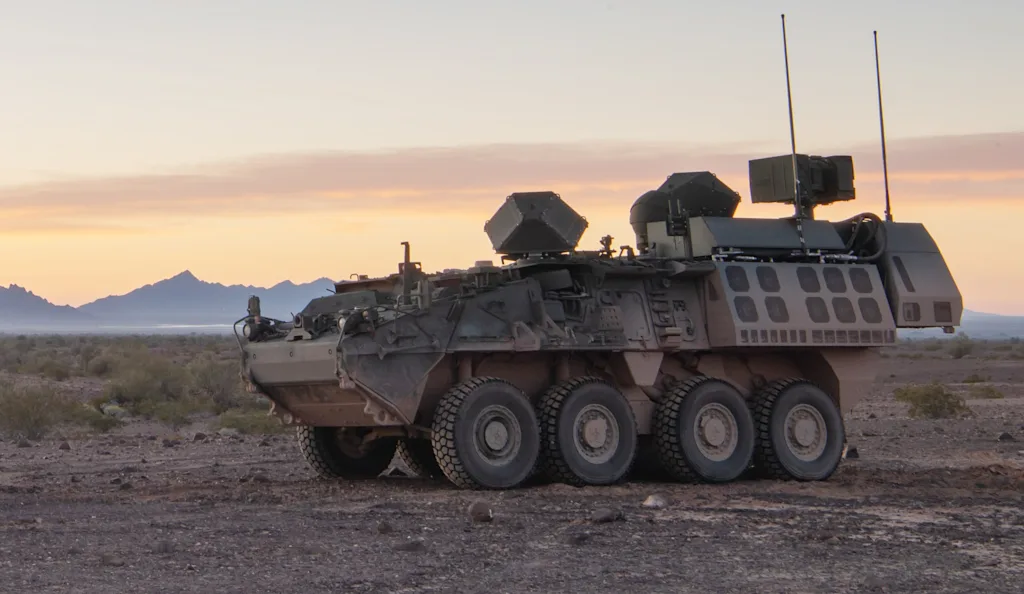
Nobody knows when the Pentagon will catch up. The U.S. military-industrial complex is sluggish and still focused on sixth-generation fighters and stealth bombers like the B-21 Raider. Do these systems have a place in today’s military world? Probably—for now. But for how long? The Chinese are still working on large military systems, from nuclear aircraft carriers to their own sixth-generation fighters and stealth bombers, but they’re increasingly shifting focus toward deploying AI-powered drone swarms and flying aircraft carriers capable of launching hundreds of drones in midair.
These projects take years of research to realize. But in Ukraine, military tech becomes obsolete every six weeks. Russia’s newest attack drone, the Geran-5, flies at 370 mph—fast enough to outrun current Ukrainian interceptors. “The Russians are trying. They are not as stupid as they look,” Roman Yeremenko, a director at Aero Center, says. “They are adapting to our means of destruction.”
The arms race will keep racing. If the U.S. doesn’t rapidly evolve its multimillion-dollar defense paradigms to embrace cheap, agile, adaptable, AI-driven drones, it will be left behind in the ashes of its own expensive hardware. As Yeremenko puts it plainly: “This is a war of technology. And the one who is ahead will win this war.”