Efficiency by Design
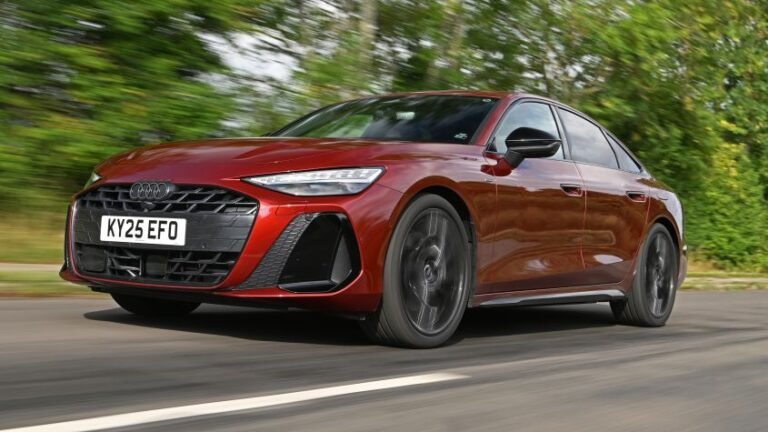
When the electric vehicle market began to grow significantly at the start of this decade, discussions around aerodynamics became more prominent. That’s largely because a more streamlined shape reduces drag, helping improve driving range. EVs such as the Lucid Air and the Mercedes-Benz EQS stand out with drag coefficients (Cd) of 0.197 and 0.20, respectively.
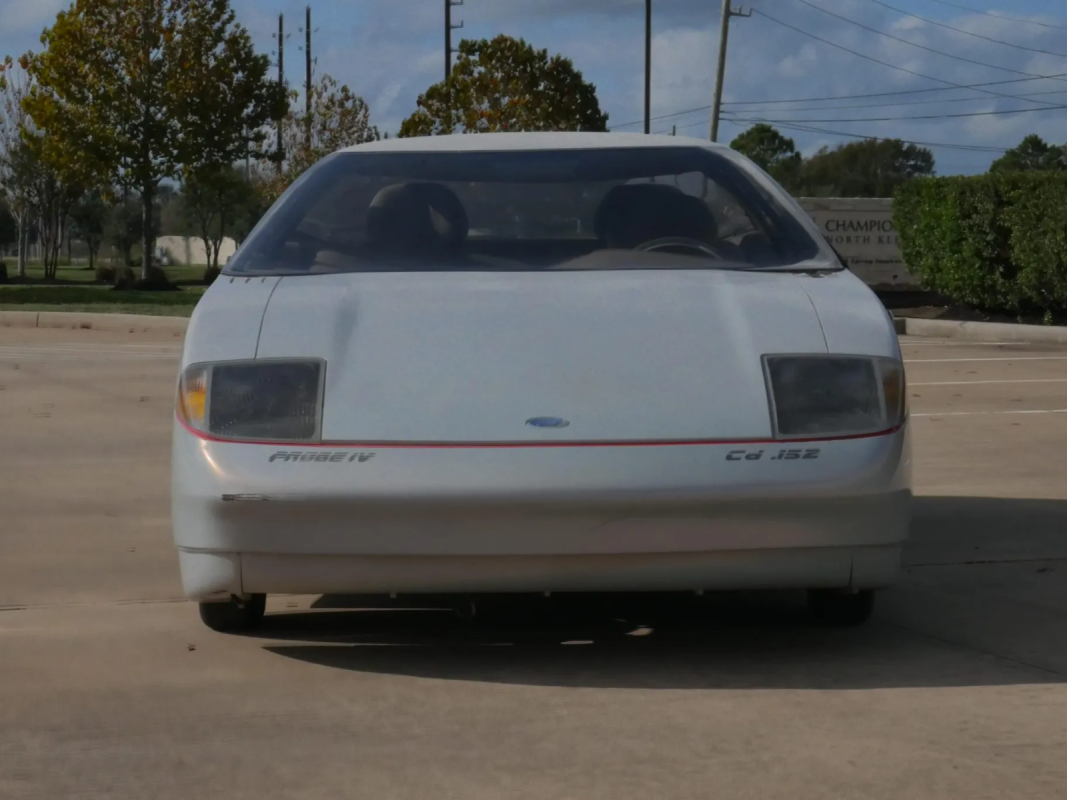
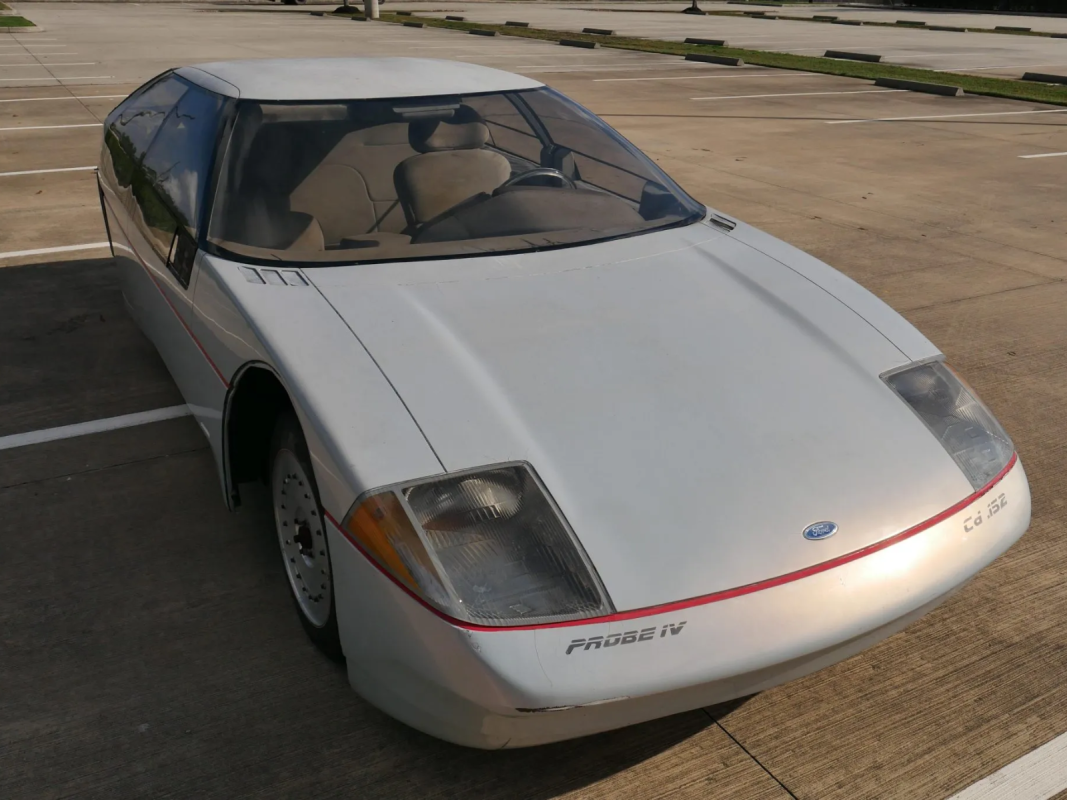
By the early 1980s, however, Ford, in collaboration with Italian design house Ghia, developed two concept cars as part of a series of low-drag prototypes that easily edge out today’s EVs in aerodynamics, with a claimed 0.152 Cd. Known as the Probe IV Concept, the prototypes were used to study extreme low-drag design and features such as adjustable ride height, and the first of the two examples (chassis #001) is currently up for sale on Bring a Trailer.
But You Can’t Drive It
To be fair, the 1983 Ford Probe IV Concept was designed with far fewer constraints than modern EVs, as it was intended for wind-tunnel testing rather than public roads. Production models must meet strict safety regulations, including passing crash tests, which force automakers to make design compromises that can affect overall drag. They also require additional airflow openings to cool components such as brakes.
Nevertheless, the Probe IV shows just how far aerodynamic design can be pushed – an impressive feat considering it was developed more than four decades ago.
According to the listing, the vehicle – featuring a fiberglass bodywork over a wood frame – was previously displayed in the private collection of the owner of Gullo Ford in Conroe, Texas, before being acquired by the current seller in 2024. The second example is currently on display at the Petersen Automotive Museum in Los Angeles and is considered the more complete of the two.
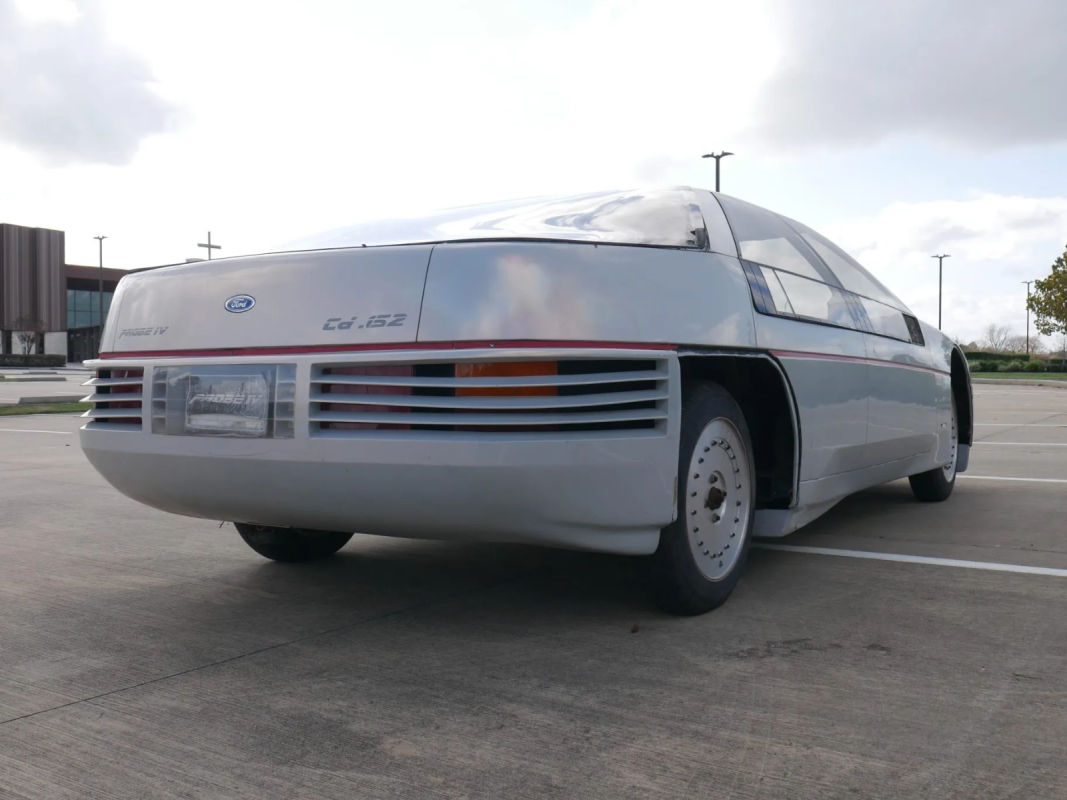
That’s because chassis #001, the example for sale, is not a functioning car. Unlike the other prototype, which runs on a 1.6-liter turbocharged four-cylinder engine, this one lacks an engine, transmission, brakes, and a steering system, though the front wheels can be manually repositioned. It also shows several imperfections, including a sagging rear roof, missing mirrors, and a left-front spat that does not stay in place.
The Value of Engineering History
So why would anyone buy it? The Probe IV Concept essentially offers a piece of engineering history – one that likely helped Ford refine aerodynamics in future models. With only two examples ever built, it also represents an exceptionally rare opportunity for collectors.
The listing is scheduled to end on March 22, with the current bid at $1,500 as of this writing.