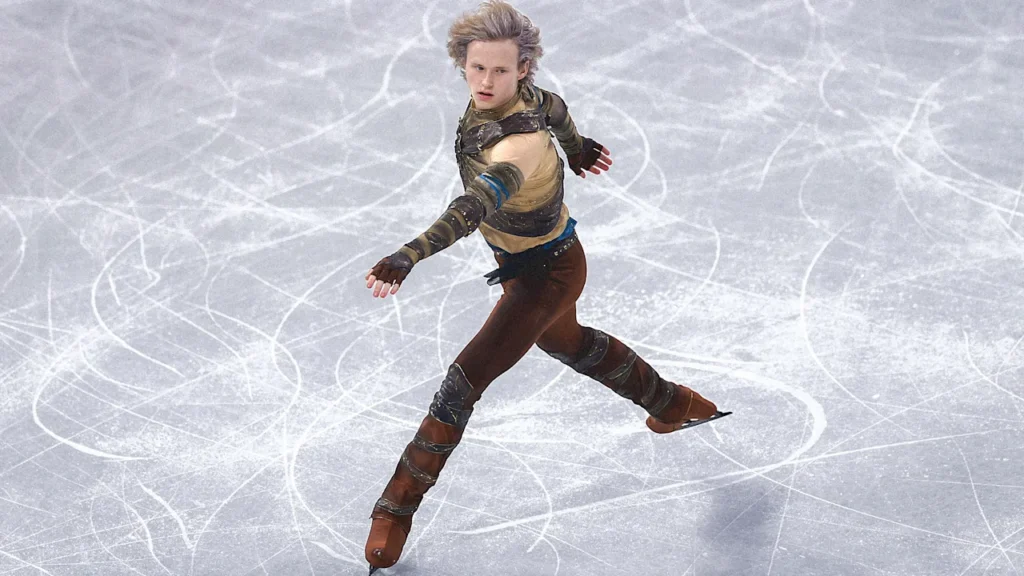
Part of a figure skater’s job is to make their routine look as effortless and graceful as possible, as if they’re floating on ice and soaring into the air through sheer force of will. In reality, they’re often launching themselves multiple feet into the air with what amounts to sand bags on their feet; generating hundreds of pounds of centripetal force through rotations; and landing on a blade that’s just 3/16 of an inch wide.
At the 2026 Winter Games in Milan and Cortina, Italy, NBC is using an AI tool developed by a former MIT researcher to help audiences understand just how mind-boggling the feats of today’s Olympic athletes are.
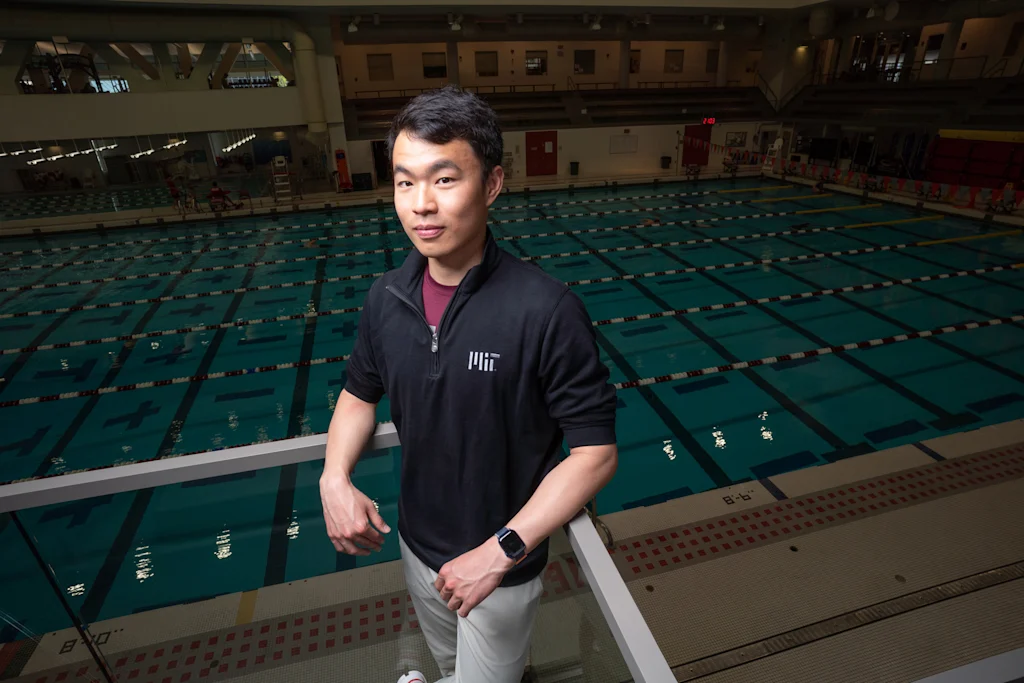
Jerry Lu is a 2024 MIT graduate and the founder of OOFSports, a sports analytics company that uses AI to analyze program footage, document performance data in real time, and allow commentators to give viewers a more concrete understanding of athletes’ feats. At Milan Cortina, he’s partnering with NBC Sports on its figure skating, snowboarding, and skiing programming, collecting data like the height of jumps, athletes’ speed, and their rotational paths.
As figure skaters continue to break new ground in the sport—like landing more and more jumps with quadruple rotations (see American skater Ilia Malinin’s first-ever quad axel landed at the Olympics), Lu’s AI-powered tech can help make sense of their routines, moment by moment.
A big ask from NBC
Lu’s career in sports analytics began with his own interest in competitive swimming. During his undergraduate studies at the University of Virginia, he worked with the mathematician Ken Ono to develop a wearable device that let the school’s swimmers analyze their strokes, which helped them to increase propulsion and reduce drag. Lu later served as a technical consultant for five swimmers who won medals at the Tokyo Olympics in 2020, followed by 16 medalists at the Paris Olympics in 2024.
During his time at MIT in its dedicated sports lab, Lu began experimenting with sports analytics technology for other fields, including a program designed to help Australia’s BMX freestyle team optimize its strategy. Following the Paris Olympics, he says, NBC approached him directly to ask if he could create a data analytics system for figure skating in Milan Cortina.
“At that point, some of the artistic sports were missing this data-driven storytelling ability—if you watch hockey on TV, it looks slow, but if you watch it in person, it looks fast,” Lu says. Similarly, he explains, if one were to watch American figure skater Amber Glenn perform a jump on screen, it might not look mind-blowing—but in person, she would be soaring unbelievably high in the air. NBC needed a way to bridge the gap between those two experiences.
Building an AI model for the Olympics
For Lu and his team—none of whom are skaters—the first step toward building this tool was jumping on a call with former Olympic skaters and longtime NBC analysts Tara Lipinski and Johnny Weir. Unlike sports like swimming or track and field, the judging parameters for figure skating can involve quite a bit of grey area, meaning that Lu’s team needed a full run-down of what the judges would be looking for.
“They essentially taught us the sport,” Lu says. “They taught us exactly what they were looking for, what the judges are looking for, what, from their understanding, is a virtue, and what’s a vice. We needed to come up with ways to quantify those and essentially give them the metrics with which they can compare across athletes.”
Making a tool for analyzing figure skating required a completely different system from swimming, Lu says. Whereas propulsion and drag were the two main variables in that sport, figure skating is all about the speed and rotation needed to complete complicated jumps. To calculate those metrics without wearables, his team trained an AI model to analyze program footage and identify a variety of rotational points on the athlete’s body, from their head to shoulders, elbows, hips, and ankles.
Using those data points, the team then taught the model to categorize different jumps based on body positioning—like the toe loop, luxe, and axel—and, further, to count the athlete’s total rotations in order to classify the jumps as a double, triple, or quad. By understanding exactly where the skater is at any given point, the AI model can calculate statistics like their speed when entering a jump, total jump height, jump exit speed, and the ground they cover across the rink; all crucial elements of their performance. These kinds of numbers can help commentators like Lipinsky and Weir paint a much more detailed picture for this year’s Olympic viewers.
Will AI ever replace Olympic figure skating judges? This researcher says no
Outside of his collaboration with NBC, Lu has turned his figure skating model into an app called OOFSkate, which lets skaters of any level film their routines and instantly understand their own stats. The app became an official partner of U.S. Figure Skating in December 2025.
Lu’s next step is creating a version of this technology that not only tracks skaters’ routines, but also scores them. Right now, he already has a model in the works, which he plans on debuting some time during the skating off-season. Ultimately, he says, the model will be able to assist in evaluating technical performance on a select number of skills, but it will never replace human judgements on athletes’ artistic performance.
“Figure skating is this very unique blend of artistic and technical abilities,” Lu says. “The Olympics is all about athletes going higher, faster, stronger—otherwise you don’t deserve to be here. Figure skating has a part of that, which is that the bigger jumps get awarded bigger points, which is correct—if you did a quad and I did a triple, you should get more points. But at the same time, this artistic element is also part of the thesis of figure skating.”