Amid the usual barrage of new launches around this time of year from the likes of Samsung and Xiaomi, I’ve been checking out the highest-end device yet from a manufacturer many readers won’t have heard of—but it’s one that marks an unusual collaboration with another brand that might be more familiar.
Infinix is a sub-brand of Chinese company Transsion, which also owns the smartphone maker Tecno. The manufacturer is particularly successful in developing smartphone markets like Africa and the Middle East; across all of its brands, Transsion accounts for about half of Africa’s smartphone market share, according to figures from Canalys last year.
Infinix largely targets young consumers in the markets where it operates. Its ultra-popular Hot series is designed to be affordable and stylish, while the Note is a step up in performance and functionality. The new Note 60 Ultra, however, is Infinix’s first attempt to compete in truly premium terms.
The spec sheet
By global standards, the Note 60 Ultra doesn’t really justify the “Ultra” designation if you look at its spec sheet, though it’s certainly at the high end of what Infinix typically produces. It’s based on a midrange MediaTek Dimensity 8400 Ultimate system-on-chip, topping out at 512GB of storage and 12GB of RAM.
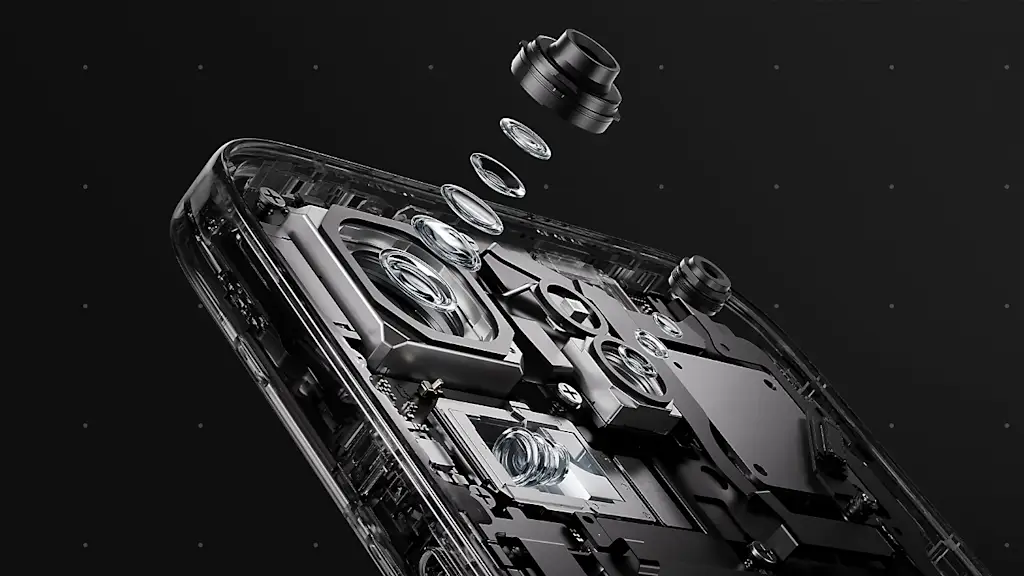
The camera setup, meanwhile, is capable but cuts corners. The main camera uses a reasonably sized 200-megapixel sensor, backed by a 50-megapixel 3.5x telephoto and a pokey 8-megapixel ultrawide. Results are fine for the price point, but you might expect more from something with Ultra in the name.
It’s harder to pick nits with the display—you get a 6.78-inch 144Hz 2644-by-1208 OLED panel, which looks great in any environment. There’s also a very high-capacity silicon-carbon battery at 7,000mAh (milliampere-hours) that can be charged at up to 100 watts, getting you a 50% charge in about 18 minutes, and there’s support for wireless charging at 50 watts.
Stand-out design
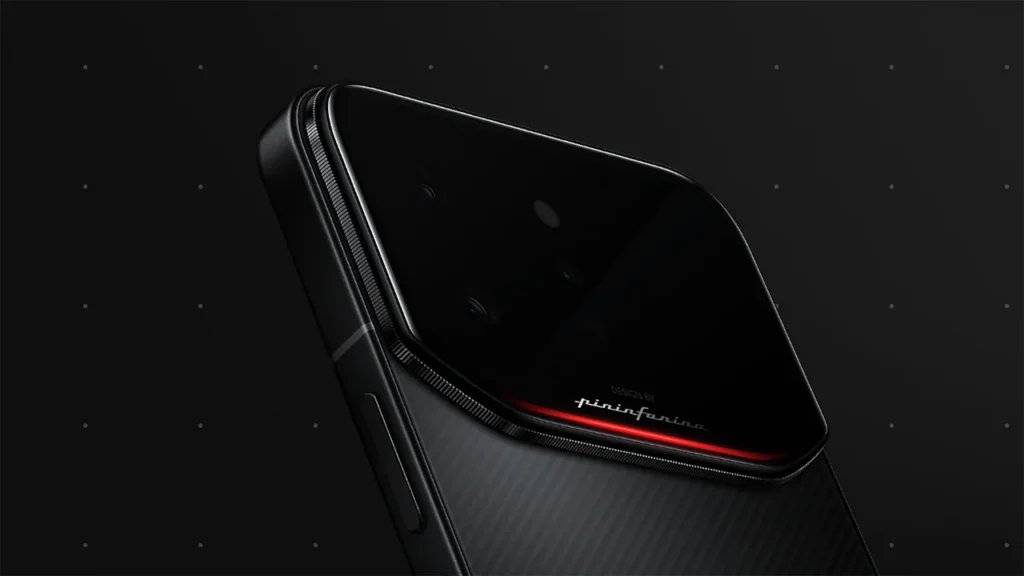
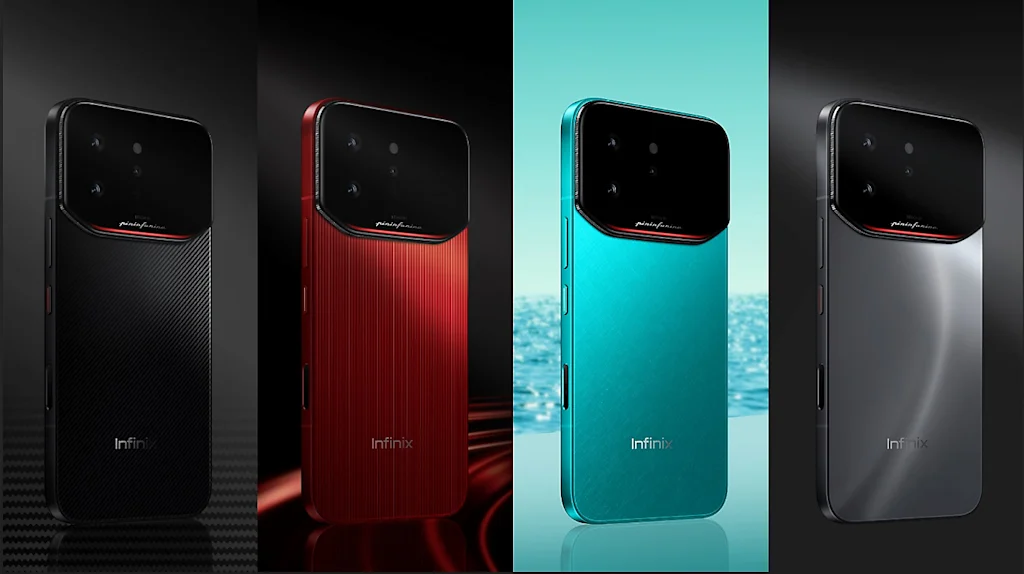
But where Infinix is really aiming to stand out is with the design. The company partnered with Pininfarina, the Italian car design house that’s probably best known for its collaborations with Ferrari—including the iconic F40 and Enzo. This is the first time Pininfarina has worked with a smartphone brand, and you can see the evidence of supercar styling all over the Note 60 Ultra.
The most conspicuous element is the “uni-chassis” camera bump that stretches across the entire top third of the phone. The whole construction is covered by a single opaque piece of glass, obscuring the actual camera hardware. The bottom edge of the camera module is highlighted by a red LED that flashes on for notifications and is reminiscent of sports car taillights.
The right side of the camera module houses another surprise: a low-resolution monochrome active-matrix display. This can be used to display the time, the weather, battery charging status, basic minigames or simply a cute pixel-art pet on the back of your phone. It’s similar to what Nothing has done with some of its recent devices, but rather than being the focal point of the industrial design, the display is completely invisible when not in use.
The rest of the Note 60 Ultra’s back panel is finished off in Kevlar-style fiberglass, which would not be my first pick on another device but feels appropriate enough here given the car influence. The overall effect of the phone’s construction is remarkably sleek and coherent.
Charger as paperweight
Perhaps the most ostentatious result of the Pinanfirina collaboration—yes, even more so than the camera bump taillight—is the bundled wireless charger. This is a weighty slab of vaguely car-shaped metal that would effectively serve as a classic desktop paperweight. It has a little more utility than that, though, housing an included magnetic wireless charging puck. It might not be the most efficient use of desk space but I admit it does look quite cool.
Overall, Infinix has proven that it can produce a well-made flagship-adjacent device with the help of Pinanfirina. The Italian firm’s contributions to the Note 60 Ultra go well beyond previous automotive collaborations we’ve seen in the industry, like OnePlus with McLaren or Huawei with Porsche Design.
The question, though, is whether anyone will actually buy it. Right now the Note 60 Ultra is available only in Malaysia for an equivalent price of around $750, far beyond what people are normally willing to pay in Infinix’s strongest markets. Even outside of those, it’s getting into iPhone territory, and the Android competition is fierce at this pricing tier.
It seems unlikely that Infinix ever intended to ship the Note 60 Ultra in large volumes; the wireless charging stand alone means it comes in an impractically huge box. Instead, it’s probably best thought of as a Pinanfirina design study that serves as a halo device for a brand with higher aspirations. Taken on those terms, it’s surprisingly effective; I’ll be watching to see whether Infinix can bring some of this design sensibility to more mass-market products.