Everyone’s talking about capital punishment these days. It’s a reflection of public outrage against a senseless murder. But it sounds too much like the line from the Grade-B Western, “Give him a quick trial, and a quick hangin’.”
Last week, Utah prosecutors indicted Tyler Robinson on seven counts, including aggravated murder of right-wing activist Charlie Kirk. Gov. Spencer Cox (R) said the state would seek the death penalty. Would Cox have been so quick to demand the death penalty had the victim been George Soros?
Kirk might have agreed — in a video clip often cited as evidence of his politically extreme views, he once advocated for televised public executions with corporate sponsors, with at least older children allowed to watch.
While the alleged killer’s motivation and mental state remain unclear, Trump and many of his MAGA supporters were quick to blame the “radical left” for the violence, even though a 2024 report from the Department of Justice noted that “since 1990, far-right extremists have committed far more ideologically motivated homicides than far-left or radical Islamist extremists.” Julia Ornedo of The Daily Beast reported that the Department of Justice removed the report from its website after the shooting.
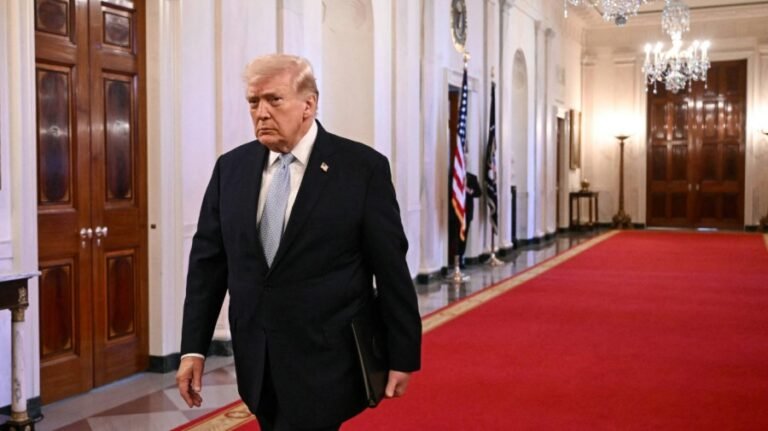
President Trump, speaking of the cowardly murder just hours after Tyler Robinson’s arrest, declared, “I hope he gets the death penalty.” Appearing on “Fox and Friends,” he said, “I hope he gets the death penalty” and a “quick trial.” Lest we forget, the Constitution requires a fair trial with due process before the government deprives anyone of life or liberty.
Trump is a longtime friend of the death penalty, even in cases where no one has been killed.
In April 1989, a young woman — a white woman — went jogging in Central Park, where she was attacked, raped and bludgeoned, and left for dead. Five black and Hispanic teenagers (later exonerated) were arrested for the crime and pressured into confessing. Trump then a New York real estate mogul in the public eye, bought full-page ads in the city’s papers calling for the execution of the “Central Park Five.” BRING BACK THE DEATH PENALTY! BRING BACK OUR POLICE!” Trump’s ads ran — in effect calling for a lynching.
In New York, where Luigi Mangione faces trial for the murder of United Healthcare CEO Brian Thompson, Trump’s attorney general Pam Bondi cobbled together an indictment calling for the death penalty. There is no death penalty in New York, where state charges against Mangione are proceeding while the federal charges seeking the death penalty are being held in abeyance. Indeed, a New York judge just threw out terrorism charges against Mangione but let the murder counts stand.
Under Trump, judicial executions in red states have ticked upward. There have been 30 so far this year, as opposed to 25 in all of 2024. The Supreme Court, on its shadow docket, denied stays of execution in 26 of them.
Seventy percent of the world’s countries have abolished the death penalty. There is no evidence they have since suffered an increase in capital offenses.
The rationale for the death penalty is deterrence and retribution. It is how an angered public exacts vengeance on its murderers. There is little evidence that capital punishment is a deterrent to school shooters, gang members, organized criminals, the lawless (who Trump claims are taking over our cities) or lone wolf killers, like the murderers of Brian Thompson and Charlie Kirk.
The late Justice Antonin Scalia, a devout Roman Catholic, believed the death penalty to be moral. He argued that “government … derives its moral authority from God. It is the ‘minister of God’ with powers to ‘revenge.’”
Citing the same passage of Deuteronomy that Saint Paul once quoted, he wrote: “’Vengeance is mine; I will repay, saith the Lord.” And in this world, he went on, “the Lord repaid — did justice — through His minister, the state. … If just retribution is a legitimate purpose (indeed, the principal legitimate purpose) of capital punishment, can one possibly say with a straight face that nowadays death would ‘rarely if ever’ be appropriate?”
Other jurists might disagree, arguing that the death penalty is too cruel, too harsh, too unusual for a civilized society. While continuing to acknowledge the constitutional validity of the death penalty, the Supreme Court has said “death is different,” a penalty unusual in its finality, pain, and enormity compared to other penalties.
Robert Badinter, a former French justice minister, called on the U.S. to abolish the death penalty, arguing that capital punishment was a “bloody, revolting practice.”
Scalia’s concurring opinion in Kansas v. Marsh expressed doubts that any innocent person had ever been executed. But the justice system is imperfect and at times inhuman. Convicts spend decades of death row only to have their sentences commuted or reversed. In Callins v Collins, Scalia singled out the brutal murder of an 11-year-old girl as a reason for supporting capital punishment. “How enviable a quiet death by lethal injection compared with that!” Twenty years later, DNA evidence exonerated Henry McCollum, the intellectually disabled North Carolina man who had been sentenced to death for that murder.
James D. Zirin, author and legal analyst, is a former federal prosecutor in New York’s Southern District. He is also the host of the public television talk show and podcast Conversations with Jim Zirin.