
Editors’ Highlights are summaries of recent papers by AGU’s journal editors.
Source: AGU Advances
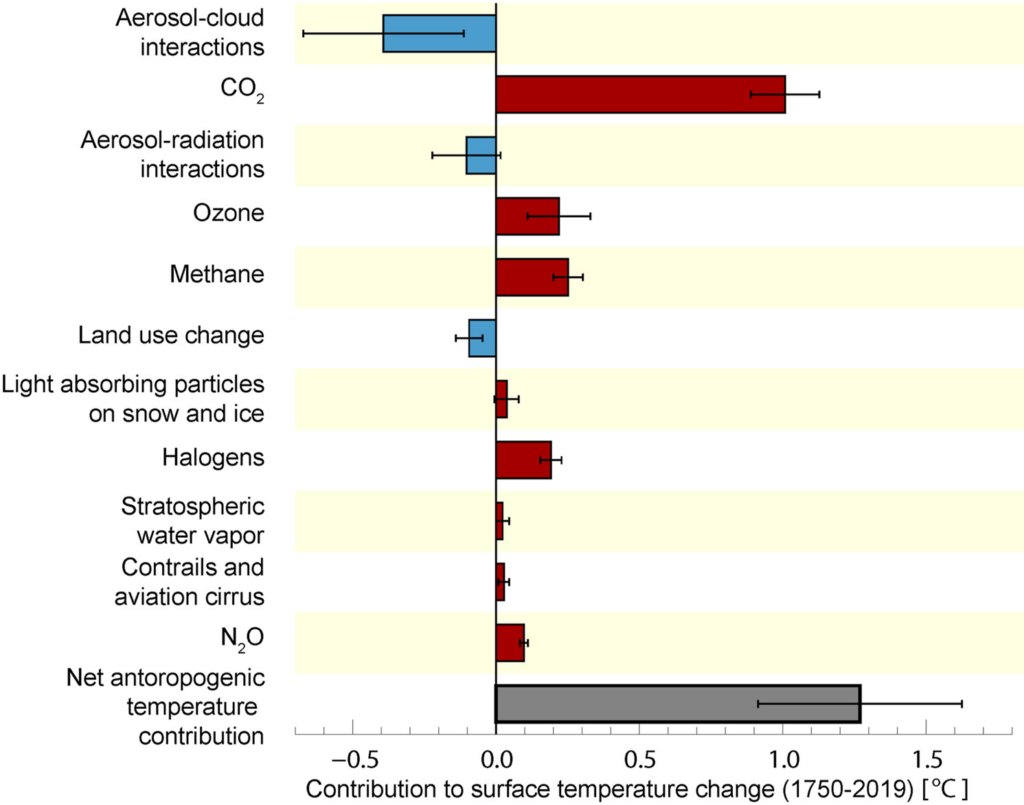
The dynamics of interactions between aerosols and clouds are far from being completely understood and, therefore, it is a source of uncertainty in climate modeling. In Im et al. [2026], a call is issued to integrate into climate models, through data assimilation, the innovative and massive information provided by satellite remote sensing, ground, and airborne observations. Machine learning is proposed as a valuable resource to improve our capability of integrating several sources of information and exploring new retrieval algorithms. Furthermore, machine learning provides the means to set up climate model emulators to speed up climate modeling. The authors call for a global effort to profit from renewed international cooperation to advance our understanding of aerosol-cloud interactions, with the target of reducing uncertainty of climate projections.
Citation: Im, U., Samset, B. H., Nenes, A., Thomas, J. L., Kokkola, H., Dubovik, O., et al. (2026). Aerosol-cloud interactions: Overcoming a barrier to projecting near-term climate evolution and risk. AGU Advances, 7, e2025AV001872. https://doi.org/10.1029/2025AV001872
—Alberto Montanari, Editor-in-Chief, AGU Advances
Text © 2026. The authors. CC BY-NC-ND 3.0
Except where otherwise noted, images are subject to copyright. Any reuse without express permission from the copyright owner is prohibited.