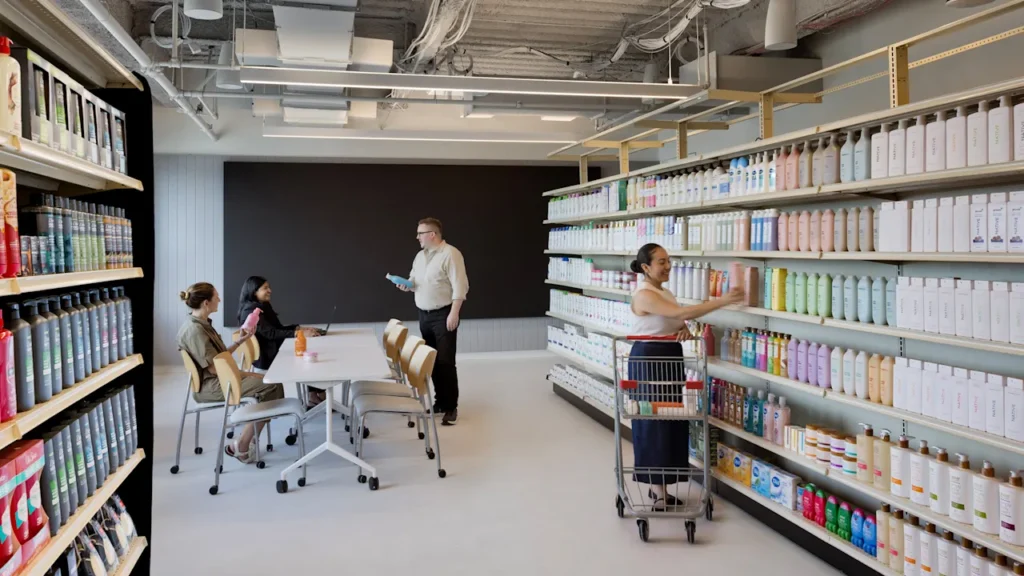
For consumer packaged goods, the path from product idea to store shelves runs directly through the center of Unilever‘s new North American headquarters, and not just because the company makes market-saturating products like Hellmann’s mayonnaise and TRESemmé shampoo. This new headquarters space was designed specifically to put the entire process of product creation on display in its office, from ideation to development to marketing to retailing.
Spread across 111,000 square feet in downtown Hoboken, New Jersey, Unilever’s newly opened headquarters is centered around an accessible spine of rooms and facilities that are optimized for bringing new products to market. There are “innovation labs” where ideas for new products come to life, workstations where ideas can take shape, a test kitchen and salon where products get sampled and refined, and a retail lab where the company and its retail partners can see the products as they’ll look on store shelves.
“We want people to walk in and just immediately know what it is we stand for and what it is we do,” says Nathaniel Barney, Unilever’s global head of workplace services, travel, and fleet. “Not just to see it on the walls, because images come and go, but actually to feel it in the design.”
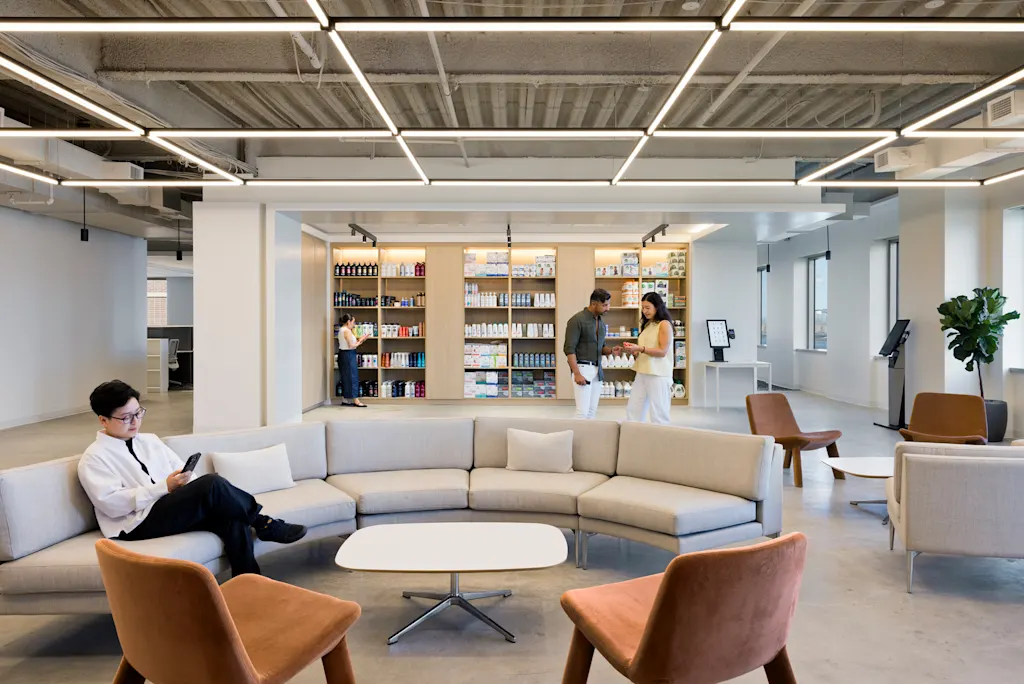
Unilever’s new headquarters is about a third of the size of the company’s previous suburban campus, 12 miles north in Englewood Cliffs, New Jersey. The smaller size prioritizes the collaboration required to develop its wide range of consumer products across personal care, beauty and wellbeing, foods, and home care. In the post-pandemic context, it’s also a recognition that the company didn’t actually need its big suburban footprint, according to Herrish Patel, president of Unilever USA. “When you’re like we are, now three days a week [in the office], actually those three days are all about connection, creativity, collaboration,” he says. “That’s why this design was built for the future.”
Bringing Unilver’s products to life
Unilever worked with the architecture firm Perkins & Will to design the space, centering its most collaborative product development functions in a spine that connects the entire office. Accessible by anyone passing by or taking a meeting in a nearby private room or sitting aside one of the picture windows with wide angle views across the Hudson River to Lower Manhattan, the product development spine is meant to draw in people—and ideas—from across the company.
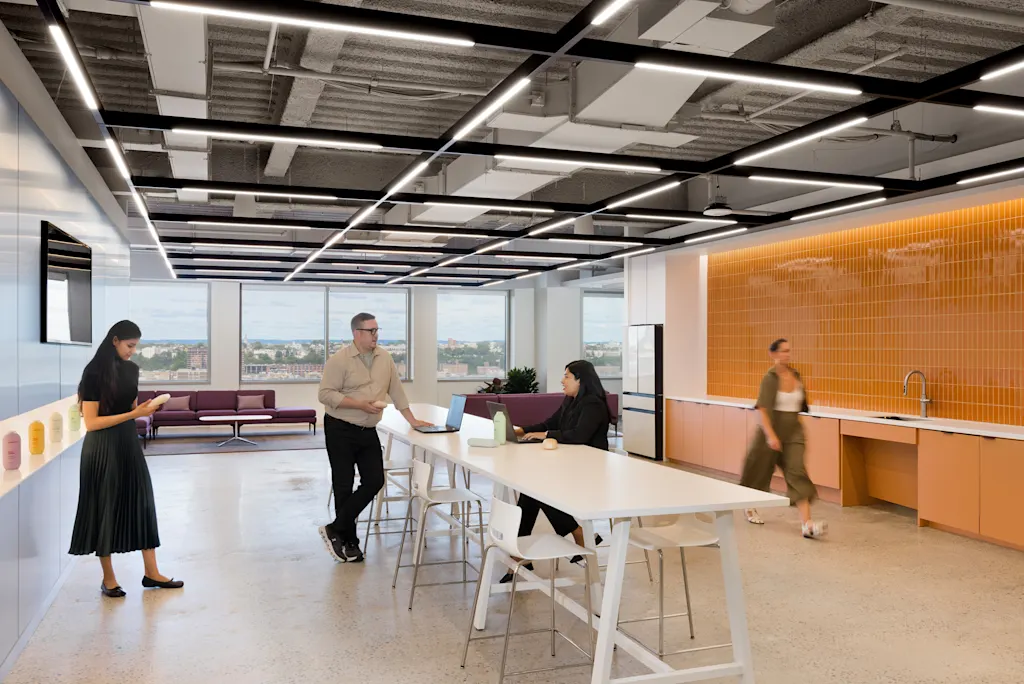
One easy draw, especially for a company in the food business, is the flavor-wafting test kitchen. “It’s the first thing you see when you walk into the space,” says Mariana Giraldo, design principal at Perkins and Will’s New York studio. “Right behind reception, there are two windows into the kitchen, so there’s no way you can miss it.”
Employees get a chance to see new foods and flavors being developed live, and also get a chance to taste products that may be coming to market years down the line. The test kitchen is also part of the product pipeline, where new ideas get piloted and refined.
Down the spine, “innovation labs” are intended to be blank spaces where those ideas can be born. Intentionally open and flexible in their furnishings and equipment, the labs leave themselves open to interpretation and reconfiguration.
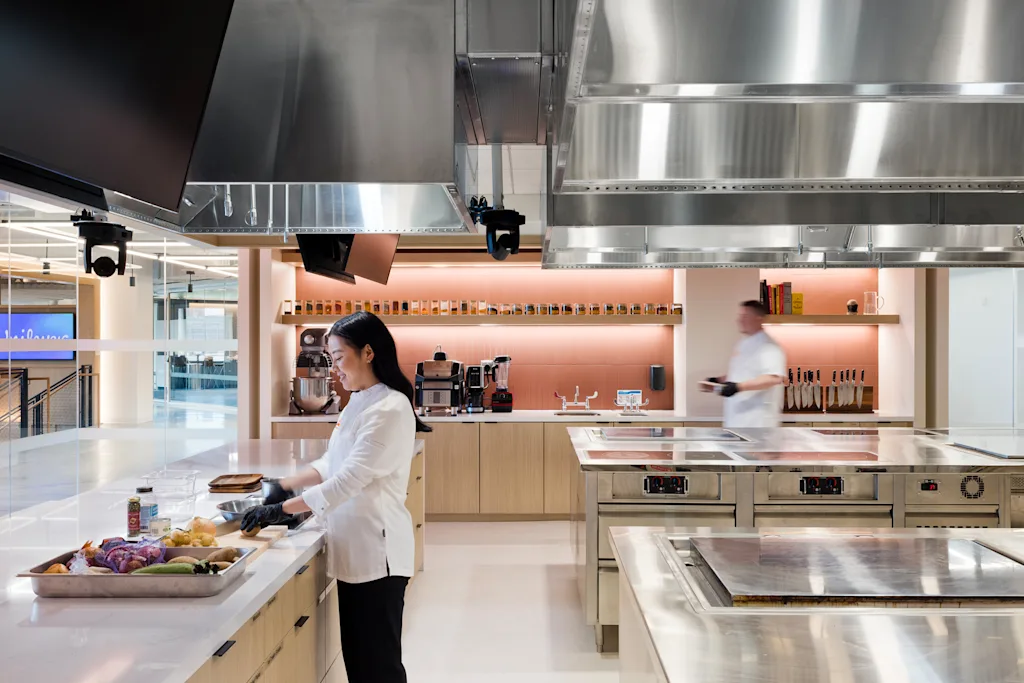
For products farther along in the product development timeline, there are spaces with a higher gloss and purpose, including the test kitchen and a fully equipped salon. Both can be used for research and development as products take shape, but also for marketing purposes when products are heading to shelves. Each doubles as a stage set.
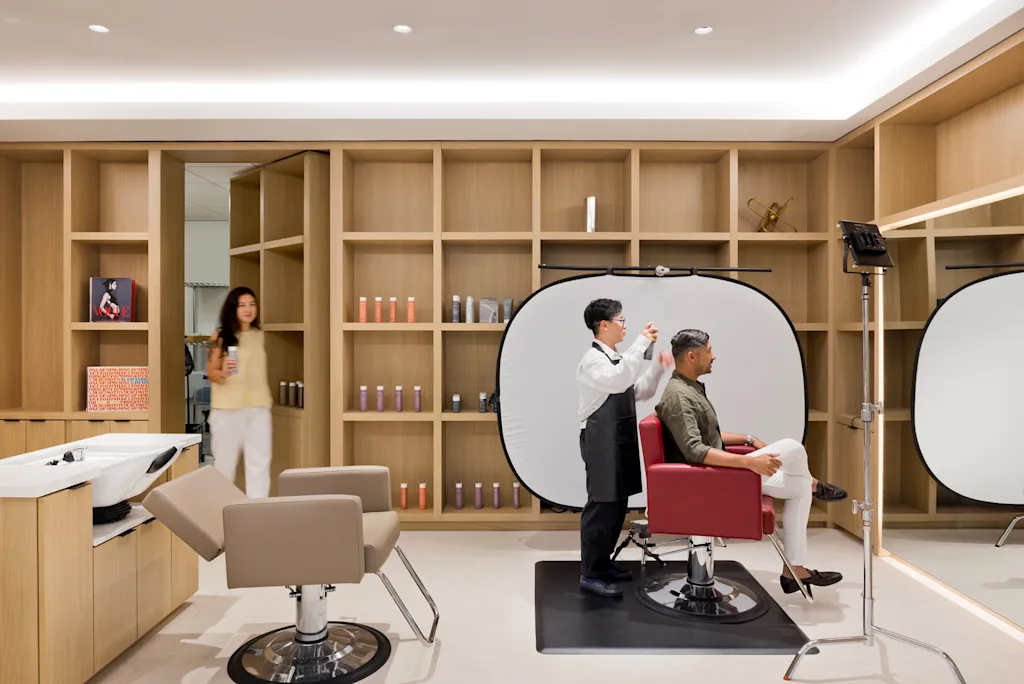
Beyond serving the product development process, these spaces are meant to attract employees and encourage more engagement with the creative side of the business. Giraldo says the design team approached these spaces as amenities within the workplace.
“Here, the amenities didn’t have the purpose of just being amenities for the for the sake of it, but really being amenities that connected back to the product, and that connected back to exactly the work being developed here,” she says.
Shrinking desk space
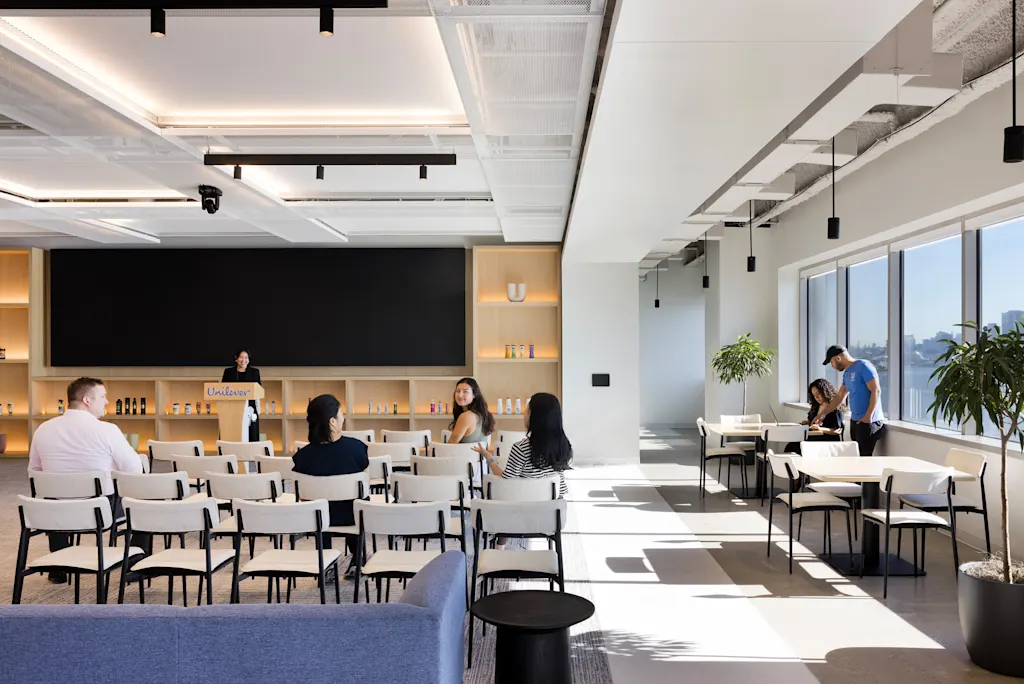
Product development also relies on heads-down and desk-centric tasks, so there are regular workstations and meeting areas in Unilever’s headquarters. But even these are shaped by the company’s focus on collaboration. Barney says that the new office carved out much more space for one-on-one meetings and smaller group interactions, and ditched formal conference rooms for large spaces that could expand or contract to host larger groups and events. (The test kitchen, for one, opens out to a common area, making it easy to integrate into an all-hands meeting or a large-scale taste test.)
“Today we need probably two times the number of small rooms to what we had five or six years ago,” Barney says. “What we see a huge need for is places where we can have groups of 35 to 50 people come together and then have another 20 to 30 people on screen, if not more . . . We had to create spaces that were designed around a very different set of criteria.”
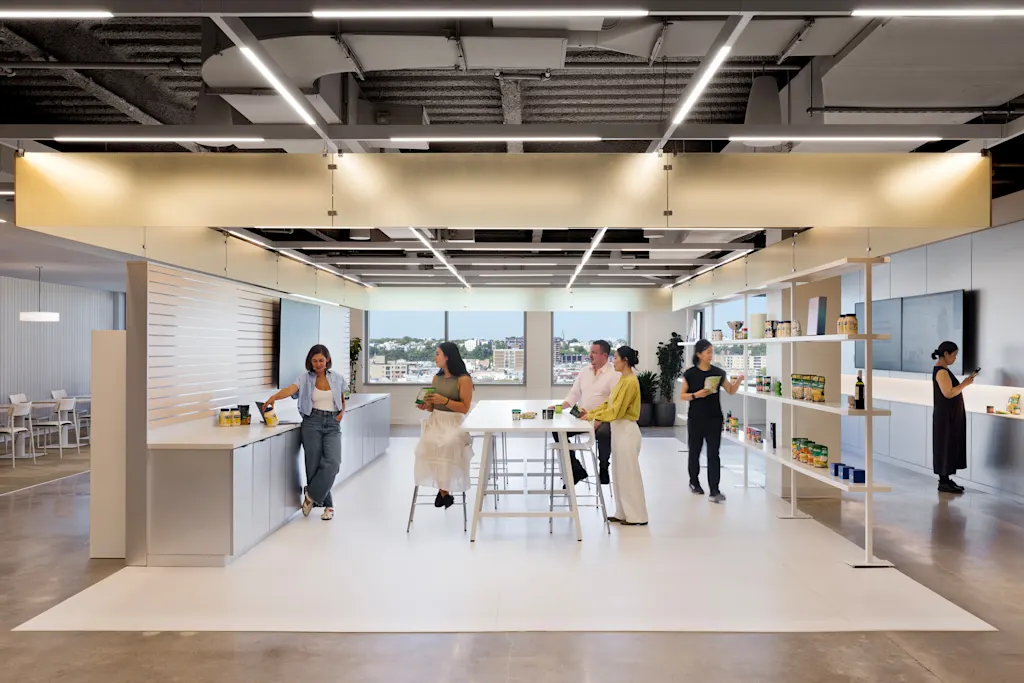
While Unilever’s headquarters was designed to create products and, by extension, profits, there’s an emphasis on informality across the space. That’s tied to an ethos Patel says is integral to the company’s culture. “We wanted to create a space and a location where our organization would love wasting time with each other,” he says. “We believe wasting time together is when culture blossoms. That’s when you get to know the person, you get to know what’s going on in their lives. There’s so much more than just work.”
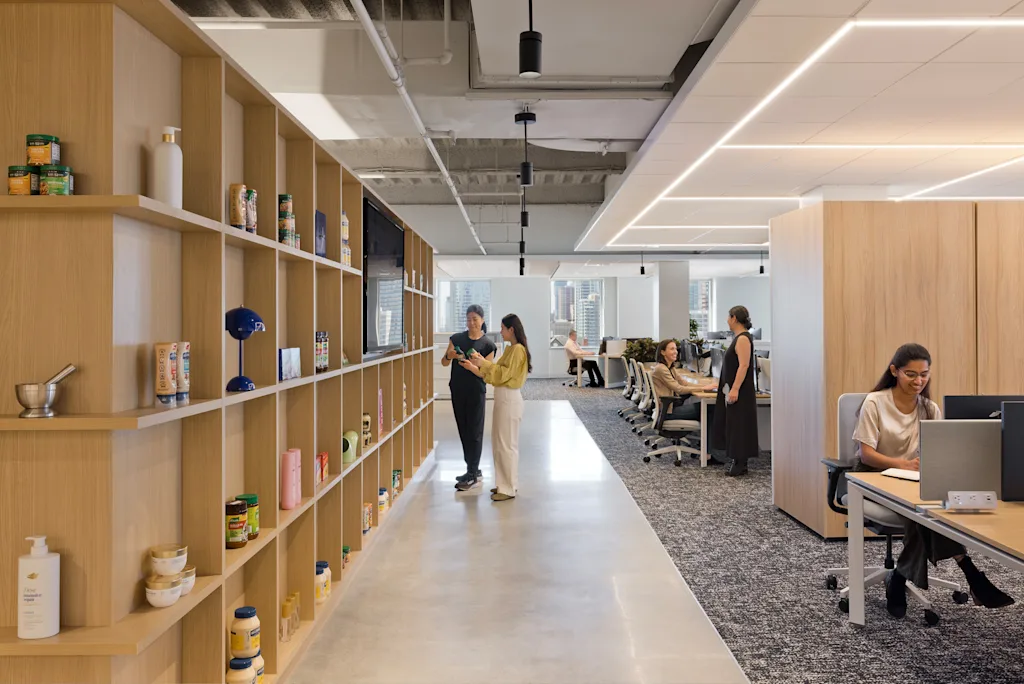
If that time wasting among employees leads to an idea for a new body wash concept or mayo recipe, all the better. They won’t have to go far to start turning those ideas into the products of the future.