Automakers have made some big improvements in EV range over the last several years, even while dropping prices, with a number of $30,000 models coming to market in the next few years. But there’s another big hurdle the industry needs to overcome before many potential buyers will be ready to plug in.
Kia
And that’s where a start-up called Ionna hopes to shake things up. Based in Durham, North Carolina and just marking its second anniversary, the company is rapidly rolling out what’s set to become a nationwide network of 30,000 charger bays. But that addresses just one of the roadblocks to widespread EV adoption, Ionna CEO Seth Cutler said during an exclusive interview with Autoblog.
A critical goal is to keep its chargers running at all times, no easy task considering the industry up-time averages barely 70%, resulting in EV owners facing the prospect of being stranded. Ionna is also determined to make the “charging experience” quicker, more secure and even a bit more fun, said Cutler.
Backed by 8 Automakers
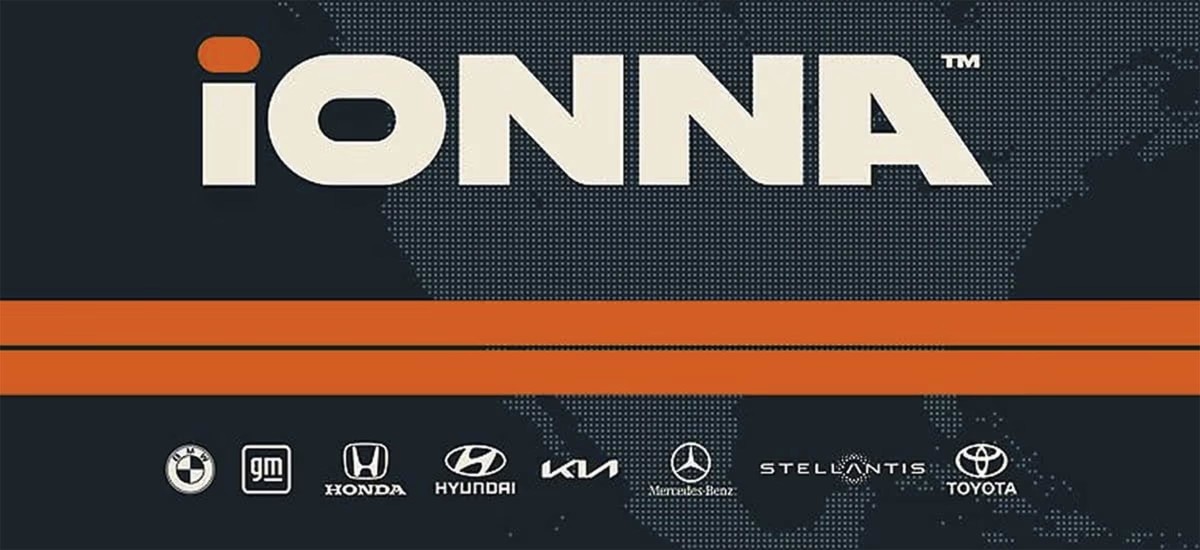
Since you’ll likely ask, “Ionna” is a classically geeky name, short for Ion North America, the codename early planners came up with when seven automakers decided not to wait for more familiar brands like EVgo, Electrify America and Shell Recharge to address the issue of public charging. Initially, BMW, General Motors, Honda, Hyundai, Kia, Mercedes-Benz and Stellantis kicked in cash, Toyota signing on, as well, shortly after Ionna was officially launched in March 2024.
The plan called for the start-up to put “at least” 30,000 DC quick chargers in the ground by 2030. With stations typically offering 10 to a dozen bays each, that would translate into as many as 3,000 individual locations, roughly equal to the current Tesla Supercharger network in the U.S. The 100th Ionna facility opened this month and the company expects to be operating in “the majority of states” by the end of the decade, said Cutler, but for Alaska, Hawaii, Montana and the Dakotas – though they could follow later.
Unplugged
It’s one thing to have a readily accessible network of chargers. It’s another to keep them running, as most EV owners can attest to. At any given moment, at least one in six EV chargers is out of service, according to a recent report by the National Renewable Energy Laboratory. Other studies have the figure closer to one in four – though the J.D. Power EV Experience Study released last month did find modest improvements in reliability.
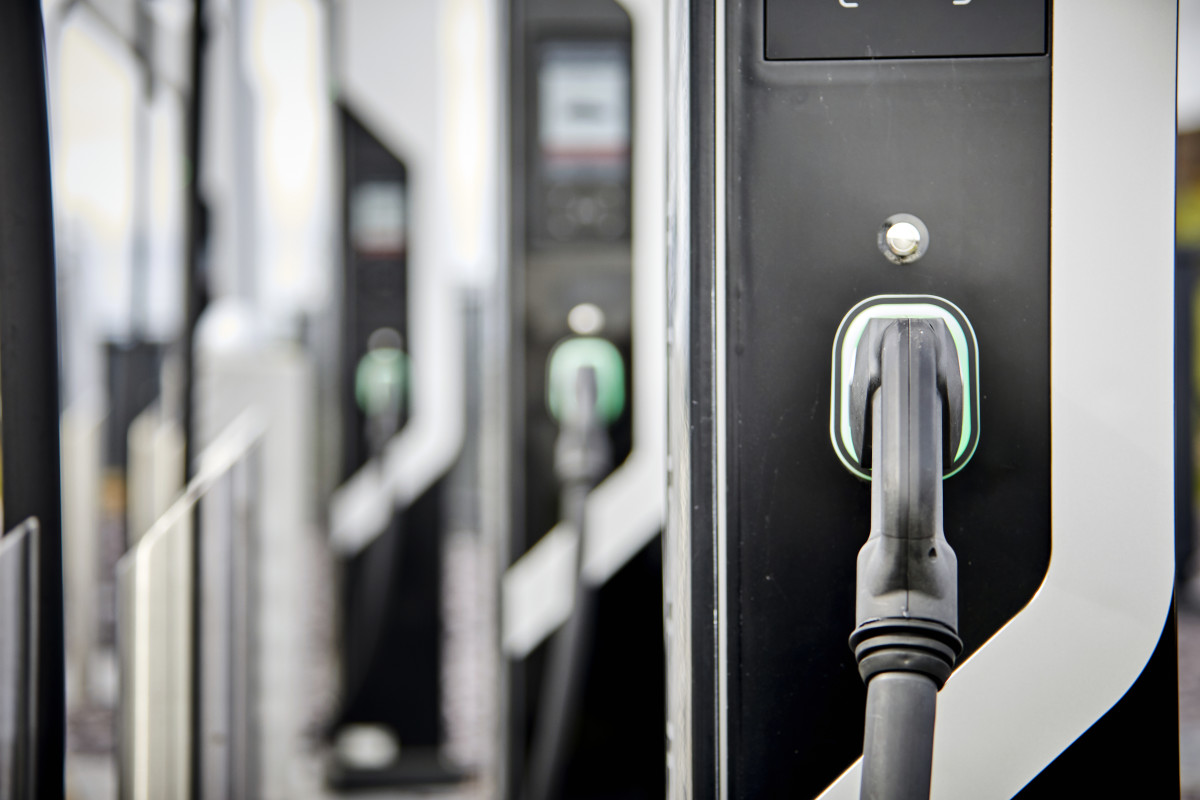
The possibility that an EV owner might not be able to get a charge, even if they can find a place to plug in, “creates angst from a consumer standpoint,” said Cutler. Consumers don’t want to be thinking “Am I going to get stranded?” They also want to be sure that the charger provides the promised amount of current. All too often, stations claim they can provide 350 kW but, once plugged in, that falls down to 150, 100, even 50 kW – which means substantially longer charging sessions.
Related: Tesla Leads JD Power EV Satisfaction Study as Honda Falls to Bottom
Ionna aims to deliver the dependability owners of gas vehicles expect at the pump. “Our uptime is 99.5%” at the first 97 sites that went live,” he reported. Just as importantly, added Cutler, when there is an issue, the company has set up methods to make sure it’s immediately identified, with technicians quickly dispatched to get the problem resolved.
In the Dark
Even when motorists can find a working charger that doesn’t mean they enjoy the experience of plugging in. All too often, charging companies have opted for low cost, out of the way locations with little in the way of lighting and no protection from the elements. Studies show women, in particular, concerned about security when plugging in. But even when they’re placed in better locations, EV chargers typically don’t offer the same level of convenience as a conventional service stations. And that creates an opportunity not only to improve the experience but also generate more revenue, said Cutler.
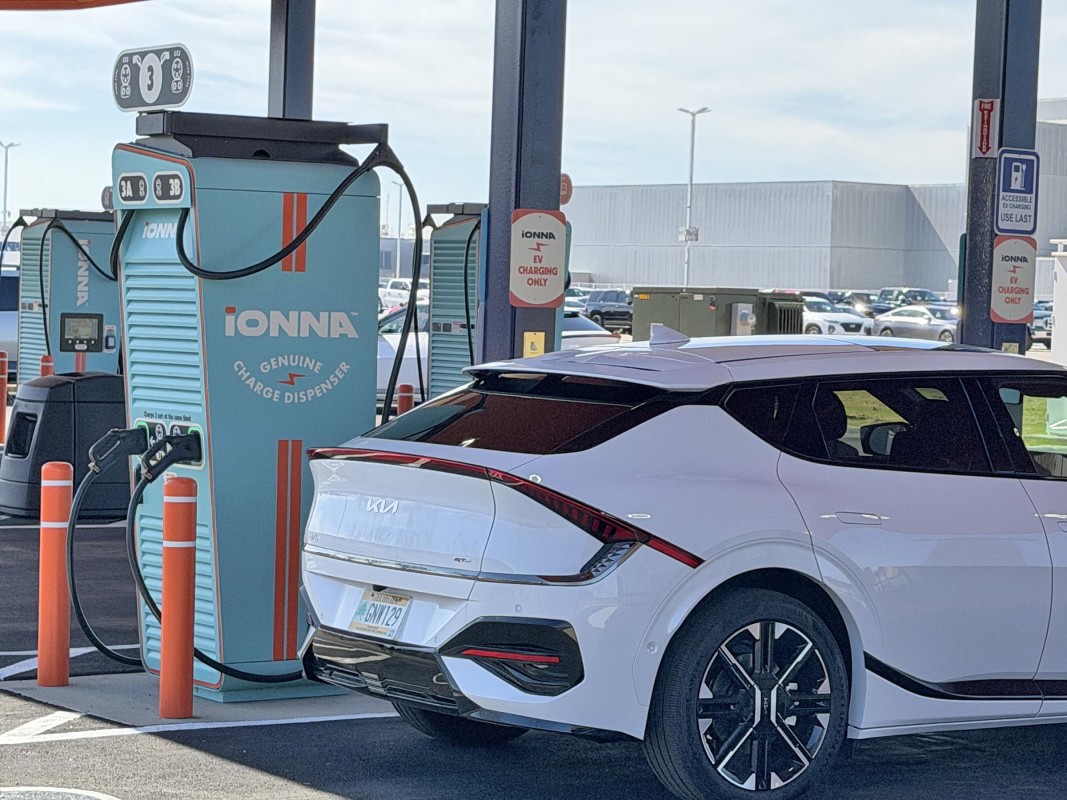
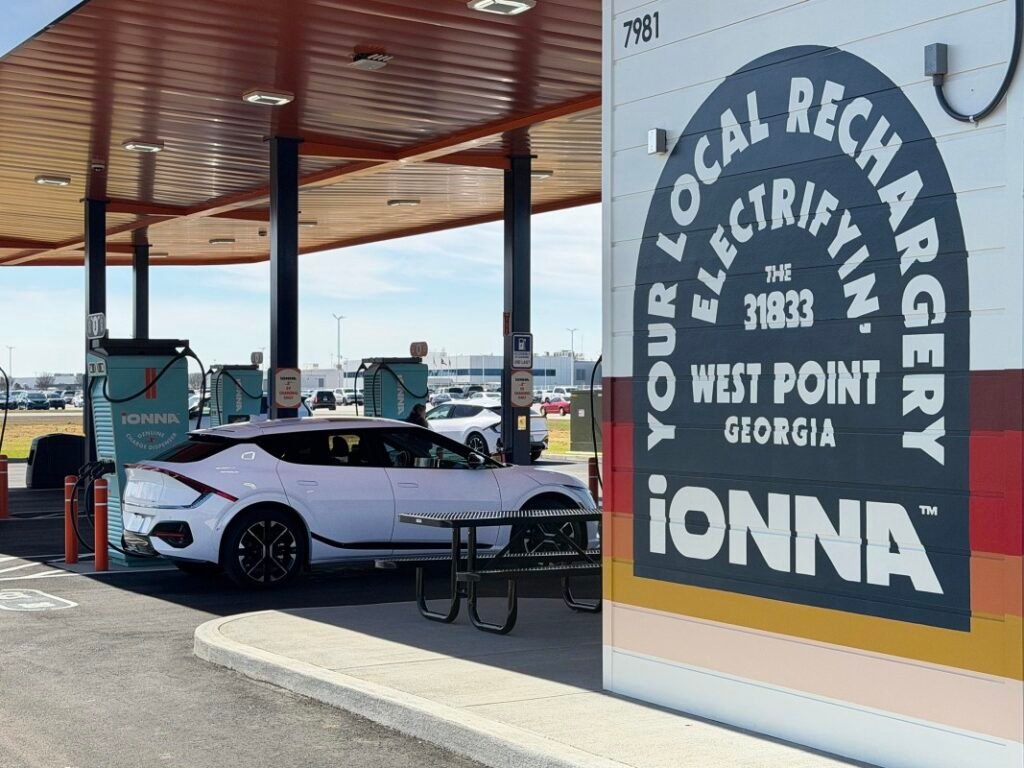
I spoke to Cutler at the Kia plant in West Point, Georgia, where we recently attended the production launch of the automaker’s new Telluride Hybrid. One of Ionna’s first stations was set up on a factory outlot, right at an I-85 interchange. It’s one of Ionna’s mid-range facilities, well-lit and offering a canopy over its six charger bays – three with CCS-style plugs, the others using Tesla-style NACS plugs. CCS-style plugs and which use the Tesla-style NACS plugs. “Recharge” stations offer restrooms, accessible by using QR codes, and vending machines.
Related: The “Selluride” Hybrid Is Kia’s Big Bet for 2027
Shining a “Beacon”
At the other extreme are the “Beacon” facilities, the first now under construction near Disneyland, in Westminster, California. “It’s really meant to be kind of this flagship brand ambassador location to bring people in (and) demonstrate the full power of what Ionna can be,” explained Cutler, noting, “It’s under construction now. It’ll be live this year.”
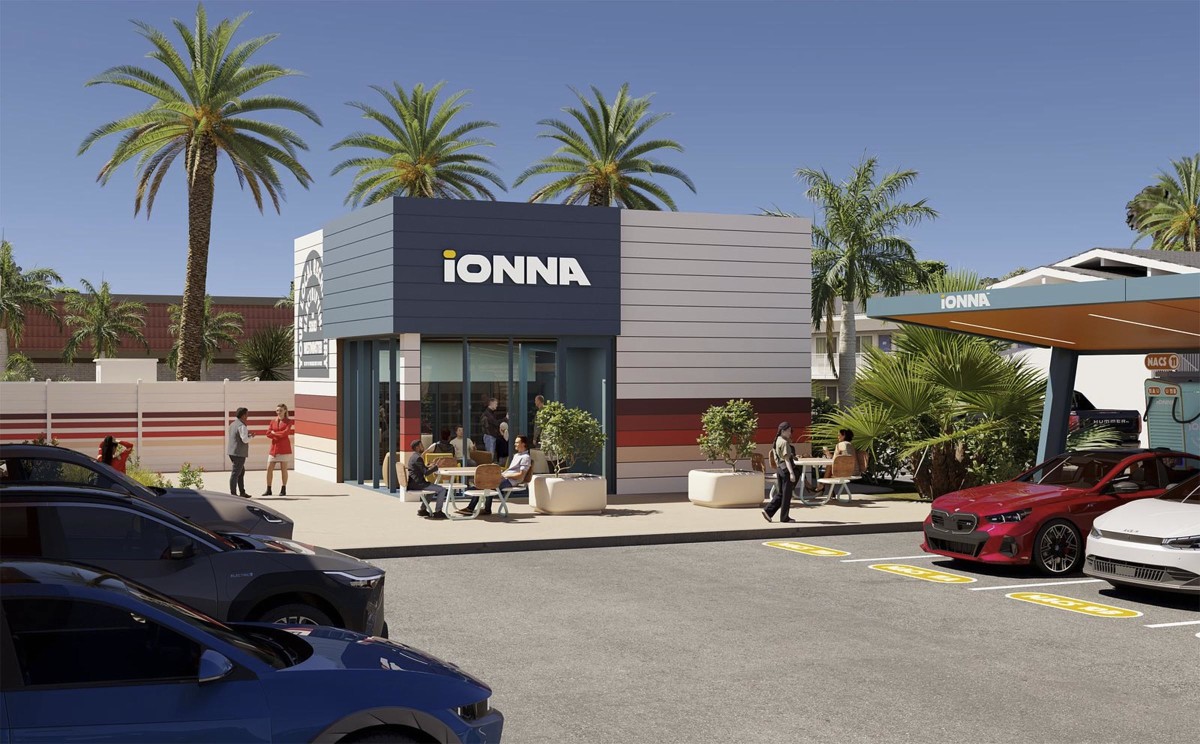
The station will feature 22 separate charging bays – not quite a Bucky’s, but larger than almost any existing public EV charging facility. It will offer the sort of convenience store amenities common at today’s gas stations, but the 1,000-square-foot facility will also feature a driver’s lounge, as well as outdoor seating. Considering today’s typical EVs may plug in for anywhere from 15 minutes to an hour, Cutler expects this to make for a much more relaxed charging experience – and to generate additional revenue, as gas station operators long ago discovered.
A third group of Ionna stations will operate in partnerships with the likes of WaWa and Sheetz, existing service station operators who may already have amenities in place where they’ll add Ionna chargers.
Boosting Demand
Ionna is “constantly evaluating” its plans, said Cutler – not surprise considering how much different the battery-electric vehicle market is today compared with how things were expected to shake out two years ago under an EV-friendly president. Since returning to office in January 2025, Pres. Donald Trump has reversed course and, most notably, federal EV tax credits were phased out in September, sending sales into a downward spiral. But with the War in Iran sending fuel prices soaring, dealers report a renewed surge in interest in battery power.
Cutler is confident that an improved charging experience also will help buoy demand. “We know sales for EVs are not going to go to zero in 2026 or ’27,” said Cutler. “In fact, costs are coming down, performance going up. You probably (will) see a dip this year. But I think there will be a second wave” to follow later in the decade where EVs regain momentum, he added.
Ionna’s current plans call for the start-up to focus on urban areas where sales and ownership levels are highest, as well as on the Interstate network connecting those cities. Longer-term? The Ionna network could start fleshing out in more rural area and possibly even expand into Canada. “It’s a very popular question,” said Cutler, adding that “It’s something we’re evaluating, though it won’t be this year.”