- Volkswagen has teased the upcoming Tukan pickup.
- It goes into production in Brazil starting next year.
- South American model was named after the toucan.
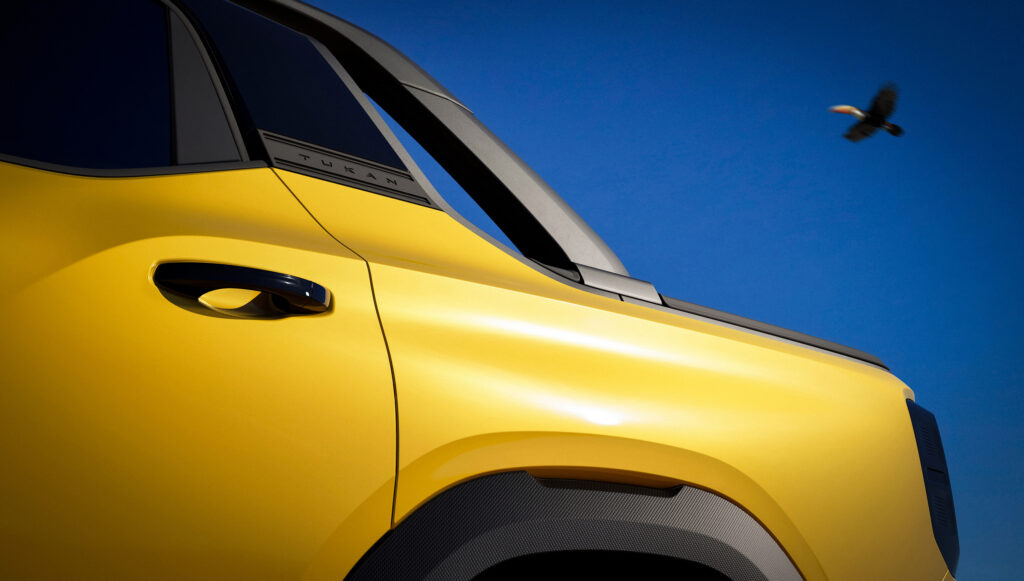
Volkswagen’s truck lineup continues to grow as the company has released the first teaser image of the Tukan. Designed and developed in Brazil, the pickup will be built at the company’s São José dos Pinhais plant starting in 2027.
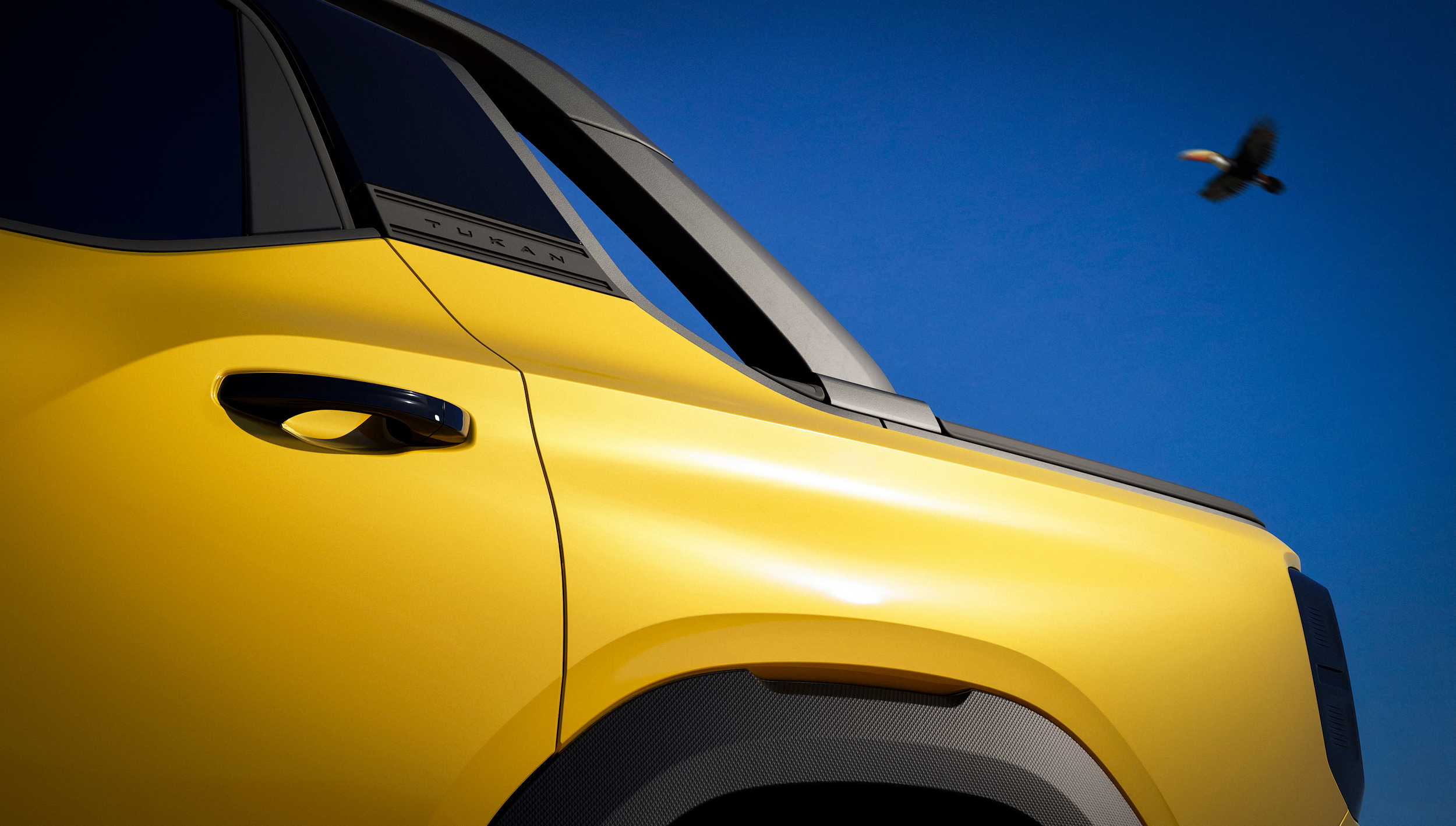
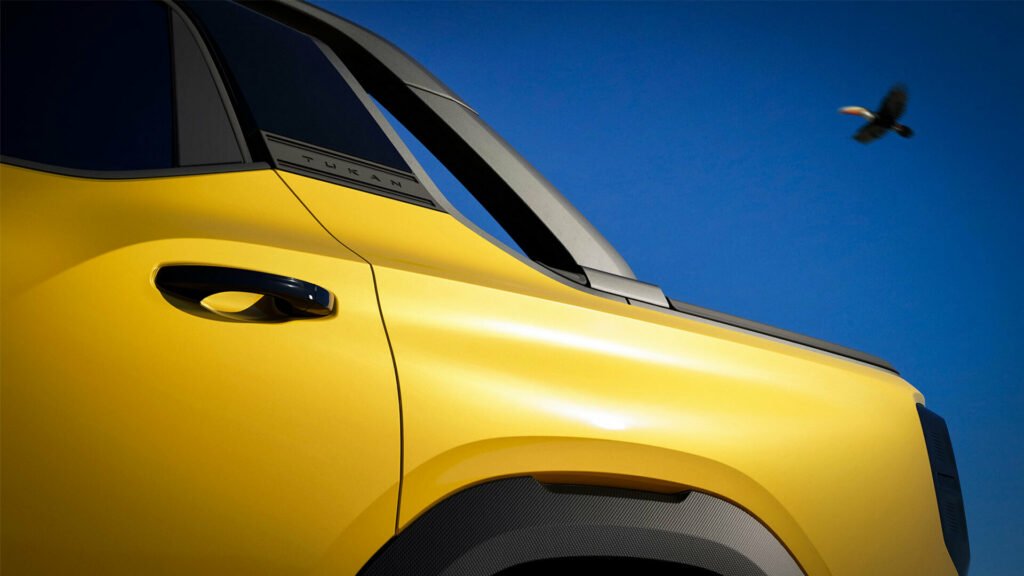
While the company hasn’t revealed much yet, the teaser image shows it will have a relatively short bed as well as plastic bars that appear to flow into a roof rack. Elsewhere, there’s a blacked out rear pillar with Tukan badging.
More: VW Is Making A Pickup That Corners Better Than It Crawls
A closer inspection reveals an angular shoulder line, plastic fender flares, and black door handles. We can also see stylized rear doors as well as a dynamic beltline.
Last but not least, Volkswagen announced one of the launch colors will be Canary Yellow. The company is particularly proud of this and spent roughly six paragraphs talking about the color.
How Do You Name a Pickup?
We’ll spare you the monotony and focus on how the automaker came up with the name. As Volkswagen do Brasil’s Vice President of Sales and Marketing explained, “The goal was to find a unique, short, and strong name that could resonate with different cultures, sound good in various languages, and reflect the product’s mission from its inception.”
That’s easier said than done and potential monikers were subjected to “rounds of discussion, regional validations, and strategic analyses.” They also had to get approved by a massive team that included everyone from marketing to legal and beyond.
Names were evaluated and refined on a series of criteria including ease of pronunciation, memorability, and suitability for the markets where the model will be sold. In the end, Volkswagen took a cue from the toucan, which is native to South America and “recognized for its striking presence and vibrant colors.”
In a statement, Volkswagen do Brasil President Ciro Possobom said “The Tukan symbolizes a strategic turning point for our brand in Brazil and reinforces the country’s strategic role in the development of Volkswagen vehicles, valuing our engineering, our people, and our local capacity to create products with regional relevance and global appeal.”
he company added the model is just one of 21 product launches scheduled for South America by 2028.