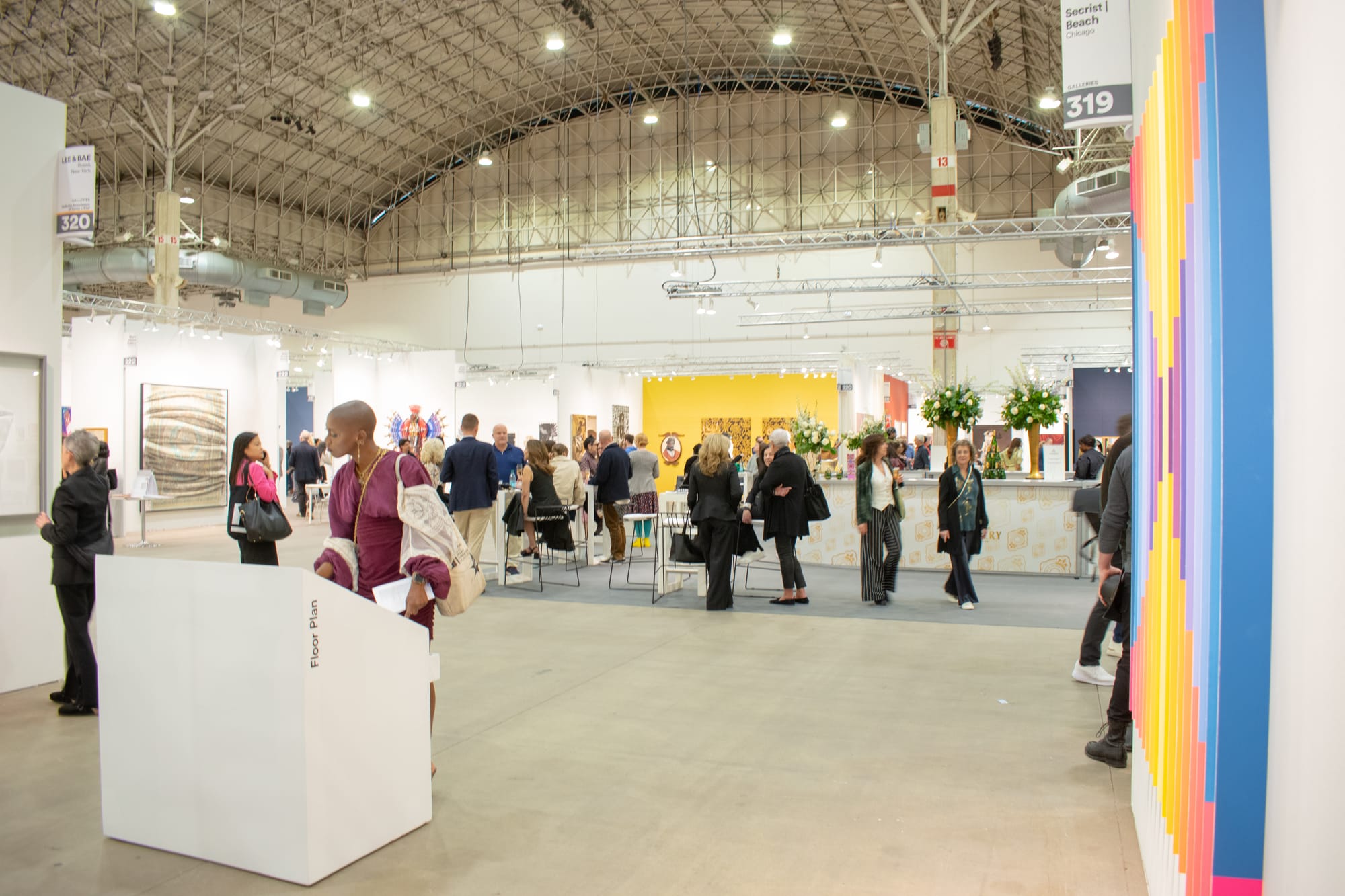
CHICAGO — Between the scores of working artists, underpaid arts administrators, and wealthy, often well-meaning arts hobbyists with cash to burn on $40 tickets and $7 bottles of Dasani, the question burns: What does Expo Chicago (and its orbit of adjacent fairs) actually do for the local arts community?
The obvious answer is the boring one. Art fairs sell art. But in actuality, that purpose fractures into something messier. Perhaps the most interesting way to experience fair week in Chicago is as a vivisection of the Midwestern arts ecosystem, exposing our pulsating, bleeding heart innards.
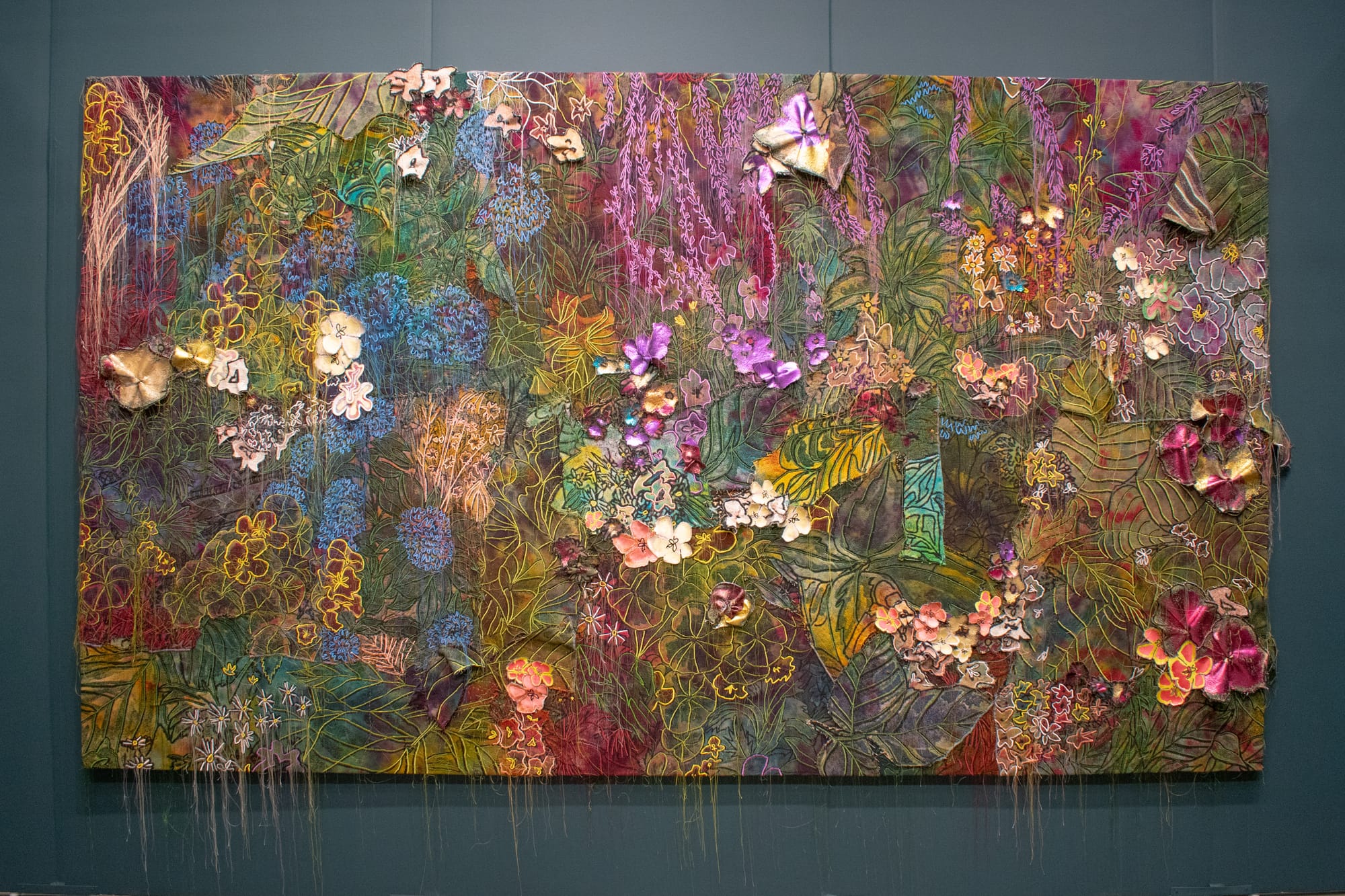
At Expo proper, a tighter fair reveals both the joys and pain points of Chicago’s current creative environment. In a shining statement by local artist Melissa Leandro, Andrew Rafacz Gallery displayed stunning canvases covered in glimmering embroidered textile foliage. Leandro has been with the gallery for over 10 years, finding the coveted steady support that countless artists seek in representation. “As an artist, I think the gallery relationship can be awkward, but they never make me feel that way. They care about my long-term career,” she told Hyperallergic.
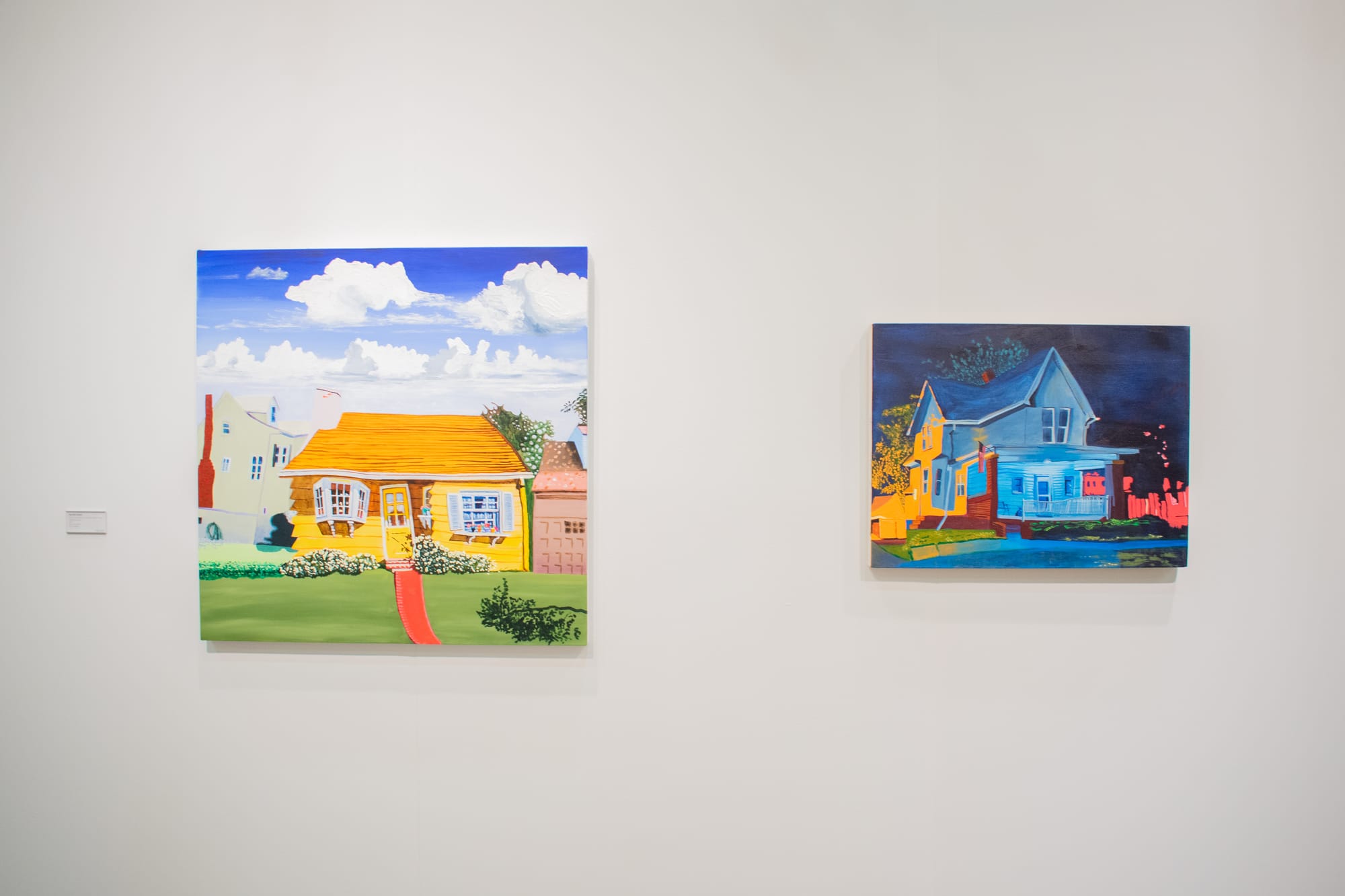
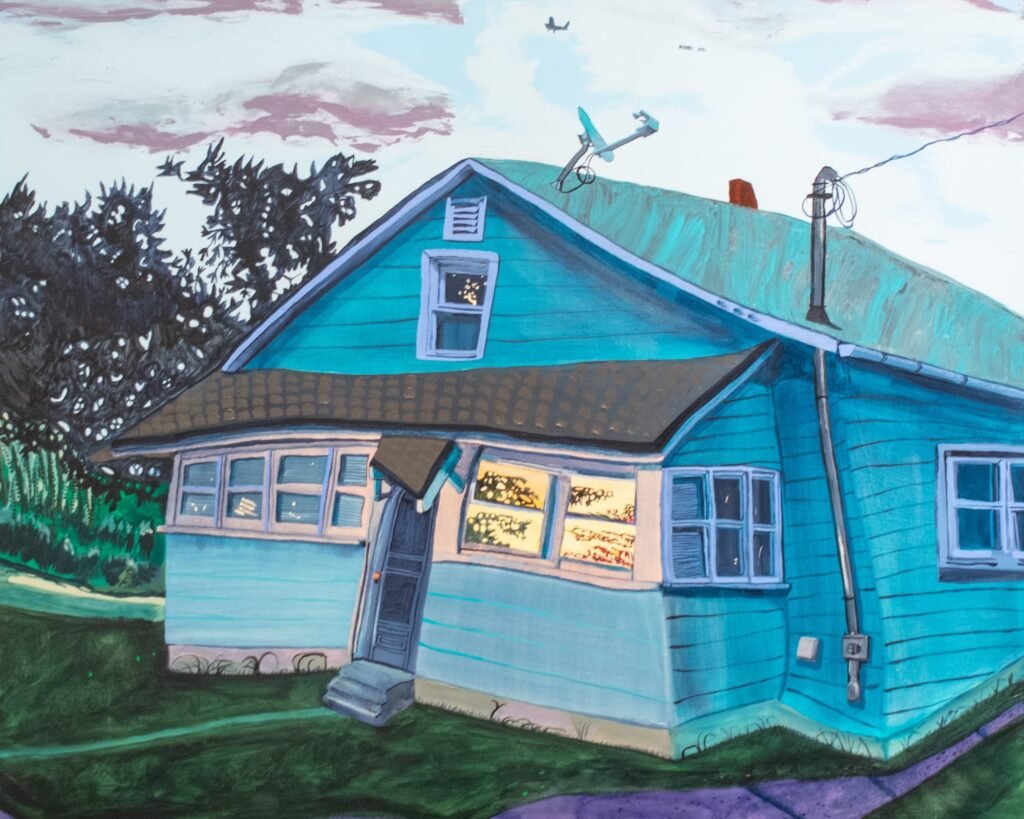
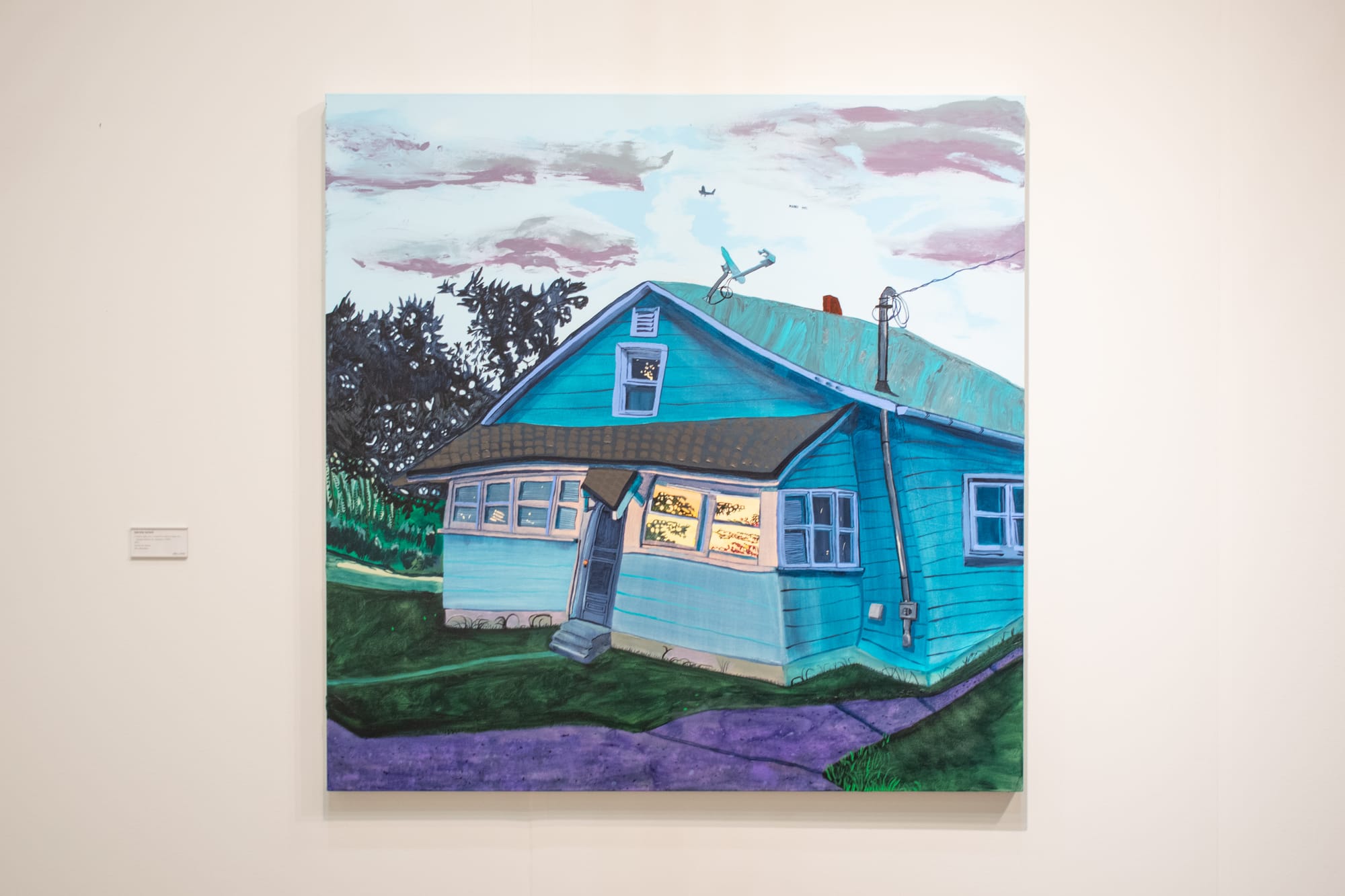
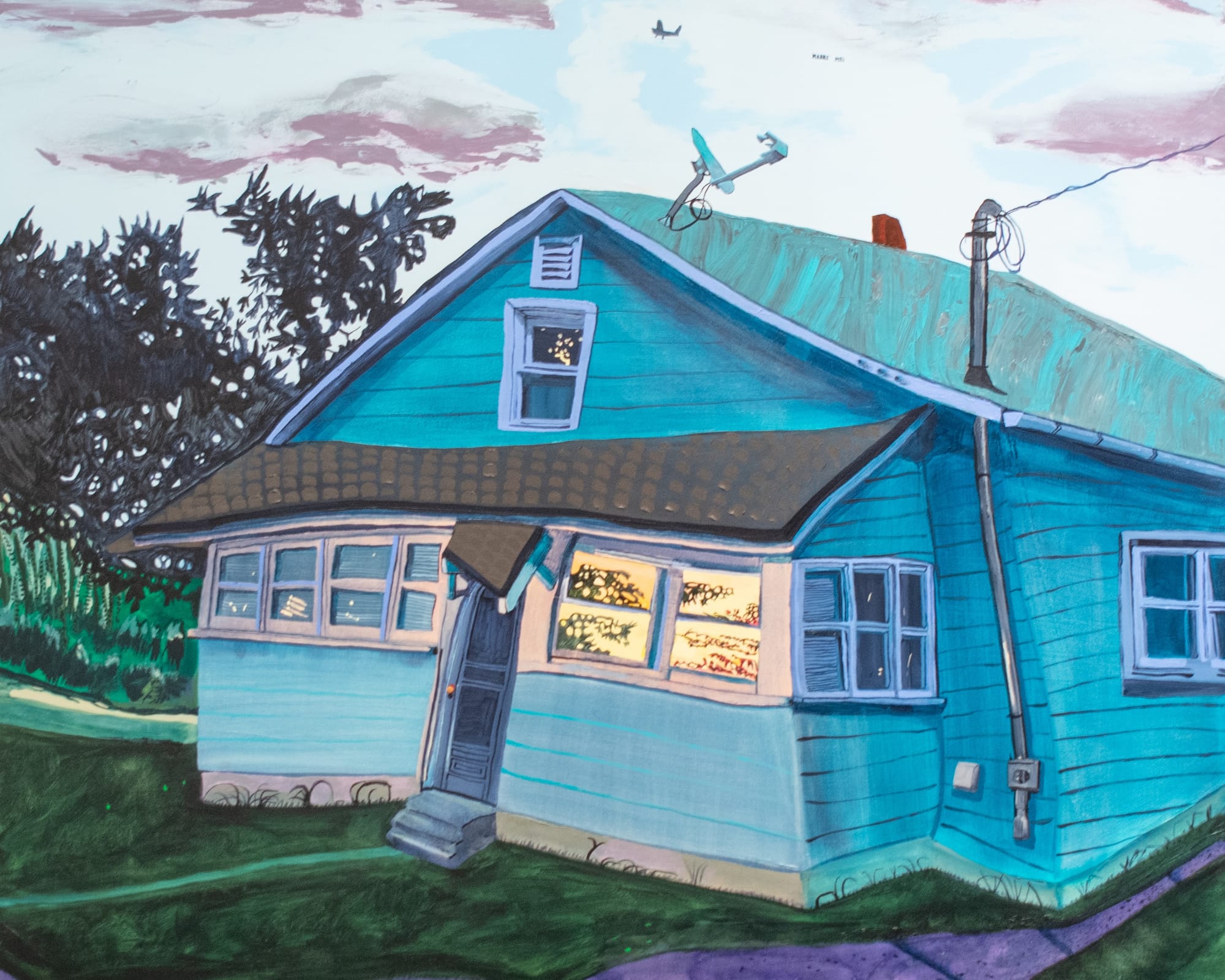
Corbett vs. Dempsey also presented the work of an artist with ties to the city and longstanding ties to the gallery. The solo booth of new Gabrielle Garland paintings and drawings, depicting warped dreamscapes of American domestic architecture, had a promising opening day, with several drawings selling for $2,000 a piece and a larger canvas for $20,000.
Leandro and Garland represent classic success stories for hopeful creatives — paths that, despite rising costs, still feel possible in Chicago. Both came up through the city’s arts degree-granting programs, with Garland catching the attention of gallerist John Corbett while still in school at the University of Chicago. Leandro built momentum by showing her work in alternative venues, like cafes and public libraries, until she was approached by Andrew Rafacz. It’s no certain journey, but at least it remains viable.
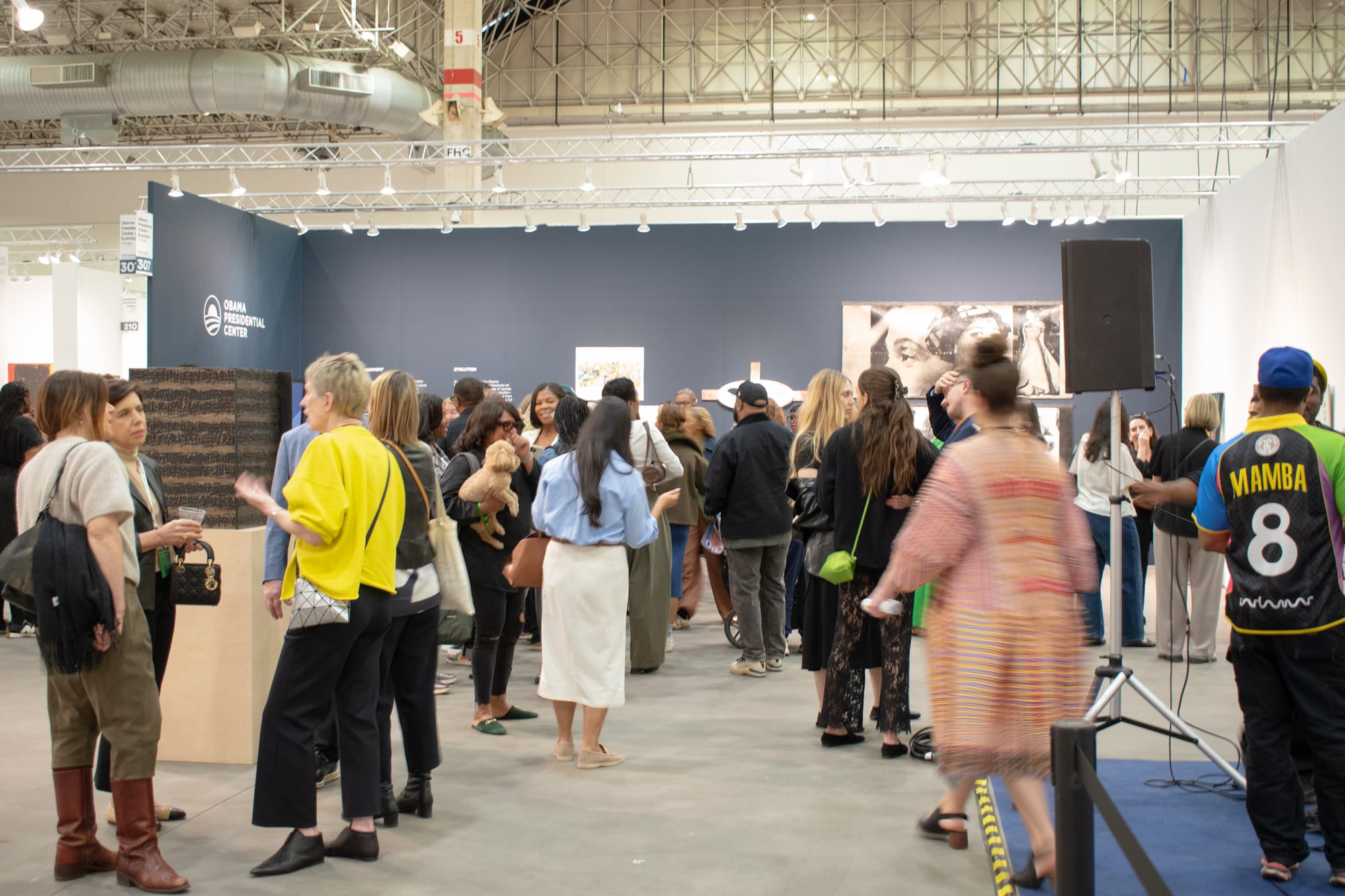
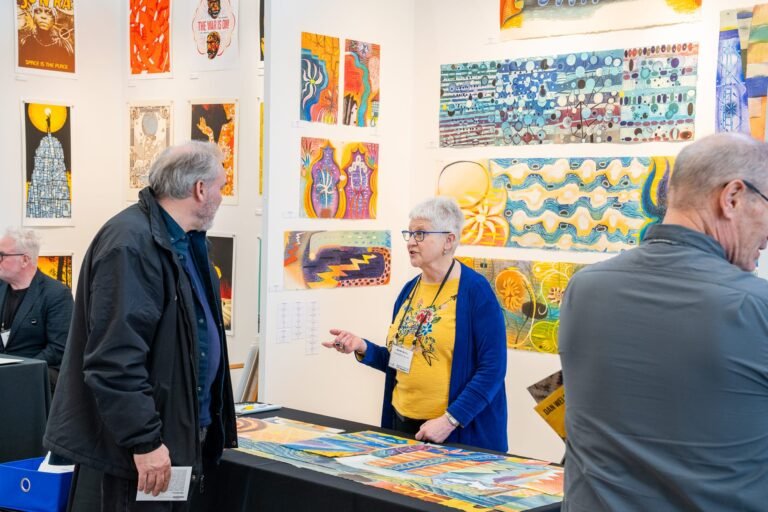
This fragile optimism rests uneasily beside Expo’s institutional presence. It’s curious that the Obama Presidential Center was granted so much real estate in the fair when nearly all other Chicago nonprofits have been cut (a product of the nixed Special Exhibitions section from years prior). Situated in its own curated section and represented by a large booth featuring sample materials from artists participating in the Center’s commissioned public art program, the overt display decision by Expo points to what does and doesn’t get attention in the city.
The Center’s presence is certainly an effort to stir up attention ahead of its grand opening in June. It can also be read as a legitimizing effort amid years of protest, particularly among South Side residents, who fear gentrification and displacement as a result of the new campus. Despite this, Virginia Shore, the curator of the Obama Presidential Center Art Commissions, has hopeful visions for the organization’s arts programming. “Art has so many benefits for people,” she told Hyperallergic. “It makes them feel welcome, it makes them feel like there’s possibility.”
It’s true that many of the artists featured in the booth (and soon, the Center) are socially engaged and tied to the city, like Chicago stars Theaster Gates and Richard Hunt, alongside emerging voices like recent School of the Art Institute graduate Lindsay Adams. But two truths can exist at once: Public art can, and often does, inspire belief in possibility, even as the institutions behind it threaten the communities they aim to serve.
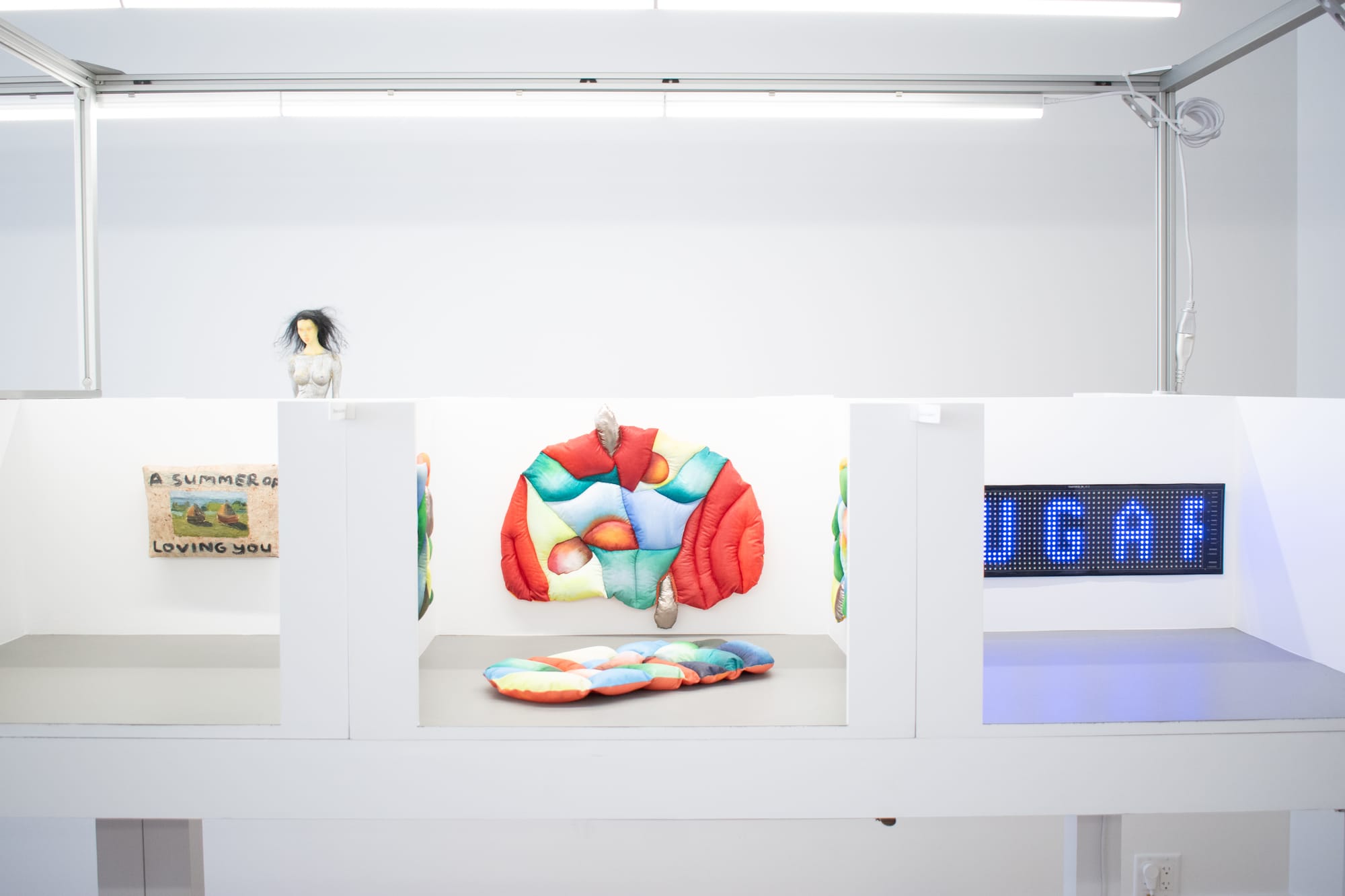
Outside of Navy Pier, Barely Fair, a satellite staple, represents what the most optimistic among us hope an art fair can achieve. With its miniaturized scale, it’s easy to write off the program as a gimmick, but lower costs to exhibitors, intentional partnerships, and relative freedom from market pressures ensure it constantly pushes the needle of artistic evolution. “Giving people a chance to do something really terrible is important,” said co-founder Roland Miller. “We always want to have a full range of possibilities, so that it’s always unexpected.”
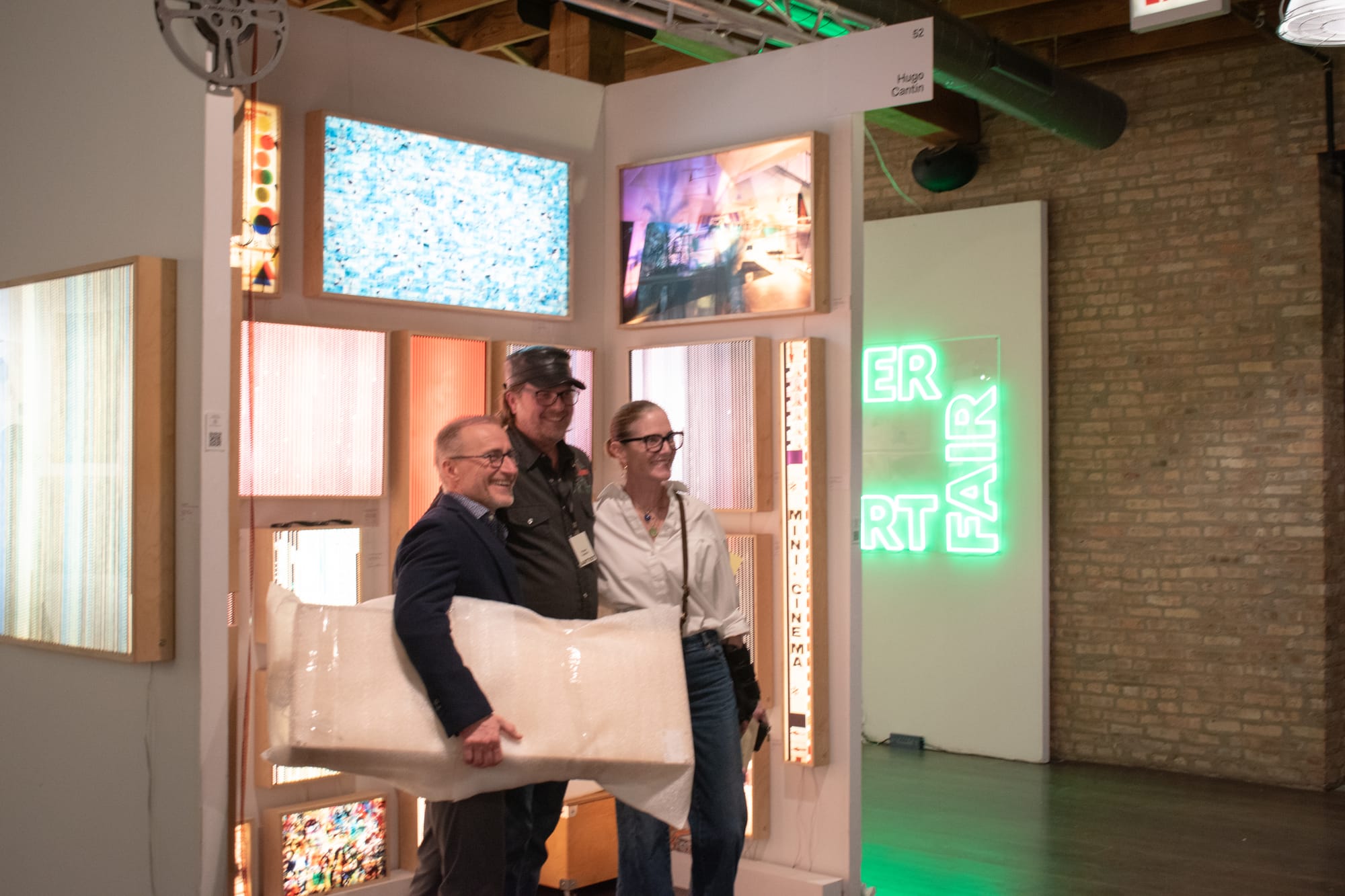
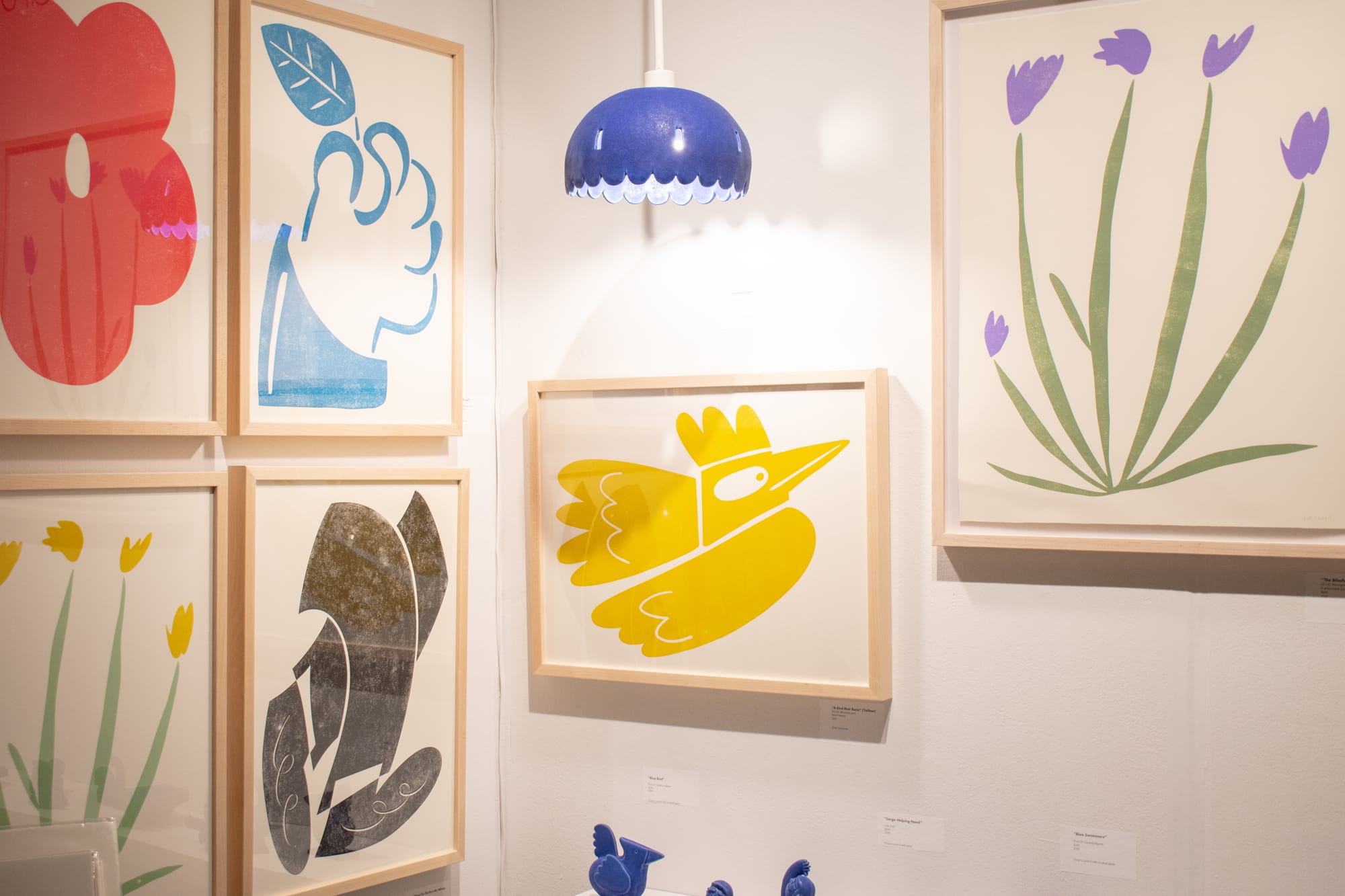
Across town, the Other Art Fair and the newly minted Neighbors present opposing models. The Other Art Fair feels more like a maker’s market — an affect some might scoff at. Still, the program offers artists a way to sell works directly to audiences, with a bigger pay cut (82% of sales) than most galleries can offer. Chicago-based artist Joe Kraft is a repeat participant in the fair, finding it an important avenue to increase visibility: “Here, the artist is representing themself, and so there are these in-person interactions that get to happen that are super special,” he praised.
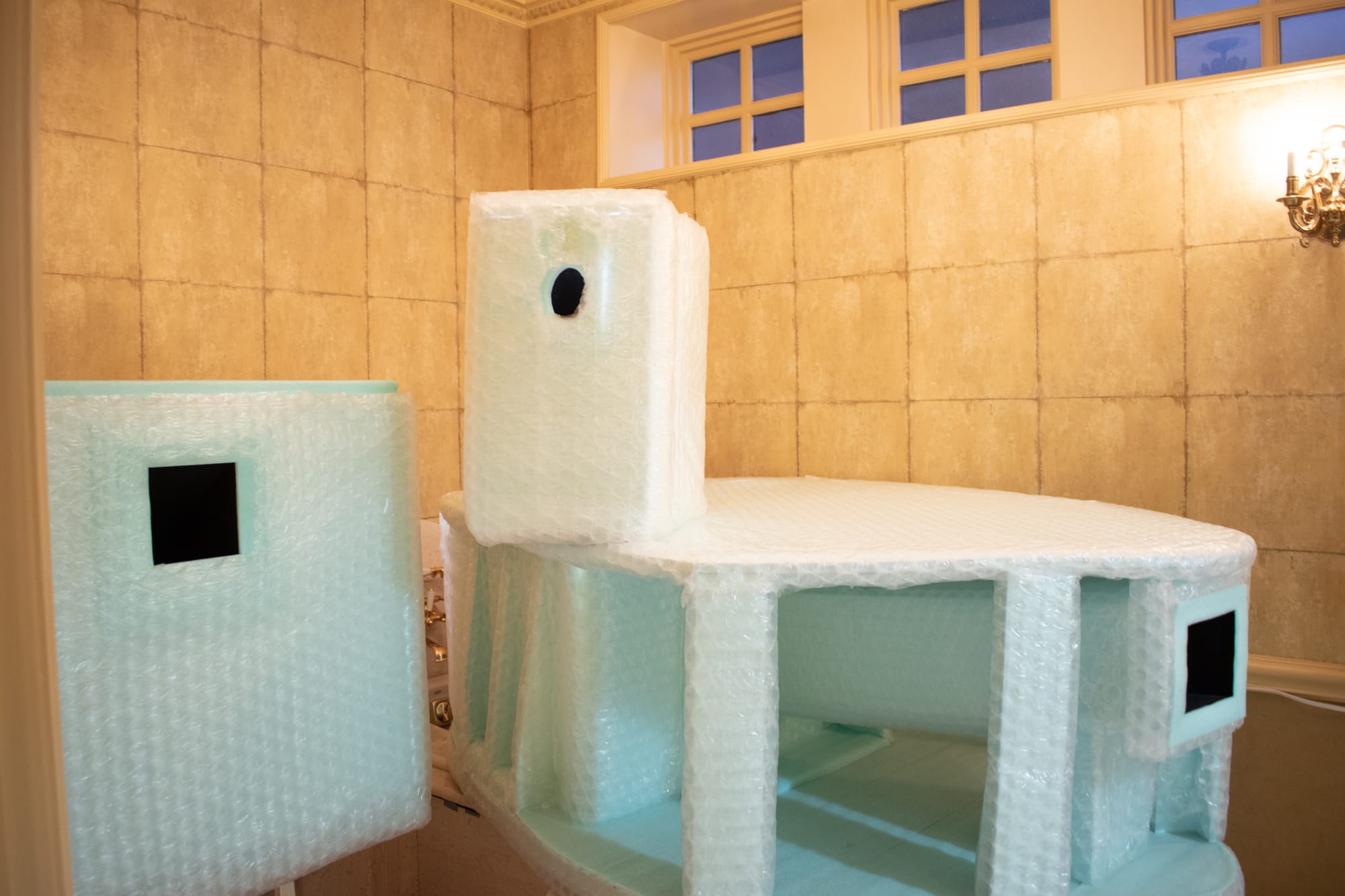
Neighbors, housed in a gilded Gold Coast residence, is a bit too literal to the sin of uneven wealth concentration in the art market. However, it did make some room for subversive voices. Shanghai Seminary, run by Chicago-based artist Qiuchen Wu, presented a playful installation by local sculptor Caitlyn Min-Ji Au, composed of foam constructions with openings to view plushies and water dripping from impossible angles. With their cumbersome size and use of moving water, the works seemed delightfully impossible to sell. But as Wu argued: “If you can hire someone to take care of plants, why can’t you hire someone to take care of an artwork?”
Back at Expo Chicago, the clearest demonstration of the fair’s value, at least in terms of supporting artist visibility and local creative communities, might be tucked into the Artists in Public Schools booth. The Chicago nonprofit offers paid residencies for local artists to integrate into the public school system and facilitate art experiences with students. Resident artist Jonathan Michael Castillo’s photography and video works are accompanied by handmade books by the ESL students of Bernhard Moos Elementary School, one of Castillo’s partner schools, documenting their families’ difficult immigration journeys. The installation commands attention — stark and challenging amid a sea of safe, commercially viable works.
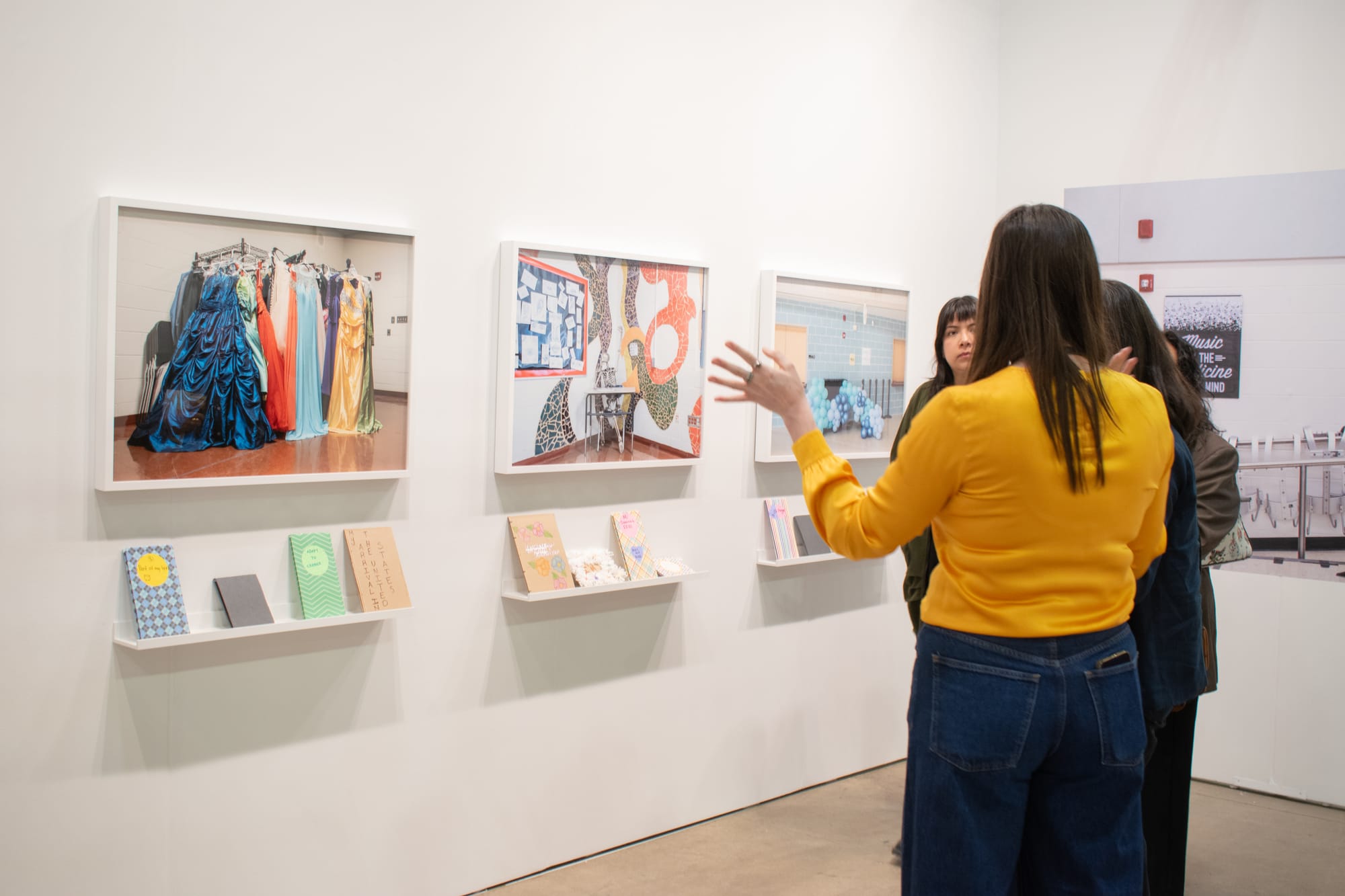
Artists in Public Schools sees Expo as an important opportunity for its resident artists to exhibit work and raise money through any sales. But the few exhibiting nonprofits still had to pay thousands for their crucial Expo spots, a clear demonstration of the precarious balance between financial risk, exposure, and arts infrastructure.
Chicago’s fair week is a microcosm of the churning, tense, contradictory discourse surrounding art and its support networks in the city. It’s a time where major institutions, genuine community work, and earnest local artists are pulled into the same orbit. To be sure, it sells art — a key function to the survival of artists, whether we like it or not. But more than that, it exposes the terms under which art gets to exist here, and the negotiation required to thrive.