PHEVs: The Best Compromise?
It’s easy to understand the appeal of a plug-in hybrid vehicle. You get a decent amount of battery-only range, and you don’t get the typical range anxiety one might get from a pure-electric vehicle. If it’s out of juice, it acts like a normal hybrid, so it’s still relatively efficient — at least that’s the promise these PHEVs deliver.
On paper, it sounds like the best of both worlds. However, a recent study in Germany has revealed that some PHEVs consume up to three times as much fuel as manufacturers claim. So, what’s the real score, then?
The Study
If you check out the manufacturer’s claims in Europe, you’ll typically see consumption figures of about 2 to 2.5 liters per 100 kilometers. Convert that to U.S. miles per gallon, which hovers between 118 and 94 mpg. Those numbers look great on brochures. But the reality is far from that.
According to the Fraunhofer Institute, its research revealed that PHEVs were consuming three times as much fuel as advertised. The study tested a wide variety of models produced between 2021 and 2023, ranging from humdrum compact crossovers to high-end sports cars. Even a Ferrari was thrown in the mix, likely a 296 GTB.
Researchers observed that the engines were turning on more frequently than anticipated. Of course, the reason is to top up the battery’s charge, even if there’s still energy left in it. Once the engine kicks in, it revs relatively high to recharge the battery as quickly as possible, and depending on the engine’s capacity, it burns a lot of fuel. So, from 2 to 2.5 liters per 100 kilometers, the study saw about 6 liters per 100 kilometers. That’s still a commendable 40 mpg, but far from over 100 mpg.
BMW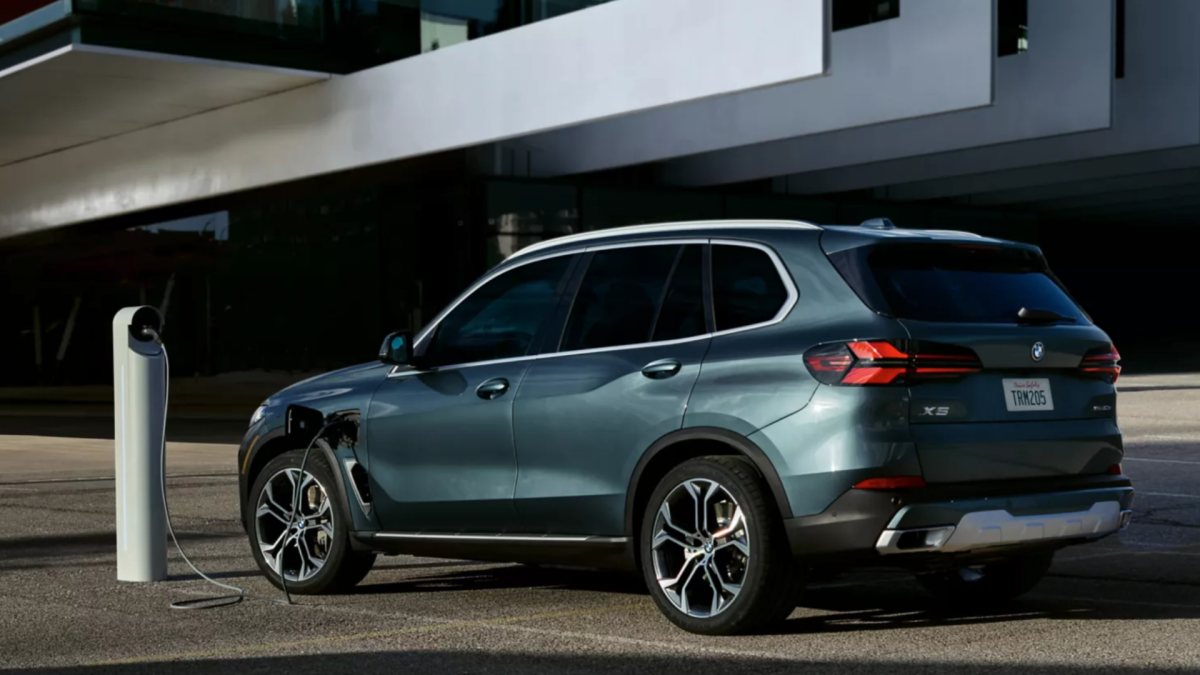
How Manufacturers Get The Figures
So, where do the manufacturer’s claims come from? To understand how those low numbers came about, one has to take a look at the Worldwide Harmonised Light Vehicle Test Procedure (WLTP). WLTP generally aims to provide more accurate, real-world figures, replacing the old NEDC (New European Driving Cycle), which has been criticized for being too optimistic and even dubbed ‘Not Even Damn Close’ by some folks.
For plug-in hybrids, measures electric range and emissions through a two-part, lab-based test. There’s the Charge-Depleting cycle that starts with a full battery and runs until the battery is empty. After that, there’s the Charge-Sustaining cycle the starts with a depleted battery, leaving the car to run as a traditional hybrid. The tests are run for 30 minutes over 23.25 kilometers (about 14.5 miles) under various driving conditions.
As some plug-in hybrids can run for a long time on a single charge, this further boosts their respective fuel economy figures and allows the engine to intervene less when needed. PHEVs with smaller engines fare better in terms of economy, though admittedly, it doesn’t take a rocket scientist to figure that out.
Toyota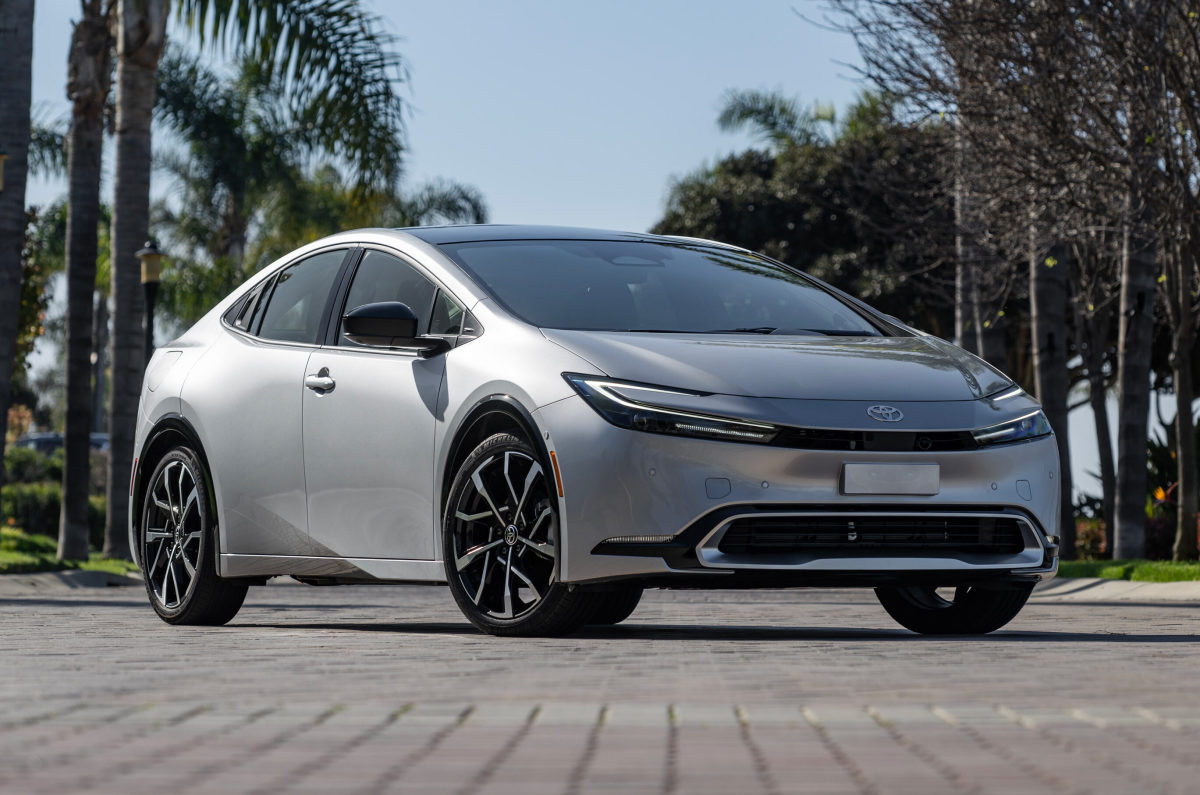
Best and Worst Performers
Surprise, surprise: official figures differ from the real world. The thing is, some automakers actually did well in the study. Toyota was the closest to the claimed numbers, along with Kia, Ford, and Renault. Some of its PHEVs consumed less than a liter of fuel in 100 kilometers (62 miles), making them genuine fuel misers.
Unsurprisingly, the ultra-luxury marques didn’t have a great time. Bentley and Ferrari were near the bottom because using high-powered twin-turbo V6 engines to charge up batteries consumes a lot of fuel. But the worst offender, per the study, was Porsche, with models typically doing 7 liters per 100 km (33.6 mpg).
Still, a plug-in hybrid has its benefits. It’s all about making the most of its plug-in bit. Charge it up as often as you can and keep the car running in battery mode for as long as possible. Of course, you can leave the system to its own devices, but you won’t be maximizing its efficiency.
Volvo