When Rare Beauty, Bogg, and Goodles arrived in stores, they had to vie for shelf space with well-established brands making beauty products or beach bags or boxes of macaroni and cheese. But these brands quickly amassed cult-like followings by being very intentional with their missions to foster a sense of loyalty with customers.
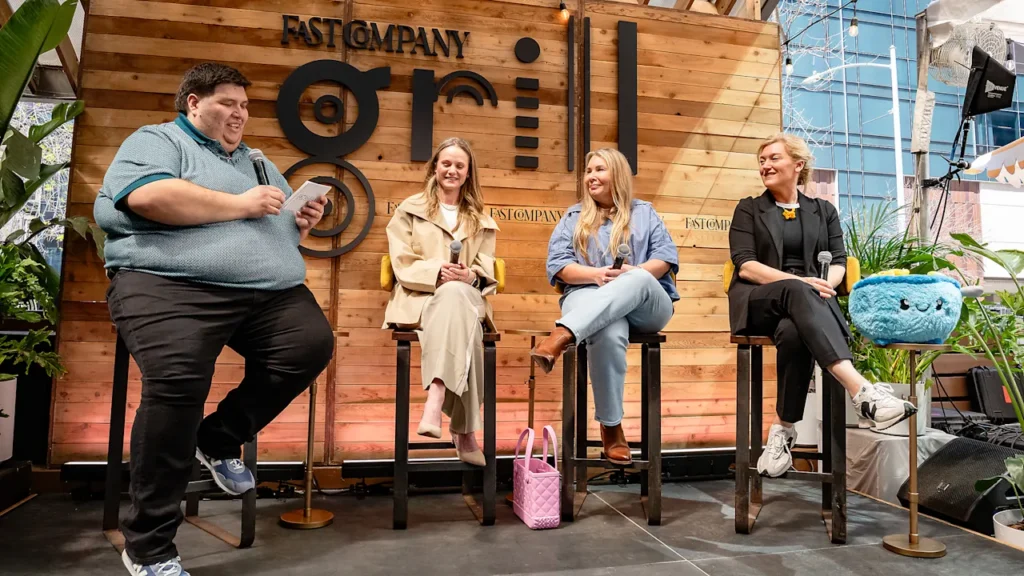
Although her legions of fans might have lined up to try the beauty products in Selena Gomez’s line, Rare Beauty, the company was founded with a bigger mission baked in: To support youth mental health by donating 1% sales to the Rare Impact Fund. While the company has found that customers will come for the products, they stay for the mission, Elyse Cohen, the brand’s chief impact officer, said during a panel discussion at the Fast Company Grill at SXSW.
“Instead of starting with a product that we didn’t feel like existed in the marketplace, we started with a mission that we felt like didn’t exist, particularly in the beauty space,” Cohen said. “We love that young people are turning to brands for not just products, but for the issues that they care about—and also that’s what holds us accountable.”
HOW TO STAY ALIGNED AMID CHANGE
Founders must also hold themselves accountable. About six months ago, Goodles was weighing how to expand beyond its original offering—boxes of macaroni and cheese that are packed with protein, fiber and nutrients—and respond to customer demand for on-the-go microwaveable cups, recalled Jen Zeszut, cofounder and CEO. Though opting for plastic cups would be most cost-effective, doing so goes against what the company stands for, she added.
“We want to make, be, and do gooder, so when you put that out there, it’s a high standard that you have to live up to,” Zeszut said. “If you’re all aligned on the mission and you’re saying that you’re gooder, then you have to launch paper based cups no matter how long it takes and even if it costs more, you just got to do it.”
Finally, it’s important to understand who your core customers are and what they want as new competitors emerge with copycat products, as has been the case with Bogg. “It’s been a tough go for us with all of the people trying to nip at our heels, but we have to stay above that—we have to innovate at a lightning-fast level,” said Kim Vaccarella, founder and CEO.
Bogg’s line of beach bags are intended primarily for moms whose needs help dictate the company’s business decisions, Vaccarella said.
“We just have to keep doing everything and listening to her and coming out with things that are going to help make her life easier,” she said. “If we fail at that, then we’re failing as a brand, but everything we do is to expand on that original mission.”