Your “Dead” EV Battery Still Has Juice
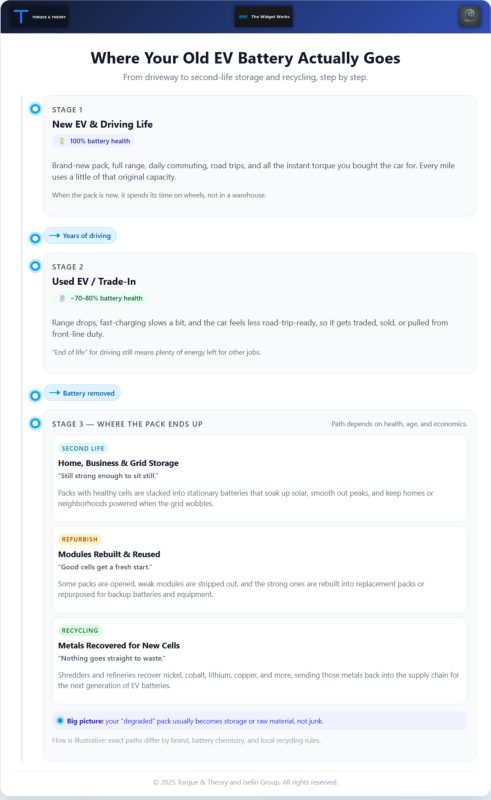
When a dealer says an EV battery is degraded it’s, perhaps surprisingly, often still sitting on 70–80% of its original capacity. Research from the Union of Concerned Scientists puts that number right in the sweet spot. That is not scrap. That is a slightly tired athlete that no longer sprints, but can jog all day.
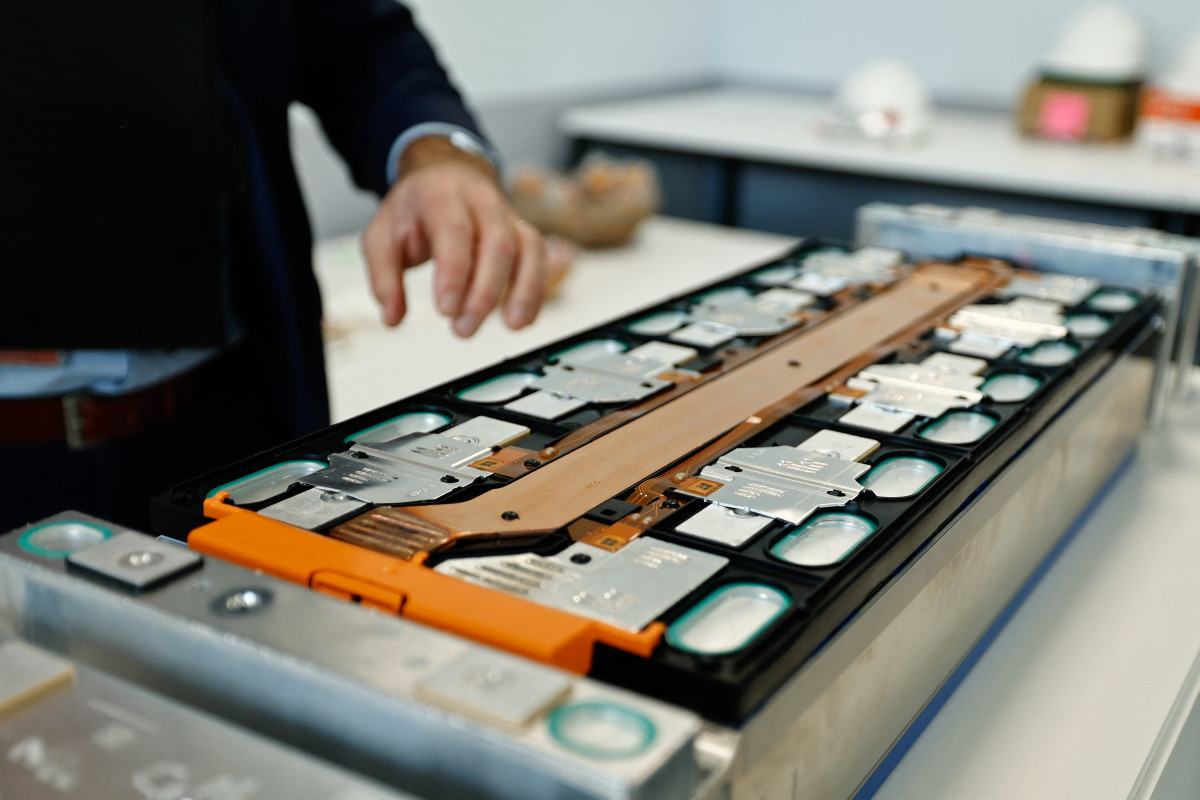
For driving, that drop feels like shorter range and less freedom on road trips. For stationary work, it’s perfect. A home or grid battery does not care about 0–60 times, turbocharged power, or highway passing. It just needs cells that charge and discharge reliably. Your “worn” pack does that for years.
So when you sell your electric car, the most expensive part of it often begins a whole new career.
Second-Life Packs: From Driveway to Power Plant
Carmakers and utilities now treat second-life batteries as serious hardware. Nissan and Enel run a project in Melilla, Spain, where used LEAF packs help keep an isolated grid stable for tens of thousands of people, turning old car batteries into backup power for a whole town. Nissan’s own energy division proudly shows it off as a circular economy win.
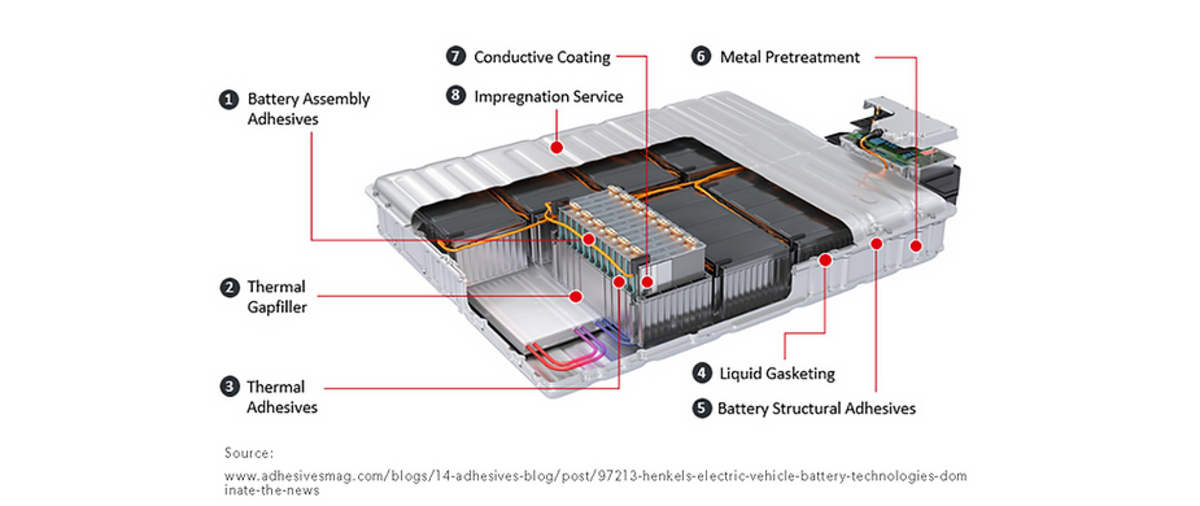
Academic reviews of second-life battery projects show the same thing: once a pack leaves the road, it can still deliver years of grid storage, soaking up solar during the day and feeding homes at night. Your old pack becomes quiet infrastructure instead of dead weight.
For you, that means the pack in your driveway carries value beyond its driving life. Buyers, dealers, and fleet operators know there is money left in that metal box, so it props up resale values and takes some sting out of battery anxiety.
When Recycling Takes Over
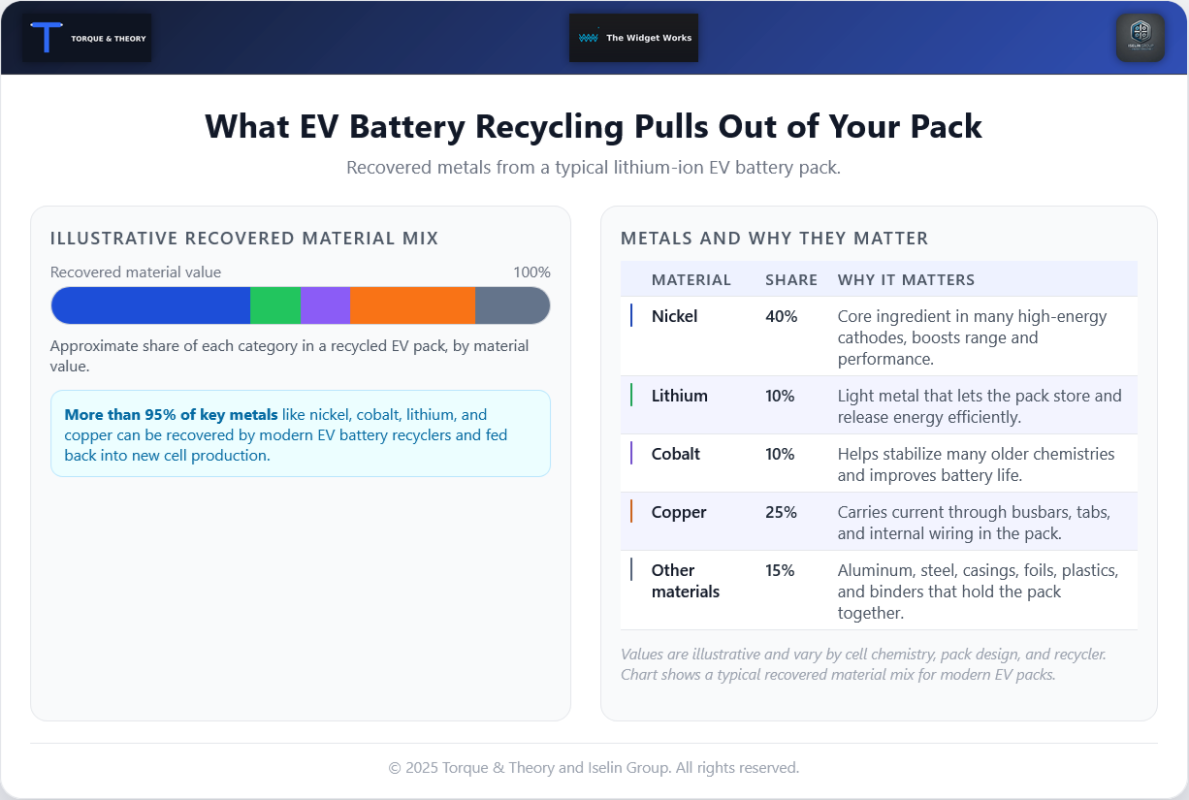
Eventually every pack really does reach the end. That is where EV battery recycling steps in. Companies like Redwood Materials recover more than 95% of the nickel, cobalt, lithium, copper, and other metals from used packs and send those materials straight back into the battery supply chain.
So your pack does not head for a landfill. It becomes feedstock for the next generation of cells that will power cars with better range, tighter handling, and stronger real-world efficiency. Recycling also reduces the need for new mining, which helps steady long-term battery prices and makes future EVs cheaper to build.
What This Means for You
For you as a buyer, this story means older EVs look less risky. A degraded pack still has clear second-life and recycling value, and the industry treats it as an asset instead of a time bomb.
For you as a seller, it means the “worn-out” battery you leave behind still works hard in the background, holding up your trade-in price while it quietly powers homes, data centers, or the next wave of electric cars. You drive away in your next ride, and that old pack keeps earning its keep long after the plates change.