RNA interference (RNAi)—selectively zapping target genes in pests—can attack insects, fungi and other pathogens without damaging soil, plants, or wildlife. This makes it an attractive alternative to traditional chemical pesticides, which are blunter instruments that are becoming less effective and come with environmental baggage.
The challenge, says German startup SenseUP, is around stability (RNA is inherently unstable), cost, and breadth of applications (a precision tool, double stranded RNA is designed to attack specific pests, not multiple pests at once, which is what many farmers want).
SenseUP claims to have patented tech that can address all three challenges:
Stability: SenseUP encapsulates dsRNA within the cell wall of its host microbes (strains of Corynebacterium). This enables the biopesticides to be stored at room temperature for 18+ months in dry conditions.
Cost: By using biosensors that light up in high-producing strains of Corynebacterium, SenseUP can screen millions of strains and rapidly identify the best host candidates, enabling the production of biopesticides that can potentially compete with synthetic chemicals on price.
Breadth of applications: By combining multiple sequences of dsRNA in a single cell, SenseUP can develop single biopesticides that attack multiple pests at once.
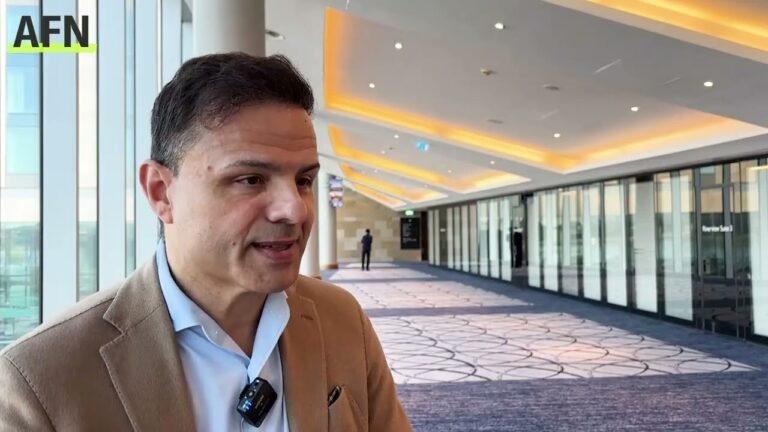
AgFunderNews (AFN) caught up with co-CEO and managing director Juan Martinez, (JM) at the World Agri-Tech innovation summit in London to discuss how SenseUP hopes to overcome the barriers to adoption, and why he believes RNAi is poised to go mainstream.
AFN: How big a part of the crop protection landscape could RNAi become?
JM: If you were me asking me some years ago, I would say it will be a niche. Today, I believe that it will become mainstream.
AFN: What key challenges do RNAi players have to overcome?
JM: Big companies and startups trying to develop [RNAi] products suffer in three aspects. One is production costs. It was prohibitive actually at least some years ago to produce affordable products for the market, at least for the ag markets.
The second is stability, as RNA degrades very easily. The third is delivery; the product might work very well in vitro or in the lab, but in the field, the product might degrade very easily.
SenseUP has created a different kind of space where we have a bio encapsulation where we can produce huge amounts of RNA very cost efficiently, and this encapsulation also protects the RNA.
AFN: What is the scope of your tech platform?
JM: We are not a one product company, and not just an insecticide company, which is where the majority of the RNAi companies are coming from. We have also seen extremely positive results in other categories such as fungicides. What we are delivering is not just one product or even one category, but a platform for agriculture, for crop protection and animal health.
AFN: What is your business model?
JM: We will be providing the technology and the product development, but not commercialization, marketing and sales. That is something that we are expecting from our partners,. We are more [focused on] manufacturing because we know our technology, our key competencies, to produce very cost efficiently.
AFN: Who owns the IP and who will handle regulatory applications?
JM: The models are different depending on how early partners come to us, but normally we should own the IP, and regulatory is something we will be working on together [with partners].
AFN: You were brought in to accelerate commercial partnerships. What are the big crop protection companies looking for before they will make a commitment to working with you?
JM: Large crop protection companies normally expect field trial efficacy.
They like to have a product that is stable and consistent as they have seen unfortunately in the past, many products that were not consistent.
The third thing is production scalability, and the fourth is a path for registration.
We at SenseUp are really checking all of these aspects because in trials we have already demonstrated that we have a stable, cost-efficient product that we can produce in a very scalable manner. We have a technology that doesn’t require a lot of capex.
As to the regulatory path, we have seen in the last months and years that more and more products have been registered in the space of RNAi.
AFN: What pests and crops are you focusing on first?
JM: We are working on Coleoptera [beetles], but also on sucking pests. In terms of fungicides, we are working on different kinds of fungus mainly in crops such as grapes and potatoes.
In insects we are looking at broad acreage crops also, so we are we are covering a large spectrum of crops and pathogens.
AFN: What does the regulatory pathway look like for RNAi-based biopesticides?
JM: The good news is [players in the RNAi space] have already seen registrations in the US. Incredibly, we have seen RNA products registered in just nine months in Mexico, and we see also a path for Brazil.
In Europe there was a product with emergency approval* in the RNA space and the European Union is working on new legislation**, adapting the legislation we have [for biologicals], where we believe that RNA will be considered as it should be considered very soon, and so I really see that we are on the right path.
I think we have a kind of perfect product where we have high efficacy that is also affordable, stable, and environmentally friendly and I think the regulatory bodies have already seen that.
We really believe that we are on the right path to become a mainstream product.
AFN: Where do you see the commercial sweet spot for SenseUP?
JM: At the beginning, any biological normally focuses on high-value crops because these are markets that are already used to biologicals, are willing to pay for them, and have huge problems they need to solve.
Having said that, we are already working on products for broad acreage crops, and also other targets. We have in mind to be a product that can solve problems for any kind of agriculture.
*In May 2026, Belgium granted a 120-day emergency authorization to GreenLight Biosciences’ RNAi-based insecticide Calantha, which uses the dsRNA active ingredient ledprona to control Colorado potato beetles, although full EU approval remains outstanding.
**The European Commission has proposed changes to EU plant protection legislation that include mechanisms intended to accelerate market access for ag biologicals.
Further reading:
Renaissance Bioscience unveils yeast-derived VLP platform for next-gen RNAi biopesticides
Molagri raises $5.8m to build ‘updatable’ biopesticides
Tropic bags $105m to scale gene-edited bananas, deploy TR4 resistant bananas in 2027
The post 🎥 SenseUP aims to take RNAi pesticides from niche to mainstream appeared first on AgFunderNews.