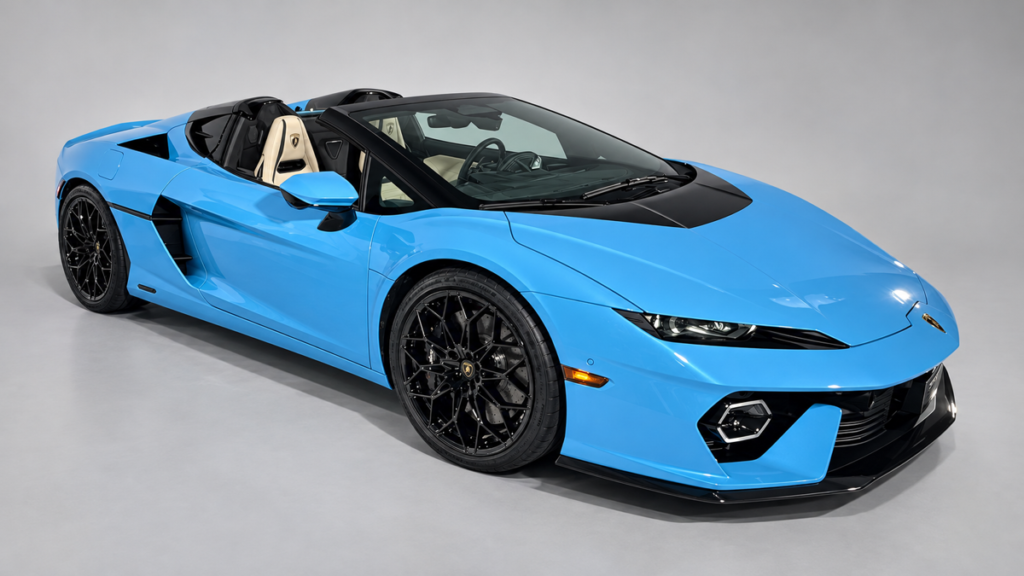
The 2027 Lamborghini Temerario Spyder brings a new dimension to the brand’s latest hybrid supercar, pairing its 907-horsepower powertrain with an elegantly engineered retractable hardtop.
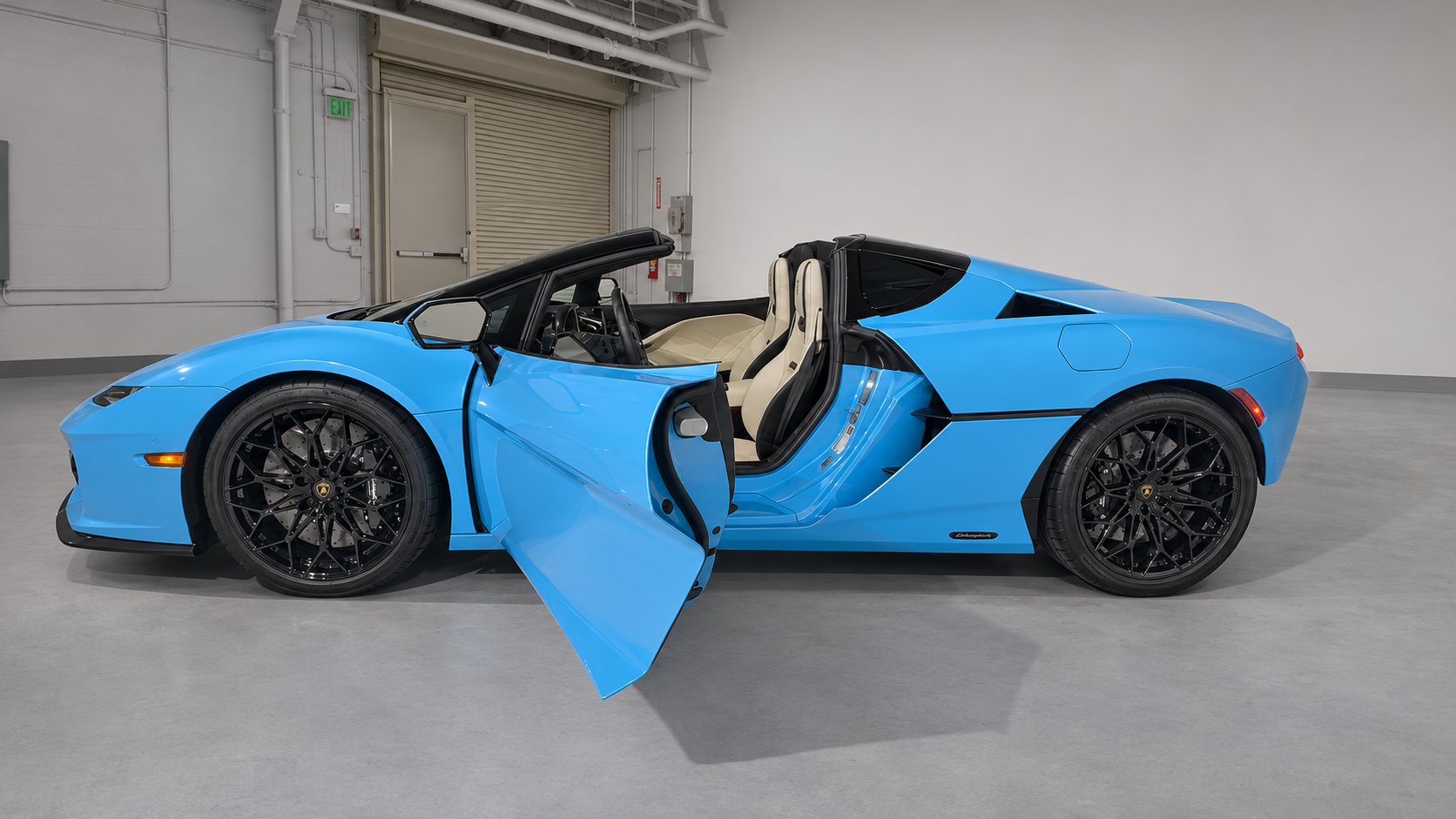
While the performance figures are impressive, the roof deserves particular attention. Its compact folding mechanism preserves the Temerario’s distinctive profile with the top raised, then neatly disappears behind the seats for open-air driving. Seeing it operate up close, I found the engineering every bit as compelling as the styling.
Related: Baja After Dark: Cameron Steele, Sylvania PHENOM and a Little Desert Chaos
Lamborghini’s open-air history stretches back to the 350 GTS, of which just two were built in 1965. Since then, its convertibles have generally relied on fabric tops or removable panels. This folding arrangement adds a new chapter, and quite a few moving parts, to that history.
I examined the Spyder in a studio, so this is a first look rather than a driving review. Unfortunately, nobody handed me the keys and pointed toward a deserted canyon. I checked.
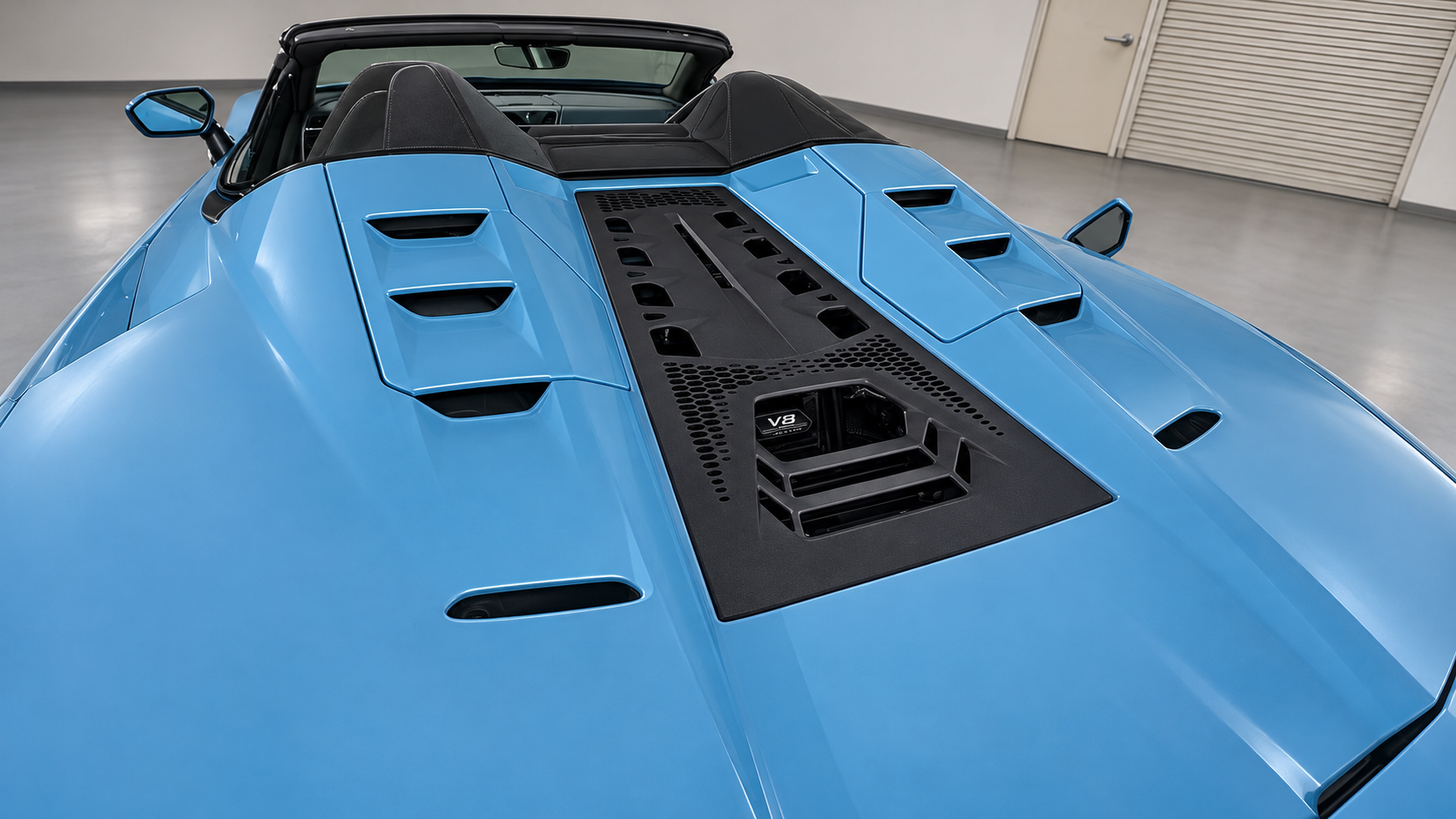
No, the V10 didn’t return, but the V8’s a monster
Like the coupe, the Spyder combines a 4.0-liter twin-turbocharged V8 with three axial-flux electric motors and an eight-speed dual-clutch transmission. Combined output is 907 horsepower, or 920 CV if you prefer your horsepower served in Italian.
The engine’s party trick is its 10,000-rpm ceiling. A flat-plane crankshaft and lightweight titanium connecting rods help make those speeds possible. Dry-sump lubrication maintains oil supply during hard cornering while allowing the engine to sit low in the chassis. This is considerably more involved than bolting on two turbos and hoping the warranty department doesn’t have a meltdown.
Two electric motors power the front axle, while the third sits between the V8 and transmission. That rear motor helps fill torque gaps, improving response as boost builds and during gear changes. According to Lamborghini, the front motors allow precise control of power delivery to each front wheel.
The coupe’s published benchmarks are 2.7 seconds to 62 mph and a 213-mph top speed. Preliminary information supplied at my preview suggests the Spyder adds approximately 200 pounds, with a top speed around 211 mph. Acceleration should remain firmly in the category of “hope you had a light lunch.”
I’ll reserve judgment on handling until I drive it. Usually, additional weight affects braking, direction changes, and tire loading. All-wheel drive helps deploy power, but it doesn’t make mass disappear. Lamborghini has managed a disappearing roof. Physics may remain less cooperative.
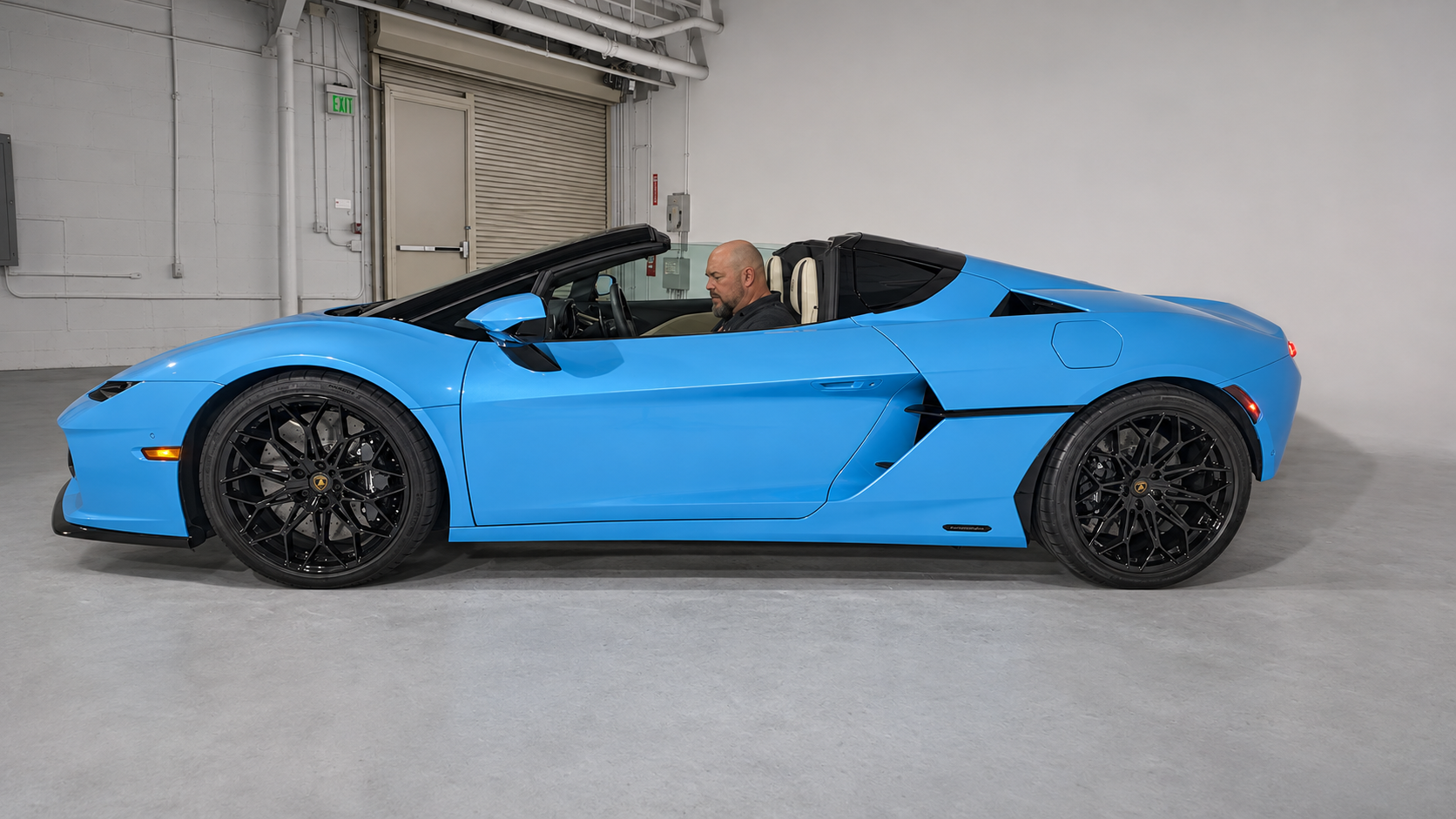
The roof deserves its own demonstration
Rather than stacking a bulky assembly over the engine, the roof separates into two sections, folds together, rotates upright and lowers into a compartment immediately behind the seats. Watching it operate, I was struck by how little space appears available for everything that has to happen.
According to the preview information, 10 electric actuators coordinate the process, taking approximately 17 seconds with the engine running. The studio demonstration was slower with the engine off, but still remarkably quiet.
It’s an elegant bit of mechanical choreography. It reminded me of the Chevrolet SSR’s folding hardtop, which is probably the only time a Lamborghini presentation will make me think about a retro-styled pickup truck.
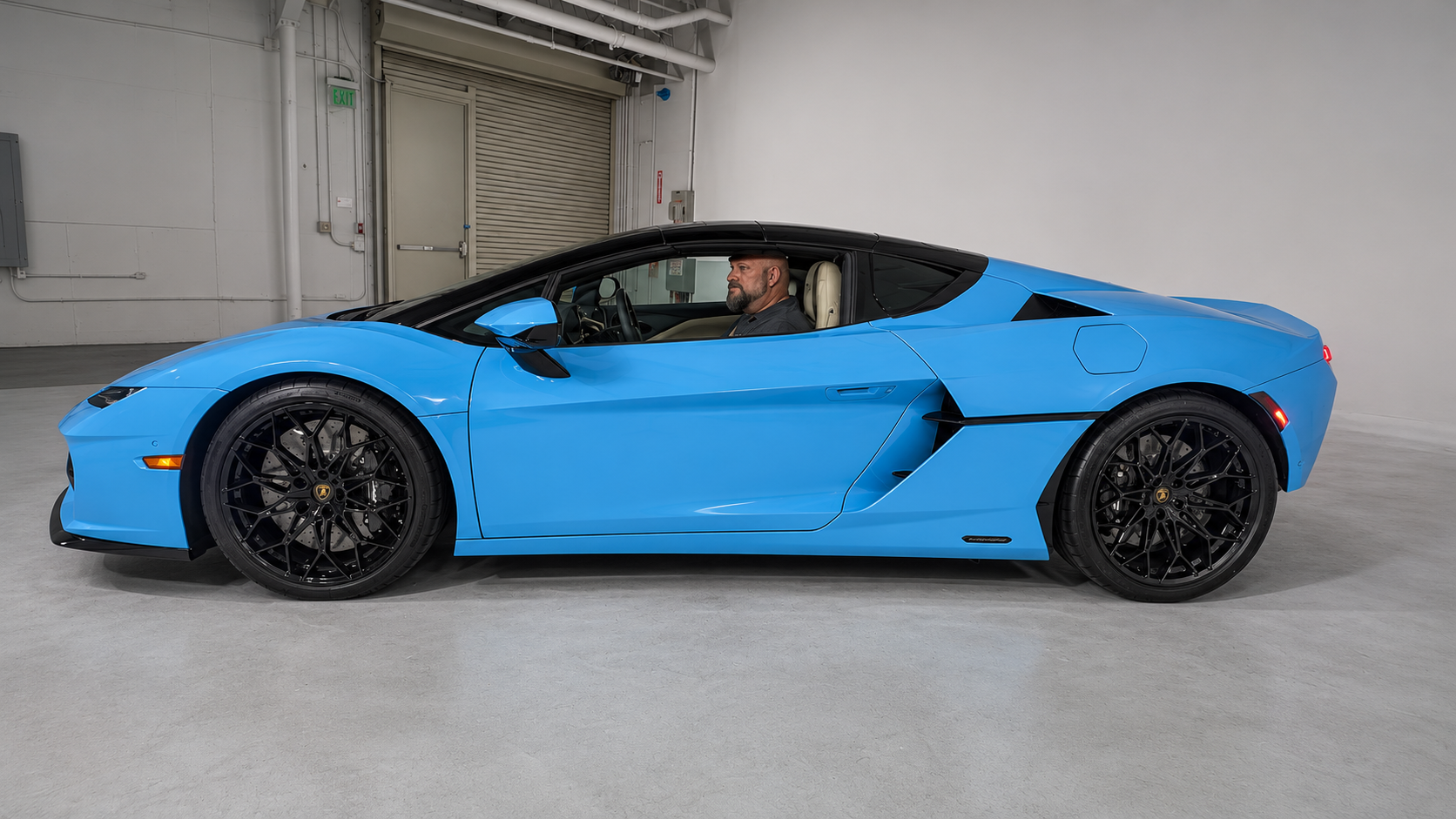
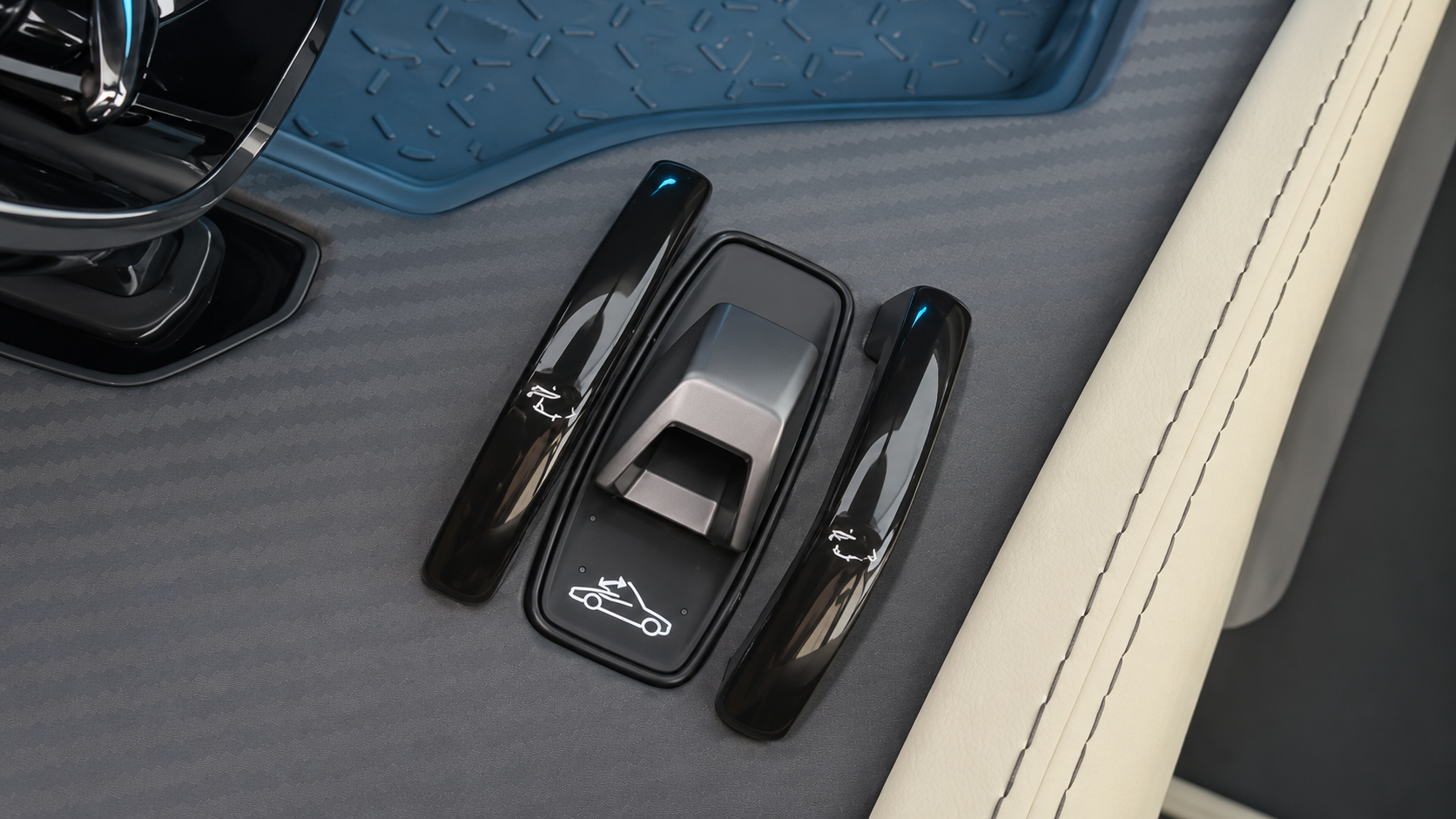
Inside, a small switch must be held during roof operation. Lamborghini relocated the fuel-filler release to a panel near the driver’s left knee to accommodate the revised controls.
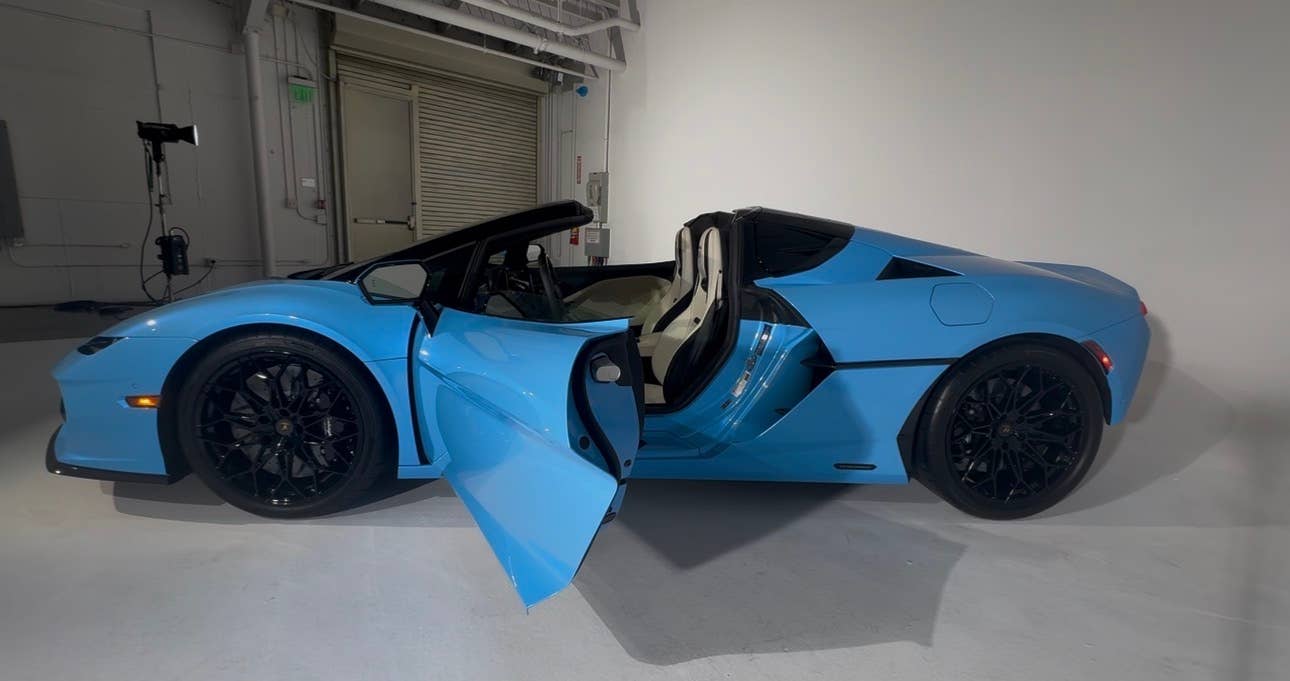
There’s also a separately operated rear window. Lower it with the roof closed and you can invite more V8 noise into the cabin without inviting the entire weather forecast. Raise it with the roof open and it can help reduce wind buffeting.
ND Adlen
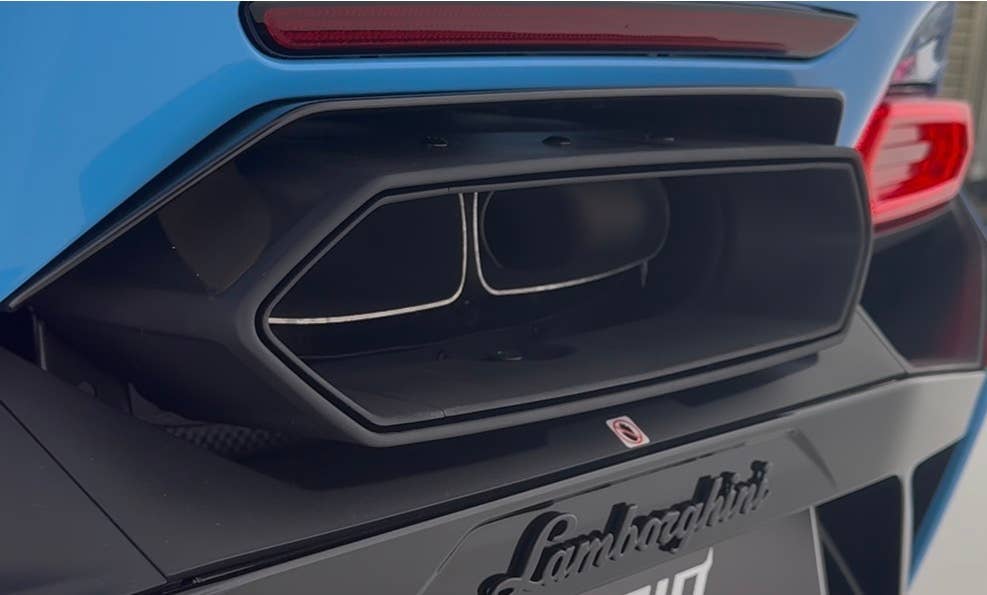
The preview car wore an optional titanium exhaust. Pair that with an opening rear window and a 10,000-rpm V8, and the stereo may face an uncomfortable employment review.
With the roof closed, the cabin looked neatly finished. The headliner’s separation lines reveal where the panels divide, but the presentation avoids resembling a collection of ceiling tiles.
ND Adlen
The price premium surprised me
Preliminary pricing provided at the preview puts the coupe around $383,000 and the Spyder just below $391,000, before options and applicable charges.
Yes, I just described roughly $8,000 as a modest increase.
In this neighborhood of the automotive world, however, that’s a relatively small premium for an elaborate roof system. Custom paint, interior treatments, and other options can still send the total toward $500,000. Financial restraint remains an optional accessory.
Final thoughts
The Temerario Spyder’s appeal goes beyond removing the roof from an outrageous supercar. Its folding hardtop adds flexibility while preserving a clean silhouette, and the mechanism is fascinating to watch.
I still need to discover how the additional weight affects the driving experience, how effectively the rear glass manages airflow and what that V8 sounds like with open sky overhead.
For now, Lamborghini appears to have combined something beautiful, something complicated, and something spectacularly unnecessary. Naturally, I want to drive it, and so do you.
Related: L.A. to Vegas in a Polaris Slingshot: My SEMA Trip Became a Rollercoaster in a Deluge