
From the Cool Cat Teacher Blog by Vicki Davis
Subscribe to the 10 Minute Teacher Podcast and Cool Cat Teacher Talk anywhere you listen to podcasts.
This is #2 in the Top 10 of the First 1,000 — the countdown of the ten most-downloaded episodes in the history of the 10 Minute Teacher. Across its first airing and four prior encores, this one has been heard 27,314 times. It is also the oldest show in the countdown.
It originally aired April 21, 2017 as episode 60. Nine years and more than a thousand episodes later, it is still one of the two most-downloaded things I have ever published — which tells you something about how badly teachers need this.
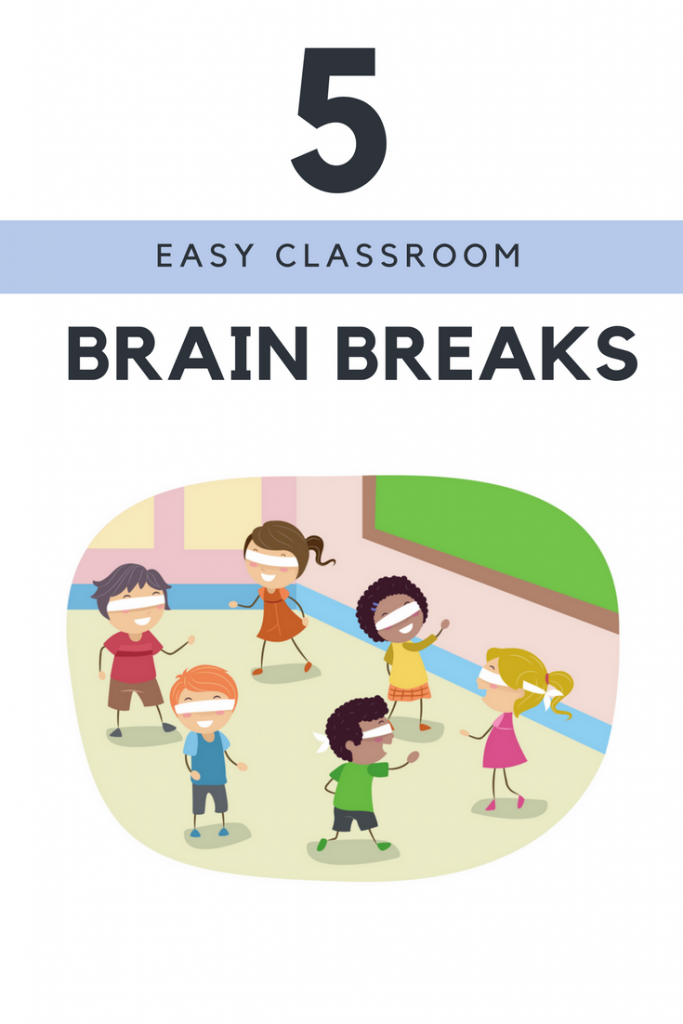
Rob Donatelli is a business and computer science teacher who gives five brain breaks you can run without buying anything, printing anything, or planning ahead: the backwards classroom race, 60-second pitches, face off, smartphone ping pong, and penny catch.
So many people now talk about “brain breaks” and there are many videos online that you can use to give students movement breaks in your classroom.
Listen to the Show
Resources from This Episode
- Donatelli EdZone on YouTube — Rob’s channel.
- The Donatelli EdZone blog.
About Rob Donatelli

Rob Donatelli is a business & computer science teacher at Dallastown Area High School. He is also the founder of the Donatelli EdZone.
His passions include school leadership, education technology, presenting, entrepreneurship, and coaching.
Connect with Rob: Donatelli EdZone | @DTown_MrD | YouTube
Other Shows with Rob Donatelli
- 5 More Easy Brain Breaks for Your Classroom (Episode 555) — Rob’s follow-up with five more brain breaks.
- How to Tell If Teaching Is Still a Good Fit for You (Episode 849) — Rob’s Q.U.E.S.T. framework for teachers feeling burned out or stuck.
Episode Transcript
This transcript was generated using AI and has been reviewed by humans for accuracy. Minor errors or artifacts may remain but I worked my best to find any issues with the transcript as I reviewed the show. – Vicki
Read the full transcript — 5 Easy Brain Breaks for Your Classroom (e993)
Announcer (00:00): This is the 10 Minute Teacher Podcast with your host, Vicki Davis.
Vicki Davis (00:05): For our number two episode of all time, we’re going all the way back to 2017, when the show first started. We recorded an episode with teacher Rob Donatelli about five easy brain breaks for your classroom. This one received 27,314 downloads. Let’s learn. So today we have with us Rob Donatelli. Rob, what is a brain break?
Rob Donatelli (00:35): Well, I would say that a brain break is an opportunity for the students to take a break from the higher level processing of learning to really just kind of calm down, relax the brain, have some fun and refocus that brain. So when a teacher gets back into learning at a high level, the students can really refocus themselves and retrain their brain to learn at their highest potential.
Vicki Davis (01:03): You know, we just can’t keep going full tilt, can we? I mean, if an interstate’s at 100% capacity, it doesn’t move, right?
Rob Donatelli (01:10): Absolutely. And these students today, you know, when they come into our classrooms, they come in with so much outside noise going on, whether it’s Snapchat or their Instagrams or what happened in the hallway. So if we can hook our students either at the beginning of the class with just something fun, such as a story about what’s happening in the world or a joke or a quote or some sort of brain teaser to hook them in and to really get them going. That’s one of the best ways to, you know, kind of calm that mind down and get them ready to learn for the day.
Vicki Davis (01:41): Okay. So what’s our first easy brain break?
Rob Donatelli (01:44): All right. Here’s a really easy one that I actually just did yesterday. So you split the class. Let’s say you have 30 students in your class and you have 15 and 15. You split them up and what they do is they’re going to do a backward race through the room. So if you have two sides, and my room is set up in pods, I have eight different stations of four students at them. And what they have to do is they have to race backwards through zigzagging through the desk and they cannot touch a chair. They cannot touch a desk, but they have to go back. And the students look at you kind of like you’re crazy at first. A lot of fun to get the whole class involved.
Vicki Davis (02:21): Wow, that almost sounds like it would be dangerous in some way. So I guess that kind of helps them just reset their brain.
Rob Donatelli (02:29): Absolutely. And when they stay from their chair, it really just kind of helps the blood flow and dopamine, which really helps them refocus to get back into the learning.
Vicki Davis (02:41): Okay, Rob, so what’s your second idea?
Rob Donatelli (02:43): Second idea is to get the students to just get up. And I don’t think our students today enough have an opportunity to just kind of talk and speak and work on those soft skills. So the second one is called 60-second pitches. And you present the students with an example of something like sell your team or a few people on why homework is bad for your health. And you put a timer up on the board and the students have to go one student at a time has to speak for 60 seconds on why homework is bad for your health. And they’re not allowed to stop talking. So it really forces them to think through a problem and the students love it. It practices those soft skills. They get to work on their public speaking. So 60-second pitches is our second one today.
Vicki Davis (03:29): Cool. And they just do that to each other. So you’re not waiting for everybody to get through their pitch.
Rob Donatelli (03:33): Correct. They just do that to each other.
Vicki Davis (03:35): Cool. Okay. What’s our third?
Rob Donatelli (03:37): The third one is when you want to do just a really quick one, you have them stand up. And this one’s called Name Three Things. So I have them sometimes do a best of five because it goes really quick. And for example, I’ll have them face off against one person and I will say, “Name three fruits.” And if you and I were doing it, we would say, you know, it was an apple, orange, and banana, right? And if I beat you, then I won that round. And I’ll put out all kinds of crazy stuff. I’ll say name three brands of shoes. I’ll say name three states in the United States. I’ll say name three countries. And they just have to spit it out, and it’s really quick. It’s really fun processing. I love that one, and the kids always really get into it and get super excited.
Vicki Davis (04:23): Oh, fun. Okay, what’s our next?
Rob Donatelli (04:25): So actually last week I have long tables in my pods that we have and I went and bought some ping pong balls. I was out at the dollar store. I thought, man, wouldn’t it be fun if we took their cell phones and they played ping pong against each other on the tables just for like two minutes. So in their baskets at their pods, I have ping pong balls in there. And when I want them to stand up, they actually use their smartphones, the back of their smartphone to hit a ping pong ball across the table and they play ping pong with each other. And it gets really competitive. It only takes two minutes, three minutes. I usually say till five. And just works on those motor skills and kind of lets them decompress from all the info that we’re learning throughout class.
Vicki Davis (05:06): Oh, what a blast. That sounds like so much fun. Oh, okay. What’s our last one?
Rob Donatelli (05:11): All right. Our last one is if you have a bag of pennies, maybe a bunch of pennies laying around and you want to put them to good use. Nobody today really likes carrying around pennies. I keep a bag of pennies in my room for the penny arm flip. And what I like to do is I put a timer up on the board for a minute and the students have to put a penny on their elbow facing up towards the ceiling. And they have to, when they move the arm down, they try to catch the penny. And it sounds really easy, but it’s kind of tough if you don’t do it really quick. And I challenge the students to see how many can you get and if they can beat me in 60 seconds. And it turns very competitive. Some can do it, some can’t, but there’s definitely always some laughs to go around. And it’s a really enjoyable, just quick brain break 60 seconds.
Vicki Davis (05:58): Okay, so Rob, let me ask you this. What happens when somebody comes in and observes your room and they think you’re playing?
Rob Donatelli (06:03): Yeah, interesting question. We actually went from a model this last year. We were teaching 42 minutes and now we’re teaching 68 minutes in trimesters. And we were encouraged by our administration to really come up with some brain breaks because you want to be able to chunk that information. If a student’s sitting there for 68 minutes, just, you know, getting lectured to or doing a project, they really have a hard time. We know that through research, focusing even after 18 to 20 minutes. And so our administration is very encouraging to allow us to do these brain breaks and to challenge our students to be creative and get up and engage with each other. So it’s been really cool to have the support from that standpoint.
Vicki Davis (06:42): OK, here’s your brain break, Rob. Pitch all of the teachers out there listening for 40 seconds. Why does every classroom need a brain break? Go.
Rob Donatelli (06:51): Every classroom needs a brain break because the students are inundated with so much noise. And what the brain break allows students to do is really just take a break from all of that knowledge that is getting crammed into their brain through lectures and projects and discussions. It also improves their motor skills, creativity skills, teamwork skills, skills that allow you to build those soft skills with handshakes and talking to one another. And in a day and age where students are so inundated with their technology and they’re on it all the time, it really is fun to have them engage with one another in a fun and enthusiastic and creative and interesting way.
Vicki Davis (07:31): Teachers, to be remarkable, we need a sense of adventure. We have to shake up routine. If they’re doing the same thing every day, the same way all the time, and part of that we have because of our classroom procedures, but we do want to kind of mix things up and break the routine and make things novel and exciting and remarkable.
Rob Donatelli (07:51): Absolutely. And if I don’t do this, Vicki, they’re begging me. They’re wondering at the end of the period, when are we doing a brain break? So it’s really transformed the classroom and brought a level of energy that was missing in years past.
Vicki Davis (08:03): Thank you for tuning in to 10 Minute Teacher Podcast. Join us here every weekday and subscribe to the Classroom Matters newsletter. See you later, educator.
The Top 10 of the First 1,000
As the 10 Minute Teacher approaches its 1,000th episode, I went back through the download numbers for every show and pulled the ten that teachers listened to most. One airs each weekday through September 18, counting down to number one.
#2 — you are here. Yesterday: #3, Lisa Hollihan Allen on reading stamina. Tomorrow: number one. And it is a biggie!
Listen and Subscribe
If this one gave you something to try this week, share it with the teacher across the hall.
The post 5 Easy Brain Breaks for Your Classroom appeared first on Cool Cat Teacher Blog by Vicki Davis @coolcatteacher helping educators be excellent every day. Meow!
If you’re seeing this on another site, they are “scraping” my feed and taking my content to present it to you so be aware of this.