The tech world loves superhuman leaders who can withstand boardroom coups and weather negative publicity. Steve Jobs navigated negative press during his tenure at Apple. Elon Musk’s transgressions are forgiven by his followers because of what he brings to his companies. And Sam Altman survived a boardroom coup a little under three years ago.
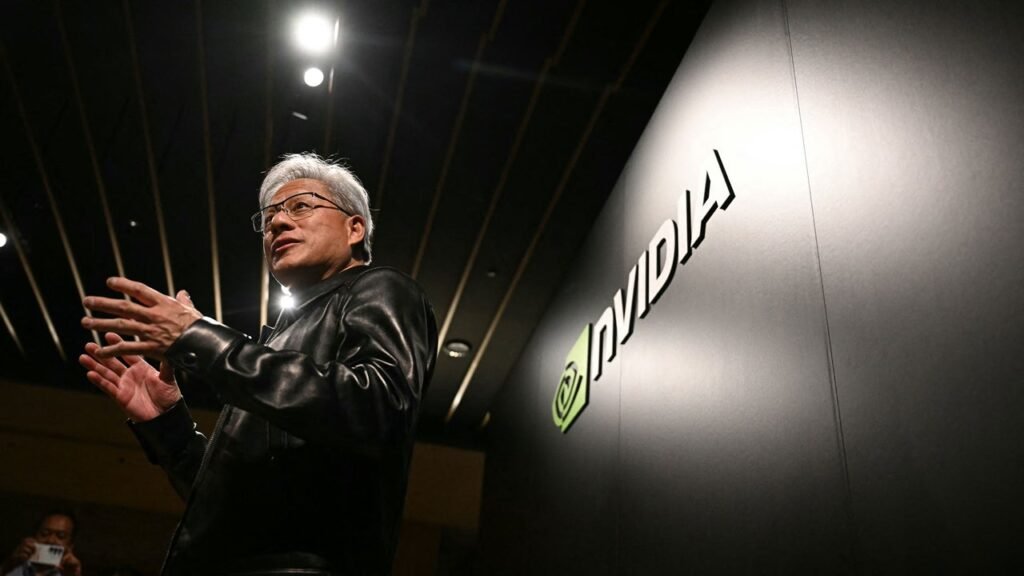
Jensen Huang, Nvidia’s one-of-a-kind CEO and figurehead since its founding in 1993, couldn’t survive reports of successive romance scandals. On November 12, he was defenestrated and replaced by his chief financial officer as interim CEO. But in the long term, a permanent replacement will be needed.
Finding the right person will be tricky. Huang was renowned for his attention to detail, larger-than-life leadership style, and outgoing personality. He deftly navigated competing business and geopolitical interests to build one of the world’s most valuable companies—and managed to master a wide range of disciplines along the way.
So what qualities will his successor have to replicate?
Managing geopolitics
Huang’s downfall began with a dalliance with an alleged Chinese spy, Alice Huang, the CEO of tech company Megaspeed. But one of his biggest strengths was his ability to navigate the messy geopolitics of the AI race between the U.S. and China—and the awkward relationship between Taiwan, home to TSMC, which is central to Nvidia’s chipmaking process, and China, which wants to invade it.
“The fact that he was born in Taiwan, is the founder-CEO of Nvidia, and has been able to advocate for less-hawkish approaches to tech policy vis-a-vis China all go hand in hand in giving him perspectives as well as influence within the White House, and a demigod status in Taiwan and Asia,” says Kristy Loke, a researcher at the MATS Program. Loke reckons any future CEO will struggle to replicate that geopolitical deftness. “Instead of Steve Jobs, we’ll get perhaps a Tim Cook,” she says.
Handling Donald Trump
Game recognizes game, and Donald Trump held Jensen Huang in high esteem. The U.S. president was still defending Huang earlier this week, saying his departure wasn’t necessary.
“Between Taiwan and the development of AI in the U.S. and China, Huang has attempted to walk a careful line between the Chinese and U.S. governments, refusing to use adversarial language with respect to China, and uniquely able to attempt to remind political leaders of the major dependence of Nvidia on Asian supply chains and markets,” says Paul Triolo, partner and head of technology for Asia and the Americas at DGA.
That could easily have irked the man in the White House. But it didn’t. “He was clearly a staunch supporter of the U.S.leading in the AI race, and frequently only advocated for the sale of GPUs to China several generations behind the cutting edge to ensure the U.S. lead,” says Triolo. “These are policies that both the Biden and Trump administration have supported.”
Being a personality and pitchman
Nvidia didn’t become one of the world’s most valuable companies by accident, and one of Huang’s strengths was his ability to convince a skeptical public that AI was a technology worth investing in. Like Steve Jobs with his iconic black turtleneck, Huang had his own trademark look—along with the swagger to match—that helped make him one of AI’s most recognizable personalities.
One suggestion for his replacement has come from the White House, where Donald Trump has floated Apple’s former CEO, Tim Cook, as a potential candidate to lead Nvidia. That seems unlikely.
Schmoozing clients and customers
Huang’s downfall stemmed from getting too close to his contacts, but one of his strengths as CEO was his ability to keep people sweet. Taiwanese media regularly covered Huang’s wining and dining of clients, which sometimes involved trips to street food stalls and getting chummy with collaborators.
The concept is known as 义气, which roughly translates to loyalty. Huang made regular visits to his native Taiwan, home to many of the vendors that supply Nvidia with chip components, maintaining those relationships through boozy meals and appearances at factory ribbon-cutting ceremonies. That closeness paid dividends. “Jensen’s legendary supply chain dinners and commitments are what pushed suppliers in Taiwan to deliver on technologically and logistically aggressive plans,” wrote Dylan Patel of SemiAnalysis in a blog post. It’s much less clear whether those suppliers will extend the same warmth to anyone else.
Keeping on top of the details
Beyond his command of the big picture, one thing that distinguished Huang from many CEOs was his deep understanding of how his business worked and the technology underpinning it. “He was much more involved in the details of the firm’s day-to-day operations than a typical CEO and has no deputies who can easily step into his shoes,” says Chris Miller, a researcher at Tufts University and the author of Chip War, a book on the semiconductor industry.
That strength may now prove a weakness, as Huang’s flat organizational structure means few others possess the same combination of breadth and depth of expertise. “Jensen Huang was one of the longest serving CEOs in the tech industry and the key force behind Nvidia’s rise and its investments in AI,” says Miller. “He’ll be very hard to replace.”