Research & Developments is a blog for brief updates that provide context for the flurry of news regarding law and policy changes that impact science and scientists today.
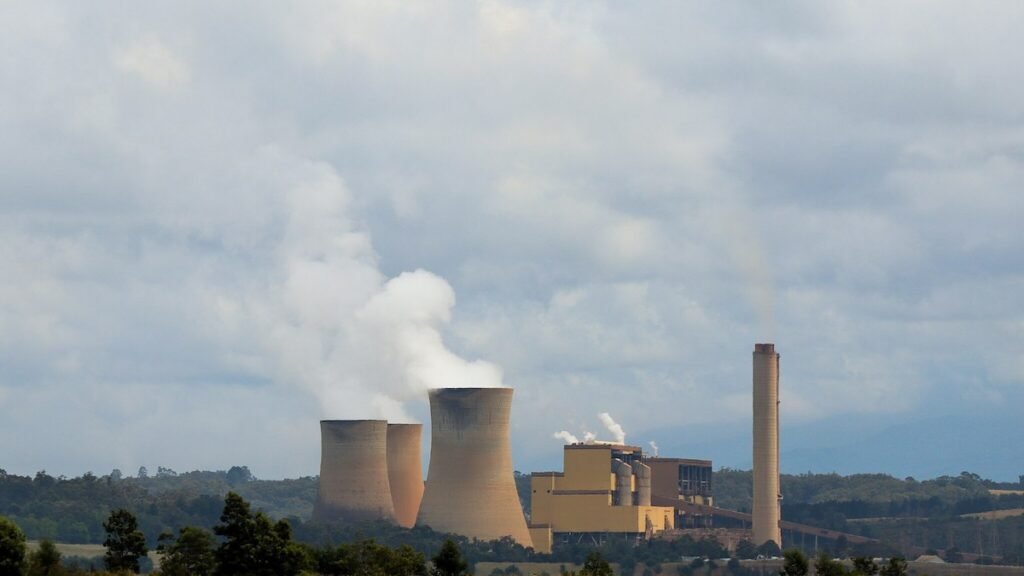
At a 20 February event in Kentucky, the Trump administration announced plans to loosen pollution restrictions for coal-burning power plants, including limits on emissions of mercury, a hazardous neurotoxin.
The move was originally put forward in June, alongside a proposal to repeal federal limits on power plant carbon emissions.
The new rollback would eliminate parts of the Mercury and Air Toxics Standards (MATS) finalized under the Biden administration. The 2024 updates strengthened limits on mercury and other hazardous air pollutant emissions from coal-burning power plants.
According to the EPA proposal, coal-burning power plants would be allowed to emit more than twice as much mercury as they currently do. Specifically, they would no longer need to adhere to the limit of 1.2 pounds of mercury per trillion British thermal units of heat input (lb/TBtu) and instead comply with the previous mercury release limit (set during the Obama administration in 2012) of 4.0 lb/TBtu.
“Weakening critical clean air safeguards will harm public health.”
The proposed repeal would also relax limits on emissions of arsenic, cadmium, chromium lead and nickel from coal-burning power plants.
The announced rollback shows that the “EPA is letting the dirtiest, least efficient coal plants in the country off the hook,” Joseph Goffman, who worked as an administrator in the EPA’s Office of Air and Radiation during the Biden administration, told The New York Times.
In the documents reviewed by The New York Times,the Trump EPA argued that the move will reduce “unwarranted costs” for utilities operating coal-burning power plants. The agency estimated the change would save companies up to $670 million between 2028 and 2037, but did not explain how it arrived at that estimation.
“The Trump E.P.A. is committed to fulfilling President Trump’s promise to unleash American energy, lowering costs for families, ensuring clean air for ALL Americans and fulfilling the agency’s core mission of protecting human health and the environment,” wrote Brigit Hirsch, an EPA spokesperson, in an email to The New York Times.
Related
• Trump EPA to Weaken Rule Limiting Harmful Mercury, Air Toxics From Coal Plants
• E.P.A. Plans to Loosen Mercury Rules for Coal Plants, Documents Show
• Read more about the EPA’s Mercury and Air Toxics Standards
• EPA Fact Sheet: Proposal to Repeal Revisions to the Mercury and Air Toxics Standards for Power Plants
• Get Involved: AGU Science Policy Action Center
High levels of mercury exposure cause human health harms, including impairment to the nervous system, brain damage and developmental delays in children. Coal plants are responsible for nearly half of the United States’ mercury emissions, according to the EPA. The Biden administration’s EPA had predicted that its amendments to MATS would create health benefits worth $300 million over 10 years.
The repeal would add to a list of actions by the EPA deregulating the coal industry.
The EPA’s action would “contribute to thousands of additional deaths, asthma attacks, and learning disabilities,” Matthew Davis, a former EPA scientist and policy expert at the League of Conservation Voters said in a statement. “Weakening critical clean air safeguards will harm public health.”
—Grace van Deelen (@gvd.bsky.social), Staff Writer
These updates are made possible through information from the scientific community. Do you have a story about how changes in law or policy are affecting scientists or research? Send us a tip at eos@agu.org.

Text © 2026. AGU. CC BY-NC-ND 3.0
Except where otherwise noted, images are subject to copyright. Any reuse without express permission from the copyright owner is prohibited.