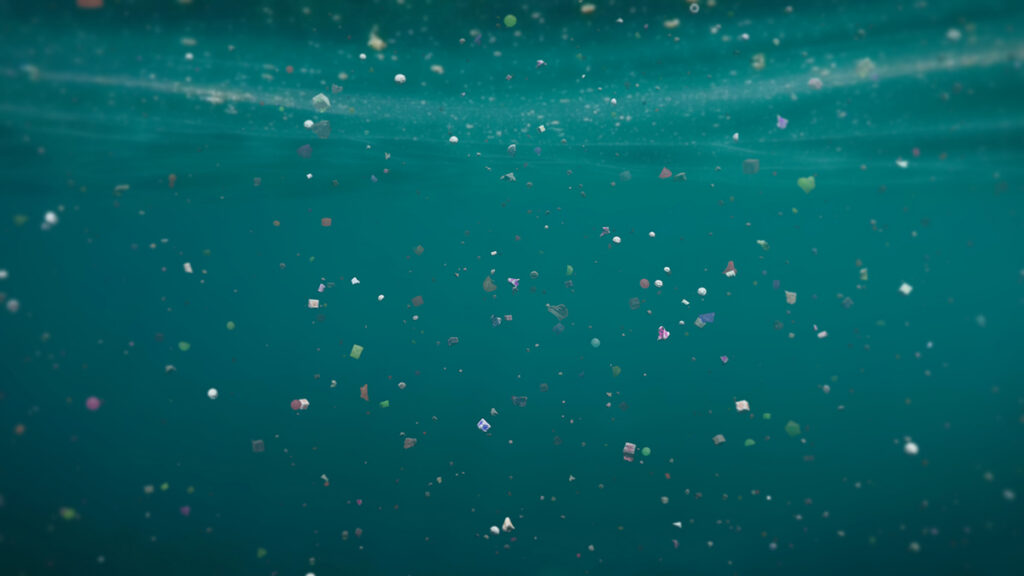
Invented more than 150 years ago, plastic was initially developed as a means to conserve natural resources such as ivory by acting as a substitute. Today, after humanity has produced more than 9 billion metric tons of plastic, more than double the dry weight of all terrestrial and marine animals, the relationship between plastics and conservation has become far more fraught.
As of 2015, 6.3 billion metric tons of plastic had been discarded as waste [Geyer et al., 2017]. Only about 9% of this waste was recycled—with most of that recycled material subsequently discarded—while 12% was incinerated. The rest has been accumulating in landfills and in the natural environment.
The ocean is one major sink for plastic debris, receiving an estimated 11 million metric tons of plastic waste annually.
The ocean is one major sink for plastic debris, receiving an estimated 11 million metric tons of plastic waste annually, a number projected to grow substantially if current trends continue.
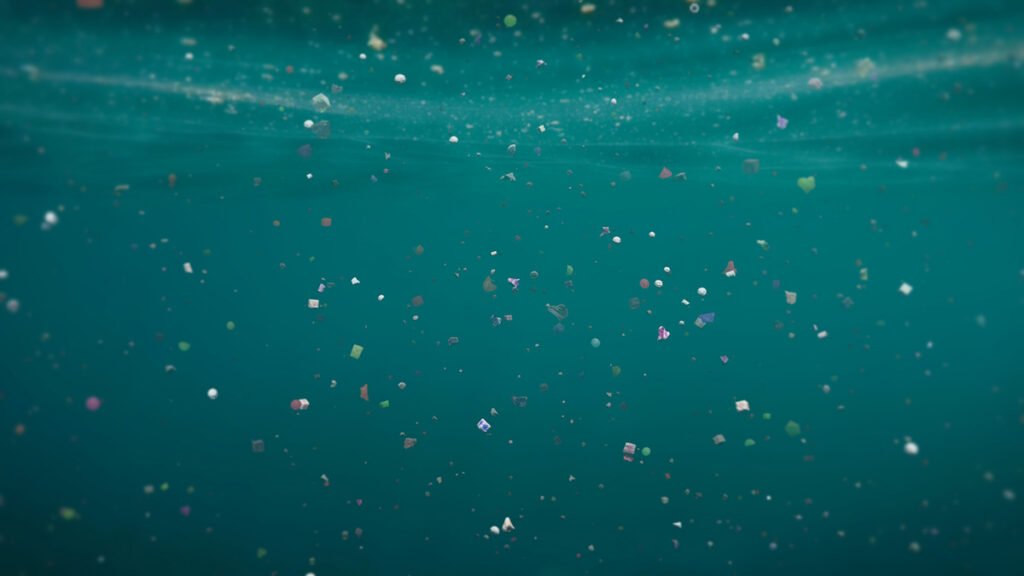
In the environment, plastic waste degrades into a continuum of small particles, ranging from microplastics (1 micrometer to 5 millimeters) down to nanoplastics (<1 micrometer) [Thompson et al., 2024; Ten Hietbrink et al., 2025]. Such particles were first discovered in the sea in the 1970s [Carpenter and Smith, 1972; Buchanan, 1971], although research surged only after the term “microplastics” was coined in 2004 [Thompson et al., 2004].
Two decades of subsequent study have confirmed how ubiquitous microplastics are in the ocean, from the Arctic to the Antarctic and from the surface to the deepest trenches, and how embedded they are in the marine food web, from plankton to whales. Indeed, plastic particles are infiltrating ecological processes, creating risks for wildlife and humans, and altering biogeochemical processes throughout the ocean.
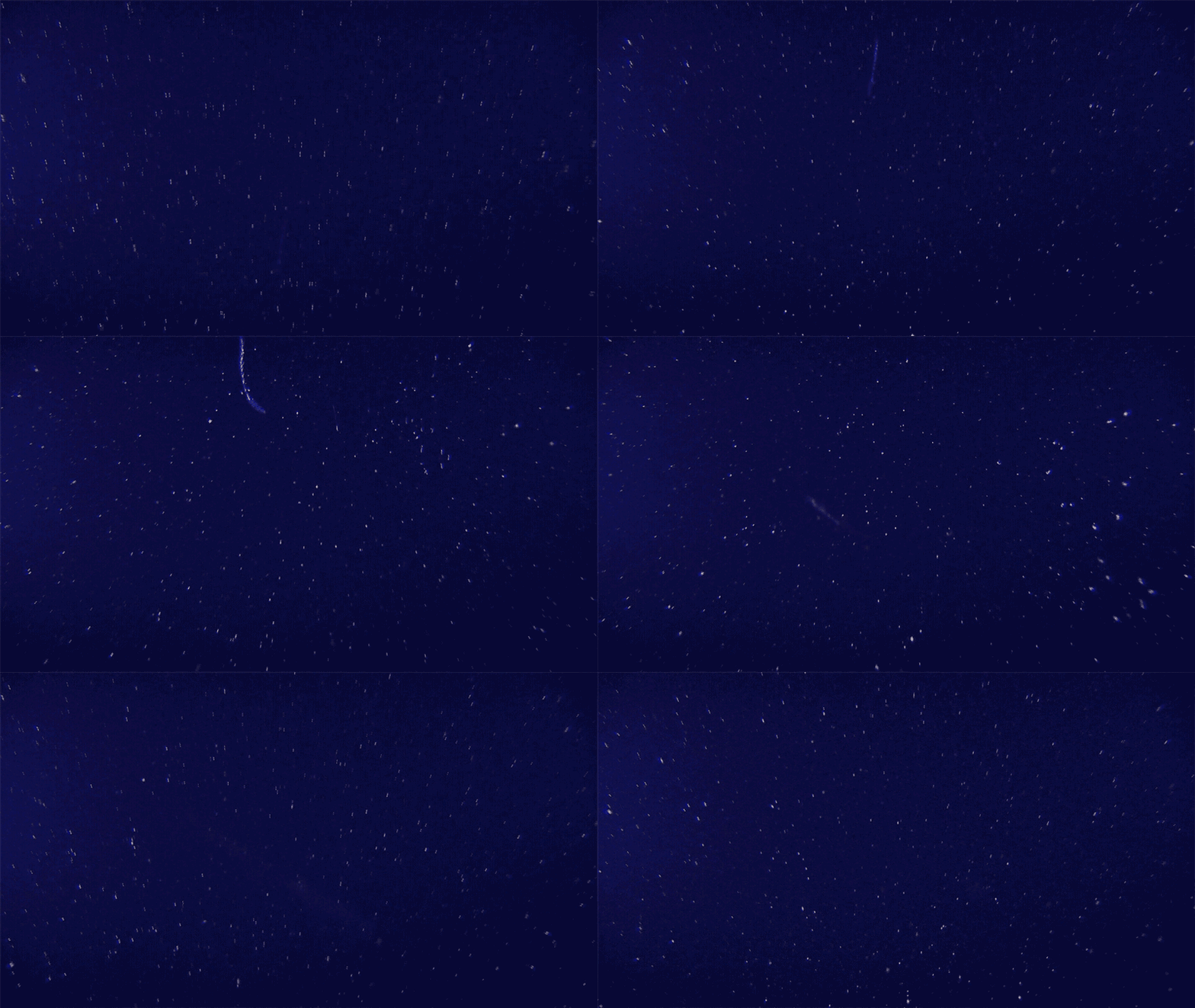
However, significant knowledge gaps persist that hamper our understanding of the fate and consequences of many plastic particles because most research focuses on the easily reached, upper 50 centimeters of the sea, leaving the rest of the vast water column largely a “black box” [Zhao et al., 2025]. Uncertainties about concentrations and fluxes of marine plastics are compounded by the lack of reliable and mutually comparable data collected using different methods. Filling these gaps is thus a pressing environmental concern—and the focus of recent and ongoing international scientific collaborations.
Why Small Plastics in the Ocean Matter
The ocean water column, constituting up to 99% of Earth’s habitable volume, teems with particles both living and nonliving, including marine creatures from bacteria to whales, as well as organic detritus (e.g., dead cells, fecal pellets, and biomineralized shells). Plastic particles with different physical and chemical characteristics are now a nonnegligible component of this marine particulate pool.
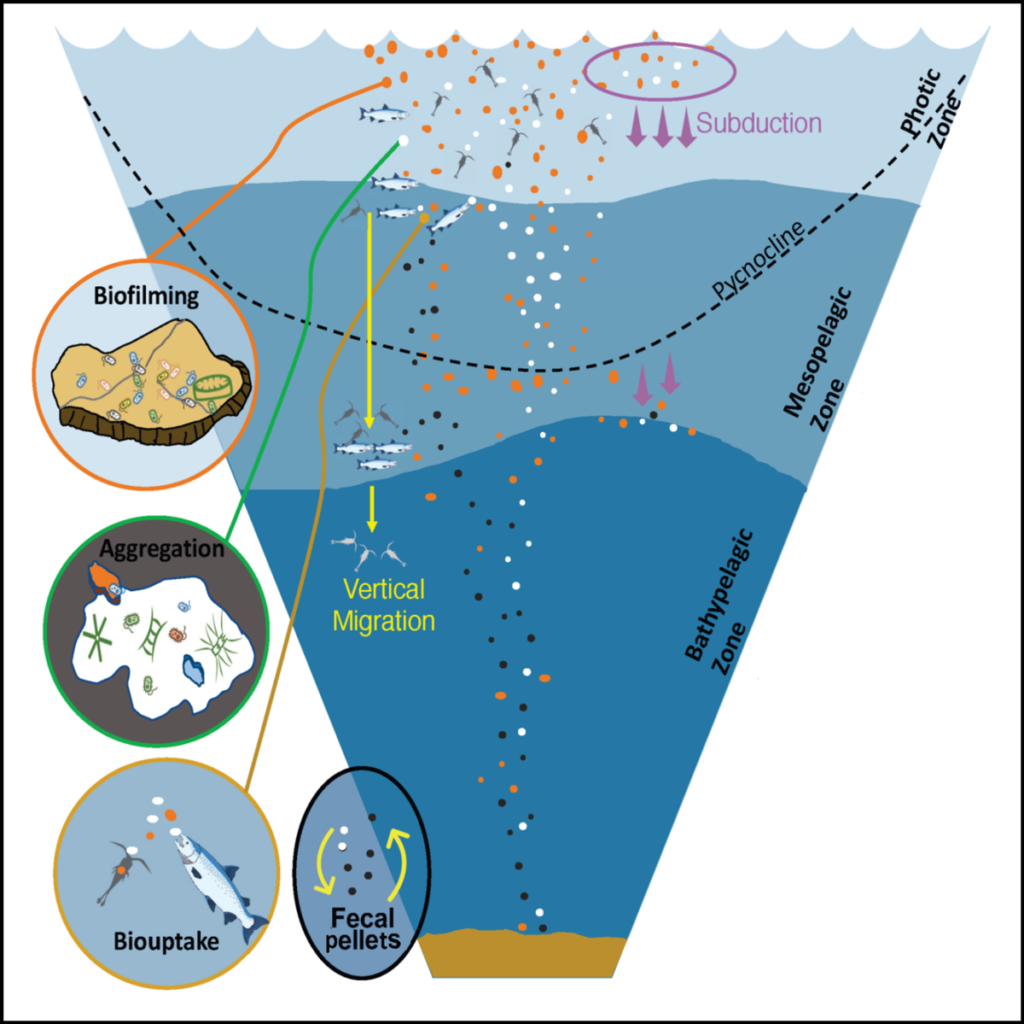
The dynamics of living and nonliving particles and their interplay with environmental processes play pivotal roles in ecological processes and biogeochemical cycling in ocean ecosystems. Most notably, particles in the water column function as a carbon vector, transferring biological carbon to greater depths via a variety of mechanisms (Figure 1). Together, these mechanisms make up a biological engine that sends carbon to the deep ocean, where some of it is stored for centuries to millennia, and that acts as a natural regulator of global climate.
Introducing plastics into the ocean may compromise this critical engine. As small plastic particles descend to the seafloor, they cause physical damage and introduce chemical toxins to more than 1,200 marine species known to ingest them. Furthermore, plastics embedded in marine snow, including fecal pellets, may alter its density and sinking rates, making it a less efficient vector of carbon transport.
To understand the full spectrum of consequences of a plasticized ocean, scientists must look below the surface and gain a holistic understanding of how plastics interact with living and nonliving particles in the sea.
To understand these risks and quantify the full spectrum of consequences of a plasticized ocean, scientists must look below the surface and gain a holistic understanding of how plastics interact with living and nonliving particles in the sea. That effort starts with locating, counting, and characterizing small plastics throughout the water column.
Counting Plastics Below the Surface
Counting subsurface microplastics started in the 1970s with the use of opening-closing plankton nets in the waters of Block Island Sound [Austin and Stoops-Glas, 1977] in the Atlantic Ocean off the coast of Rhode Island. That work found that millimeter-scale polystyrene particles were common within the upper 20 meters of the water column but absent below that, where water masses originate from offshore.
Since 2014, observations of microplastics throughout the marine water column have spiked. As with the earlier observations, modern methods for sampling subsurface plastic particles have been adapted from established tools used for gathering biological particles like plankton.
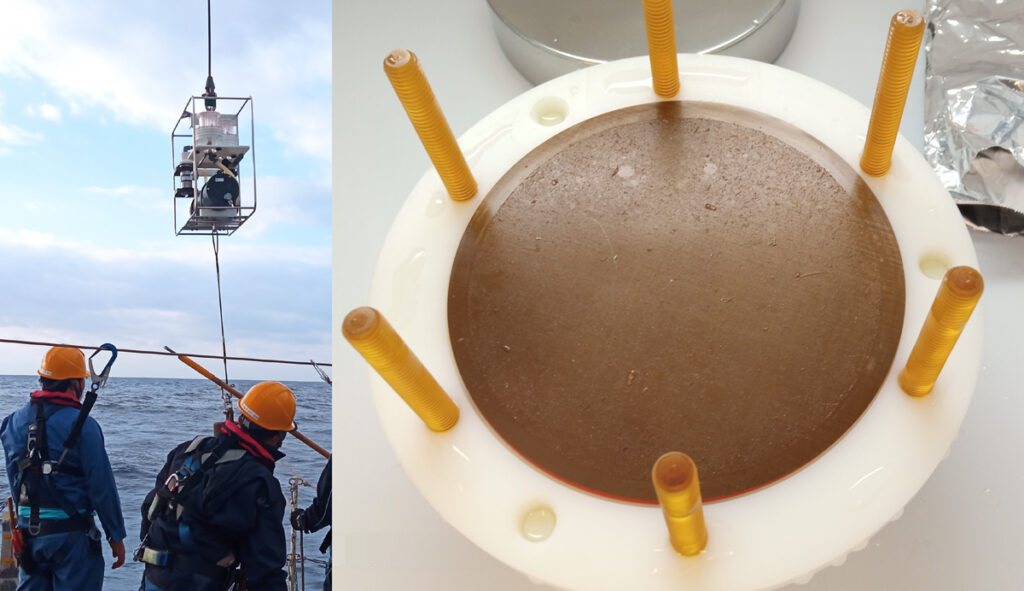
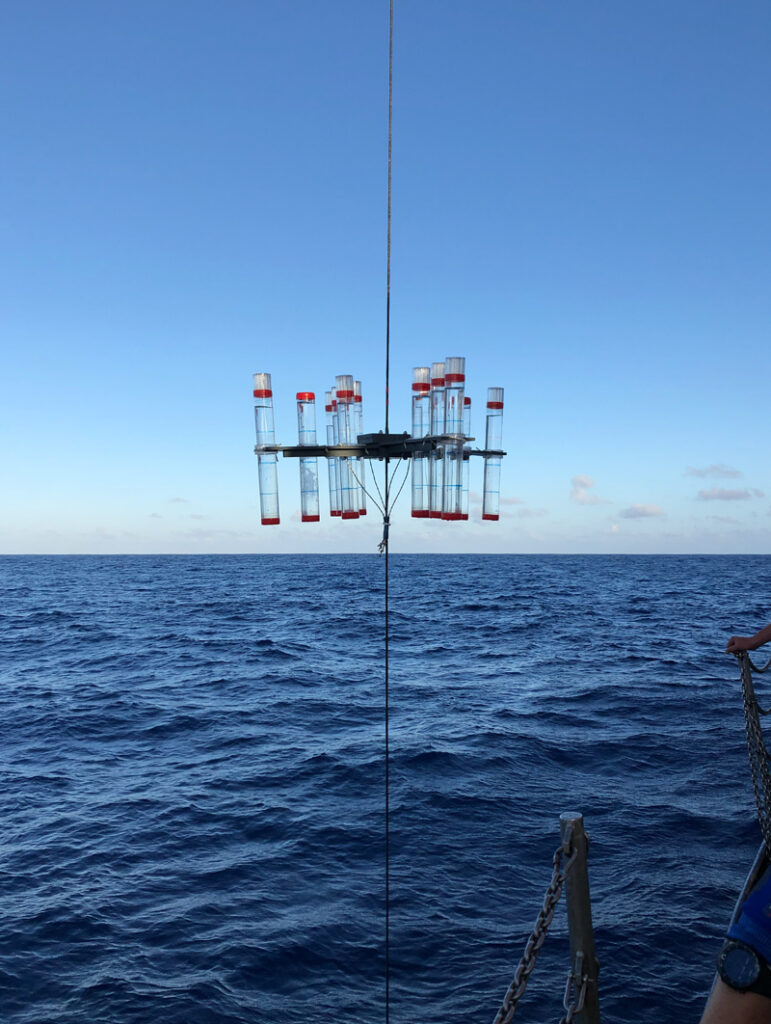
Methods such as using the Multiple Opening and Closing Net and Environmental Sensing System and other large-volume water transfer systems can process hundreds to thousands of liters of water from targeted layers and capture particles in different size fractions at depths greater than 5,000 meters. By comparison, bulk sampling methods using Niskin bottles, for example, capture discrete smaller volumes (e.g., 10–15 liters), allowing analyses of plastic particle concentrations and compositions from different depths [Ten Hietbrink et al., 2025; Zhao et al., 2025].
Sediment traps, traditionally used to measure marine snow and carbon fluxes, can also be deployed to quantify vertical plastic fluxes and study how plastics interact with biological materials [Galgani et al., 2022]. Other approaches have used ship underway pumps or plankton nets and pumps attached to remotely operated vehicles to study plastic pollution at discrete depths.
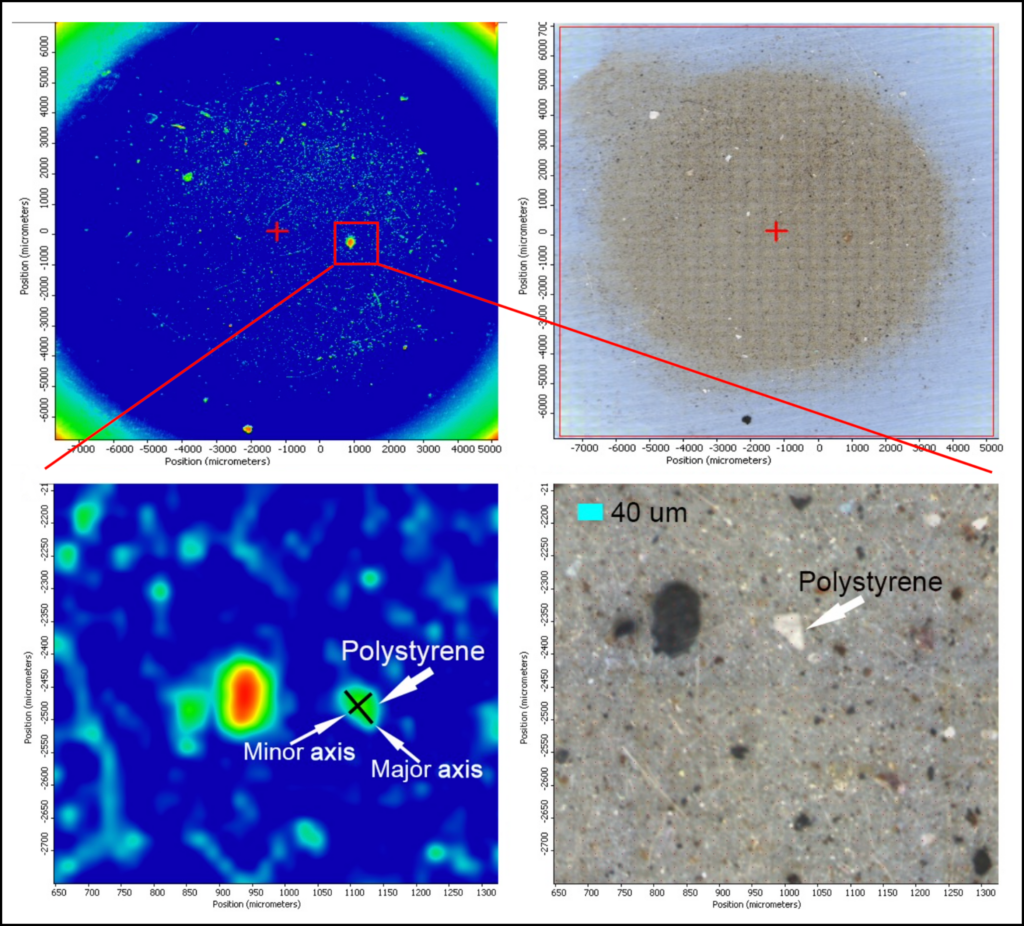
Once collected, plastic samples are processed in laboratories to isolate synthetic polymers from natural organic and mineral matter and from other compounds. Identification of particle chemistry is then done using spectroscopic imaging or mass spectrometric techniques. The former, which include micro-Fourier transform infrared and micro-Raman spectroscopy (Figure 2), are favored for being nondestructive and for providing detailed data on particle shapes and compositions. Mass spectrometric techniques, such as pyrolysis–gas chromatography–mass spectrometry, provide bulk mass concentrations, although they are destructive and do not provide data about particles’ physical properties.
Consistent sampling and analysis methodologies for subsurface plastics do not currently exist.
Researchers typically select specific sampling and analytical approaches that are guided by their research interests and available logistical and technical resources. Amid the diversity of techniques used, though, consistent sampling and analysis methodologies for subsurface plastics do not currently exist, presenting significant hurdles to our understanding of the distribution of subsurface plastic pollution and the severity of its consequences.
The lack of consistent methodologies is primarily due to the extreme complexity of small plastic particles. In natural environments, these plastics constitute a suite of contaminants spanning a wide array of sizes, shapes, colors, specific densities, chemical compositions, degrees of aging, and accompanying microbial communities. This heterogeneity dictates the diverse environmental behaviors of plastic particles and leads to inconsistencies in their investigation.
Discrepancies in the Data
Recent measurements have confirmed that small plastics occur throughout the full water column and have revealed that the subsurface ocean frequently harbors high numbers of particles, most of them smaller than 100 micrometers. At depths of 100–270 meters in the Atlantic Ocean, for instance, concentrations exceeding 1,100 particles per cubic meter have been observed.
Deeper still, even more staggering concentrations have been recorded in hot spots: 2,600 particles per cubic meter at depths greater than 5,000 meters within the Great Pacific Garbage Patch and up to 13,500 particles per cubic meter at 6,800-meter depth in the Mariana Trench. The persistence of these subsurface hot spots poses significant ingestion risks to deep-sea creatures.
Research in the Gulf of Mexico indicates that fish and crustaceans inhabiting deeper ocean layers, particularly those that do not migrate to shallower waters, have higher microplastic ingestion rates than their shallower-dwelling counterparts. This trend is especially pronounced in organisms retrieved from depths of 1,200–1,500 meters [Bos et al., 2023]. It is surprising—and alarming—that such nonmigratory organisms, which remain relatively quiescent at depth throughout their life cycles, are facing such high levels of plastic exposure in what was once considered a remote and protected realm.
Small plastics are now a permanent part of all layers of the marine environment. Yet a recent global synthesis of current literature revealed stunning discrepancies in the available data: Measured microplastic concentrations in the oceanic water column vary by up to 8 orders of magnitude across different studies [Zhao et al., 2025]. Meanwhile, although measurements of the vertical flux of sinking plastics remain scarce, existing reports of mean daily flux also show a wide spread, ranging from 4.7 to more than 20,000 particles per square meter [Zhao et al., 2025].
The variance in these measurements highlights the critical gaps in comparability and reproducibility among different sets of observations. These gaps directly result from methodological inconsistencies—for example, some studies account exclusively for microfibers, while others focus on fragments—and from regional sampling biases, such as limited sample sizes. Furthermore, particle characteristics such as size and shape, which regulate their environmental behavior, are not reported consistently across studies.
The shortage of comparable data prevents the scientific community from reaching reliable conclusions about the distribution and movement of plastic particles in the ocean.
The shortage of comparable data prevents the scientific community from reaching reliable conclusions about the distribution and movement of plastic particles in the ocean. Such data are also necessary to constrain models ranging from mechanistic simulations of plastic transport to biogeochemical simulations projecting long-term impacts on deep-sea biome health.
A shift toward systematic consistency, from sampling and analysis to final reporting, is urgently needed to ensure that datasets collected around the world are both reliable and comparable.
Taking Steps Toward Consistency
Recent efforts have made positive steps toward standardizing how we track plastic particles throughout the vast oceanic water column. Consensus scientific reports have highlighted the need for standardization, and research networks and international scientific working groups (WGs) focused on marine litter and plastic have provided fundamental information and advancements on sea surface and seafloor pollution, upon which ongoing efforts can build.
The former Scientific Committee on Oceanic Research (SCOR) WG 153 identified knowledge gaps regarding near-surface ocean dynamics that affect litter distribution and transport, advanced marine litter modeling capabilities, and evaluated remote sensing technologies for studying floating ocean litter.
Another past group, WG 40 of the Joint Group of Experts on the Scientific Aspects of Marine Environmental Protection, reviewed water column sampling methods used before 2016. This group articulated the challenges of obtaining meaningful results given the heterogeneous distribution of plastics caused by wind mixing, degradation, and varying buoyancy. The group recommended targeting smaller microplastics when monitoring the water column, as larger plastics are generally less abundant beneath the surface.
Until recently, it was widely believed that plastics either float or sink quickly to the seafloor.
However, improving and validating analytical protocols for counting and analyzing water column plastics were not specifically considered by these groups because until recently, it was widely believed that plastics either float or sink quickly to the seafloor. Furthermore, logistical challenges rendered depth-resolved information scarce.
Today, the Deep-Ocean Stewardship Initiative (DOSI) Pollution and Debris WG is focused on improving public understanding, advancing research on deep-sea plastics pollution, and advocating to integrate deep-sea science into policy development. The group is engaging with the United Nations Intergovernmental Negotiating Committee on Plastic Pollution, but it has not directly addressed the standardization of analytical protocols.
Another active effort is SCOR’s new Small Plastics in the Ocean’s Interior: Coherent Analysis and Synthesis for Better Scrutiny (SPASS) WG 174, which was launched in late 2025 by a global multidisciplinary team of marine scientists and plastic pollution experts to comprehensively study plastic throughout the marine realm.
SPASS’s primary mission over the next 3 years is to develop clear protocols for collecting and analyzing subsurface small plastics, ensuring methods are adaptable to varying institutional resource capacities. To do so, SPASS will regularly engage with and solicit technical feedback from the research community. The group also aims to provide rigorous guidance on data and metadata reporting and to compare laboratory methods to ensure reliable and comparable measurements.
Through the ongoing work of groups like DOSI and SPASS and with collaboration from other experts, we can bridge knowledge gaps that are limiting our understanding of the distribution of small plastic particles in the deep ocean. More accurate and consistent data will also better illuminate the harmful consequences of this pollution for marine ecosystems, as well as for human health and well-being—information that could influence policies that close the tap on plastic flowing into the ocean.
Acknowledgments
Work described in this article was partially supported by funding provided to the SPASS WG by national committees of SCOR and from a grant to SCOR from the U.S. National Science Foundation (OCE-2513154). S.Z. was supported by JSPS KAKENHI (grant 25K03259). SPASS enthusiastically invites the community to engage with its efforts and will solicit community feedback via its website and during in-person professional meetings over the project’s duration. Project meetings will be open to interested researchers, with registration announced beforehand in professional outlets. SPASS is open to collaborations on archive assessment as well as on the intercalibration exercise.
References
Austin, H. M., and P. M. Stoops-Glas (1977), The distribution of polystyrene spheres and nibs in Block Island Sound during 1972–1973, Chesapeake Sci., 18(1), 89–92, https://doi.org/10.2307/1350372.
Bos, R. P., et al. (2023), Microplastic ingestion by deep-pelagic crustaceans and fishes, Limnol. Oceanogr., 68(7), 1,595–1,610, https://doi.org/10.1002/lno.12370.
Buchanan, J. B. (1971), Pollution by synthetic fibres, Mar. Pollut. Bull., 2(2), 23, https://doi.org/10.1016/0025-326X(71)90136-6.
Carpenter, E. J., and K. L. Smith Jr. (1972), Plastics on the Sargasso Sea surface, Science, 175(4027), 1,240–1,241, https://doi.org/10.1126/science.175.4027.1240.
Galgani, L., et al. (2022), Hitchhiking into the deep: How microplastic particles are exported through the biological carbon pump in the North Atlantic Ocean, Environ. Sci. Technol., 56(22), 15,638–15,649, https://doi.org/10.1021/acs.est.2c04712.
Geyer, R., J. R. Jambeck, and K. L. Law (2017), Production, use, and fate of all plastics ever made, Sci. Adv., 3(7), e1700782, https://doi.org/10.1126/sciadv.1700782.
Ten Hietbrink, S., et al. (2025), Nanoplastic concentrations across the North Atlantic, Nature, 643(8071), 412–416, https://doi.org/10.1038/s41586-025-09218-1.
Thompson, R. C., et al. (2004), Lost at sea: Where is all the plastic?, Science, 304(5672), 838, https://doi.org/10.1126/science.1094559.
Thompson, R. C., et al. (2024), Twenty years of microplastic pollution research—What have we learned?, Science, 386(6720), eadl2746, https://doi.org/10.1126/science.adl2746.
Zhao, S., et al. (2025), The distribution of subsurface microplastics in the ocean, Nature, 641(8061), 51–61, https://doi.org/10.1038/s41586-025-08818-1.
Author Information
Shiye Zhao (szhao@jamstec.go.jp), Institute for Earth and Materials Sciences, Japan Agency for Marine-Earth Science and Technology, Yokosuka; Luisa Galgani, Department of Biotechnology, Chemistry and Pharmacy, University of Siena, Siena, Italy; and Karin Kvale, Aotearoa Blue Ocean Research, Wellington, New Zealand
Citation: Zhao, S., L. Galgani, and K. Kvale (2026), Measuring microplastics in every ocean layer, Eos, 107, https://doi.org/10.1029/2026EO260202. Published on 26 June 2026.
Text © 2026. The authors. CC BY-NC-ND 3.0
Except where otherwise noted, images are subject to copyright. Any reuse without express permission from the copyright owner is prohibited.