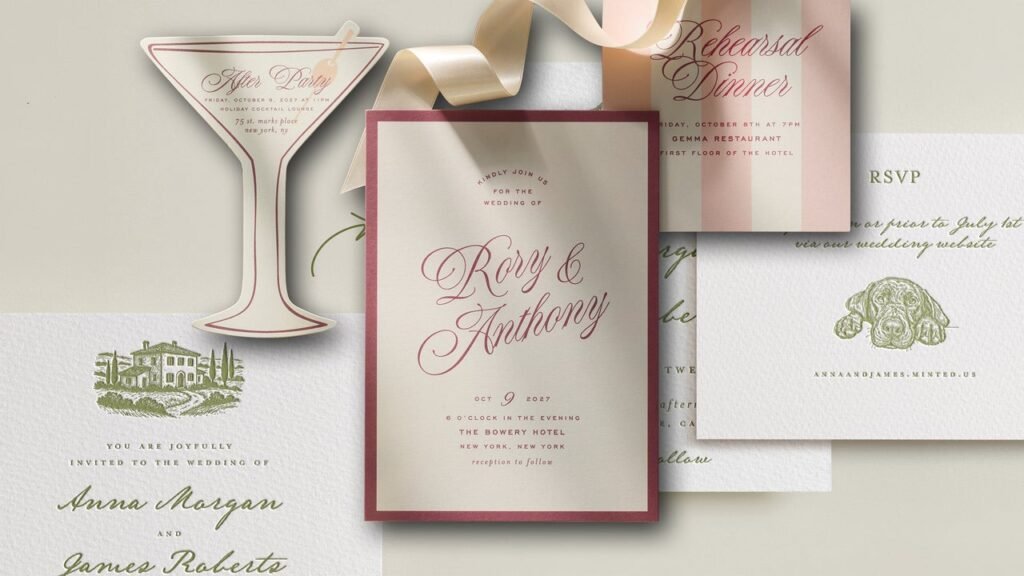
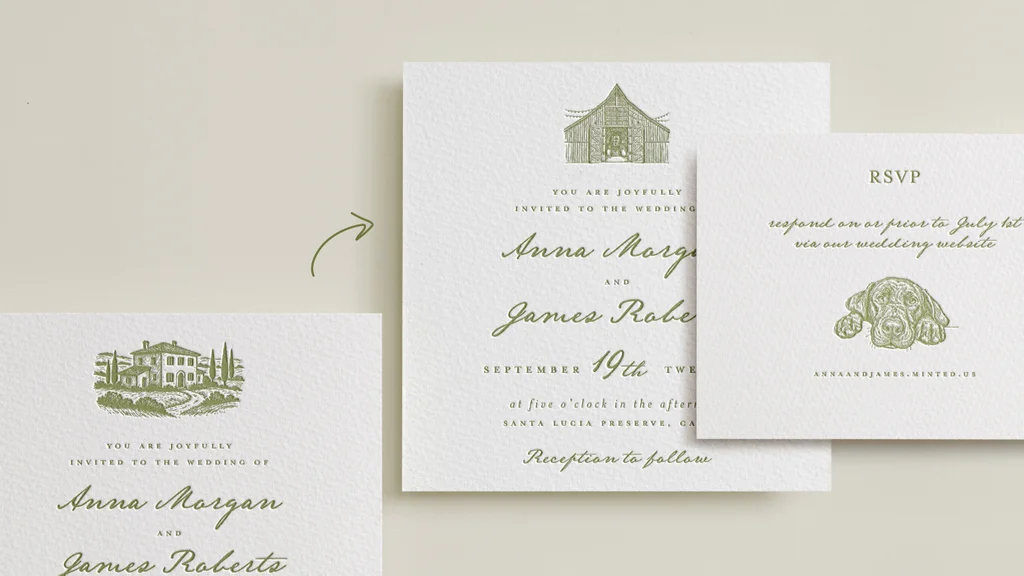
You’ve found the wedding invitation of your dreams. The illustration is a delicate watercolor by an artist whose work you’d happily hang on your wall. There’s just one problem: the painting on the card is of a generic vineyard, and you want the actual barn in Vermont where you’re getting married.
Commissioning the original artist to redo the work just for you would be prohibitively expensive—assuming they’d even take the job. So most customers do what they’ve always done: pick something close enough, and move on.
Minted, the artist-driven stationery company founded in 2007, announced this week that it has a third option in the works—its first foray into generative AI—and shared an exclusive early look at the technology with Fast Company. Over the past eight weeks, it has been quietly building an AI customization tool that will let customers swap a specific element of an existing design for something personal to them—a venue, a pet, a person—while preserving the original artist’s style. The tool isn’t live yet, and the company hasn’t set a launch date. But it offers an early look at how artist-led businesses are trying to fold generative AI into their products without becoming the very thing their customers came to them to avoid.
“Our customers want high-quality, human-created artwork,” says Minted CEO Melissa Kim. “And they want the ability to do more customization. This seems like a productive use of AI that will benefit the artist, since it will lead to more sales.”
The Artist Economy
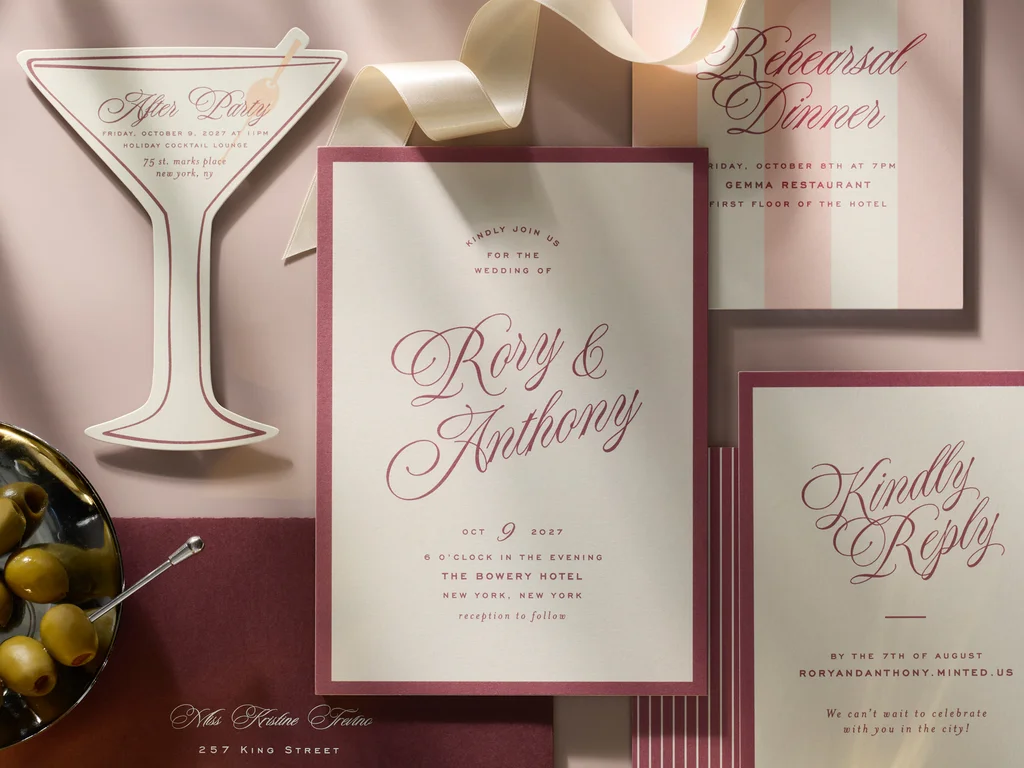
Minted launched in 2007 with a then-novel premise: rather than have a handful of in-house designers, it would crowdsource its catalog from a community of independent artists, then let consumers vote on which designs went into production. Today, that artist community numbers roughly 21,000 artists.
Minted finds artists through design competitions—a holiday photo card challenge, a painting challenge, a save-the-date challenge—which happen dozens of times every year. Artists submit work, receive critique from peers, and then both artists and consumers vote on the submissions. Minted runs the results through an analytics process to decide what makes it onto the site.
Winning artists receive a cash payment up front, which allows Minted to license the art and then earn a commission, typically six to 10 percent, every time their design sells. “If you have a hit holiday card,” Kim says, “that artist can make a significant amount of money in commissions during the holiday season.”
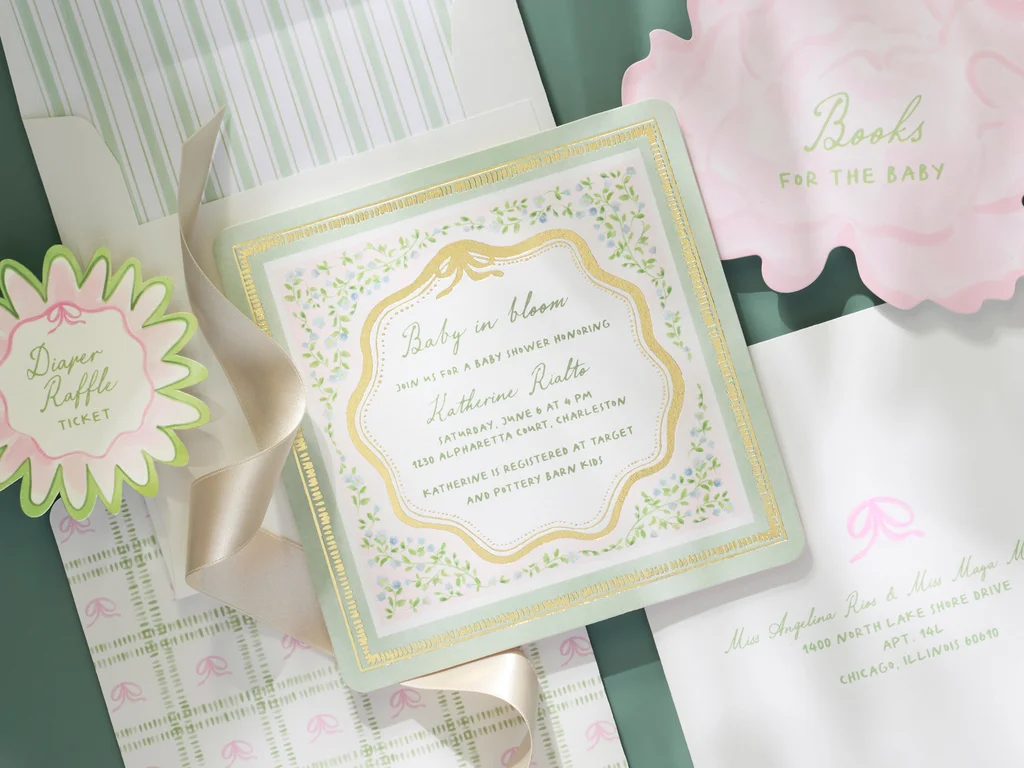
This model has given Minted a distinct position in a crowded category. Compared with Vistaprint or Canva, the site is relatively rigid—you choose a design, you customize the text, you maybe swap in a photo, and you’re done. Instead, Minted’s selling point is curation. Someone who lands on Minted is opting into an aesthetic shaped by working artists rather than an infinite design canvas they have to navigate themselves.
“We generally attract customers who want high-quality artistic content,” Kim says. “And I think with that comes a little bit more rigidity, in terms of being faithful to the artist’s intent. At the same time, in categories like wedding, there are a lot of specific needs and desires to have something that really reflects you as a couple.”
A narrow door, opened carefully
The new tool, still in R&D, is designed to crack open the door to AI. Customers will be able to feed in reference material—a photo of their dog, an image of their wedding venue—and Minted’s models will render it in the style of the artist whose card they’ve chosen. The artist’s broader body of work serves as stylistic context, so the resulting illustration is meant to look like something that artist would have painted.
Kim said the company’s edge in building this is the data it already owns. “Because we have all of this proprietary artwork from our base of artists, and all of the data around how all of those designs have done, we can feed that information in to preserve that artistic style,” she says.
Just as important, she elaborates, is that the artists themselves are evaluating the output. Minted artists have been invited to opt in to this research and development project, so they can help review the quality of the AI generated output and fine tune the methodologies. Nine have chosen to participate, a number kept intentionally small so that the team can test the technology rapidly. These artists score designs along many dimensions to ensure the final product aligns with their style, and many also provide more detailed qualitative feedback.
Kim says that having these expert human artists have been instrumental in helping to get the models to produce higher quality output, which is important to both the artists themselves as well as Minted’s customers. “The artists see quality very differently than I do, even as a relatively informed consumer,” she says. “I might see something and say that looks fine to me, but the artist is noticing far more detail. So it’s not just a consumer quality bar, it’s the artist’s quality bar, which is inevitably higher.”
At this point, Minted does not have a defined monetization strategy around the AI. But the company has committed to the artist community that if it charges a premium for the add-on AI customization feature, artists will earn a portion of the additional revenue, much like with all Minted products. And Kim believes that customers will pay more to have highly-customized, aesthetically pleasing, and she hopes that this will be a windfall for the artists.
The R&D effort itself has been small and fast. Kim said the company brought in a single hire—”part entrepreneur, part AI engineer, part AI product manager”—and gave them room to work outside the normal product process. Two months in, she says, the output of the models is where she wants it. What remains is the user interface: figuring out how much of the prompt engineering Minted should handle behind the scenes versus how much it can reasonably ask the customer to do. It is working out these details before it launches this technology to the public in the near future.
Firm Guardrails
Minted is playing with AI when consumer patience for AI-generated images is wearing thin. The internet is awash in slop—uncanny stock-style portraits, off-kilter product mockups, mangled hands. Sora has come and gone in waves of cultural backlash. Artists are watching their livelihoods get scraped into training sets without consent or compensation. Even when the underlying models are capable of producing something beautiful, the average user has no idea how to create a sophisticated prompt, so what results is often ugly or incoherent.
Minted’s own consumer research, Kim said, points in a clear direction. “Seventy-three percent of consumers tell us that they want human-generated artwork, and are willing to pay more for it,” she says. “In a world of unlimited content of varying quality, quality becomes more important.”
That’s why the company has been deliberately conservative about where AI enters its workflow. Minted does not accept AI-generated submissions into its design challenges—every design on the site originates with a human artist. The new tool extends an existing artist’s work for a specific customer; it does not generate cards from scratch.
Kim says Minted has had candid conversations with the artist community about all of this for years. “Broadly speaking, there is a lot of fear and trepidation within the creative community,” she says. “We’ve reiterated that we’re committed to helping human artists thrive in a world of AI and to monetize their talent effectively. We don’t believe the right approach is to have it create something from scratch, nor do we think we should abstain from participation in what we think are some win-win AI-driven opportunities.”
The Hybrid Future
Minted is not the only design business attempting to walk this line. Canva, the Australian design platform, has rolled out a suite of AI tools—image generation, background removal, automatic layout suggestions—but anchored them inside a human-curated library of templates, fonts, and design assets.
Adobe has taken a related approach with Generative Fill in Photoshop, powered by its Firefly model. Rather than using prompts to create a whole poster or presentation, Adobe has embedded AI inside the tools professional creators already use—letting them remove an object or fill in a background—while the artist remains in control of the final composition. Adobe also made the choice to train Firefly on its licensed Adobe Stock library and pay bonuses to contributors whose work was used, a model that has not been without controversy but that does at least attempt to keep artists inside the value chain rather than locked out of it.
All three approaches refuse to treat generative AI as a wholesale replacement for human creative labor. They treat it instead as a way to extend, customize, or accelerate work that began with an artist.
All of these design companies show that the most useful applications of generative AI right now are highly circumscribed. The open canvas overwhelms consumers and produces slop. Perhaps the middle ground is an AI tool that does one specific thing very well, while grounding the broader system within the work of real life artists. Or, as Kim puts it: “Human-created art, and AI-powered customization.