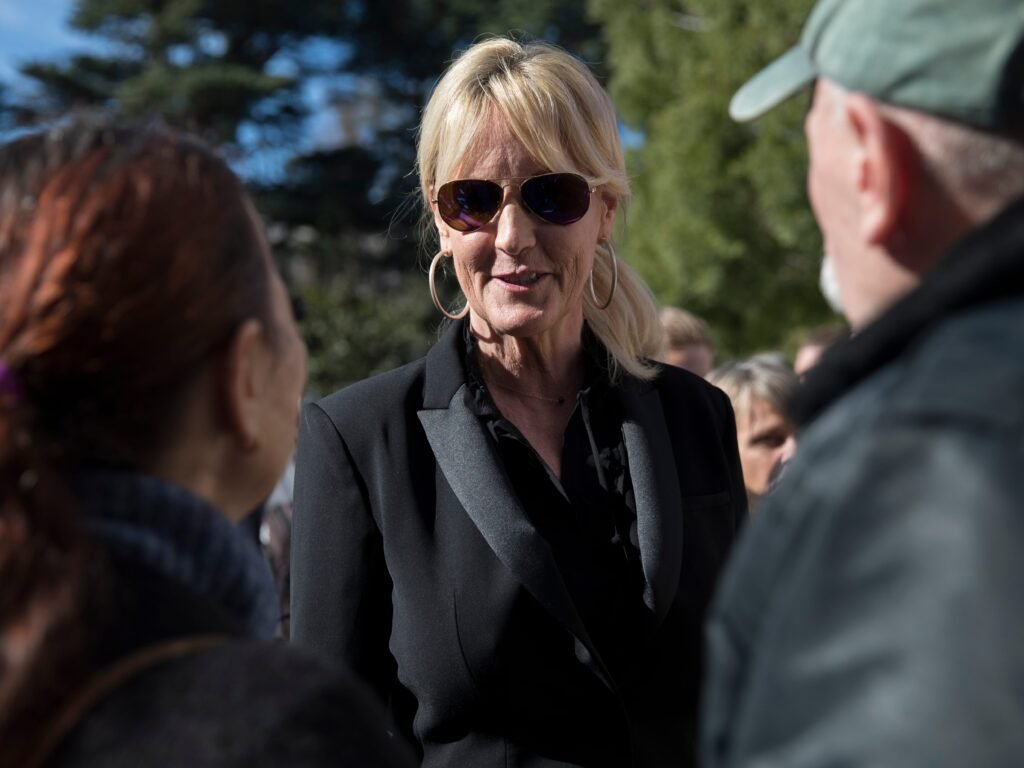
left
- Environmental activist Erin Brockovich has adopted a new cause: the impact of data centers.
- She said residents are especially angry about NDAs between developers and local leaders.
- That lack of transparency, she said, is fueling anger among residents who feel ignored.
Big Tech is expanding into communities across the country — and they aren’t all that happy about it.
Many residents in cities and towns where tech companies are looking to build large data centers to power their AI products are mobilizing against them, concerned about a possible drain on water supplies, a surge in electricity costs, and a decline in their overall quality of life.
Now, legendary environmental activist Erin Brockovich, famously played by Julia Roberts in the 2000 film about her work, has joined the fight.
Brockovich said on a recent episode of “The Jim Acosta Show” that communities are angry because they feel shut out of the decisions being made in their own backyards — and that the projects are being “shoved down their throat in secrecy.”
Brockovich said that residents learn about projects in the proposal stage, only to find that local officials are limited in what they can say because of nondisclosure agreements. In other cases, she said, projects are presented as warehouses rather than data centers.
“There’s a lot of secrecy and NDAs at a very proposal stage,” Brockovich said.
That lack of transparency, she said, is fueling anger among residents who believe their concerns are being ignored.
High-profile data center projects have faced backlash in recent months. A massive data center project in Utah backed by “Shark Tank” investor Kevin O’Leary has sparked statewide opposition, for example, leading Utah Gov. Spencer Cox to unveil a new “framework” for data center development on Friday that addresses many of the community’s concerns.
“Utahns deserve confidence that water resources, air quality, utility rates, wildlife, and quality of life will be protected. This framework helps ensure that data center development aligns with Utah’s long-term interests and reflects Utah values,” Cox wrote in an X post.
Microsoft, which once relied on NDAs in the early stages of data center development, said earlier this year that it would stop requesting them after local opposition.
“We’ve made the decision that being transparent with the communities where we operate or seek to operate is paramount,” the company said. “This shift is about strengthening public trust, enabling better dialogue, and ensuring that our growth is matched by meaningful engagement.”
Microsoft has adopted its own framework for building data centers called the “Community-First AI Infrastructure Plan.” It promises to pay for its own electricity, minimize water usage, and create local jobs, among other things.
Brockovich, who has spent decades working with communities on environmental fights, said residents are not opposed to hearing difficult information. What they object to, she said, is being excluded from the process.
“I’ve worked in communities for 30 years,” she said. “They handle the truth.”