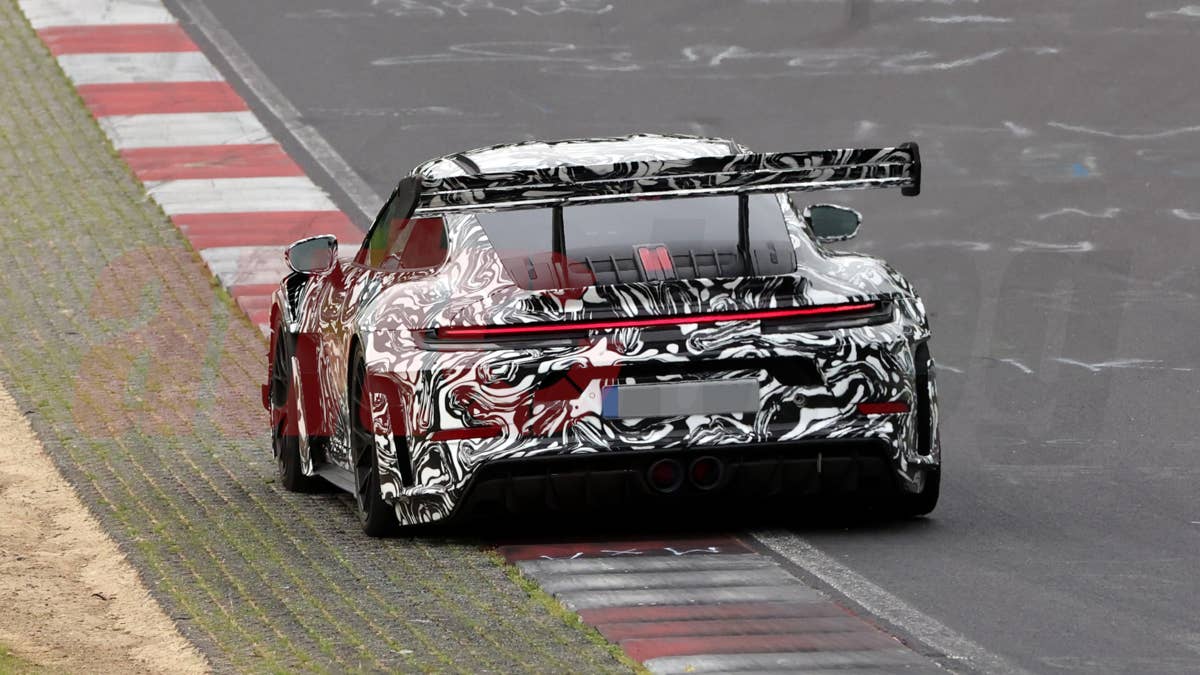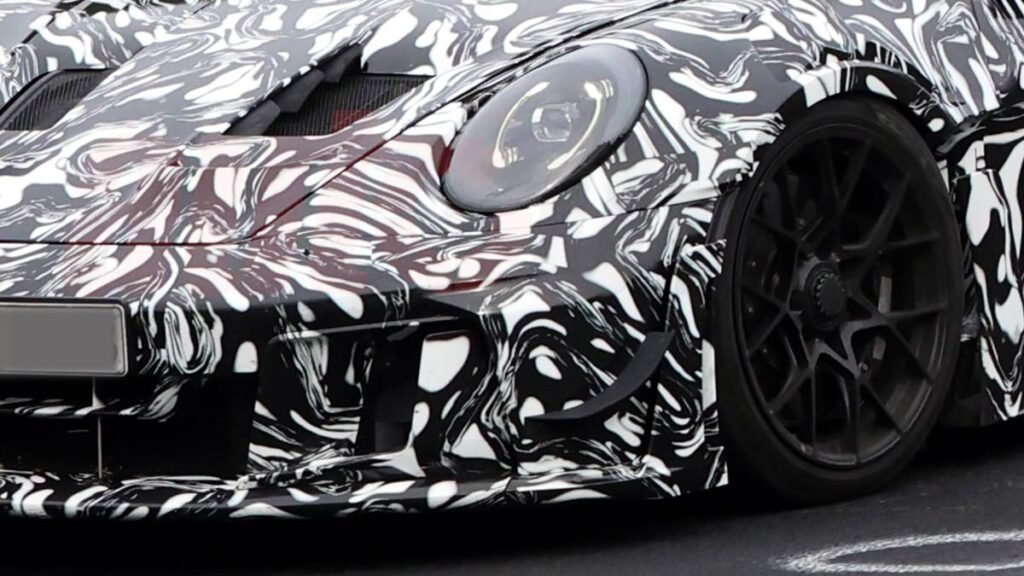
In a twist of irony, spy photos have captured two pre-production development mules of the refreshed Porsche 911 GT3 RS undergoing testing at the Nürburgring, and it’s the prototype with sophisticated camouflage that reveals more about what to expect from what will be a huge update. The other test mule in all-black bodywork is wearing bumpers that are far from any finished product, but there are still interesting changes to be seen, from the new blistering ahead of redesigned nostrils on the hood, to a new partition of the lower intake grille and extra vanes on the diffuser (four on either side of the twin-exit exhaust rather than three). Those images are further down in the article. For now, let’s turn our attention to the test car that actually looks finished – and which could infuriate and sadden the purist by becoming turbocharged.
992.2 Porsche 911 GT3 RS Will Have More of Everything
SH Proshots/Autoblog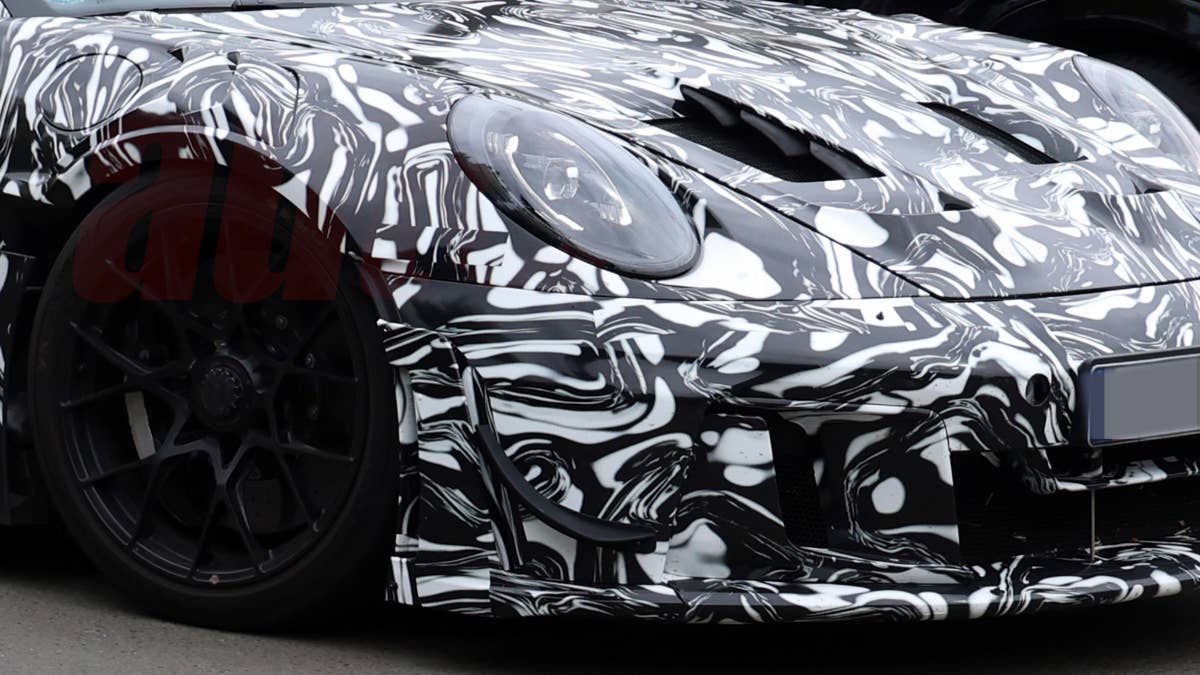
Even with the glossy finish of the camouflage wrap, it’s easy to see that there are two bulges ahead of the new hood vents, and a pair of Manthey-style dive planes have been added to each corner of the front bumper. The vented arches seem broadly the same, though the wrap may exaggerate some of the proportions, but the openings in the front end are redesigned. Where formerly there was a continuous mesh grille with a trapezoidal shape, this is now inverted, and there are several new elements therein, including struts supporting a smaller inverted trapezoidal opening. The splitter seems chunkier, too, and finally, the four-dot daytime running light signature now connects two dots either side of the main projector for a semi-circular shape that further evolves the motif. Just when you think Porsche has iterated a design trait as much as possible, it finds a way to subtly change things again.
SH Proshots/Autoblog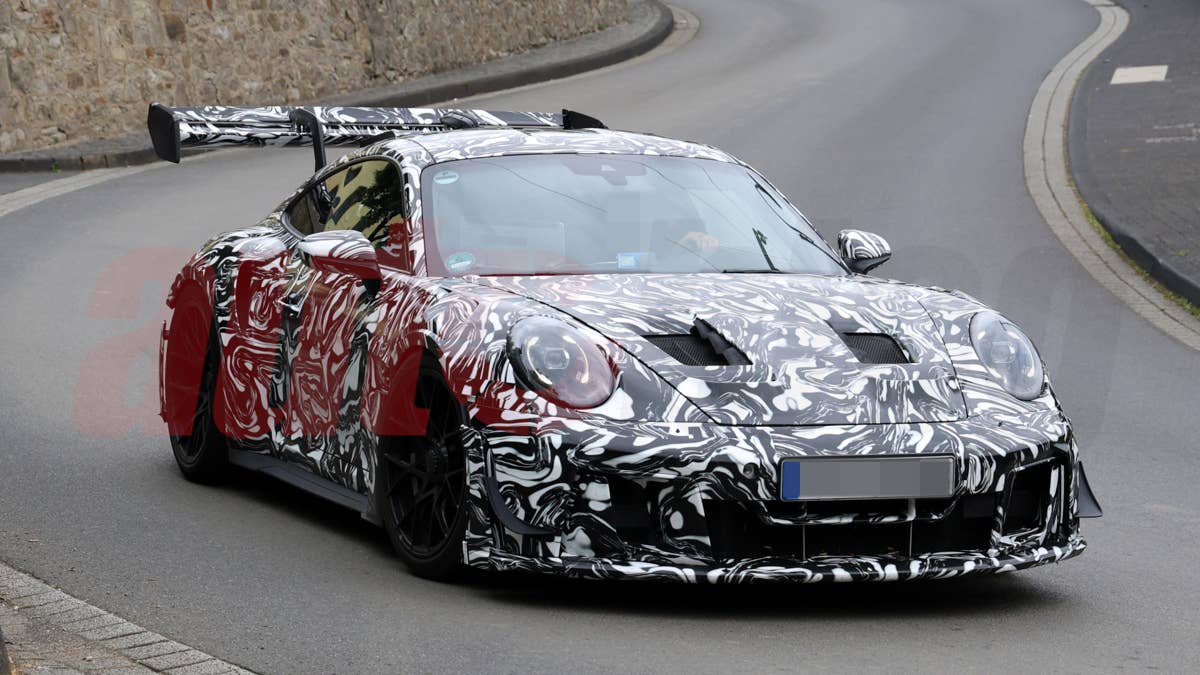
Moving backward, the side intakes also appear to have a revised shape and/or surround, while the rear wing only has slight changes, specifically what appear to be a pair of taped-over bolts through each endplate. Does this hint at increased adjustability beyond just the Drag Reduction System flap? Is it just where a sensor is mounted? That’s unclear, but behind the rear wheel, the lip beneath the strake is deeper, the reflector has moved up and out of the diffuser, and the exhaust tips look slightly larger. If so, it may be because Porsche has had to force so many filtration systems into the exhaust for the 992.2 GT3 RS to retain the current 518 horsepower of the 4.0-liter flat-six while still meeting emissions rules abroad, and it’s trying to amplify the noise slightly, or worse: it’s getting forced induction. Sadly, the large lenticular bracket-shaped vent above the rear license plate suggests an increase in heat generation…
Turbo GT3 RS, GT2 RS in Disguise, Or the Last Hurrah for NA Porsches?
SH Proshots/Autoblog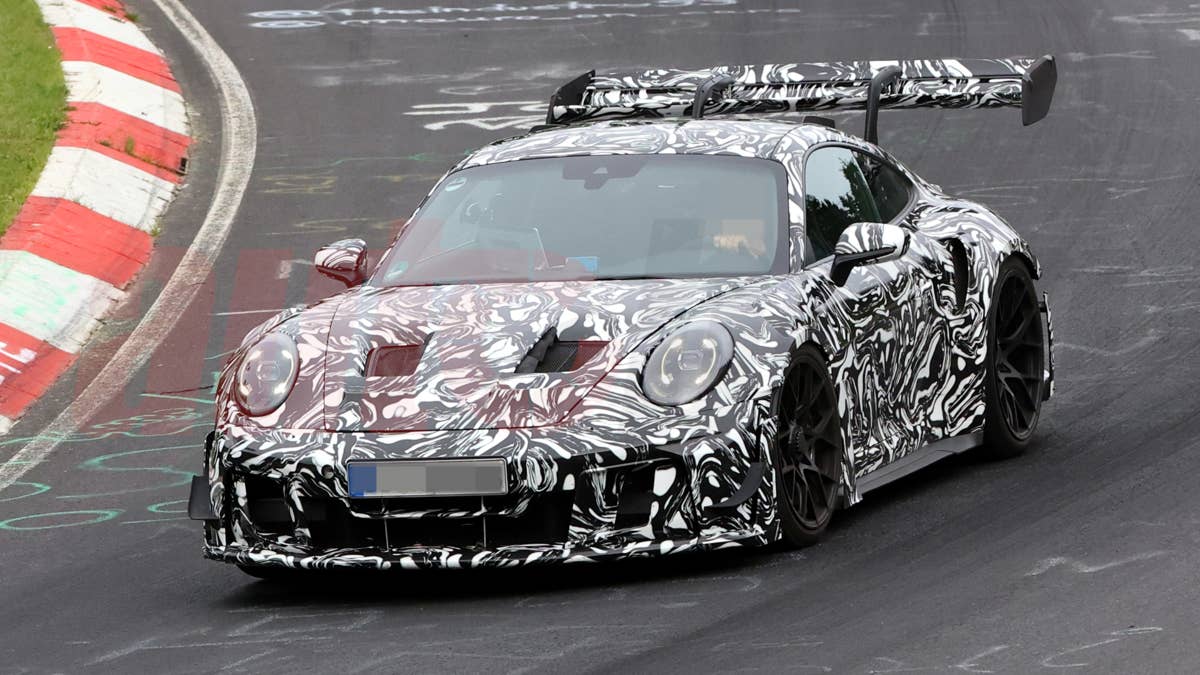
When the 992.2 GT3 arrived, Porsche doubled the catlytic converter count to four (alongside two gasoline particulate filters), updated the individual throttle bodies, and fitted the camshafts from the 992.1 GT3 RS – just to maintain the GT3’s 503-hp output while still meeting emissions regulations. Despite Zuffenhausen’s best efforts, torque fell 15 lb-ft to 332 lb-ft, necessitating eight percent shorter gearing across both manual and PDK transmissions to preserve acceleration. The trained ear could tell the subtle difference, and there were updates to the engine cover intake and RS-derived teardrop-shaped front control arms and other aero improvements. My point is, if that’s how far Porsche had to go to keep the GT3 legal and competitive, what would be required if the GT3 RS is to keep its 518-hp peak figure while upping the ante and avoiding too hefty a price increase?
SH Proshots/Autoblog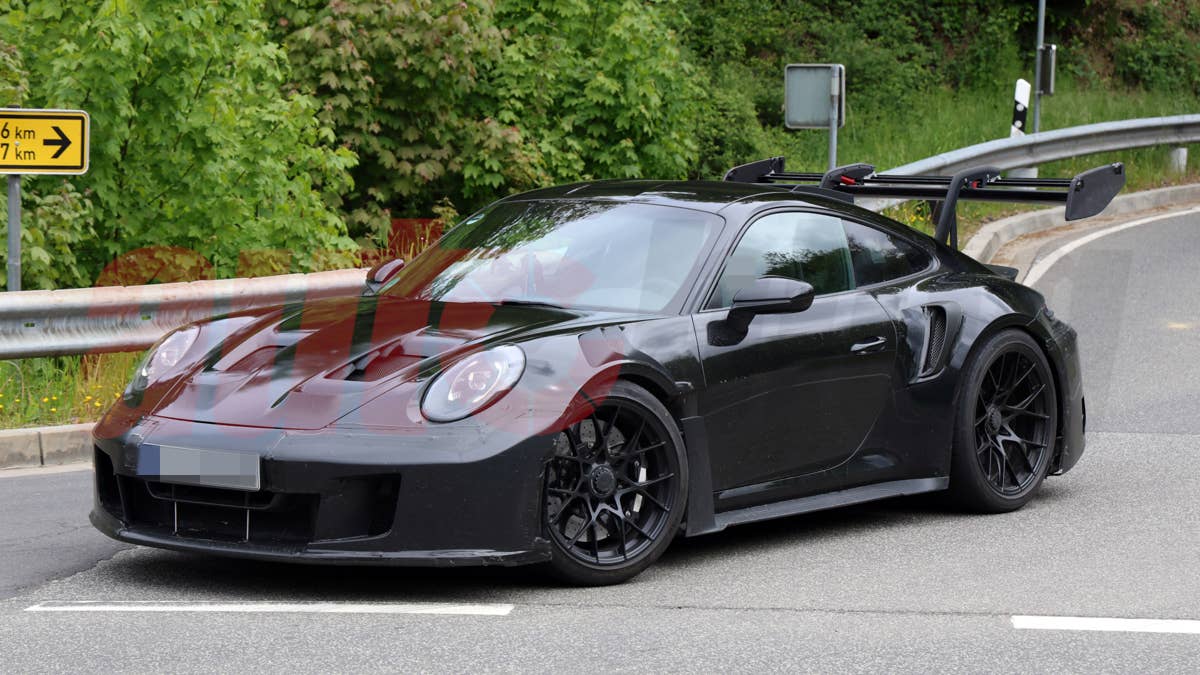
The aero is clearly getting more extreme, so that’s covered, but can the naturally aspirated boxer engine meet Euro 7 conditions that come into effect on November 29, 2026? Would it be too expensive? Some sources suggest so, with the rumor mill claiming a smaller, turbocharged 3.6-liter flat-six will replace the 4.0-liter and make up to 650 hp in apology. Perhaps the extra holes in the back of the black prototype are part of testing the turbos. If that becomes the case, where does the upcoming GT2 RS fit in? Will another 200 ponies and a wider track justify a rumored €450,000 ($520,000) asking price? It seems that the GT3 RS and GT2 RS are destined to merge into one halo for the 911 line, if not now, someday in the not-too-distant future. Whatever the truth, the fact that Porsche has progressed to the point of testing a near-production prototype means a reveal can’t be far away.
SH Proshots/Autoblog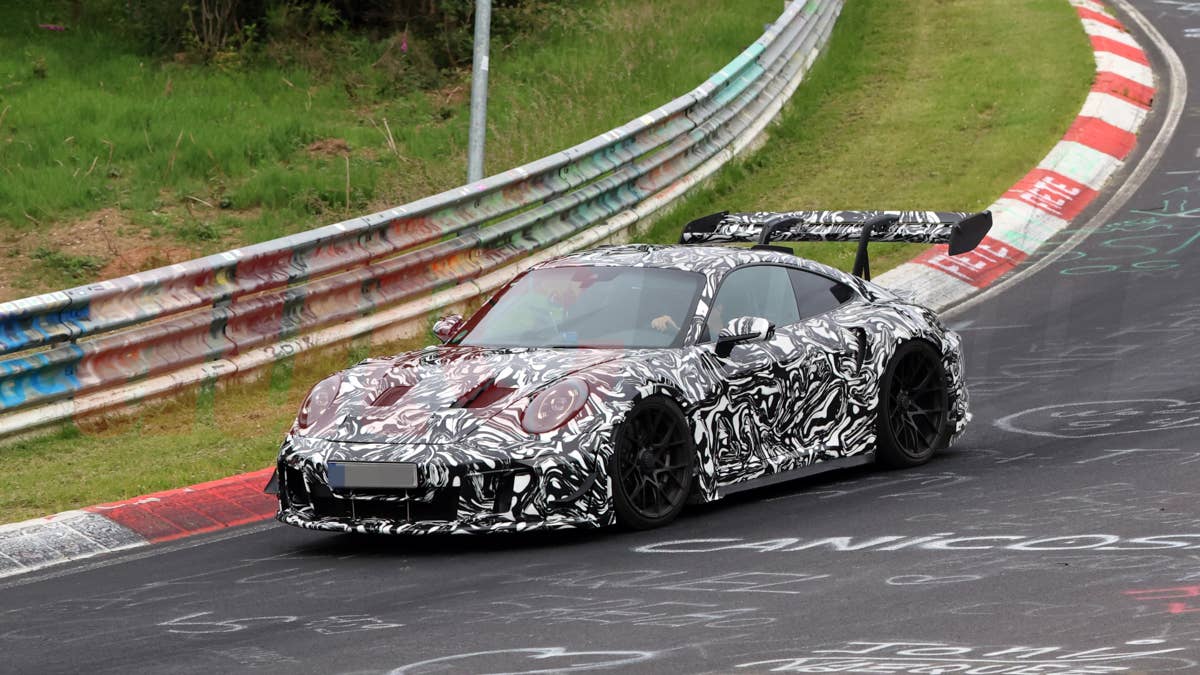
SH Proshots/Autoblog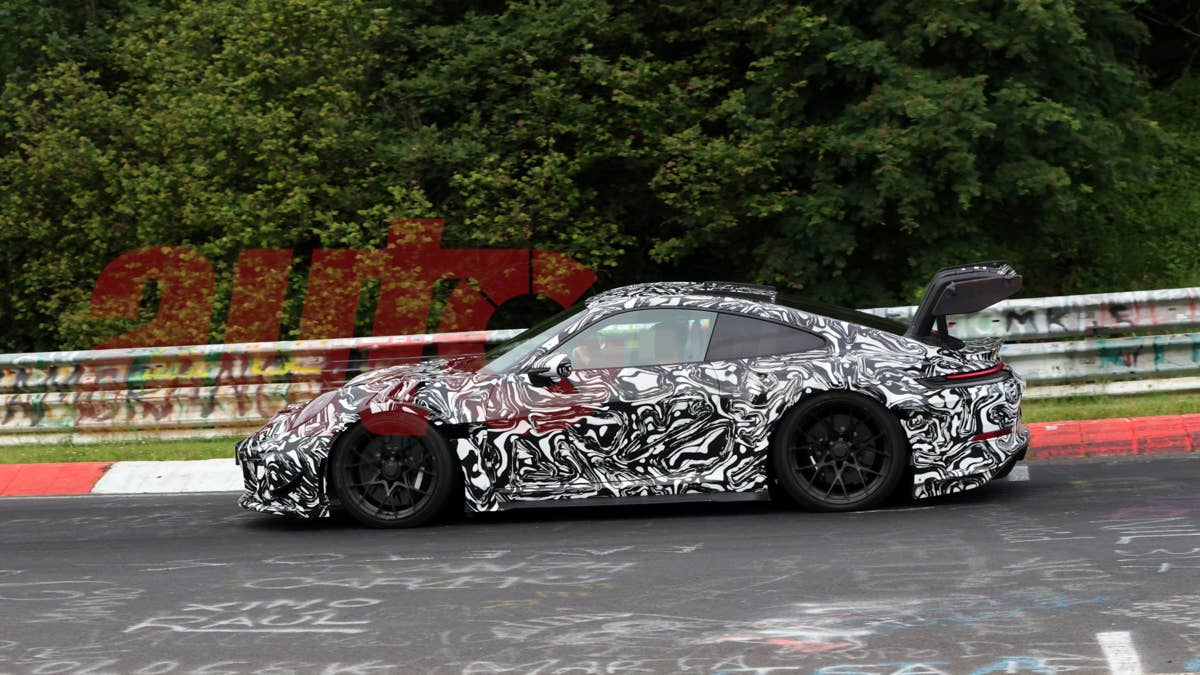
SH Proshots/Autoblog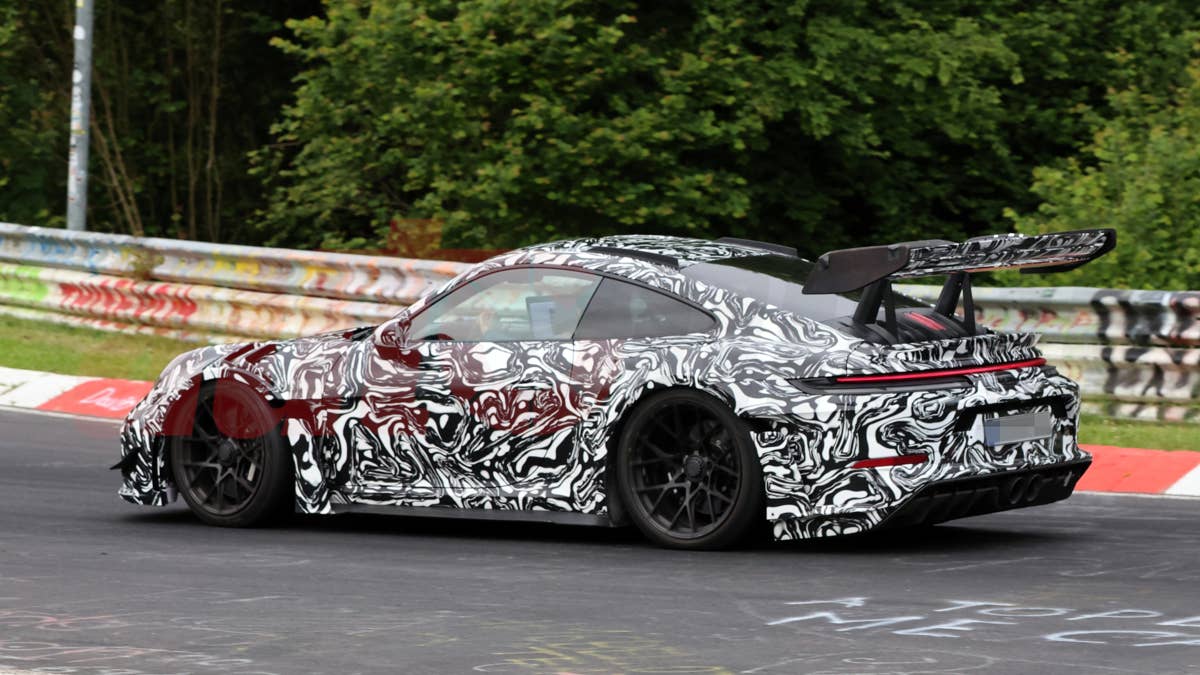
SH Proshots/Autoblog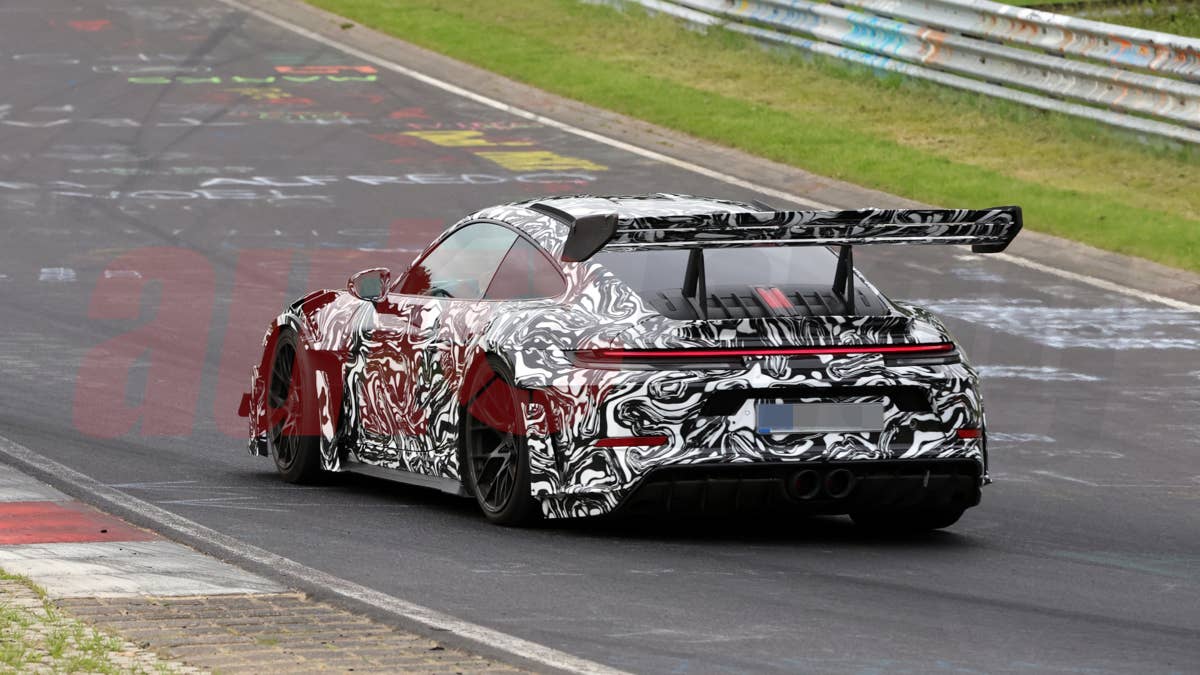
SH Proshots/Autoblog