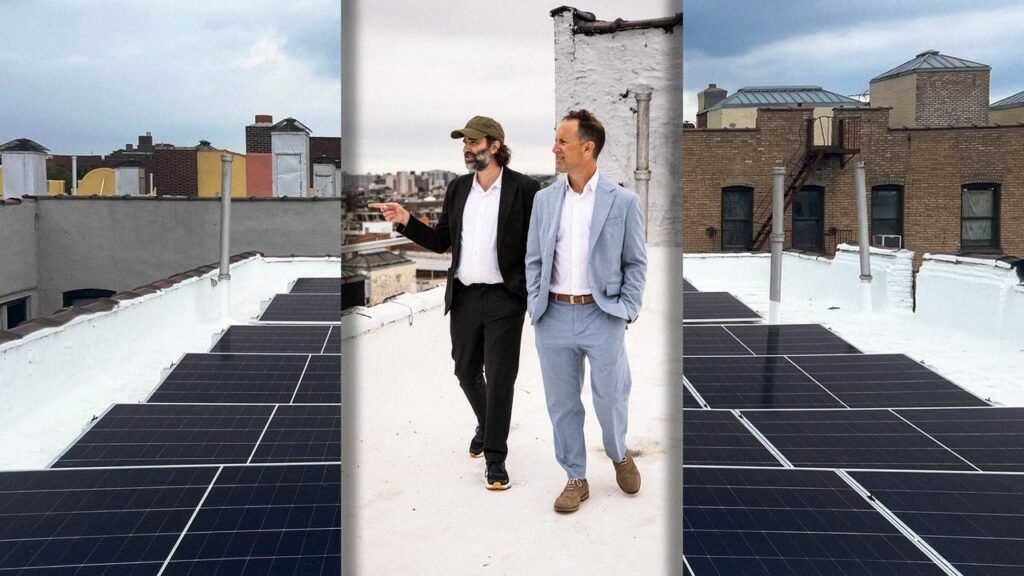
At an aging seven-story apartment building in the South Bronx, the landlord recently faced an expensive problem: a leaking roof. The repairs were pricey enough, and installing solar panels wasn’t on the agenda. But a couple of months earlier, the building partnered with a startup that took care of both at no cost to the owner—financing roof remediation through a rooftop solar project that now sells power to the grid.
It’s a model that the company, Fieldston Power, has replicated across more than 70 apartment buildings in New York City, creating a network of community solar projects that also help low-income renters save on electricity bills. Now it’s scaling up with a $200 million pipeline of new projects that will make it around 10 times larger.
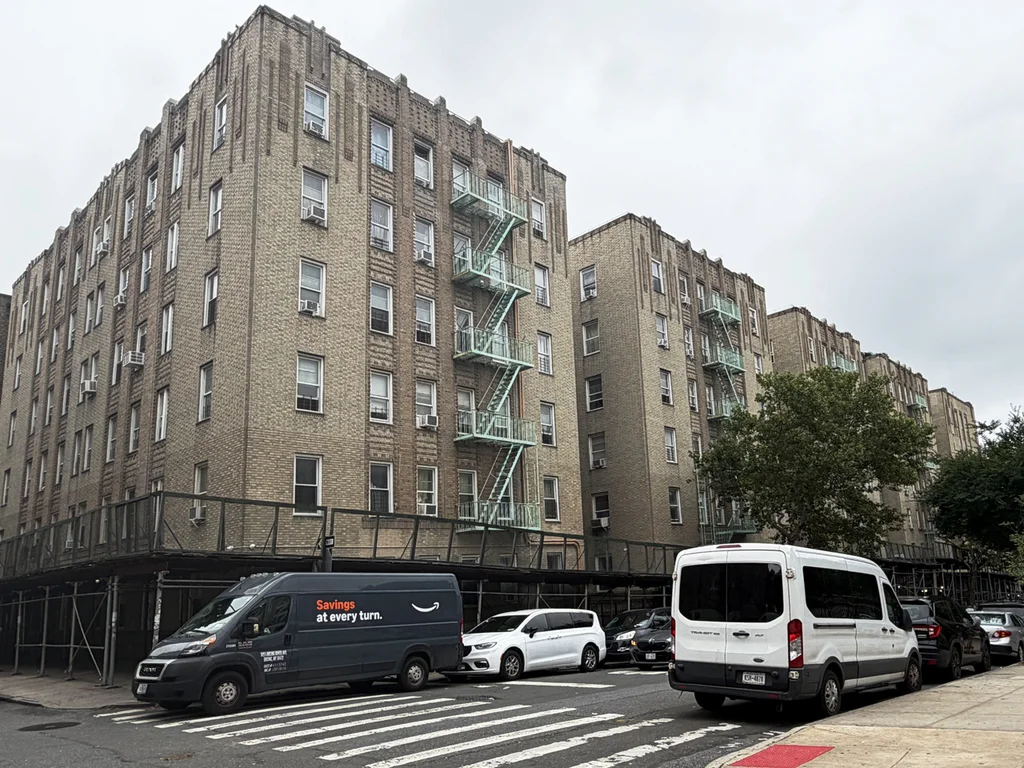
The company focuses on rent-controlled or rent-stabilized buildings that would otherwise be unlikely to buy solar, and that are struggling with other expenses. Built in the 1920s or ’30s, they often need major repairs.
“These are buildings that have their income capped and aren’t able to really cover rising expenses, broadly speaking,” says Adam Zucker, who cofounded Fieldston Power in 2024. “And one of those large expenses is almost always the roof.”
Fieldston signs a 25-year lease with building owners that gives the startup access to roof space and easements to run wires down to connect with the electric grid. But instead of paying rent, it pays for a new roof with a 20-year warranty.
The solar installation gives building owners a tax abatement from the city: up to $250,000 for the first four years. It also helps buildings comply with Local Law 97, an ambitious New York City ordinance that requires large buildings to cut emissions.
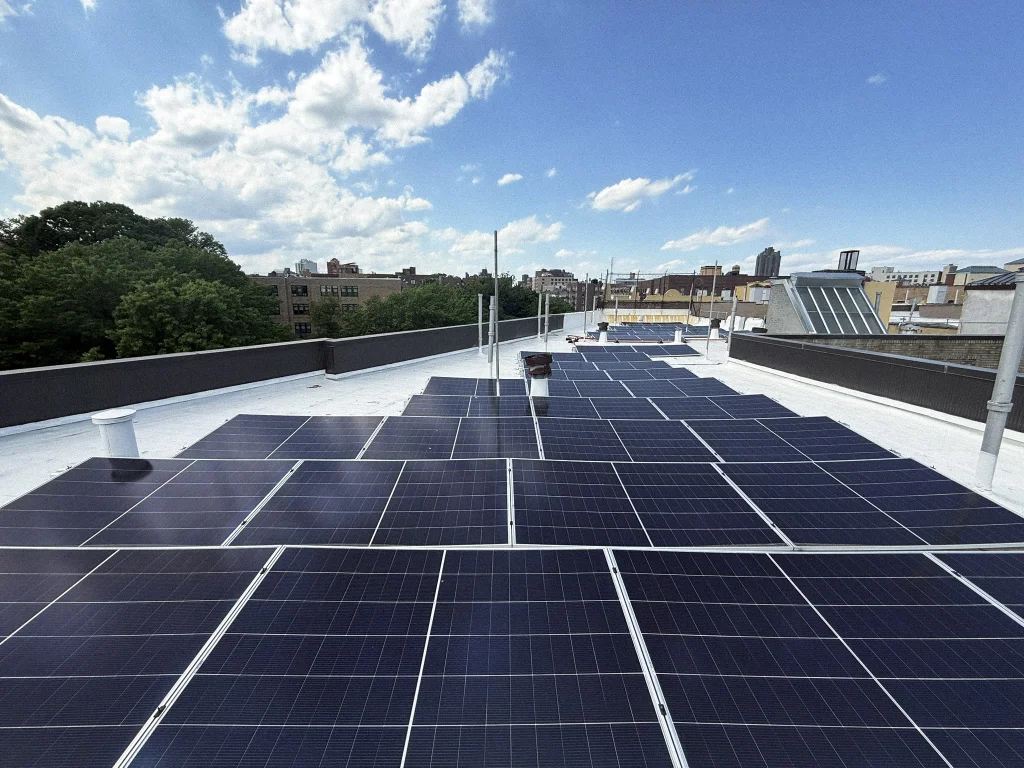
Most of the landlords Fieldston Power works with have considered solar in the past, but found the process too complicated and expensive.
“The installation itself as a construction project is super easy, but all the financing angles, the grants, the tax credits that come out of it, are not only complicated, it’s pretty prohibitive doing it as a one-off,” Zucker says.
By working at a larger scale, Fieldston can get discounts on equipment and installation fees. It also creates projects that are large enough to interest investors.
A typical rooftop system might be about 50 kilowatts. “That’s maybe 5 to 10 times the size of a typical home, but it’s significantly smaller than any investment that any renewable fund or bank or lender or tax credit buyer has ever considered,” Zucker explains. “What we’ve done is we’ve bundled many buildings into effectively a portfolio that makes it institutional grade.”

The power that’s generated doesn’t go into each building, but rather directly back into the grid. As a community solar project, low-income households can subscribe and then save roughly 20% on electricity bills. The apartment buildings themselves also subscribe. Setting it up this way, versus using the solar on-site in each building, is deliberate.
“As a company we really are looking at the totality of New York City’s grid,” says Fieldston Power cofounder and partner Alex Weisberg. “We’re really trying to tackle both the energy affordability crisis in the city by being able to offer folks throughout the city lower energy bills, but then also looking at long-term affordability.”
By adding solar generation throughout the city, and with plans to add battery storage, the company can help make the grid more efficient. As demand for electricity keeps growing, that could help Con Edison, the local utility, avoid building expensive new substations that would push electric rates higher.
To date, the company has installed solar panels that cover around 600,000 square feet of rooftops and produce 3.5 megawatts of power. The new pipeline of projects will grow that by about 10 times, eventually producing around 38 megawatts of power. A typical utility-scale solar plant outside a city is around 5 megawatts.
Like other solar developers, Fieldston accelerated its timeline because of President Donald Trump’s One Big Beautiful Bill Act, which set a deadline for renewable projects to begin this month in order to keep access to federal tax credits until 2030.
Starting the projects meant buying equipment early; the company’s warehouse is stacked with tens of thousands of inverters and panels. “We’ve now shored up equipment to build projects like this for the next four and a half years,” Zucker says.