AUSTIN — A sustained critique of the United States carceral system runs through Sable Elyse Smith’s work. Clockwork at the Contemporary Austin, the culmination of her winning the 2026 Suzanne Deal Booth / FLAG Art Foundation Prize, consists mainly of paintings appropriating prison coloring books for visiting children on the first floor, and large-scale sculptures and installations on the second. Seen as a whole, Smith’s work co-opts Minimalism’s repetition and seriality as a metaphor for structural injustice, drawing attention to the rhythmic qualities of technological and administrative tyranny.
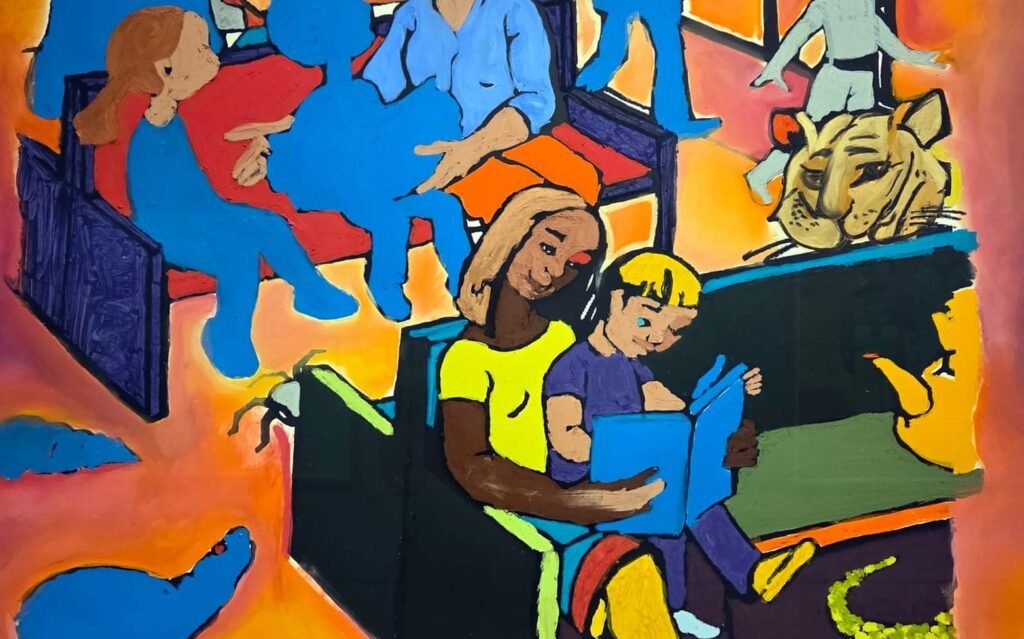
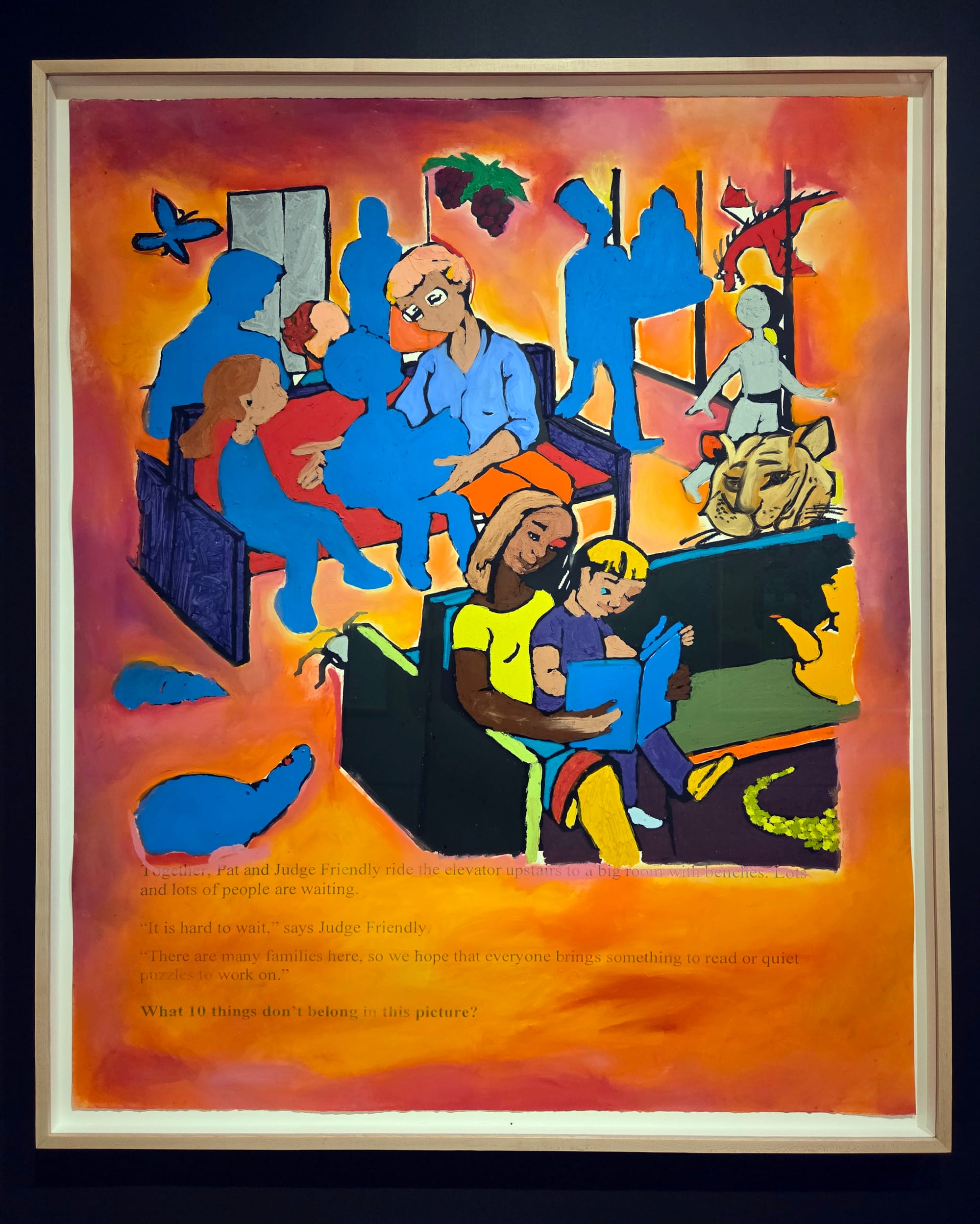
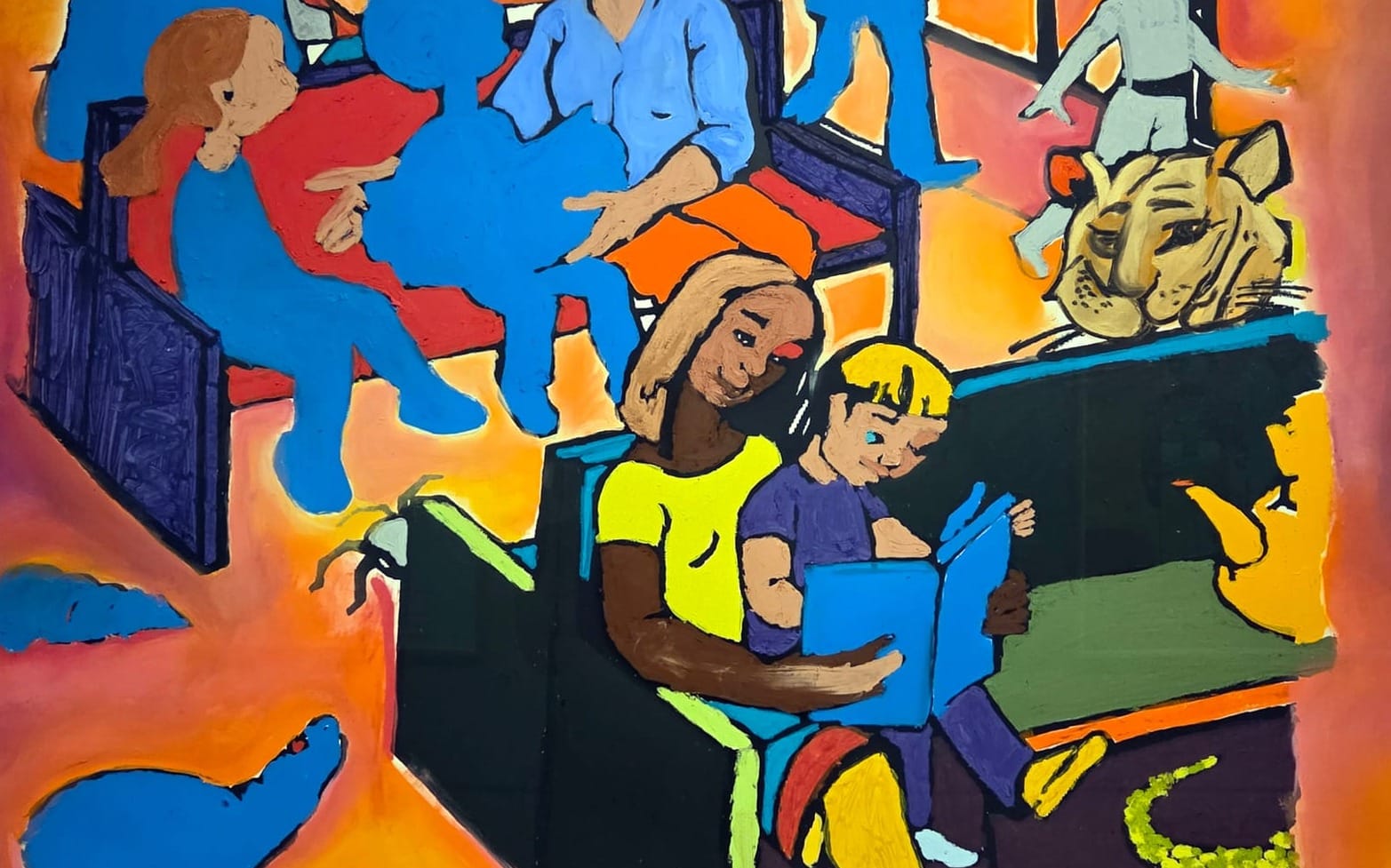
The coloring books Smith adapts were originally created to help children emotionally absorb the violence of incarceration. Smith’s transformations seem to liquefact their pictures and texts so that they melt the foundations of the institutions they represent. Two works share the same page design, a waiting room of a courthouse filled with families as well as an assortment of creatures, asking — absurdly — “What 10 things don’t belong in this picture?” One version of Smith’s coloring scheme blocks in a select number of the human figures in solid blue, turning them into police officers as omnipotent institutional authority, while the other version places x’s and o’s across figures and faces, referencing the oppressiveness of such spaces. Smith rightly shifts the ludicrous question of belonging into a critique of recurrent power structures.
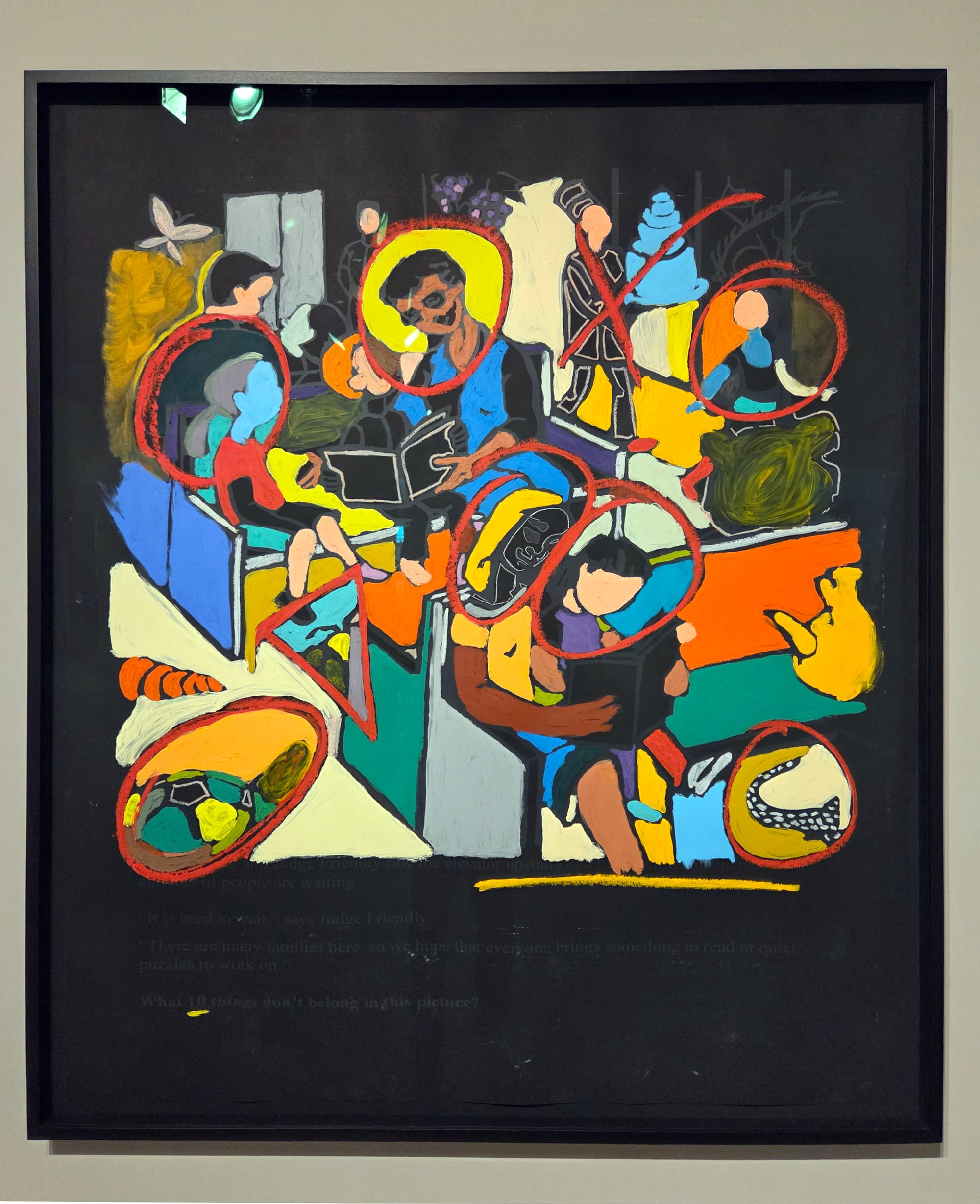
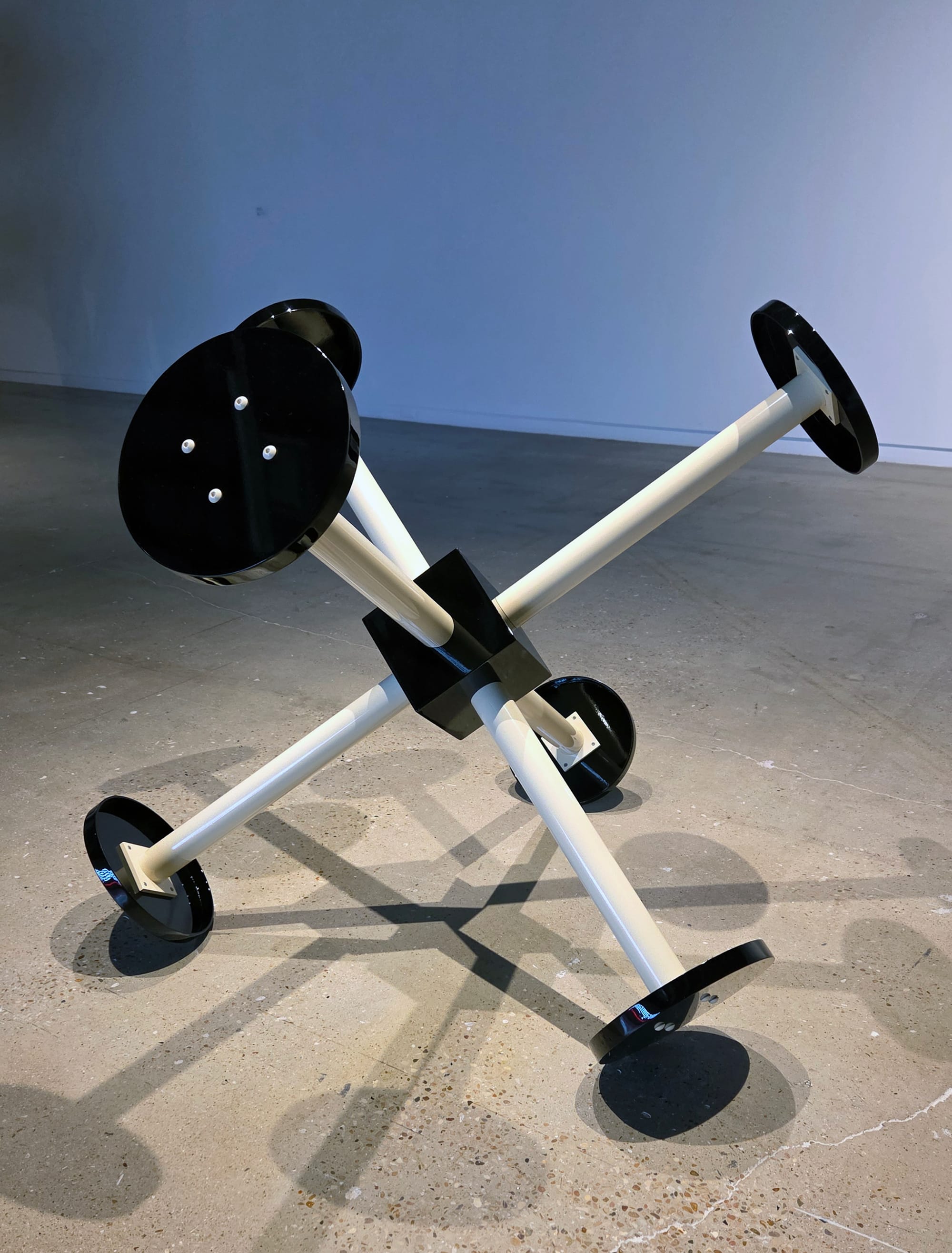
Left: Sable Elyse Smith, “Coloring Book 117” (2023), screen printing ink, oil pastel, oil stick, and wax pencil on paper; right: Sable Elyse Smith, “BARRICADE” (2023), powder-coated aluminum
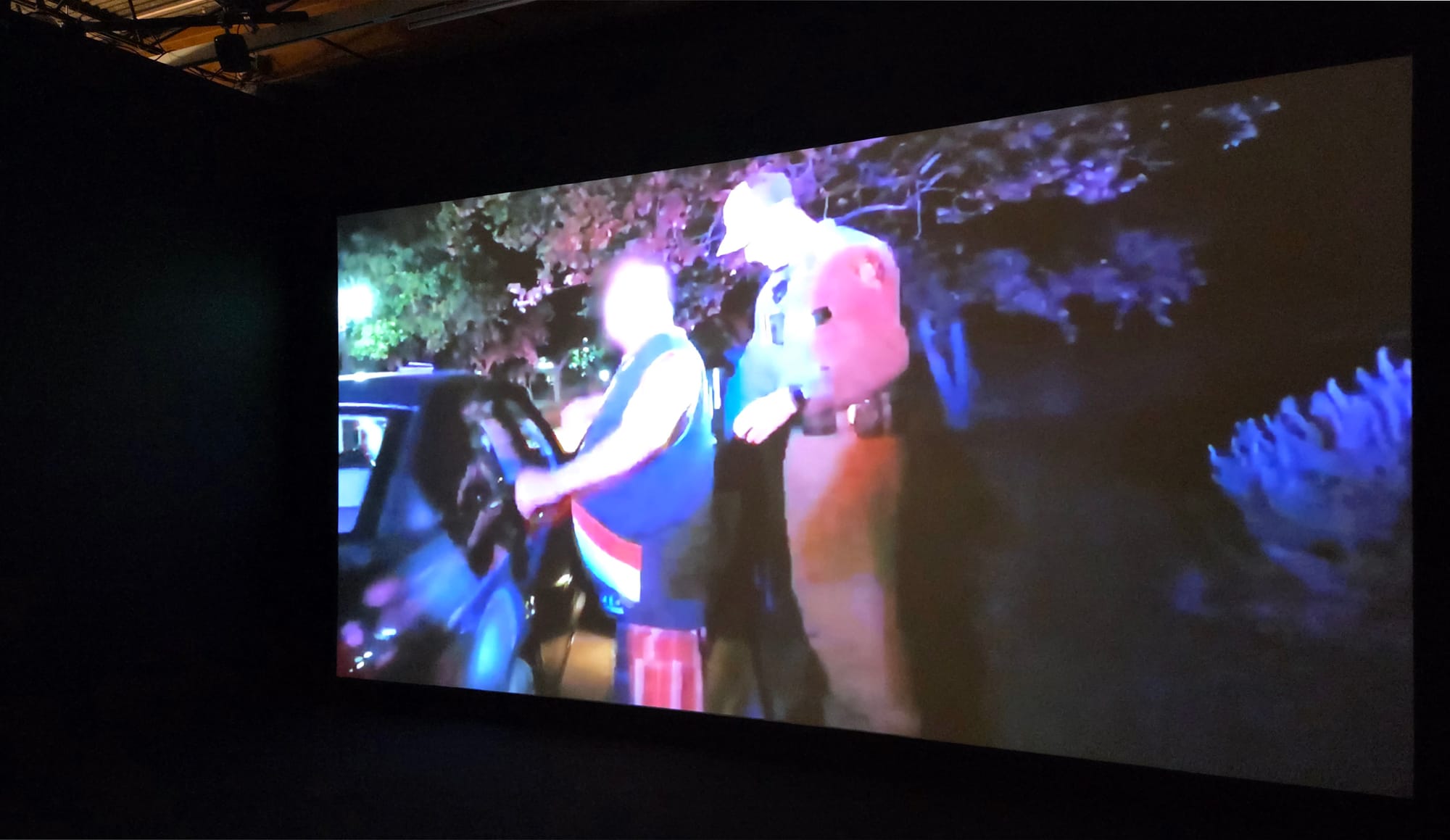
Smith’s two videos fit like gloves together. “LAUGH TRACK, OR WHO’S THAT PEEKING IN MY WINDOW” (2021) is a series of footage appropriated from police reality TV shows, which are repeatedly rewound, fast-forwarded, and shown upside down. One sequence captures a routine traffic enforcement for a rolling stop that turns into a state-sanctioned detention without cause — under the pretense of an unrelated previous conviction, a police officer stops a vehicle and frisks its passenger, places him in cuffs, and takes pictures of his face and his back tattoos. A repeated xylophone noise draws attention to those moments when socially conditioned biases and bureaucratic procedures trigger state violence. Through the use of repetition in both footage and sound, Smith emphasizes the aggressive and senseless criminal profiling of an innocent person by juxtaposing Minimalism’s iterative assault against reality television’s numbing effects.
In the adjacent “skin suit” (2025), law enforcement deals first with young White men. One sequence shows an officer finding drug and alcohol paraphernalia, along with a mask, a realistic pellet gun, gloves, and large knives contained in a bag in the trunk. After these extensive discoveries, the officer lets the person go, while giving him a fist bump. Afterward, another young White man is shown agitating an officer outside the open window of his patrol vehicle before the latter patiently drives away. This is juxtaposed with footage of a young Black man being held against his will due to the possession of marijuana. As the narrator later states, this video is about “bags of skin,” because “there are no people here” — the carceral system, Smith suggests, abstracts individuals entirely.
Smith’s sculptures are made of chairs and tables from prisons that are meant to be permanently drilled into the floor, rendered immovable like the institutions they represent. Their weaponization by the state is apparent in their rigidity, as tools that force imprisoned people into geometric configurations to better surveil them. This critique of the prison-industrial complex simultaneously deepens and skewers the legacies of Minimalism — one cannot help but think of Frank Stella’s polygons while surrounded by Smith’s work. Only, one also can’t help but notice the impotence of formal precision without larger social critique.
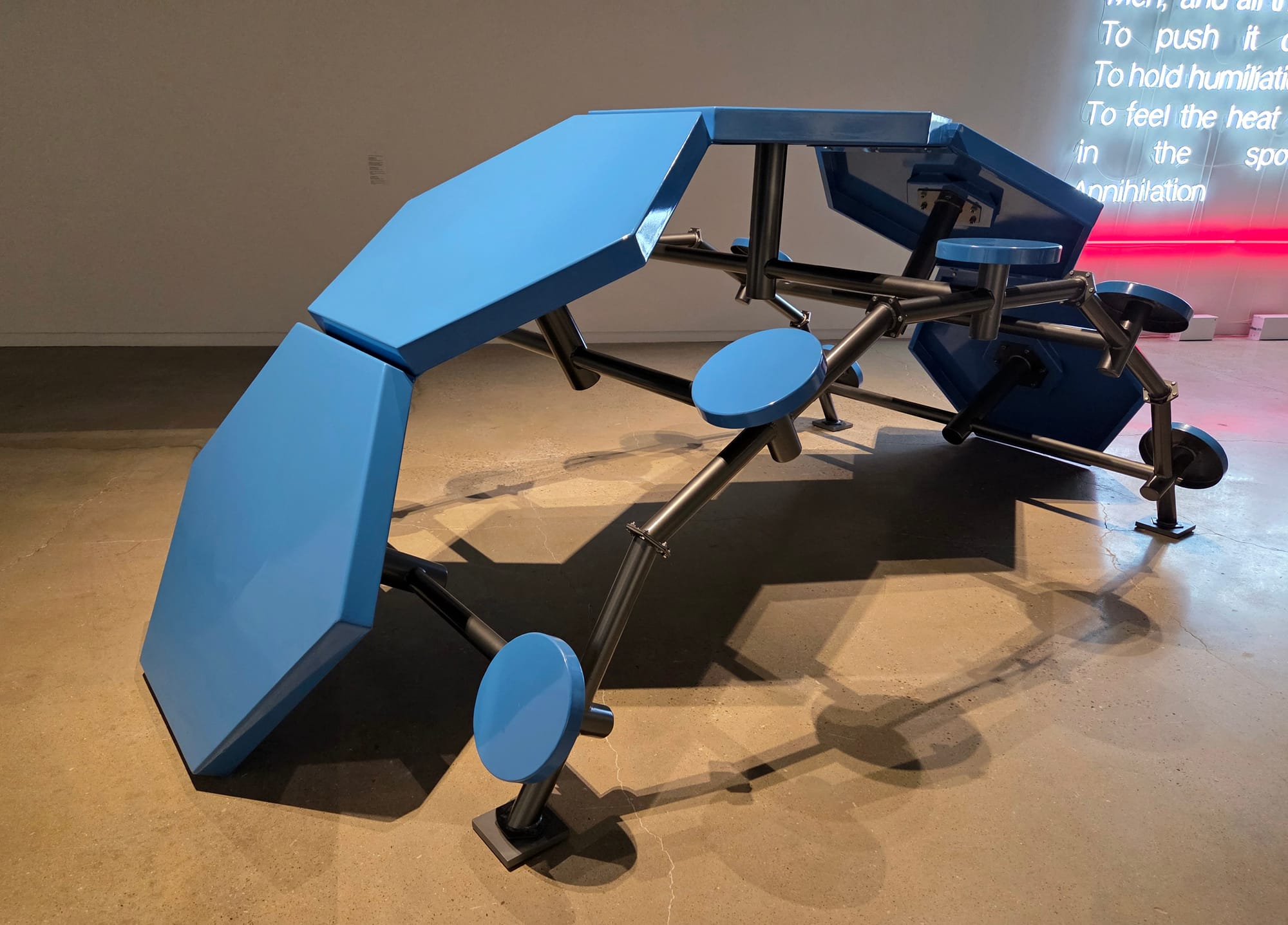
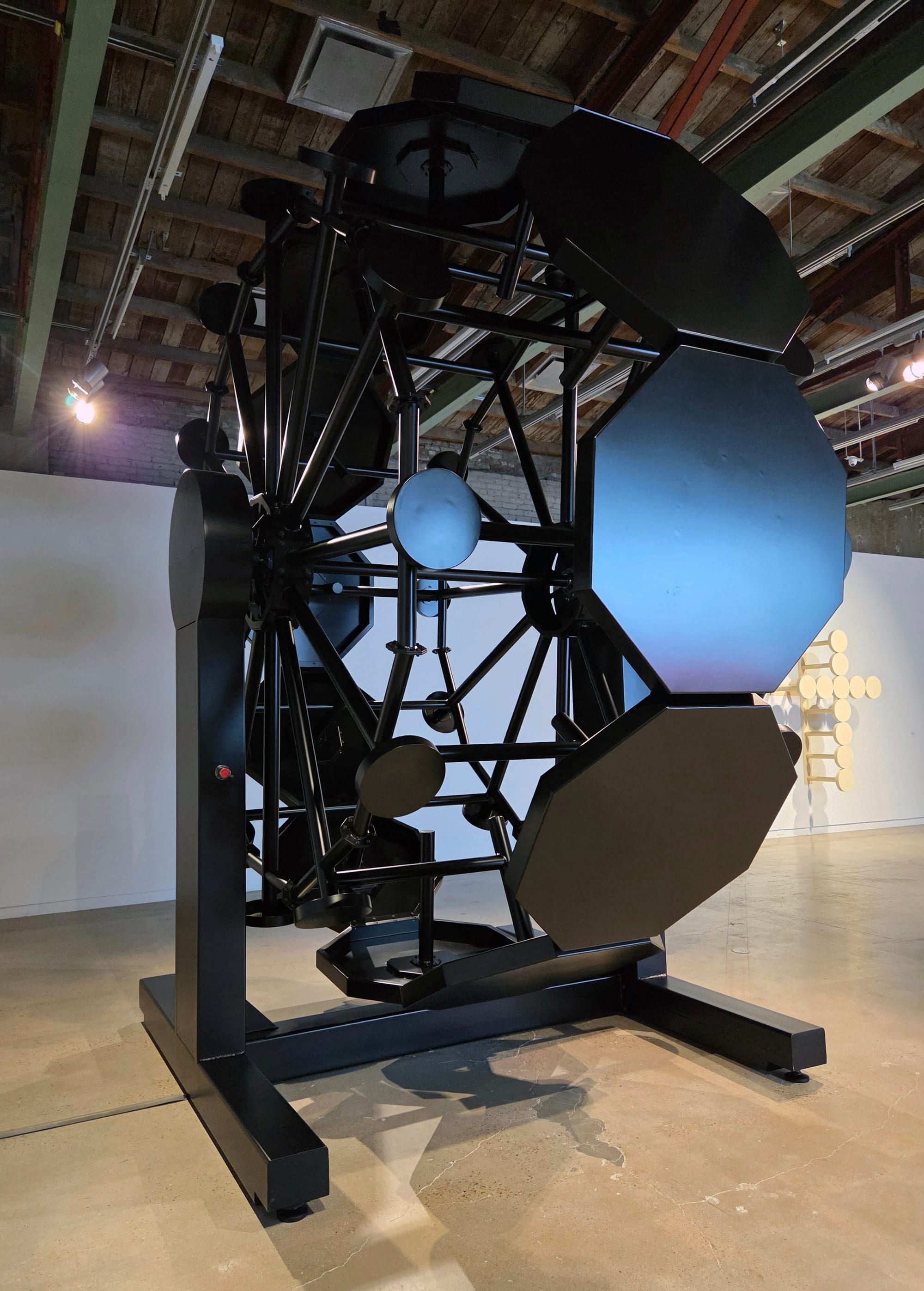
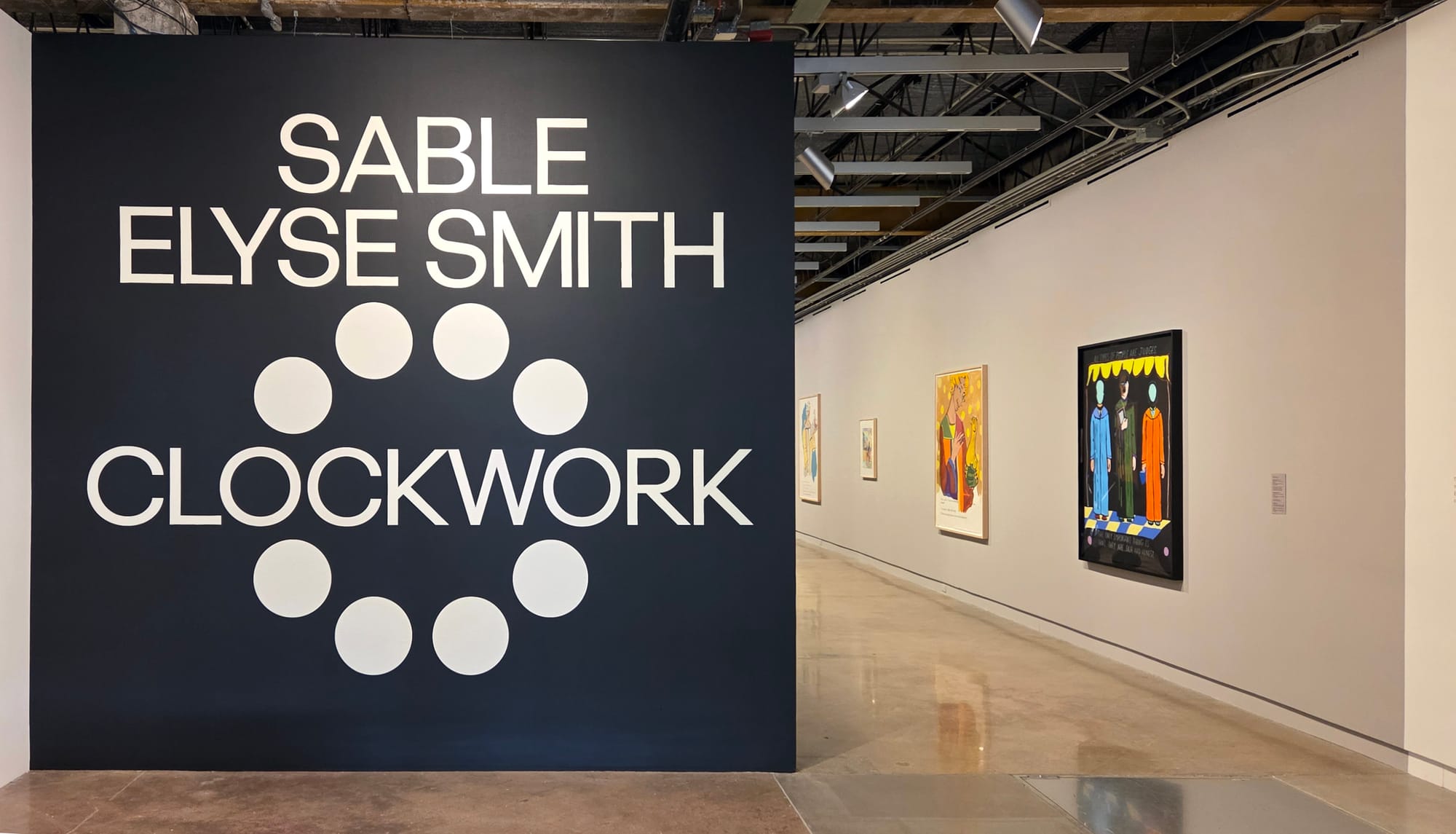
Sable Elyse Smith: Clockwork continues at the Contemporary Austin (3809 West 35th Street, Austin, Texas) through August 2. The exhibition was curated by Alex Klein and Julie Le. The exhibition will travel to the FLAG Art Foundation in New York in September; that iteration will be curated by Jonathan Rider.