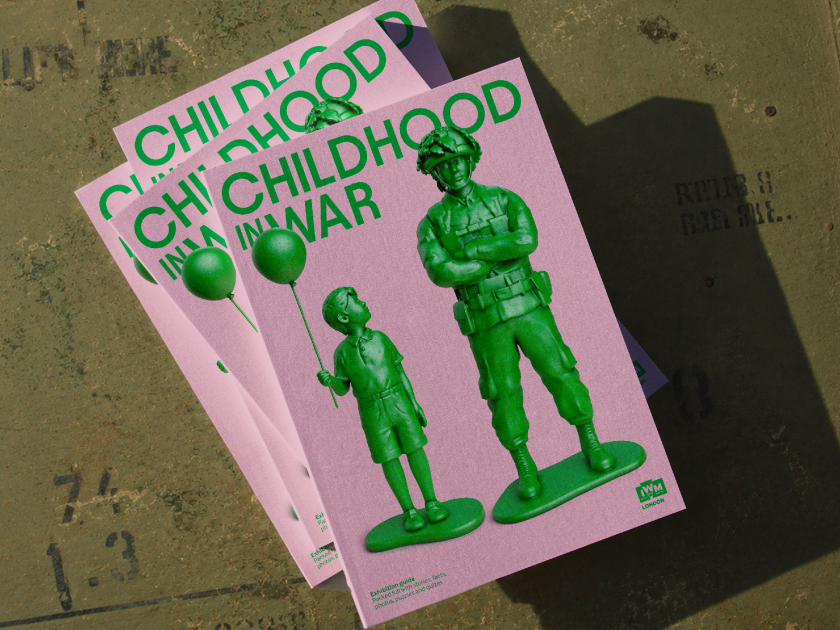
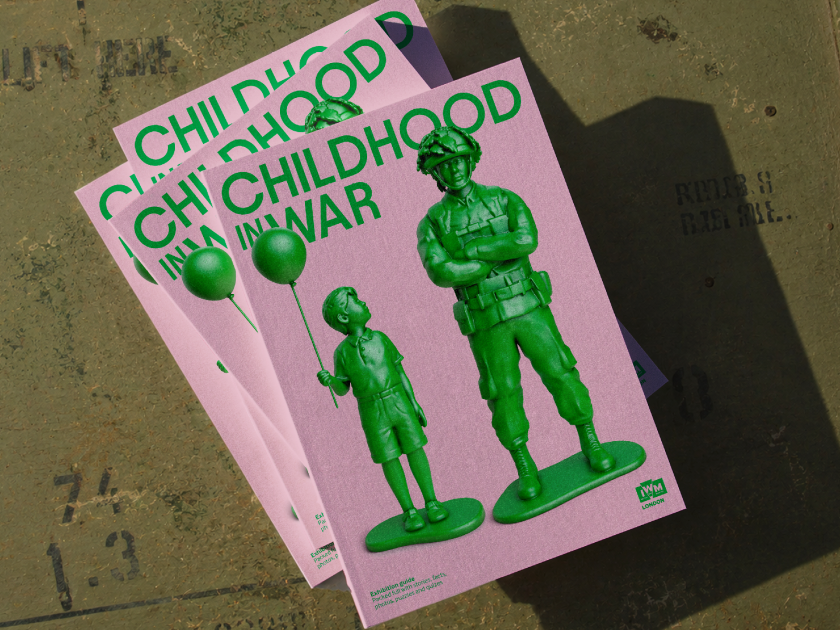
The studio’s OOH poster campaign for the Imperial War Museums’ new exhibition takes a familiar childhood toy and makes it impossible to ignore.
Almost all of us had a bag of them at some point: little green plastic soldiers, frozen mid-charge, lined up across the carpet (ready for a painful moment for a parent) or lost under the sofa, forgotten forever. We played with them for hours without ever really thinking about what they represented. It’s that gap – between a harmless childhood toy and the very real thing it stands in for – that London studio Johnson Banks was inspired by for its latest project.
The studio was asked to create the posters and lead the communications for Childhood in War, a new exhibition at IWM London, and its answer starts with those same toy soldiers. Johnson Banks drew on the “green plastic soldiers” so many of us grew up with, then built a new cast of characters around them, recreating children themselves in the same moulded plastic style. The effect is “both familiar and a bit jarring, all at the same time”, as the studio puts it, which is, of course, the whole point. By playing with the vernacular of childhood and turning it on the children themselves, the posters are built to make us stop, look twice, and think about what the exhibition is actually raising. It’s the first in a series of projects Johnson Banks is working on for IWM, and it’s a strong place to start.
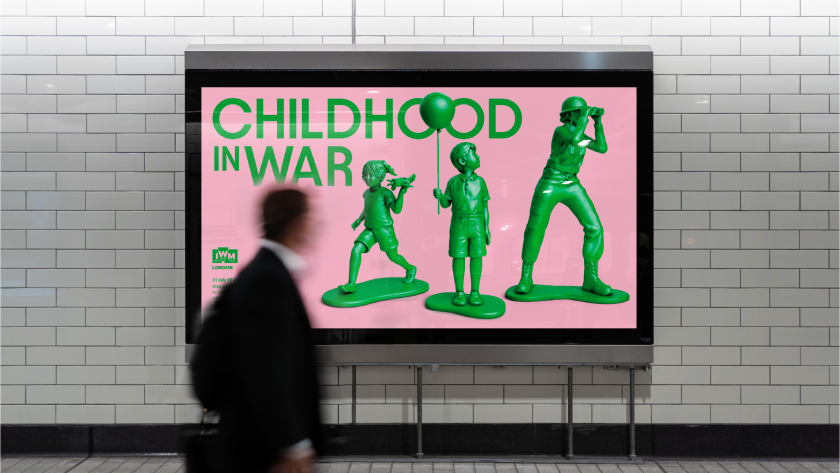
The exhibition it’s drawing people towards is a weighty one. Childhood in War is billed as the UK’s first dedicated exhibition exploring how war affects and shapes young lives, tracing children’s experiences of conflict from the First World War to the present day. With more than 450 million children (over one in six globally) now living in areas affected by conflict, it’s a subject that feels painfully current.
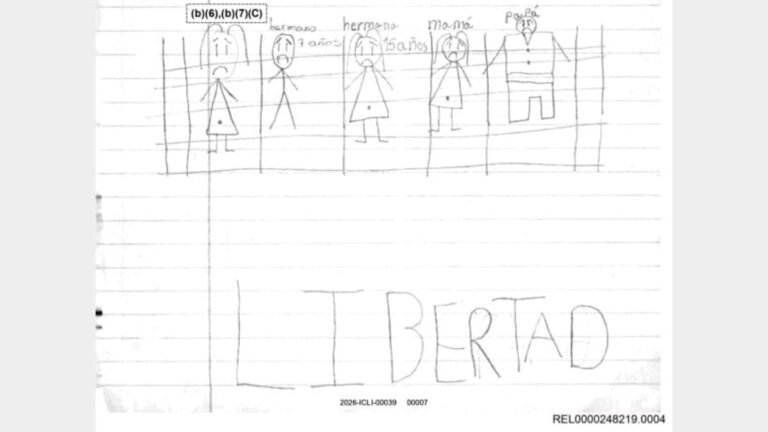
Inside, visitors move through immersive recreations of historic rooms: a large-scale evacuee train carriage, a Second World War bedroom, and a Cold War-era living room and kitchen complete with a period television and a rotary phone. Objects go on display for the first time, including a teddy bear treasured by Holocaust survivor John Hajdu and a red knitted jumper worn by Jochewet Heidenstein on the Kindertransport. These sit alongside contemporary stories and drawings from children in Ukraine, Afghanistan and Sudan, including poems written by young people as part of UNICEF’s Poems for Peace initiative.
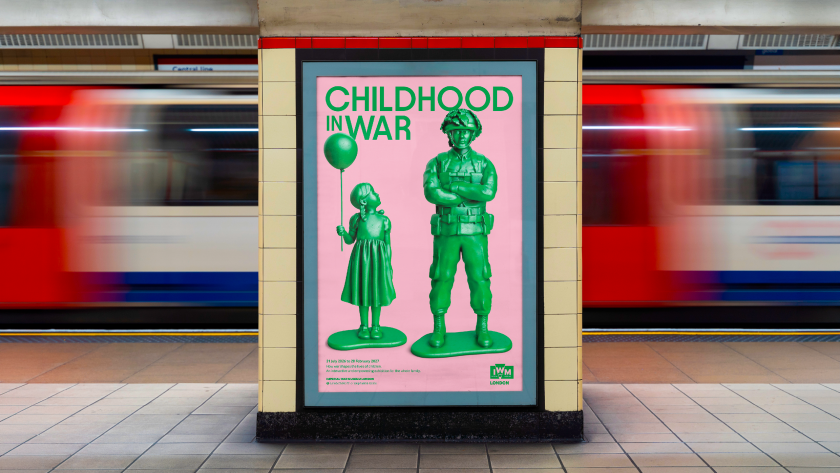
“Children’s voices and experiences of conflict matter,” says Craig Murray, lead curator of Childhood in War. “Their stories offer us a unique perspective on the impact of war. By providing a hands-on exploration of childhood through conflict, Childhood in War offers a space for families to reflect, learn and discuss difficult topics together in a world increasingly torn apart by conflict.”
It was a proper collaborative effort. Johnson Banks led the design and posters with the IWM design studio and created the animation, while Double Up Studio handled the 3D design and Nissen Richards Studio designed the exhibition itself.
Childhood in War is free and open now at IWM London on Lambeth Road, running until 28 February 2027. It’s recommended for visitors of all ages, including families and children aged 8 and over.
There’s something really clever about starting all of this with a toy soldier. It’s an object we hand to children without a second thought, which is why seeing it reworked stops you in your tracks. Sometimes the most familiar thing in the room is the one that makes you think hardest.