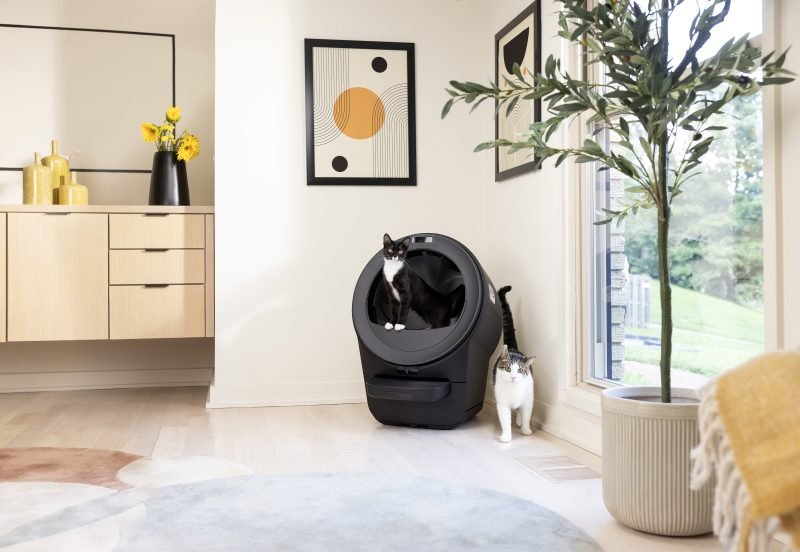
If there is one thing I regret about my automatic litter box, it’s that I didn’t get one sooner. For years, I dismissed this marvel of engineering as an overpriced fad; something that would be popular for a while but inevitably be relegated to that corner of the attic reserved for ‘things you don’t use, but were too expensive to just throw away’. However, having finally bitten the bullet and treated myself to a self-cleaning litter box a few months ago, there is absolutely no way I will ever go back to scooping by hand, and I can’t stop talking about this life-changing device to just about anyone who’ll listen – my friends, my colleagues, the woman behind me at the supermarket checkout…
You might be thinking that ‘life-changing’ sounds a bit far-fetched, but consider how much appliances of convenience have improved our lives. Washing machines, microwave ovens, dishwashers – all items that were once classified as luxuries, now considered essential household items. For those of us fortunate enough to be sharing our home with a cat or two (or five), the automatic litter box is not some passing craze; it is a game changer.
Every pet parent knows that litter box hygiene is essential; not just for the health and well-being of their feline family members, but for the human inhabitants as well, and that means regular scooping and cleaning. If your cat is particularly pedantic about starting every toilet visit with a pristine layer of litter, you’re probably digging through the litter box multiple times a day; if you’re not, it’s only a matter of time before they find somewhere else to relieve themselves.
So, what if you could provide your fastidious felines with a fresh bed of litter for every visit, without lifting a finger? What if you could be certain that your house won’t reek of eau de feces when you come home after a long day? What if you could turn litter box maintenance into a simple weekly task instead of a daily chore?
With a Litter-Robot® automatic litter box, you can.

What IS an Automatic Litter Box?
When I first heard the term ‘automatic litter box’, I pictured something that would be enormous, noisy, and terrifying to cats, and perhaps, when the first automated litter boxes hit the market over 25 years ago, that may have been the case. But it certainly isn’t now.
The concept is simple enough: your pet uses the litter box, digging and burying their deposit as usual. The solid clumps of feces or urine are sifted, separated, and stored securely, trapping odors below and leaving fresh, clean litter above. Every few days, you simply remove the drawer-liner containing the offensive waste and dispose of it – no scooping, no mess, no fuss.
Once your cat has finished their business, there is a time delay to allow the litter to clump before the magic begins. If any curious cats get too close to the action as the unit rotates, it will pause until they have moved away, and most cats lose interest in the strange activity within a couple of days.
The design of automatic or self-cleaning litter boxes prioritizes feline safety and comfort, and, in most cases, the only sound you’ll notice is the soft-yet-satisfying thud of your pet’s waste landing in the drawer below. One little bugbear of mine is that the sensors can sometimes be a tad too sensitive, and will put a halt on proceedings if a stray bit of litter gets in their way. However, this minor inconvenience is easily rectified, and over time I have become familiar with where, why, and how to sort out the most common sticking points.
For me, the benefits of a self-cleaning litter box are clear. I no longer start and end each day sifting through cat waste, there are no more arguments over whose turn it is to empty the litter box, and a frustrating daily chore is now as simple as changing a trash can liner. More importantly, my cats are greeted with fresh, clean litter every visit, and surprisingly, I’m using far less litter than ever before.
There’s An App For That!
In recent years, more and more self-cleaning litter box brands have hit the market, but the name most people think of is Litter-Robot®, with good reason. Fed up with the thankless job of scooping out litter boxes, Brad Baxter, engineer and founder of the feline-focused pet-tech company Whisker, set aside a promising career in the automotive industry to create the world’s first automatic litter box. The idea was inspired by his two cats who were refusing to use their litter box because, as Baxter admits, he wasn’t keeping it clean enough. Since it first hit the market back in 1999, the design and function of the Litter-Robot have evolved, with motion sensors and weight detectors making it safer than ever before, and now, there’s even an app for that!
More recent iterations of the Litter-Robot range allow you to pair with an app that alerts you to issues with the litter box and keeps track of your cat’s latrine habits, and the Litter-Robot® 5 Pro goes even further. Built-in AI-powered cameras stream, record, and track activity; patented WasteID™ distinguishes between urine & feces for advanced odor control, and the Whisker App monitors visits and tracks weights for optimal feline care. The cameras also use facial recognition technology to identify different cats, so you can collect information for multiple cats and even connect multiple devices.
With cats being masters of masking illness, we often miss the subtle changes that may indicate a problem. Spending longer than usual in the litter box, visiting more frequently, increased urine output, and changes in body weight can be easily missed if we’re not paying close attention, but the Whisker App tracks it all, storing up to two years of data. Imagine getting a jump-start on kidney disease? Or making an appointment for your cat before you even get home from work because you know they’ve visited the litter box ten times today.
From a veterinary perspective, the ability to track patterns and trends in feline weight and toileting habits can be just as important as the results of a blood test. Instead of relying on guesswork and memory, the Whisker App can provide evidence that could be the key to an early diagnosis.
They Haven’t Replaced Humans…Yet!
Investing in a self-cleaning litter box may mean that you’ll never have to scoop again, but it doesn’t mean you can disappear for days at a time, safe in the knowledge that your Litter-Robot is taking care of business. Your Whisker App will alert you to any problems, but it can’t fix them on its own. Not yet, anyway.
We still need to top up the litter (though the new Litter Hopper attachment makes this even easier), and even a self-cleaning litter box needs to be cleaned by a human from time to time. This typically involves keeping the sensors free of debris and giving the whole unit a deep clean every few weeks. Fortunately, the Litter-Robot features a modular design with easy-to-clean components, so even this isn’t much of a chore.
In a single-kitty household, you can go for up to 8-10 days without needing to empty the drawer of your Litter-Robot, but it’s good practice to do it more frequently, particularly in warmer weather. The carbon-filtered waste drawer keeps odors contained, but it’s not a hermetically sealed vault, so for ultimate hygiene and odor control, it’s a good idea to empty the drawer every few days.

Do You Need An Automatic Litter Box?
If you’re tired of scooping or struggling to keep up with daily litter box cleaning, then yes, you need an automatic litter box. The fact is, despite all the modern conveniences and time-saving devices in our lives, we seem to have less time than ever before, and cleaning the litter box is a chore that all too often gets put off until the next day. With a self-cleaning litter box, you get to skip the daily drudgery of scooping, while your kitty gets fresh litter for every single visit. Not only is this a godsend for busy lives, but it is also a total game-changer for cat parents dealing with injuries, chronic pain, or disabilities.
You might think that cats would be wary of these peculiar devices, but in the vast majority of cases, automatic litter boxes are readily accepted by even the most suspicious of felines. There are a few exceptions, of course, namely cats that are particularly flighty or anxious, those that are adjusting to a new environment, and very young kittens (though most can be put in manual mode or simply switched off until kittens are of a suitable size). To accommodate the waste drawer underneath, most automatic litter boxes are quite tall, so elderly cats or cats with mobility issues may struggle. However, this is easily overcome with an appropriately placed step, which the Litter-Robot has already built into its design, plus ramps that can be purchased separately for cats that need some extra help.
For me, the question wasn’t “Do I need an automatic litter box?”, it was “Do I need more than one?”.
With five cats of varying ages and sizes, I wondered if one self-cleaning litter box would be enough. Although larger units, like the Litter-Robot 5 and Litter-Robot 5 Pro, are marketed as being suitable for up to five cats, I had two main concerns:
- What if more than one cat wants to go to the toilet at the same time?
- How often will I need to empty the waste drawer with five cats using one unit?
In the end, I decided to embrace the philosophy, ‘go big or go home,’ and took advantage of bundle pricing to treat myself (I mean, my cats) to two self-cleaning litter boxes. During the introductory period, I had one automatic box and two of my old litter boxes available. I discovered that my cats preferred to use their new toilet over the old, and I needed to empty the drawer about every 2-3 days, which, to be perfectly honest, was amazing. However, since going full automatic, I have been pleased to see one box being used while the other is rotating, and I simply cannot explain how wonderful it feels to only need to empty those drawers once, maybe twice a week.
Will An Automatic Litter Box Really Change Your Life?
As a veterinarian and proud cat parent of five, I honestly believe that yes, an automatic litter box will change your life. I know how important it is to keep your cat’s litter box clean, and I also know how annoying daily litter box cleaning can be for one cat, let alone five. Litter box maintenance was becoming a source of frustration and resentment for me; frustration that I was the only one putting in the work, irrational resentment when my cats would start digging the moment I finished cleaning. Not only that, but a lower back injury was making scooping more and more painful.
I can honestly say that since switching to a self-cleaning litter box, my mood has improved, I’ve stopped holding a grudge against my litter-duty avoidant husband, and I have more time to spend enjoying my cats’ company instead of digging around in their poop.
These days, my cat litter cleaning routine involves checking to make sure both units are functioning throughout the day, brushing or wiping away debris or litter as needed, and emptying the waste drawers once or twice a week. I didn’t realize how much time I spent sorting out the feline latrines every day until I suddenly didn’t have to, and the best part is that while I’m doing less work, my cats have consistently clean litter all day, every day.
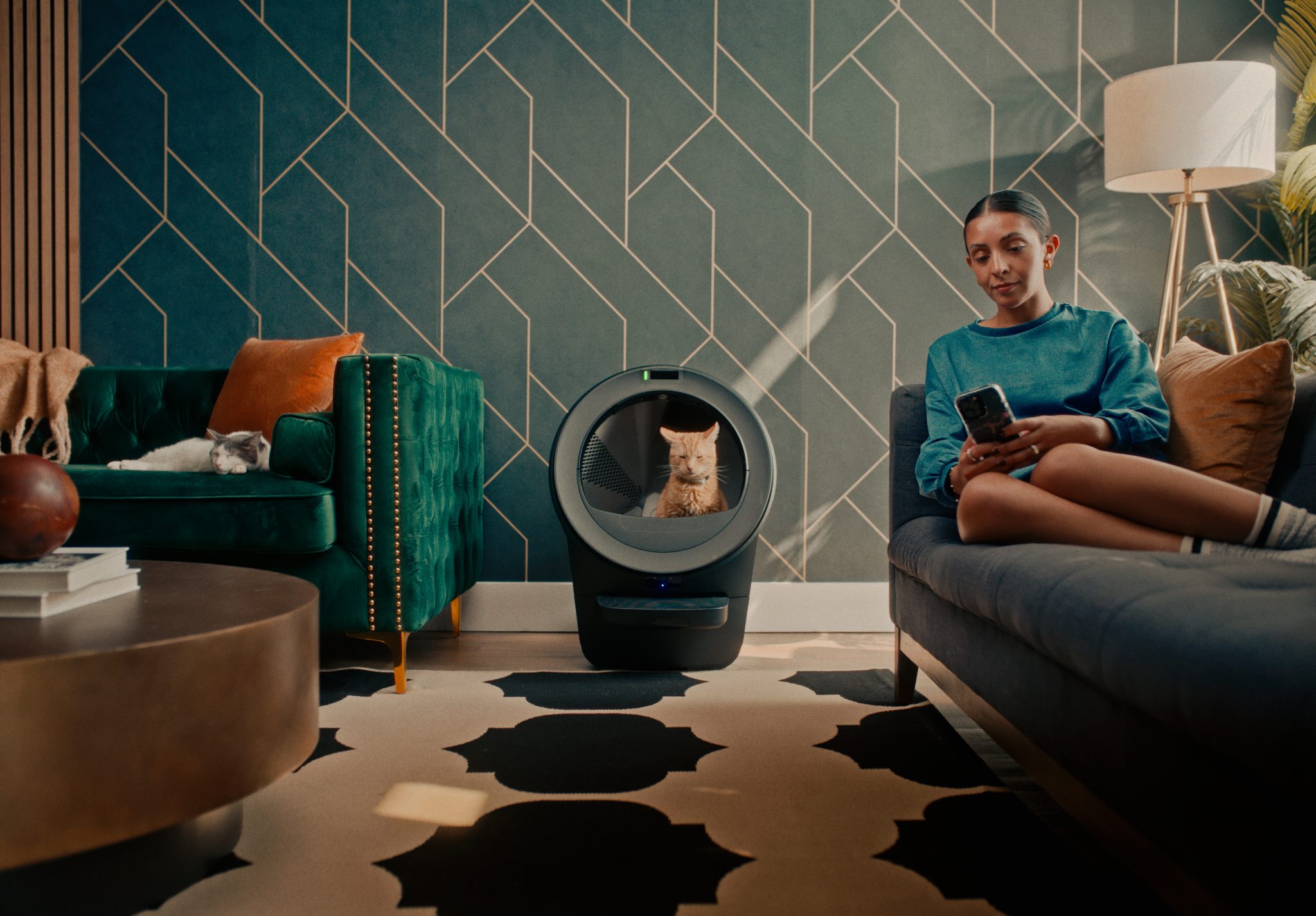

Because They’re Worth It – And So Are You
Okay, let’s address the elephant in the room; and by elephant, I mean price tag.
Self-cleaning litter boxes aren’t cheap, particularly when compared to a basic plastic tray. Depending on the brand, style, bells, and whistles, you may find yourself spending anywhere from a few hundred to almost a thousand dollars for a good unit. Certainly there are cheaper versions out there, but if you want a reliable automatic litter box with great engineering that’s going to last the lifetime of your cat, Litter-Robot, the brand that has been there from the beginning, is absolutely worth the investment.
Whisker offers payment plans, bundle discounts, and also sells reconditioned units, making the Litter-Robot more affordable, with extended warranties available for more peace of mind.
It would be easy to think of an automatic litter box as an extravagance, but would you say the same about a washing machine? You wouldn’t waste hours every week hand washing and wringing out your clothes, towels, and bedsheets, so why are we content to toil away inside dirty litter boxes when there is a much better way? Your cat deserves a clean tray for every visit, and you deserve a break.
What Are You Waiting For?
Getting a self-cleaning litter box is 100% one of the best decisions I ever made, and I only wish I’d done it a decade ago. Although my decision was selfishly motivated, the satisfaction of knowing that my automatic litter box keeps my cats’ litter cleaner, more consistently than I ever could, is an even greater reward.
We need to stop thinking of automatic litter boxes as extravagances or luxury items; they are as necessary in my home as any other appliance I could ‘technically’ live without, and I would sooner give up my toaster, my microwave, or my dishwasher than go without a self-cleaning litter box.
Just like any other household appliance, you get what you pay for, and it’s worth doing your homework, reading independent reviews, and investing in a high-quality item. If you’re not sure where to start, why not start with the one that started it all: the Litter-Robot.

Frequently Asked Questions
Do veterinarians recommend automatic litter boxes?
This veterinarian certainly does! By providing a constantly clean litter box, cats are less likely to feel stressed, which can have a significant impact on their overall health and well-being.
One disadvantage of a self-cleaning litter box is that changes in the color, form, or volume of a cat’s urine or feces may go undetected. However, with advancements like the Litter-Robot 5 Pro, these changes are not only noted, but the information is assigned to the appropriate cat and stored for up to two years.
Are automatic litter boxes safe?
They are very safe. Most automatic litter boxes aren’t recommended for very small kittens, but the sensors are so sensitive that it would be extremely unlikely for a curious kitty to become trapped. Litter-Robot has advanced safety features, like pinch detection and weight sensors, to ensure the box will not cycle at the first detection of your kitty. Additionally, the cleaning sequence tends to be quite slow.
Are automatic litter boxes suitable for all cats?
Generally speaking, any cat can use an automatic litter box; however, there are a few exceptions and considerations. As previously mentioned, they are not recommended for very small kittens, and cats with mobility issues may have some difficulty getting in and out of the taller units. However, there are accessories like steps and ramps to make access easier.
Do automatic litter boxes really reduce odor?
Compared with traditional litter boxes, absolutely. Because a self-cleaning litter box removes waste quickly, there is less time for unpleasant odors to permeate the air. However, to keep your home smelling super fresh, it’s a good idea to empty the waste drawer every few days, even if it’s not full, particularly if conditions are warm. For superior odor control, Whisker sells OdorTrap, which helps contain nasty smells for even longer.
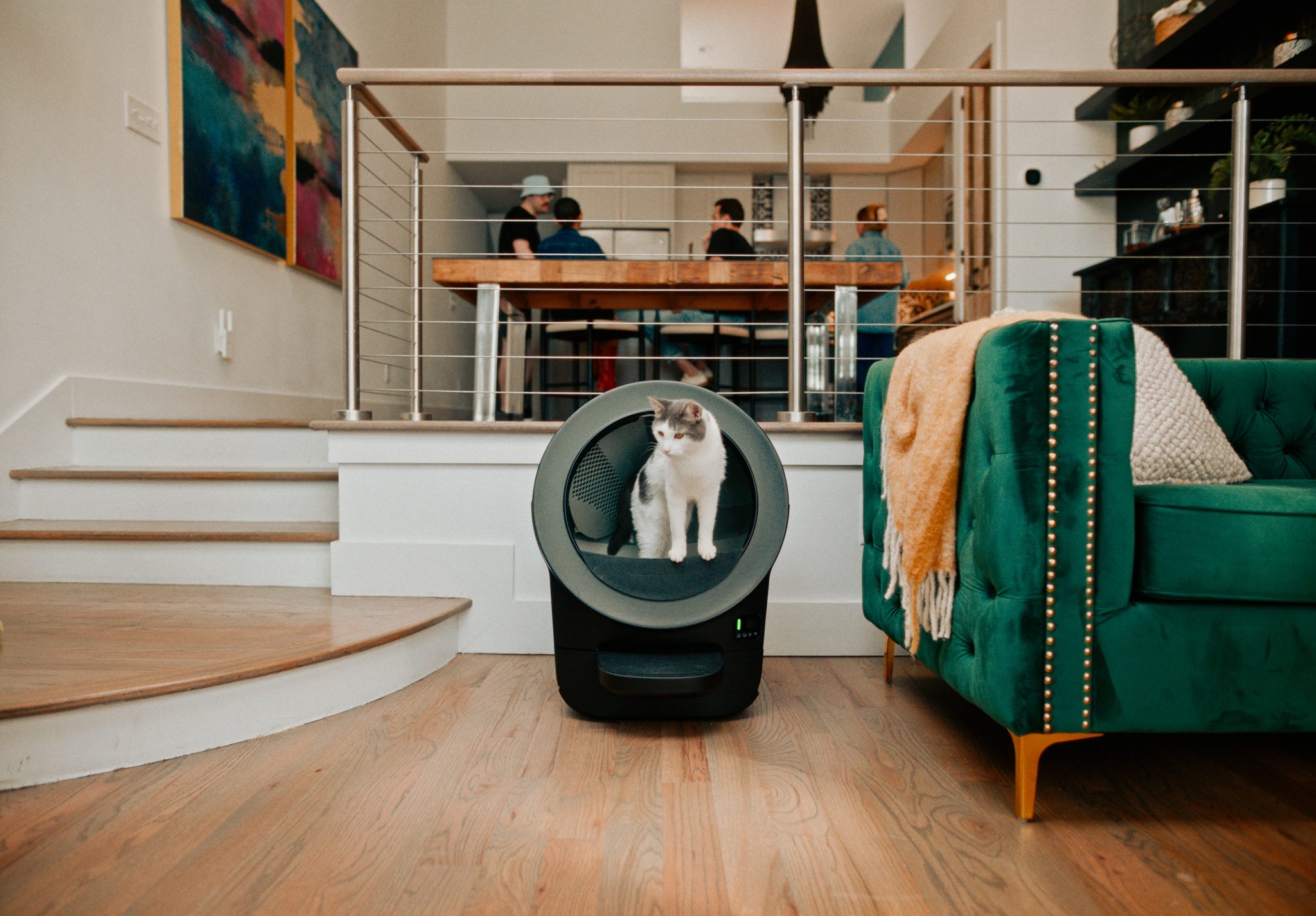
Are automatic litter boxes suitable for multi-cat households?
Absolutely. Although some cats don’t mind sharing a litter box, most prefer to do their business in fresh litter, which usually means having multiple litter boxes. With an automatic litter box, each cat is greeted with an uncontaminated tray, and a single self-cleaning litter box can effectively replace up to 5 or 6 regular litter boxes. The Litter-Robot 4 can accommodate up to 4 cats, while the Litter-Robot 5 and Litter-Robot 5 Pro are suitable for up to 5 cats.
If your cats are used to having litter boxes in different locations around the home, such as upstairs or downstairs, or if there is a lot of friction between cats, it is a good idea to either retain a separate litter box or invest in multiple units.
Do I have to use a certain type of cat litter?
Although you don’t need to buy specific brands for an automatic litter box, the cat litter needs to be clumping. The self-cleaning function works by sifting solid feces and urine clumps, so non-clumping litter will not work.
Some automatic litter boxes only operate effectively with fine-textured litter, while others can be adapted for use with pellet-type litter as well, so make sure you check before stocking up.
How big are automatic cat litter boxes?
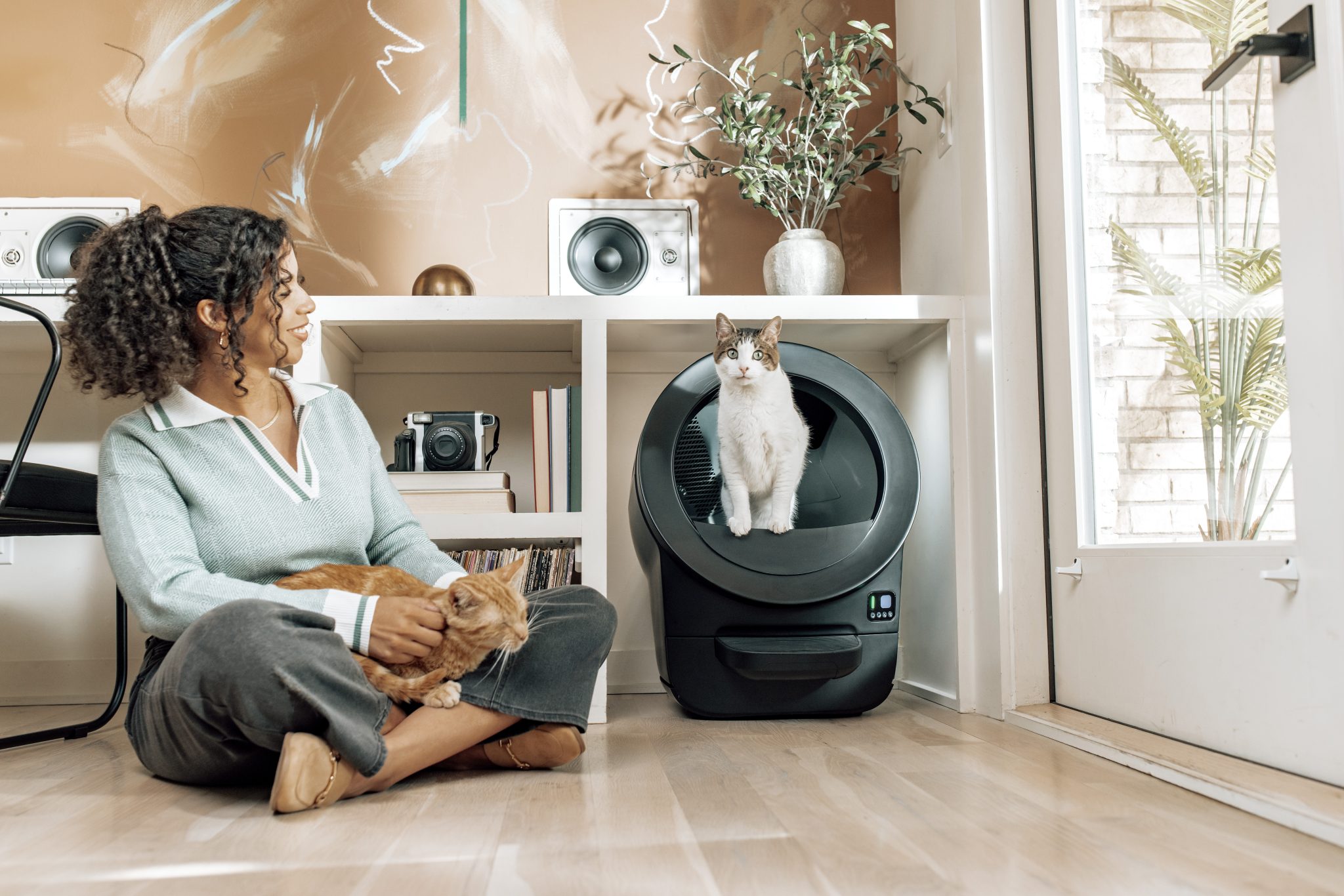
You might think that an automatic litter box will take up a lot more space than your average box, but this isn’t necessarily the case. In fact, the Litter-Robot has the same footprint as a traditional litter box, and considering a single unit can effectively take the place of three or four regular litter boxes, you’ll probably have even more space than before.
How long does it take a cat to adjust?
Cats are curious by nature, and the majority will happily investigate and use their new toilet right away, but others are more suspicious of change. You may be excited to get your self-cleaning litter box doing its thing, but you should leave the box switched off for the first few days – you don’t want to startle them! It’s important to leave your old litter box out for a week or so until you are confident that your cat has accepted the new system.
Whisker has a really helpful guide to acclimating cats to their Litter-Robot, with great tips that will work for all types of automatic litter boxes.
Are automatic litter boxes worth it?
Yes, yes, a thousand times yes! The worth of an automatic litter box goes far beyond monetary value. They use less litter, increase litter box hygiene, reduce inappropriate toileting caused by soiled litter, and give you the gift of free time. Plus, you never have to scoop again.
Still thinking about getting an automatic litter box? To borrow the words of a well-known sporting brand: Just Do It!