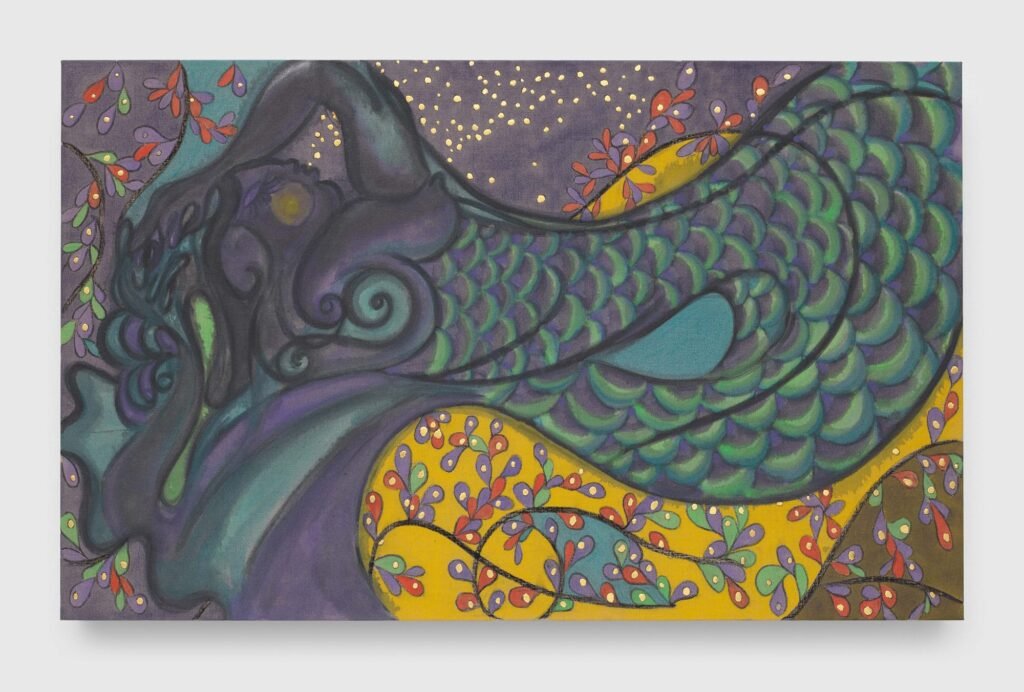
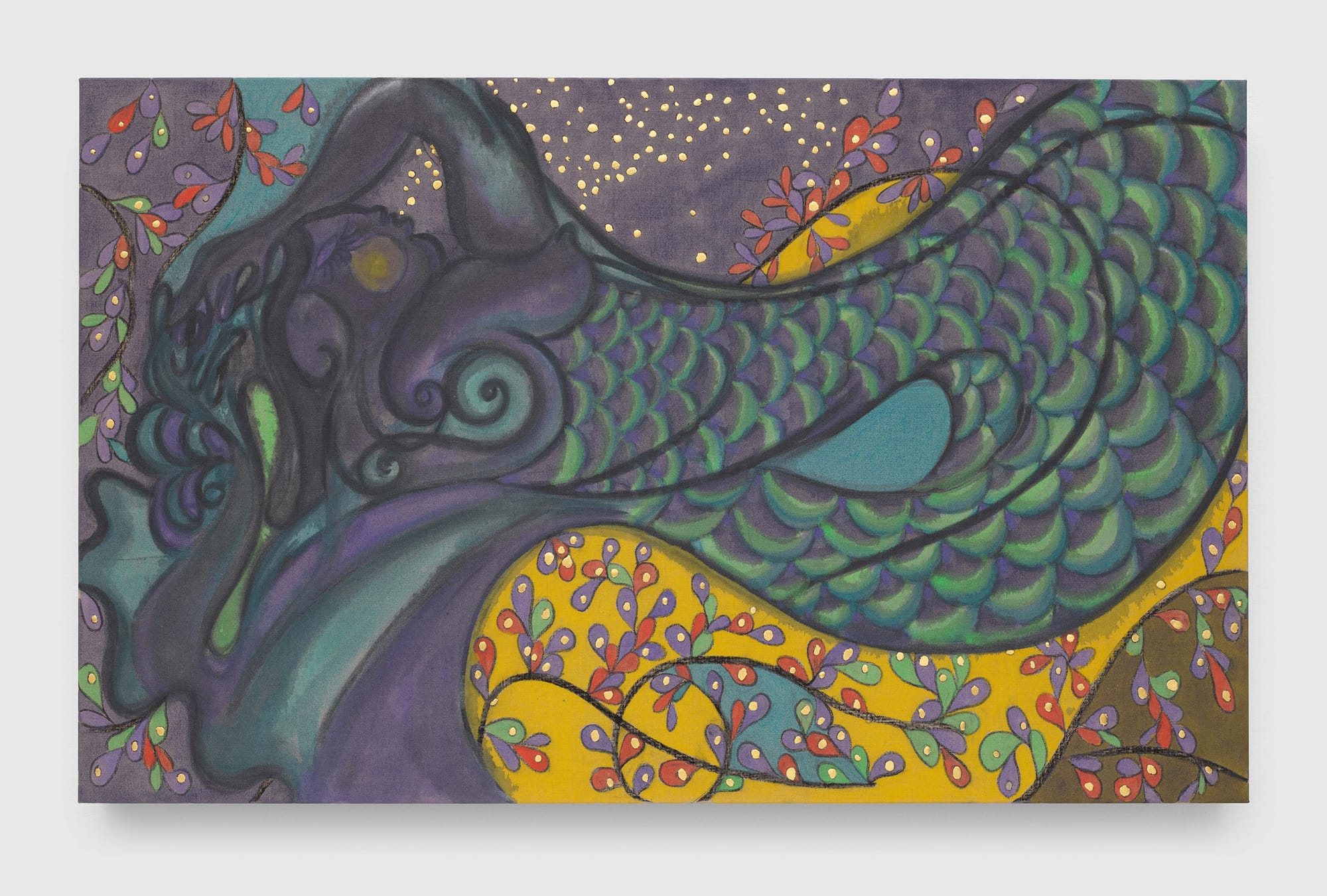
From Homerist fan clubs in Ancient Greece to a new wave of devotees enthralled by Christopher Nolan’s latest blockbuster, The Odyssey has inspired almost 30 centuries worth of interpretations, artistic renditions, and adaptations. Trek through the masses at the Metropolitan Museum of Art, and you’ll be rewarded with an ancient terracotta depiction of a tender scene between Odysseus and his nurse Eurykleia upon his return to Ithaca. Or find yourself entranced by an oil painting of Calypso as a mermaid, all wrapped up in deep purples, graphite lines, and gold leaf. In a more contemporary vein, there are Paul Chan’s inflatable sculptures, which generate their own “moving images” as they breathe, wriggle, and sigh like the anthropomorphized inflatable tubes outside car washes.
The six artworks below bring the poem into dialogue with myriad cultural histories, traditions, and mythologies, positioning the power of myth in its ability to traverse oceans of time and space.
J.M.W. Turner’s “Ulysses Deriding Polyphemus” (1829)
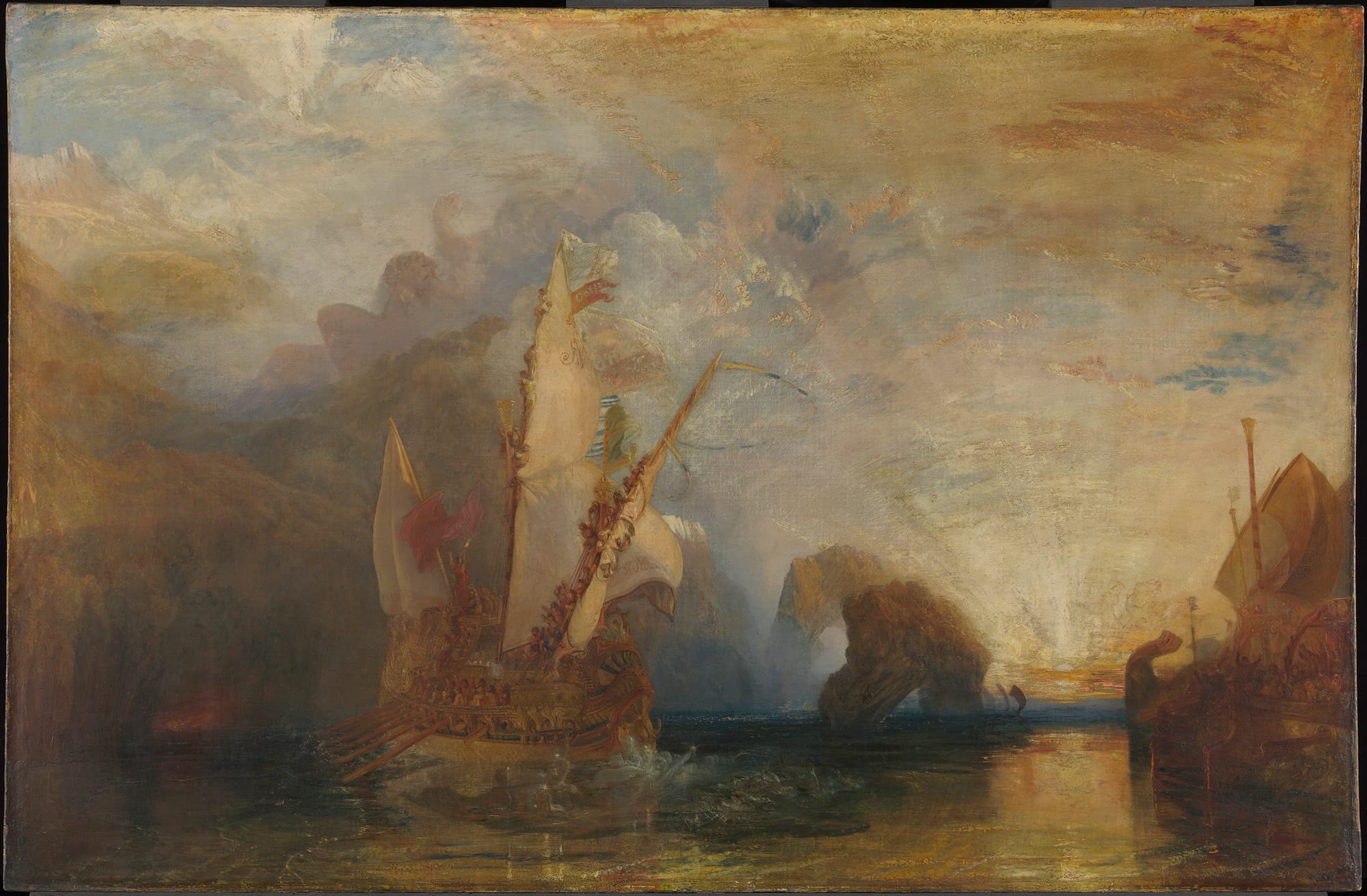
While journalists often heckled J.M.W. Turner for his unconventional techniques, the English Romantic painter nevertheless leaned into his new hazy style to depict Odysseus’ hasty getaway from the monumental, man-eating Cyclops, Polyphemus. In this pivotal moment in Book 9, all is briefly well: Our hero boasts a red banner, and a swarm of sea creatures celebrate at the ship’s prow. Polyphemus is now a far-off threat, reduced to indistinguishable remains. As sunrays signifying victory rise in the east, the ship sails toward a palette of muddier unknowns, suggesting the misfortunes Odysseus and his crew have yet to face.
English art historian John Ruskin deemed the painting “the central picture of Turner’s career,” and it has remained a prized possession of the National Gallery in London for well over a century.
Romare Bearden’s A Black Odyssey series (1977)
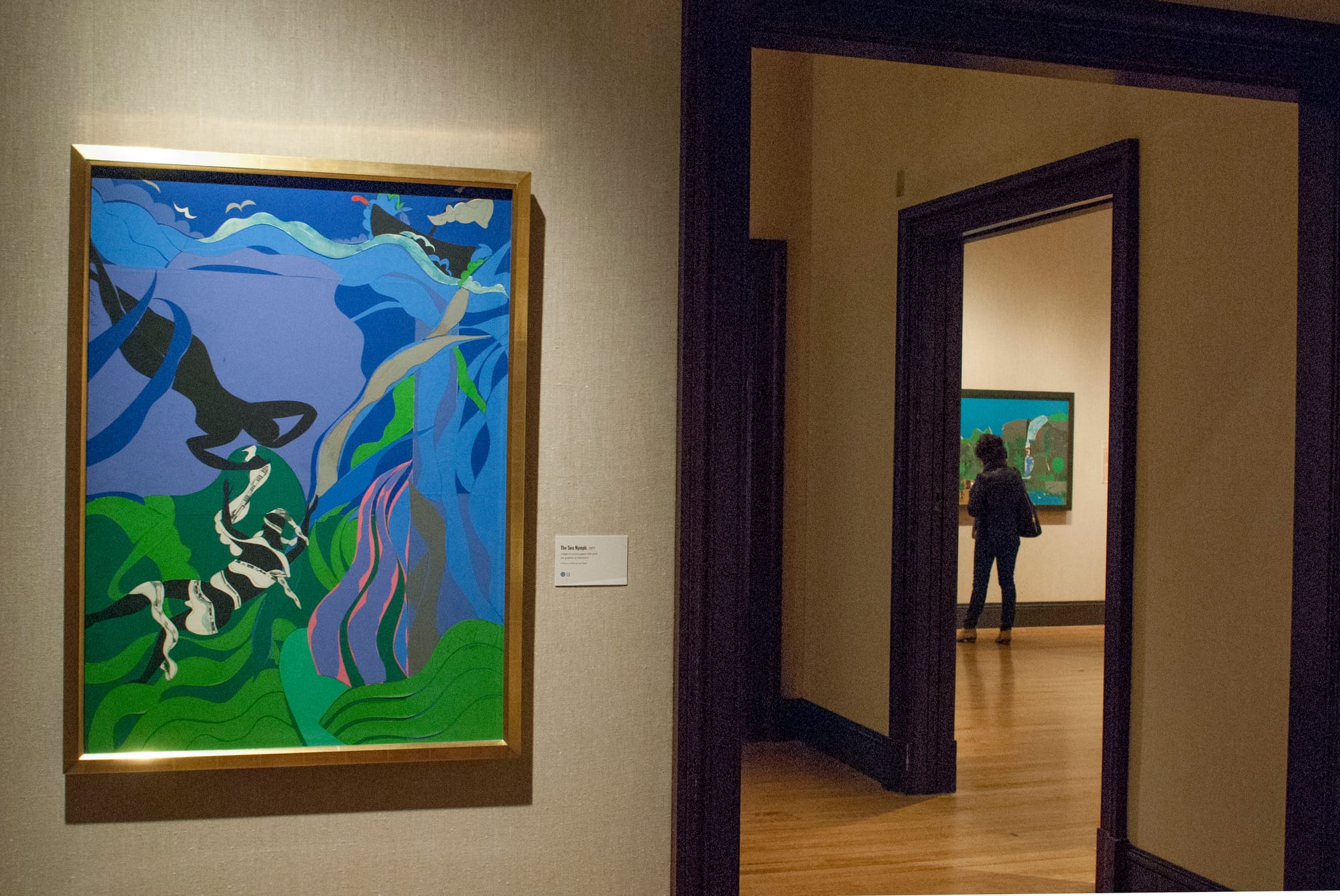
Themes of dislocation, mourning, unforeseen trials, and an insatiable longing for home saturate Homer’s Odyssey. Artist Romare Bearden situates these affects within an African-American context in his series A Black Odyssey (1977), transforming the epic across 20 collages into a vehicle for conveying the Black Atlantic historical imaginary.
Bearden’s crisp cutouts and linework captivated writers including Ralph Ellison, who applauded the artist’s “[s]urreal blending of styles, values, hopes and dreams which characterize much of Negro American history.” Take “The Sea Nymph,” for instance, which depicts Odysseus being rescued by the goddess Ino from a watery death. Bearden centers Black subjects in his rendition of the tale from Book 5, presenting the ship as a metaphor for the floating prisons of the Middle Passage and the tragedies hastened by the cruelty of the transatlantic slave trade.
From 2012 to 2015, the series was part of a touring Smithsonian exhibition that ended at Columbia University’s Wallach Gallery, just blocks away from Bearden’s former home in Harlem.