Information overload is causing a credibility crisis. True, it’s never been easier to access the right answers to our questions. But at the same time, that answer is harder to find. There are so many experts, politicians, celebrities, and influencers who are entering their opinions into the chat, and separating good information from bad now feels like finding a needle in a haystack.
As a reformed social media addict and qualified business psychology professional, I know this challenge from the inside out. I spent 15 years manufacturing influence to sell products to unsuspecting users online, while succumbing to the very campaigns I helped architect. Ironic karma. As internet culture has given everyone a platform, it’s become infinitely harder to know who to believe—and why.
The internet has become a hotbed for monetizing almost anything. And many use that overwhelm to lure people to buy something.
The volume and velocity of information
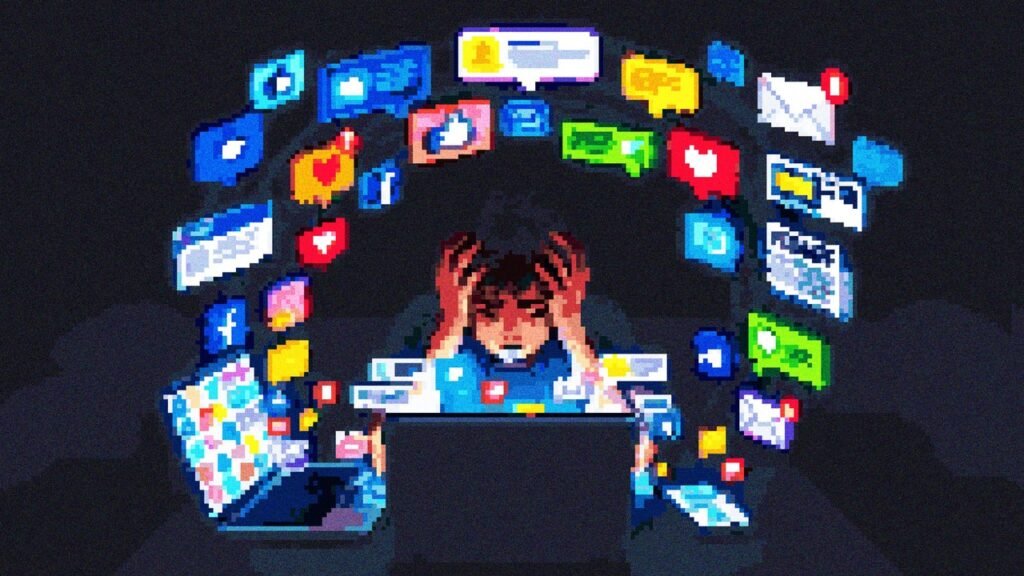
Most adults spend upwards of two hours a day on their mobile devices, much of it scrolling social media. Add in news checks and newsletters, and you’re absorbing four hours or more of information every day. Two decades ago, news arrived in finite batches: the evening bulletin, the daily paper. Today, your brain processes more in a 10-minute doomscroll than it once did in a week.
When your brain hits this overload, it protects itself in one of two ways. One, it shuts down on topics that feel too complex. Two, it might start going passive—deferring to the popular view because it’s easier than thinking it through. As overload sets in, you begin to outsource your judgment, and your susceptibility to misinformation increases. But volume is only the starting point.
Performance doesn’t equal proof
Social media breeds surface credibility. People try to build trust based on aesthetic polish, confident delivery, and perceived authority. The old signals of trustworthiness—professional appearance, institutional affiliation, peer endorsement—are now extensively manufactured: a polished personal brand, a large following, a bestseller tag, a verified badge. And our pattern-recognition brains process these as proof, even though they only mimic it.
Substantive credibility looks different; it’s less flashy and easy to overlook. People with genuine credibility build it through qualifications, peer-reviewed evidence, and demonstrated track records. They’re also willing to say, “It’s complicated.” Real experts sit with nuance: “the research suggests,” not “the research proves.” It’s the opposite of the simple answers we crave when overwhelmed. But confidence is not competence. It never was.
How cognitive bias impacts our identity
Awareness of our cognitive biases helps us vet information more objectively—but it’s harder than it sounds. Beneath those biases sits something more powerful: identity. How we see ourselves filters what we choose to believe. We absorb without scrutiny information that aligns with ourselves, and reject information that doesn’t.
This plays out professionally, too. A leader who built their identity around being a visionary is more likely to adopt information confirming their direction, and dismiss dissenting data. Political identity works the same way. Research shows that partisanship shapes how we evaluate factual claims, from economic data to public health guidance, despite the quality of the evidence. The information hasn’t changed; your identity has done the filtering.
Tribalism compounds it further. Industries and niche communities develop their own culture, which makes it hard for us to update our beliefs. The most dangerous credibility failures occur when we already wanted to believe something, and surface credibility simply handed us the justification.
What you can do about it
The good news is, you’re not too gullible. Your brain is doing exactly what it evolved to do: use shortcuts to save time and energy. And while companies have invested billions of dollars to hijack those shortcuts, awareness is your leverage.
Here’s how to use it:
- Pause when something feels immediately right. Strong certainty often means your identity did the evaluating, not your critical thinking.
- Check what makes this person qualified—specifically. Credibility doesn’t transfer across domains.
- Build your comfort with complexity. Notice whether someone says “the research suggests” or “the research proves.” Humility is a reliable marker of real expertise.
- Separate the story from the evidence. Great stories feel compelling, but they’re not proof.
- Check the incentive structure. Ask what they stand to gain from your belief.
- Notice when information flatters your existing views. An agreement without friction is worth interrogating.
- Seek out credible disconfirmation. Look for high-quality sources that challenge your position. The best updates rarely come from sources that already agree with you.
The credibility crisis is real, and is making it harder than ever to sort fact from fiction, well beyond the dark corners of the internet. The question isn’t whether you’re susceptible to surface credibility—you are. The question is whether you’re willing to slow down, interrogate your own thinking, and build habits that make you harder to fool.