US Army photo by Staff Sgt. John Bae
- The US Army wants to expand a new robotics role pioneered by special operations.
- The specialty, alongside another effort, is focused on building, modifying, and integrating robotics and new technologies.
- The first soldiers graduated from the course last week.
The US Army wants to expand a new robotics specialty pioneered by special operations across the conventional force after graduating its first robotics technicians.
The new specialty and expected expansion reflect the Army’s growing belief that future wars will demand specialists who can keep pace with rapidly evolving battlefield technology. The war in Ukraine has shown how quickly innovative solutions can become obsolete, forcing soldiers to adapt in the field.
US Army Special Operations Command is expected to provide Army officials with feedback for expanding the new specialty — officially robotics technician — beyond special operations in the coming weeks, Lt. Gen. Lawrence Ferguson, head of US Army Special Operations Command, said last month at an Army conference.
“These technical experts will help command teams understand integration across the force,” said Gen. Christopher LaNeve, acting Army chief of staff, at the same event.
“We are scaling this across the Army,” he said.
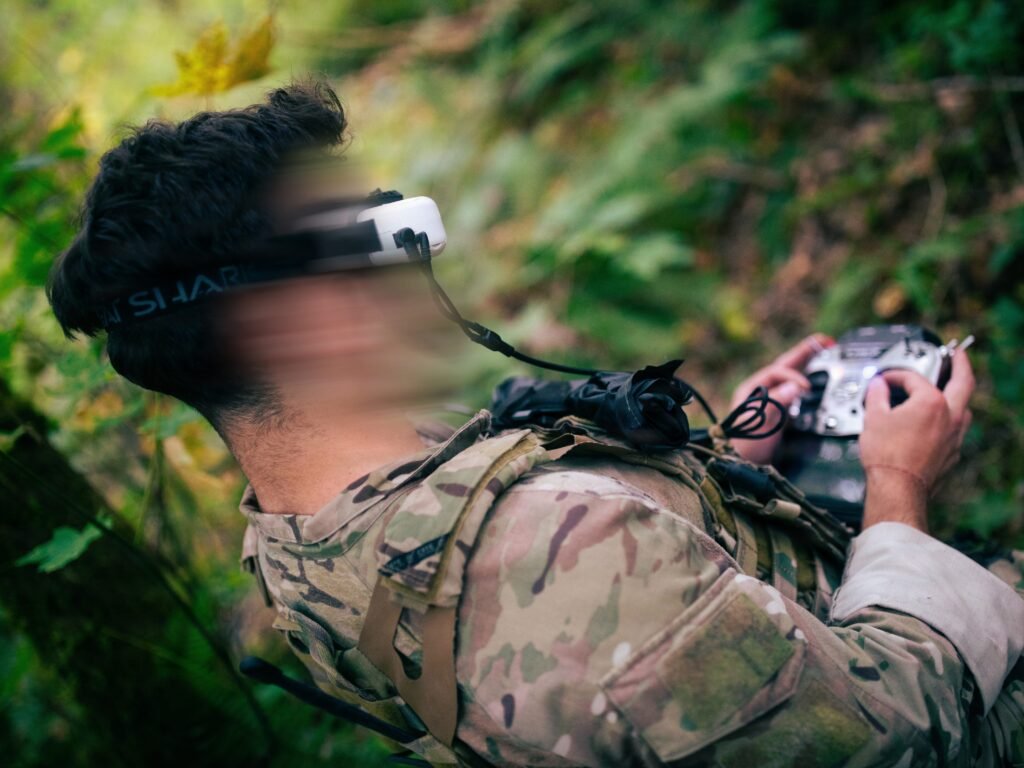
Rather than simply flying drones, the Army is training these new robotic specialists to integrate drones, ground robots, artificial intelligence, and other autonomous systems across military operations. They’ll serve as technical advisors for commanders while rapidly designing, modifying, and troubleshooting custom robotic hardware and software.
That new specialty complements a second new role, the “Robotics Technology Integrators Course” graduate, whose job is to understand new technologies. The Army said the need for the specialized role became clear from lessons from recent global conflicts.
“To maintain battlefield overmatch, the Army requires a two-tiered structure: highly specialized technical architects (MOS 390A) who engineer and secure the systems, working in tandem with tactical employment specialists (RTIC) who operate them in the dirt,” explained an Army document on the two separate but related career paths shared with Business Insider.
Sgt. 1st Class Alexis Washburn/United States Army John F. Kennedy Special Warfare Center and School
It compared the Army’s approach to a racing team. “If the Army Special Operations wants to build a Formula 1 racing team, the RTIC Graduate is our high-performance racing driver,” the document said. “They know how to push the car to its limits, read the track, and win the tactical race.”
Meanwhile, the robotics technician is the racecar’s crew chief. “They design the engine, write the telemetry software, rebuild the transmission when it breaks, and formulate the team’s strategy,” the document added.
Special operations isn’t keeping that robotics expertise to itself, though. Army leaders want to spread this capability across the broader force.
The first 10 soldiers graduated as robotics technicians on October 2 at the Army’s John F. Kennedy Special Warfare Center and School at Fort Bragg, North Carolina.
The program is considered a pilot for the Army at large, with the Special Operations Center of Excellence involved to avoid duplicative efforts. The course will be updated as technologies like drones and AI evolve, employing a flexible framework that allows instructors to update lesson plans.
The new specialties come as the Army examines which technological skill sets soldiers will need for future conflicts. The service has established various courses and schools on uncrewed systems, AI, and machine learning, with a focus on disseminating expertise across formations.
“We are experiencing a SOF Renaissance as technological advancements are swiftly transforming the character of war,” said Chief Warrant Officer 5 Gary Ostrander, Command Chief Warrant for the Army’s special warfare school, in an Army news release this summer.
“There will no longer be a time when a formation does not employ robotics technology on the battlefield to gain an advantage over an adversary,” he said.