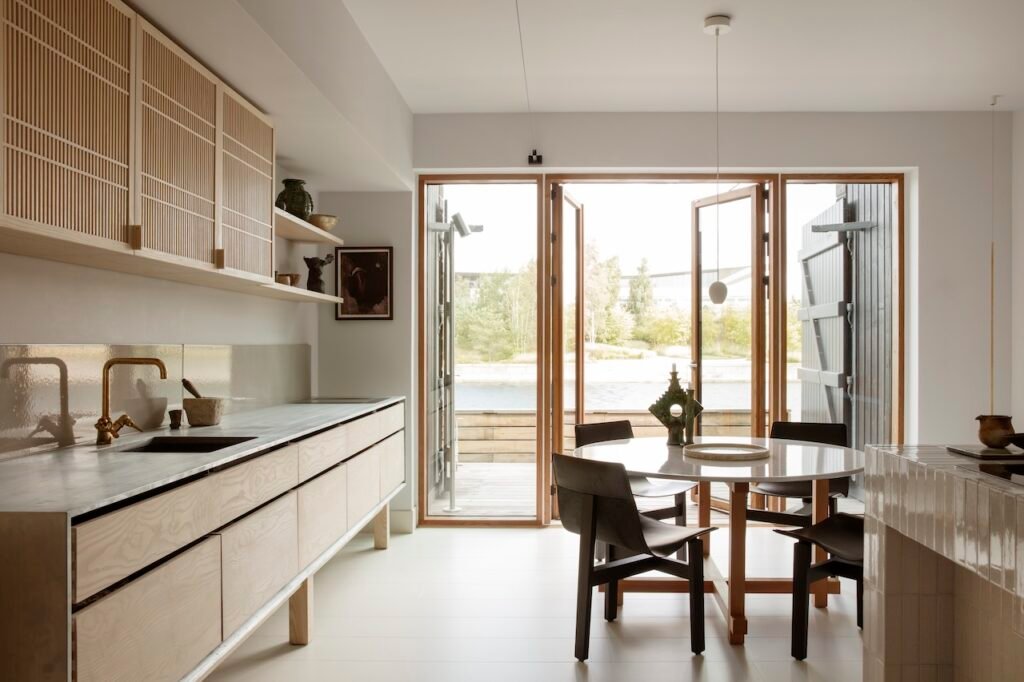
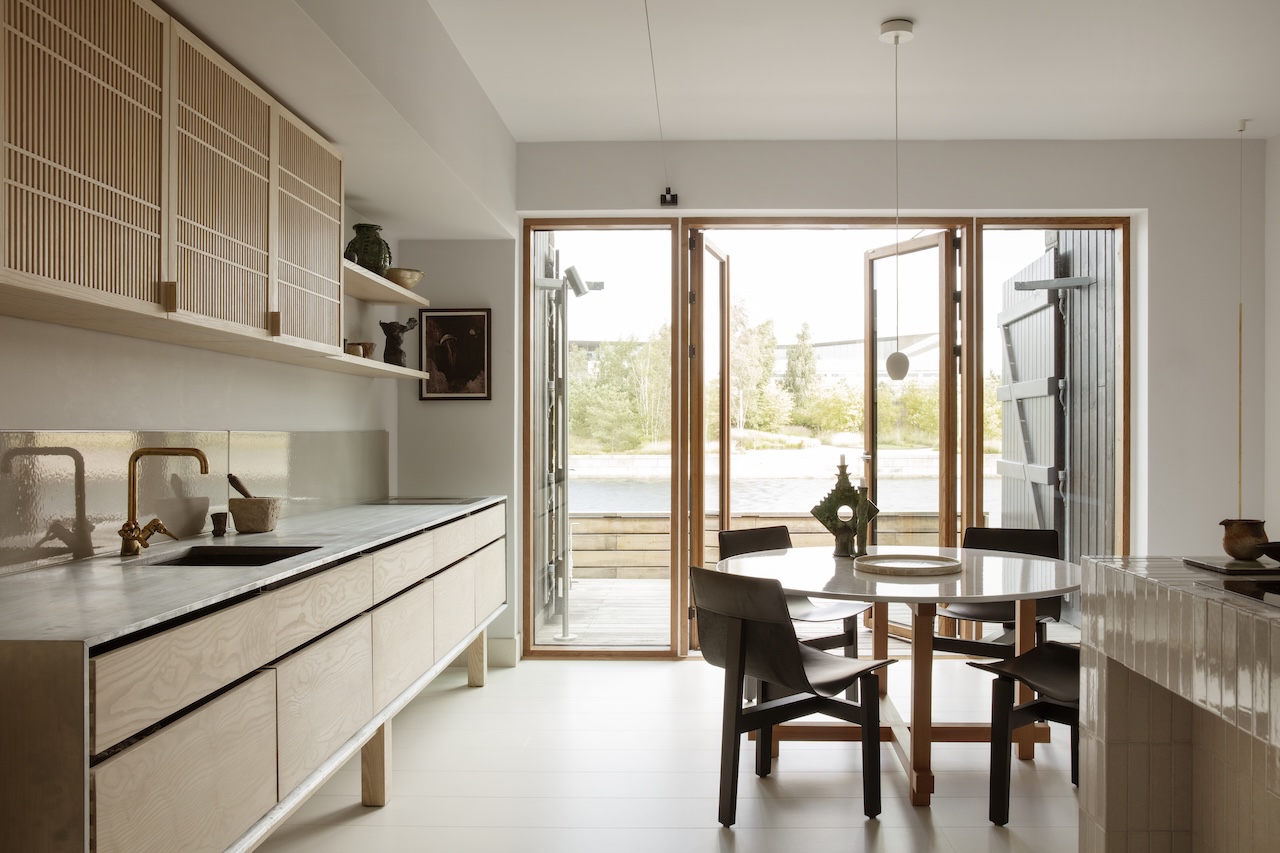
The kitchen in Josephine Yaa Akuamoa’s new home on Copenhagen’s Paper Island spent its first five years in a workspace. Danish kitchen design company Garde Hvalsøe created it for Akuamoa’s studio, File Under Pop, before moving it into her home as the space’s central element.

Photography by Heid Lerkenfeldt
Built in ash on a zinc frame, the kitchen is Garde Hvalsøe’s Solid model. Long, wide planks run across the finger-jointed drawer fronts to show off the grain. Each drawer has chamfered sides, allowing them to sit close together and read as a single plank. The upper cabinets use the brand’s Koshi-do fronts, developed with Copenhagen-based OEO Studio to combine Japanese aesthetics with Danish craftsmanship.

Photography by Heid Lerkenfeldt
Søren Lundh Aagaard, partner and CEO of Garde Hvalsøe, had previously worked with Akuamoa on another home. “Bringing something previously used and lived in into a newly built space was both a challenge and a statement,” he says. Akuamoa points to the zinc framing, the lava sink, and the pale ash. “The three materials complement each other beautifully and age with grace,” she says.

Photography by Heid Lerkenfeldt
Before the kitchen went in, the team stripped the house back, demolishing the existing kitchen and its electrical installations, the bathroom, the wooden wall panels, and the staircase connecting all three floors. The kitchen and dining area now take up the ground floor, with bedrooms on the middle level and an adaptable room at the top. One side of the house looks out over the sea and sky, and the other onto a shared garden. Garde Hvalsøe also made the bespoke ash wardrobes.

Photography by Heid Lerkenfeldt
Paper Island served as an armory for the Danish navy under Christian IV and later as a paper warehouse for the national newspapers. The new building’s contemporary architecture draws on the island’s historic harbor warehouses.
Wooden maritime gates frame the structure, and a diagonal element in the roof references Copenhagen’s harbor architecture. Akuamoa’s interior takes its cues from the water and open sky on every side of the island. The house uses nearly equal parts wood, raw stone, and ceramics. Ash runs throughout, and the limestone echoes the sandstone harbor walls and the yellow brick of the neighboring buildings.

Photography by Heid Lerkenfeldt