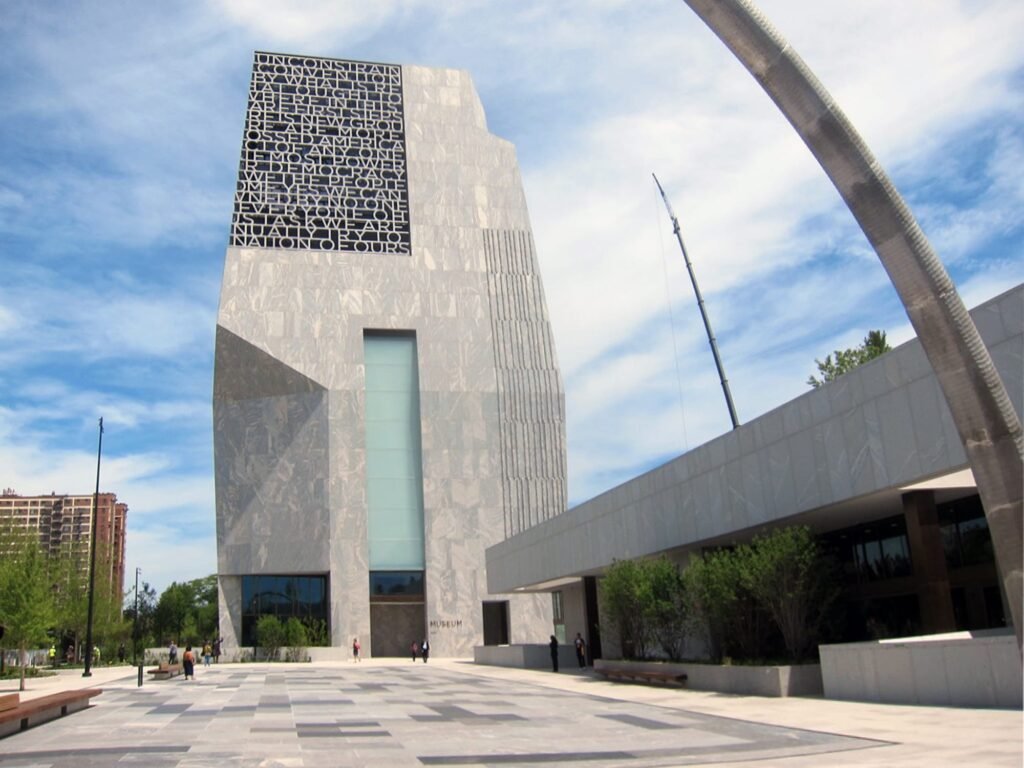
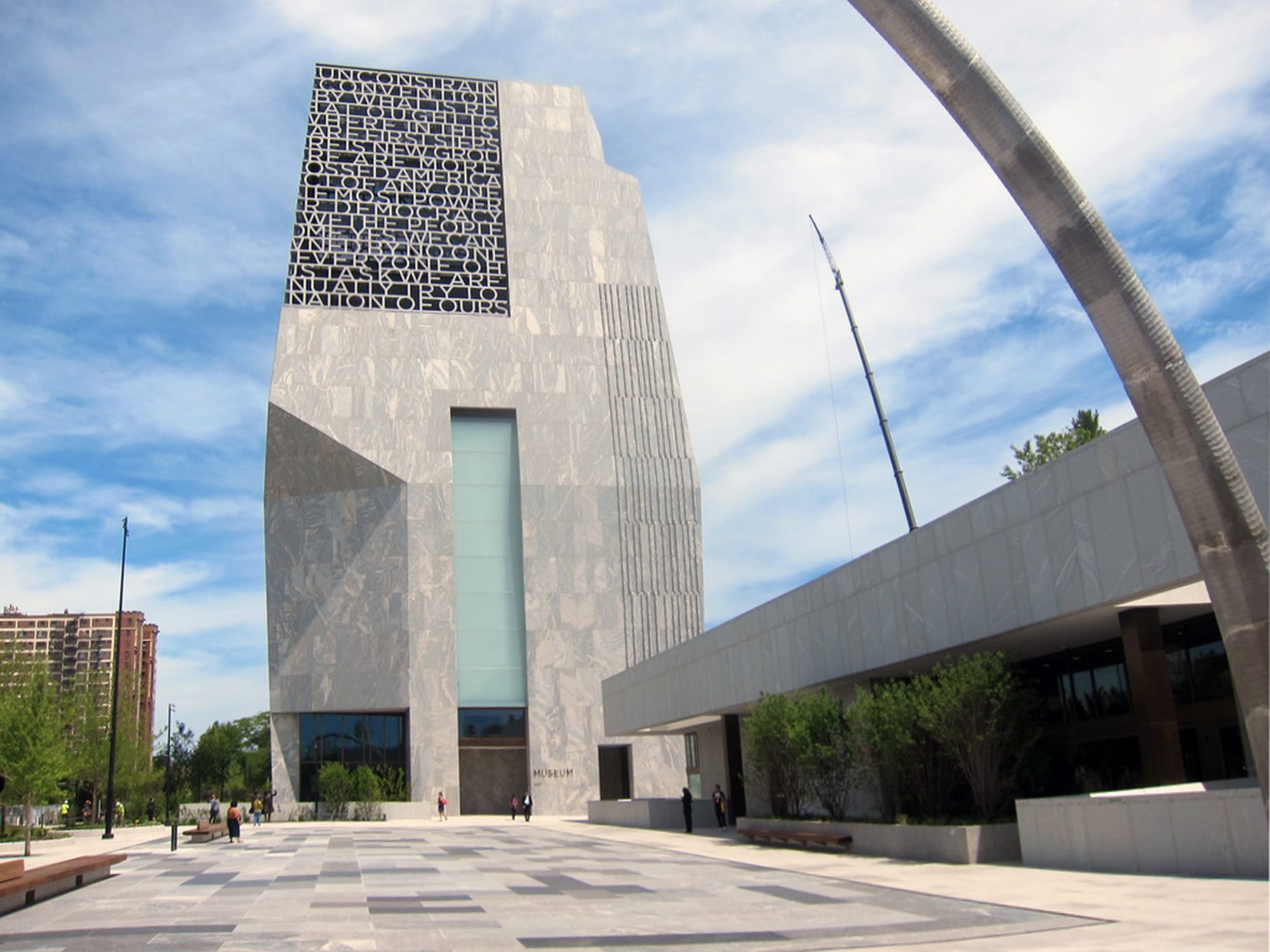
CHICAGO — I did not expect to find myself in tears while touring the Obama Presidential Center (OPC). The campus’s central building, a nearly windowless 225-foot (~68.6 m) granite tower dubbed the “Obamalith,” looks from afar exactly like what its nickname promises. And then there’s the reality that during President Barack Obama’s eight years in office, he vastly expanded and normalized the use of armed drones, wrecked Libya, failed to close Guantanamo Bay, and oversaw record-high ICE deportations.
And yet, this being Trump’s America, visiting the OPC felt like being in an alternate reality. One where people of diverse origin, ability, and belief co-exist peacefully and productively; the value of the environment, public space, human health, and the arts finds expression everywhere, for everyone; and the future appears collaborative and hopeful.
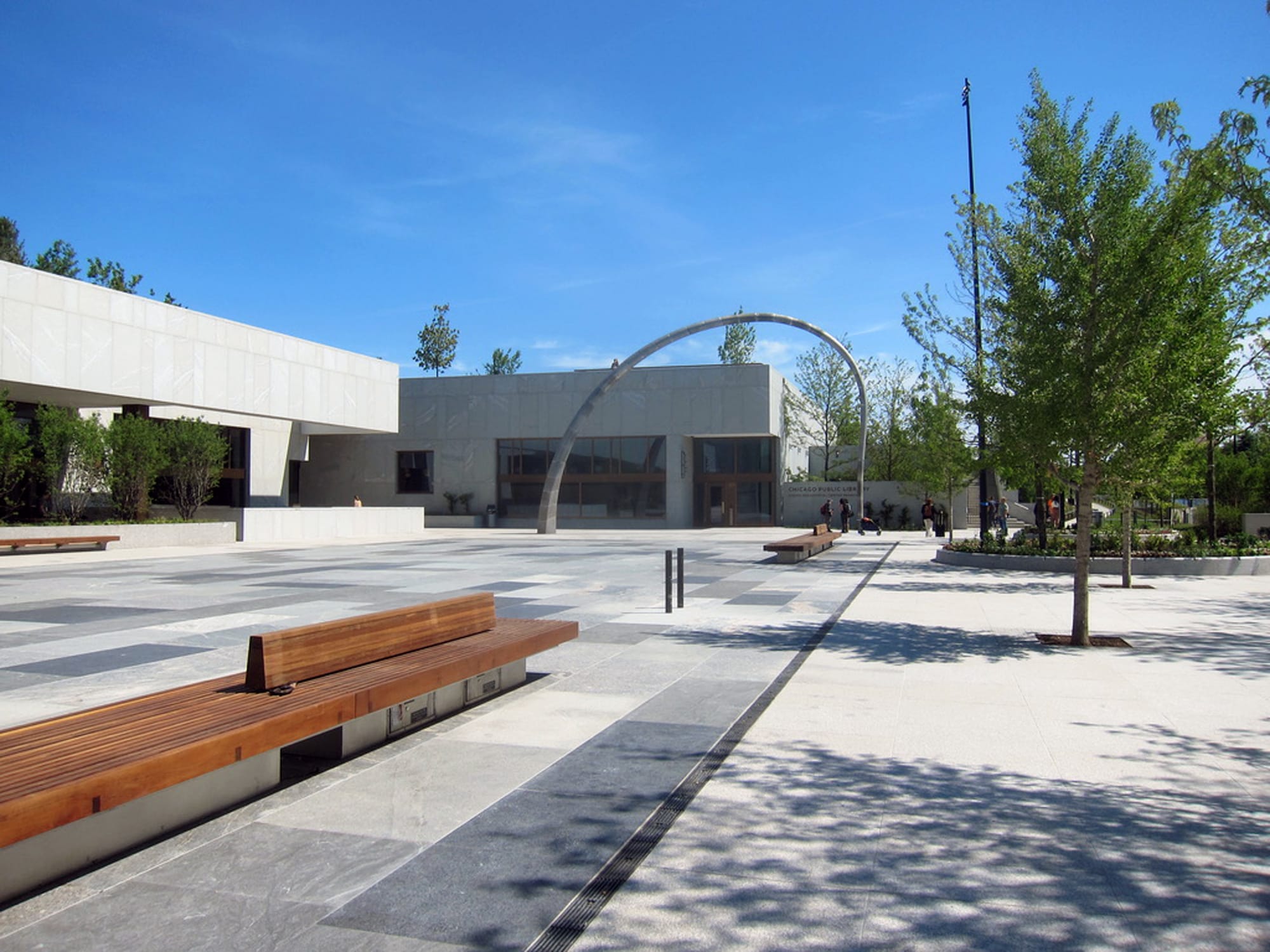
Structurally, these principles arise from a 19.3-acre (~76,890 sq m) campus designed by architects Billie Tsien and Todd Williams with landscape architect Michael van Valkenburgh. The sustainably planned grounds contain biodiverse gardens, a great lawn, picnic tables, barbecues, a sledding hill, a massive playground, and loads of trails open all day, every day, to the general public. Also free to the public are a state-of-the-art indoor basketball court-slash-community center designed by local Black-owned firm Moody Nolan; a new branch of the Chicago Public Library; and the Forum, featuring extensive common areas, a restaurant, reservable recording studios, and an intimate auditorium. Nearly every space has been named for a person who genuinely deserves the respect, from Nelson Mandela to Hadiya Pendleton, a 15-year-old Chicago honor student killed by a stray bullet just days after performing as a majorette in Obama’s second inauguration parade. The undeniably foreboding Museum Tower isn’t even all that bad up close, and it works well enough from the inside, with four ascending floors of dynamic exhibits happy to be protected from daylight.
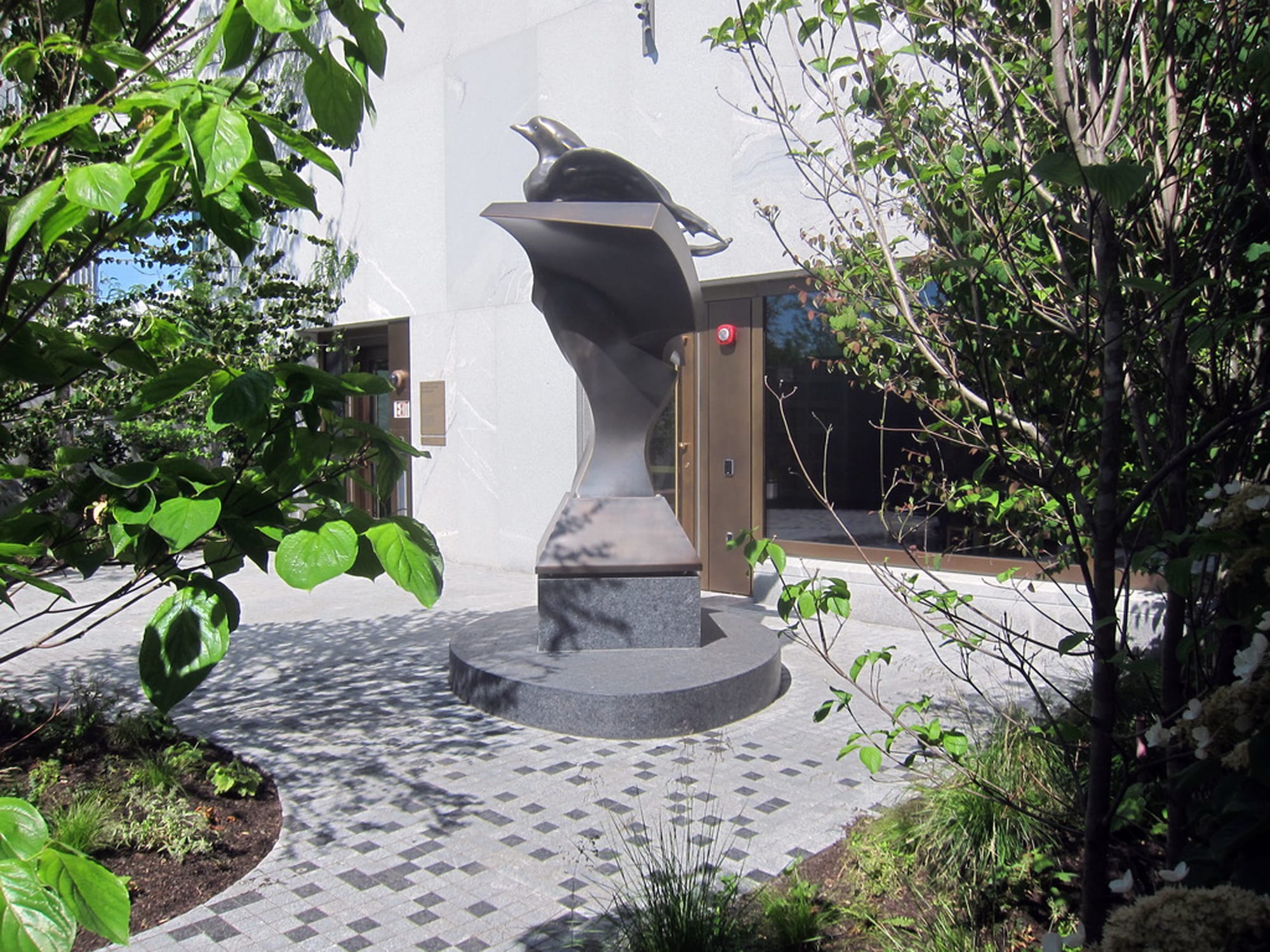
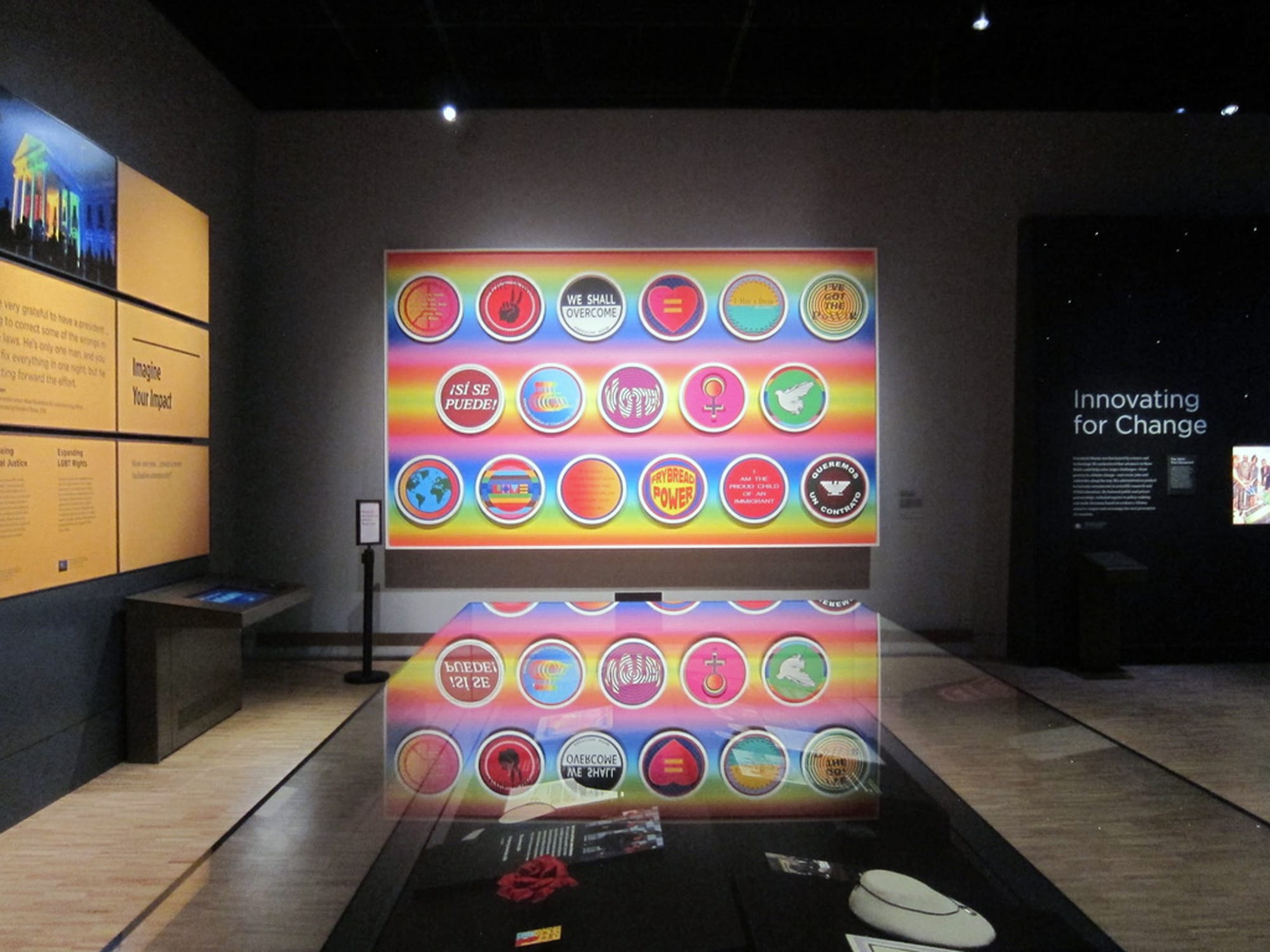
As in the Obama White House, so in the Obama Presidential Center. Michelle Obama’s focus on healthy foods and fit bodies reflects in the expansive vegetable gardens and exercise-forward park facilities. Both Obamas’ deep roots in the perennially disinvested South Side of Chicago — it’s where she grew up and he became a community organizer — explains the choice of location. Their sophisticated support for the arts, including the choicest selection probably ever hung at the White House (digitally recapped in a display on Level 4 of the museum), continues with a prominent series of art commissions spread out across the campus, indoors and out, most of it freely accessible, almost all of it very good, comfortably contemporary, temperamentally on-brand, and totally uncontentious.
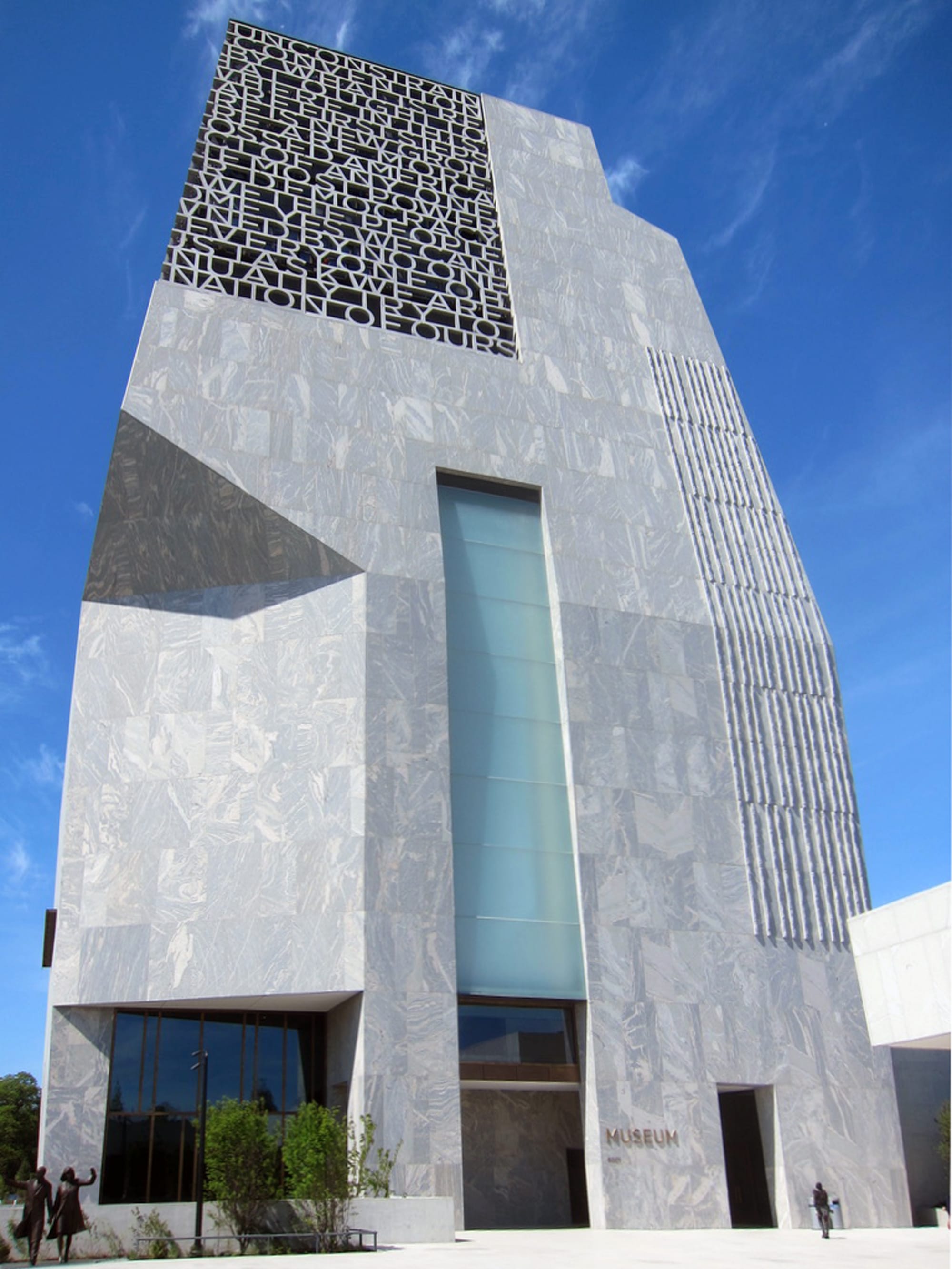
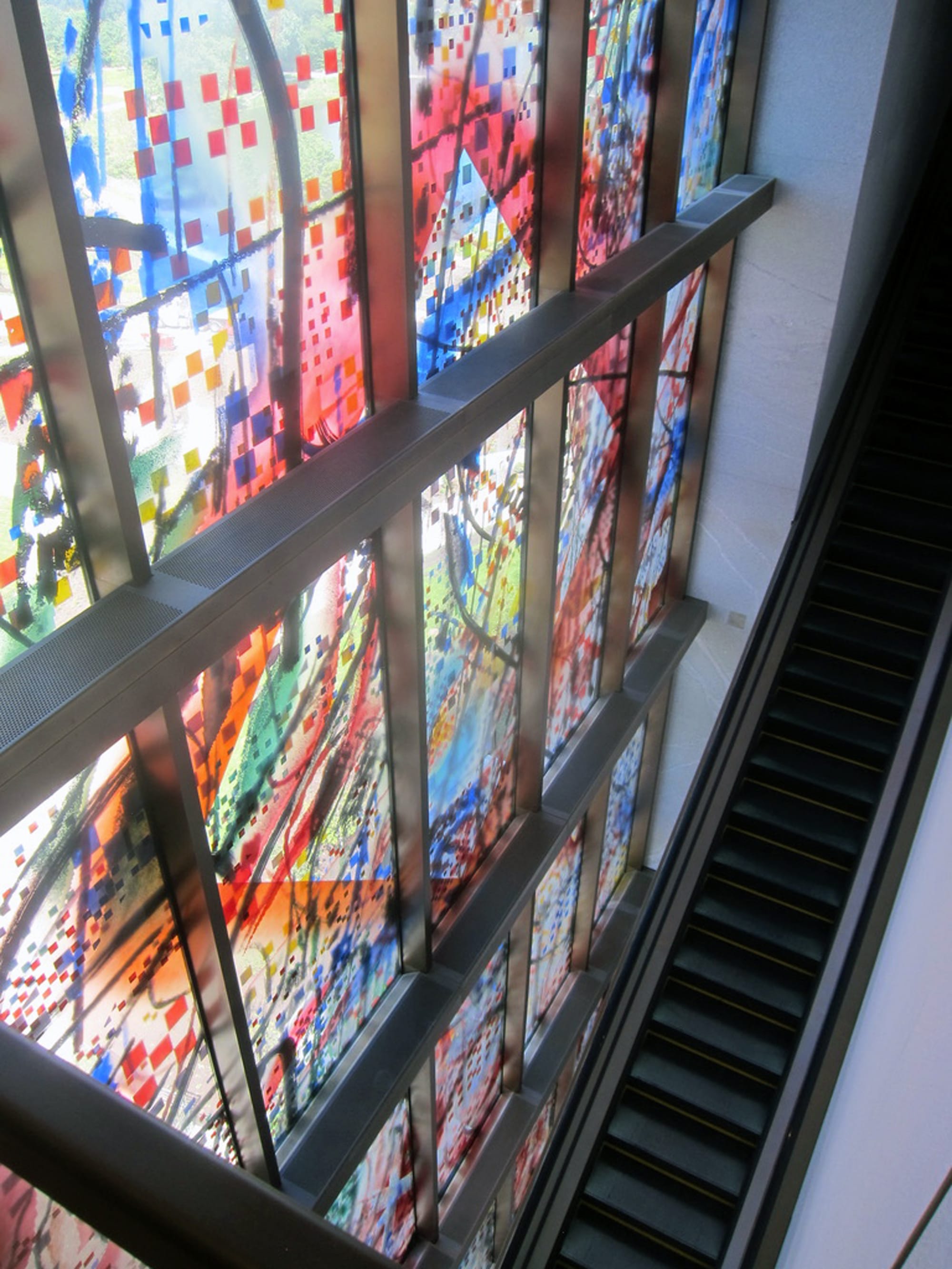
Left: exterior of the Obama Presidential Center; right: Julie Mehretu’s “Uprising of the Sun” can only be seen in its entirety from outside the Museum. Inside, visitors pass it by as they ride the elevator up between the central ticketed levels
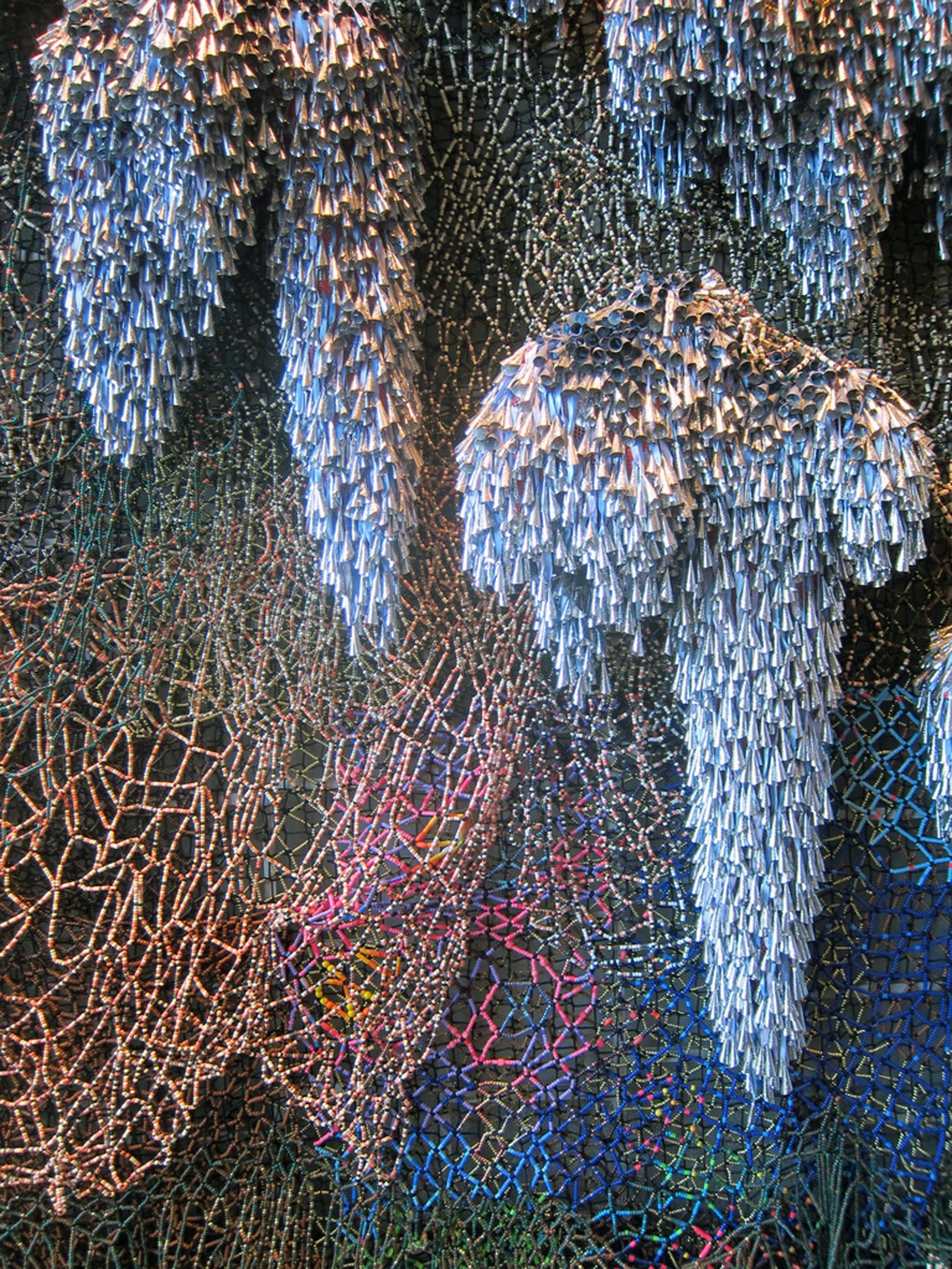
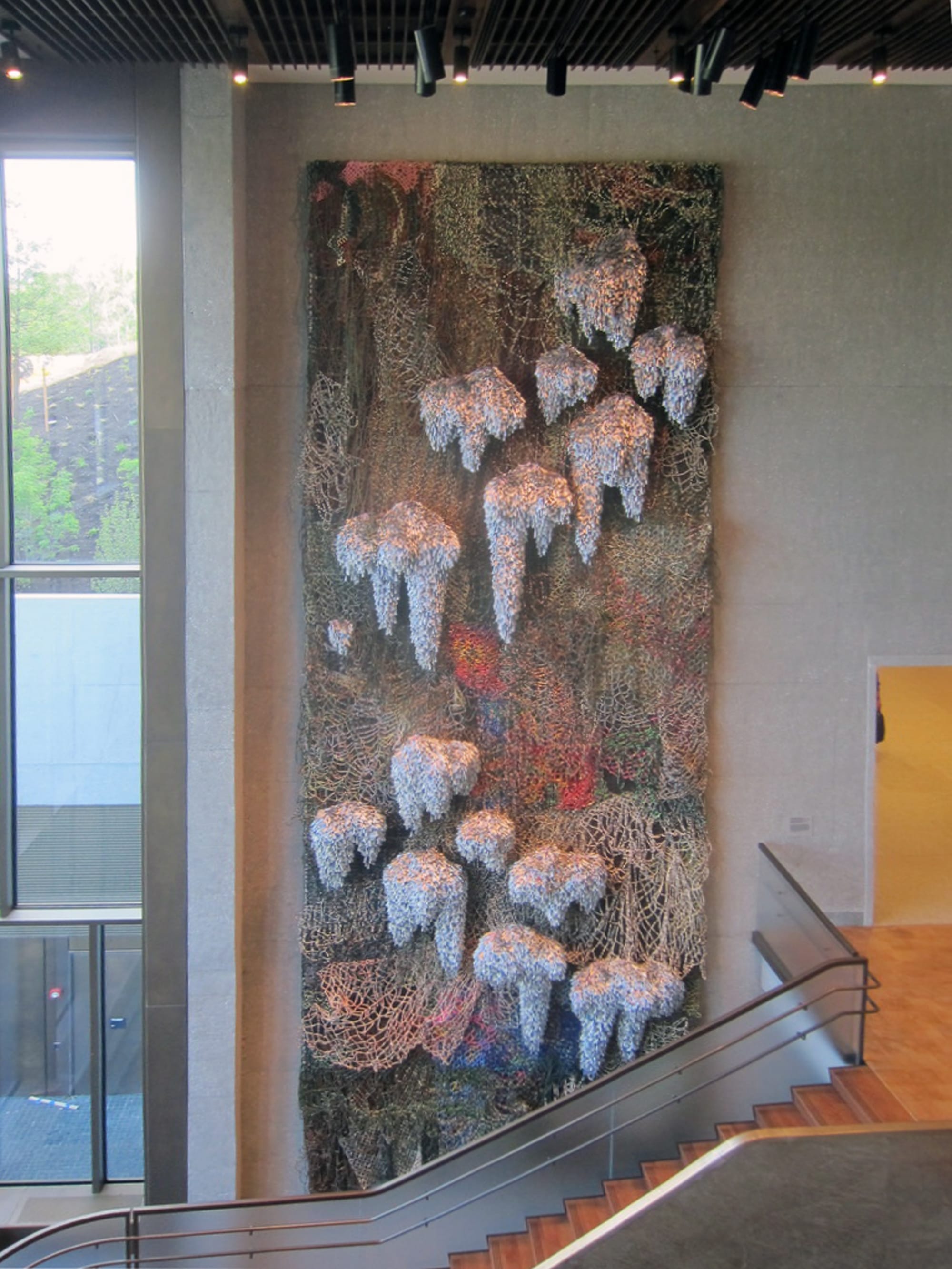
Basically, the OPC’s art program is pitch-perfect. That’s no small feat, considering that it includes 28 new large-scale artworks by 30 artists, and that the meeting of art and politics is notoriously tricky. Wise move of the Obama Foundation to have hired as curator Virginia Shore, director for over 20 years of the Art in Embassies program of the US State Department. Highlights include “Uprising of the Sun,” Julie Mehretu’s 83-foot-tall painted glass window, the sole colorful spot on the exterior of the Museum Tower. Full views of her swirling, jazzy composition — bold hues borrowed from politically resonant works by Jacob Lawrence and late Ethiopian artist Afewerk Tekle, gestural black lines all her own — can only be seen from the outside; inside, visitors catch glimpses as they ride the escalators up between ticketed museum floors. Similarly abstract and uplifting is “This Land, Shared Sky,” a multistory wall of Marie Watt’s jingle clouds, fashioned from thousands of tin cones traditionally used to ornament Indigenous regalia, floating against a background of dense rainbow nets strung by Nick Cave with millions of pony beads. Over the main plaza, Martin Puryear curves a monumental stainless-steel beam, surely the most humane grand arch ever. Inspired by a Martin Luther King Jr. quote about the moral universe bending toward justice, it rises as much with strength as with imperfection, resolutely hand-hewn.
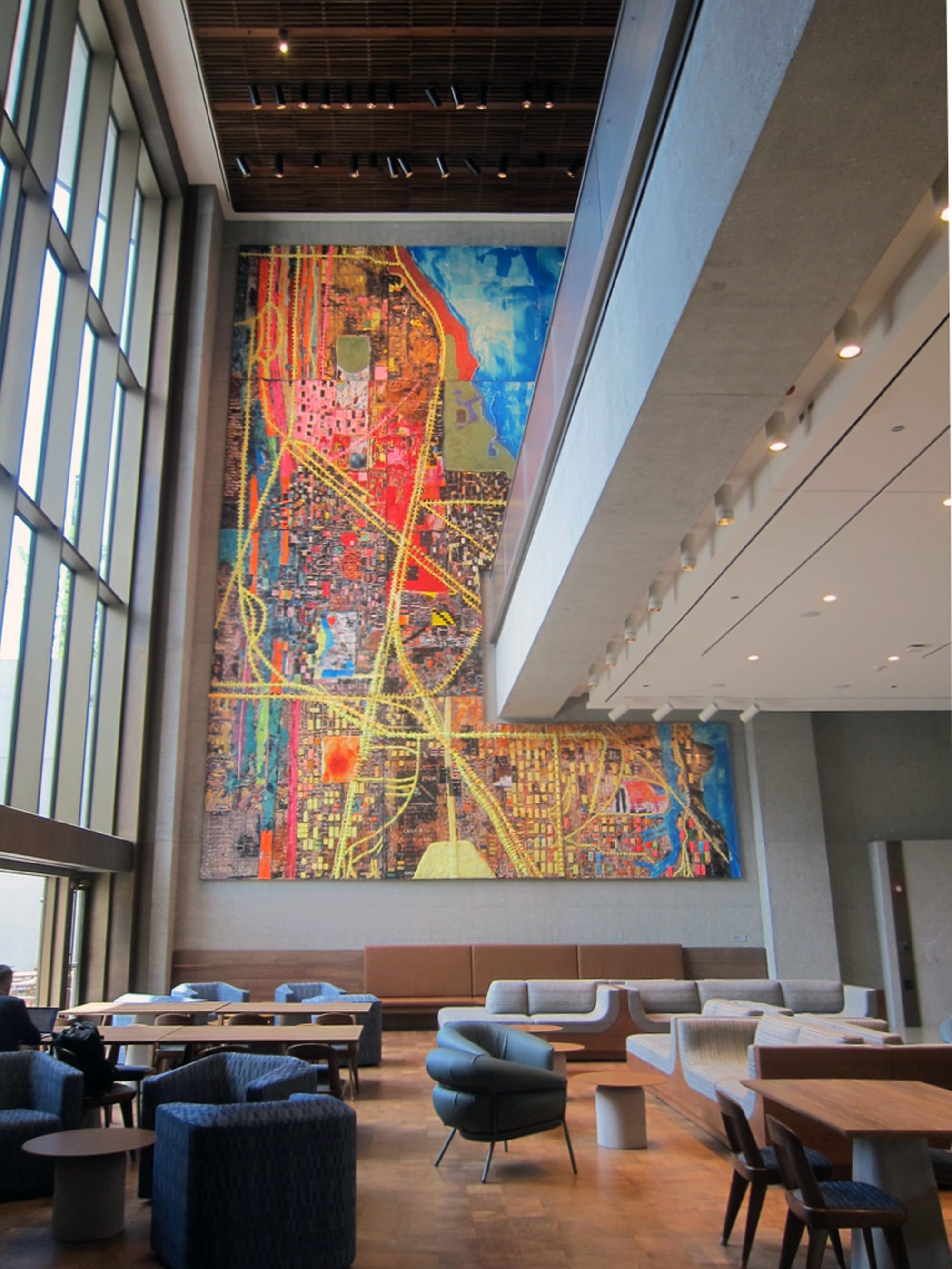
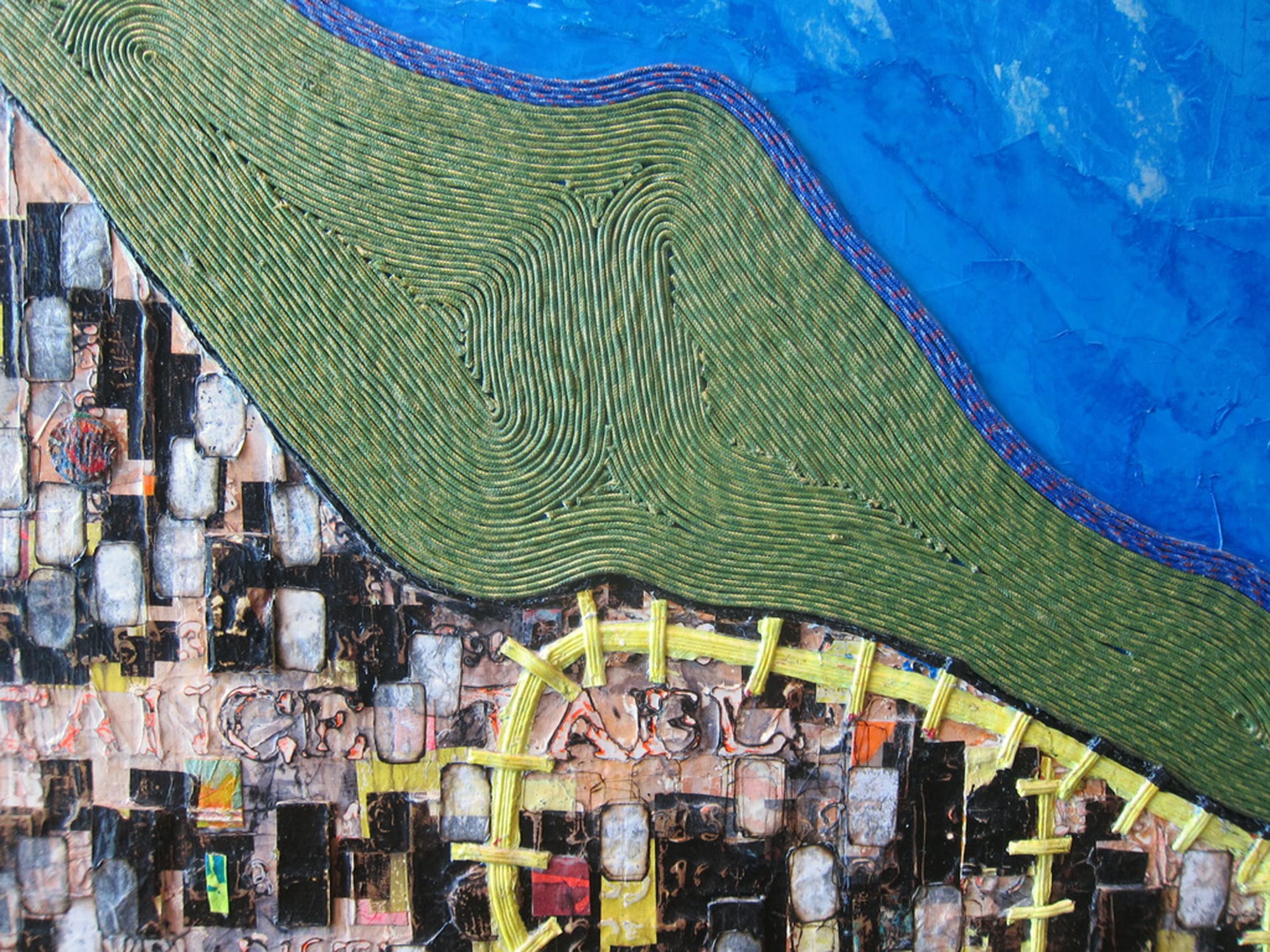
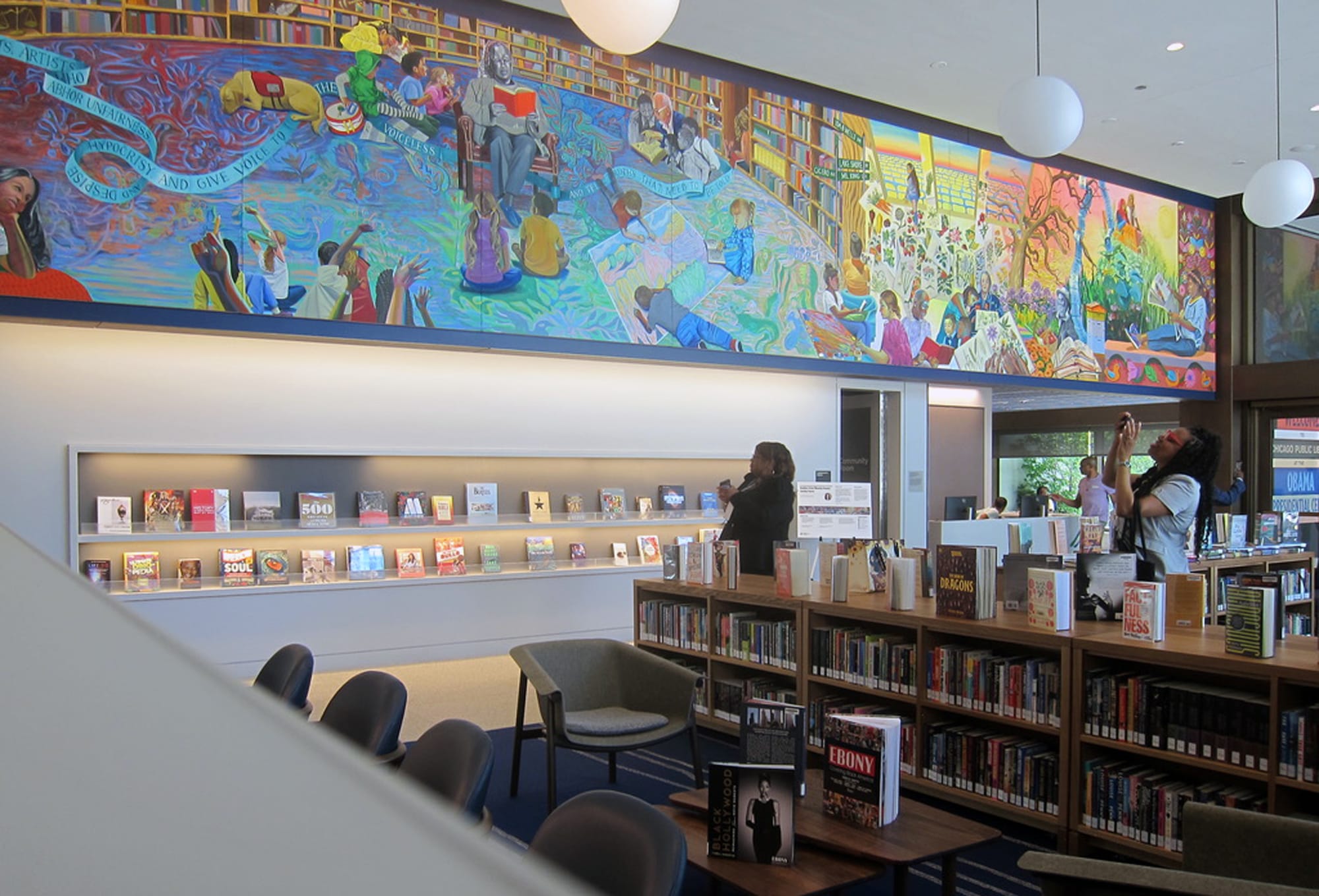
Two commissions promise to be crowd favorites for their unequivocal embrace of Chicagoland. Mark Bradford’s magnificent “City of the Big Shoulders,” a 38-foot-tall (~11.6 m) painting that wraps around one of the tower’s atriums, uses his signature palimpsest of materials — billboard fragments, hairdresser endpapers, salvaged posters, nylon rope, and more — to map out Chicago from I-55 down to the Indiana border, with plenty of azure swirls for Lake Michigan. For those unfamiliar with area geography, that’s the South Side, and the South Side only. Aliza Nisenbaum’s warmly illustrated frieze for the branch library envisions the wonders of learning and imagination found in such a place, with references to such local cultural icons as Imagist Roger Brown, outsider artist Joseph Yoakum, and a beloved Georgia O’Keeffe cloud painting that hangs in the Art Institute.
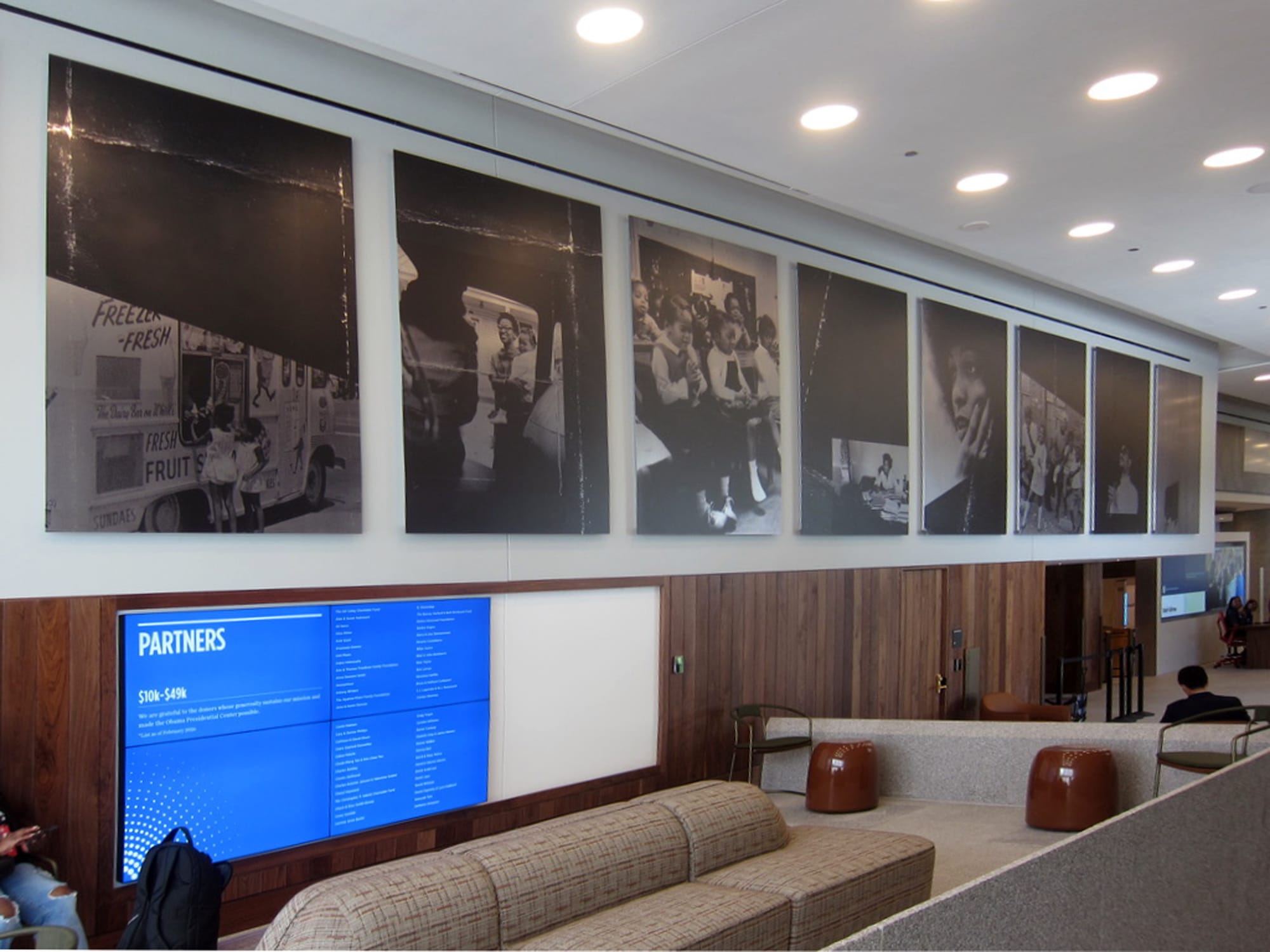
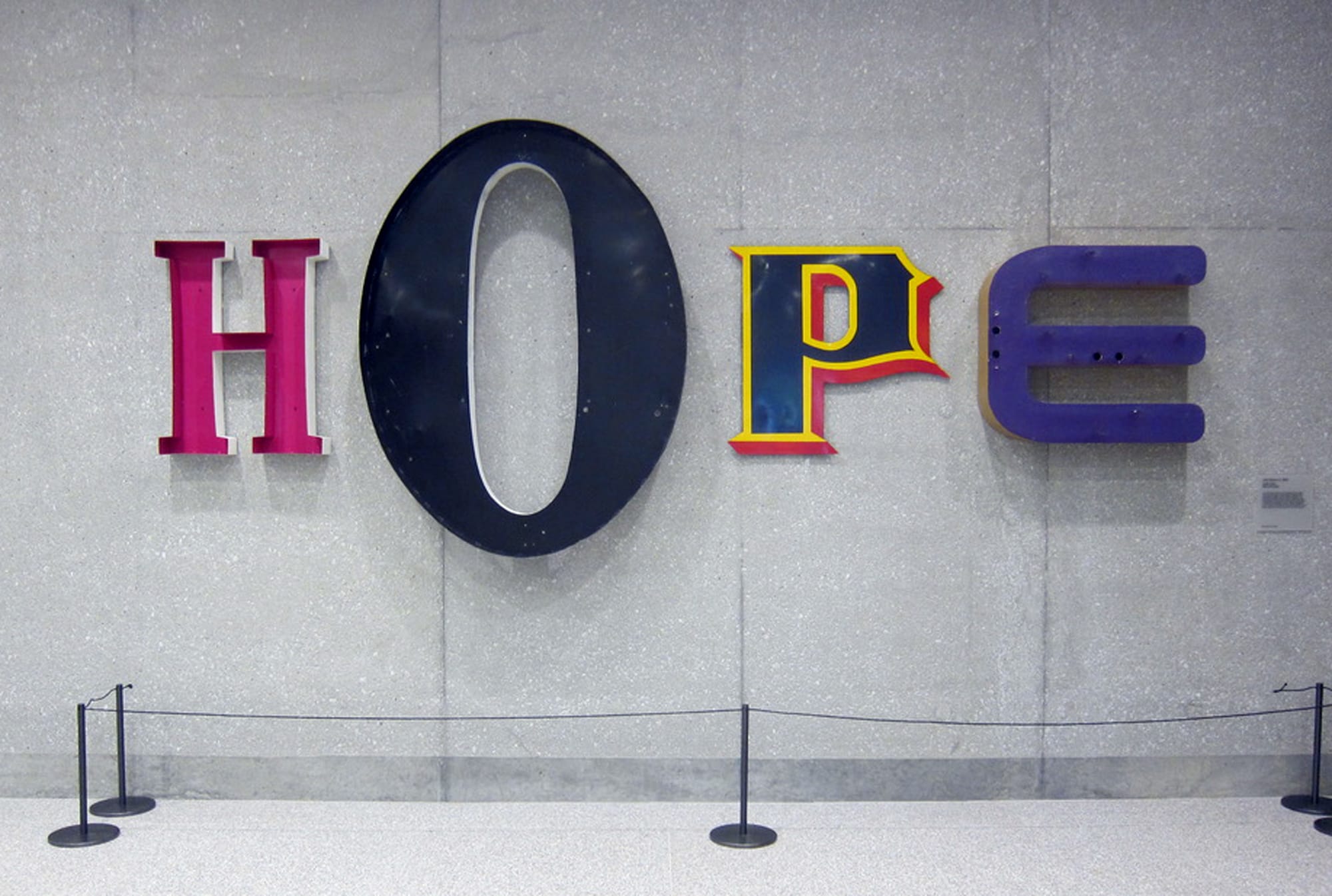
What else? Some works, certainly, drift toward the pretty or predictable. Jack Pierson’s “HOPE,” four vintage sign letters spelling out the word most associated with the Obama brand, is a no-brainer, installed first thing in the museum lobby. Spencer Finch’s sprawling mural of colored ceramic tiles, ostensibly in tones chosen by Barack himself to represent his four formative cities (Nairobi, Chicago, Honolulu, Jakarta), looks like nice bathroom backsplash. Theaster Gates phones it in, but elegantly, with a long line of classy, fun photographs featuring Black women and children, selected from the Ebony and Jet archives, and gorgeously printed onto aluminum panels lining the upper walls of the Forum atrium.
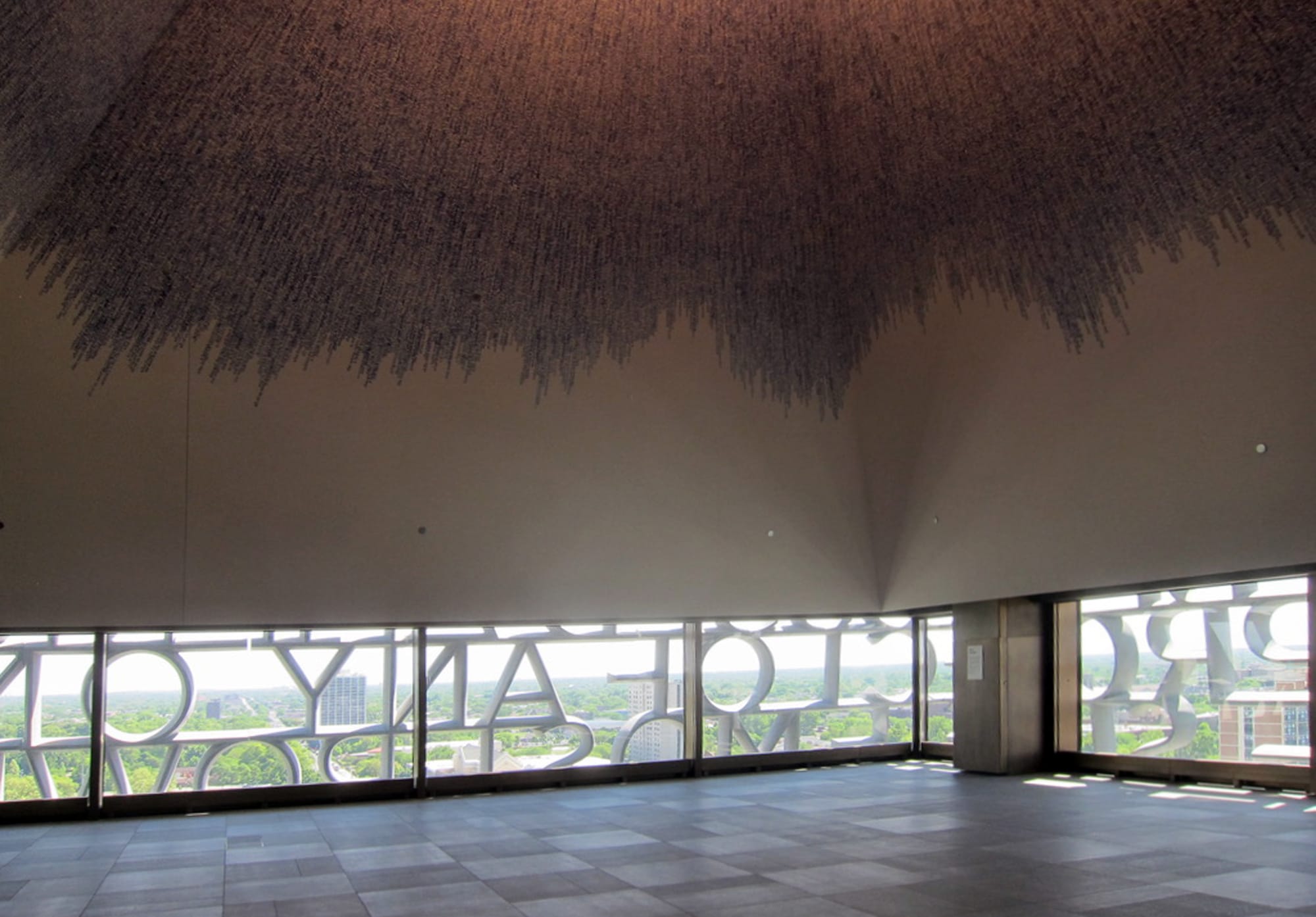
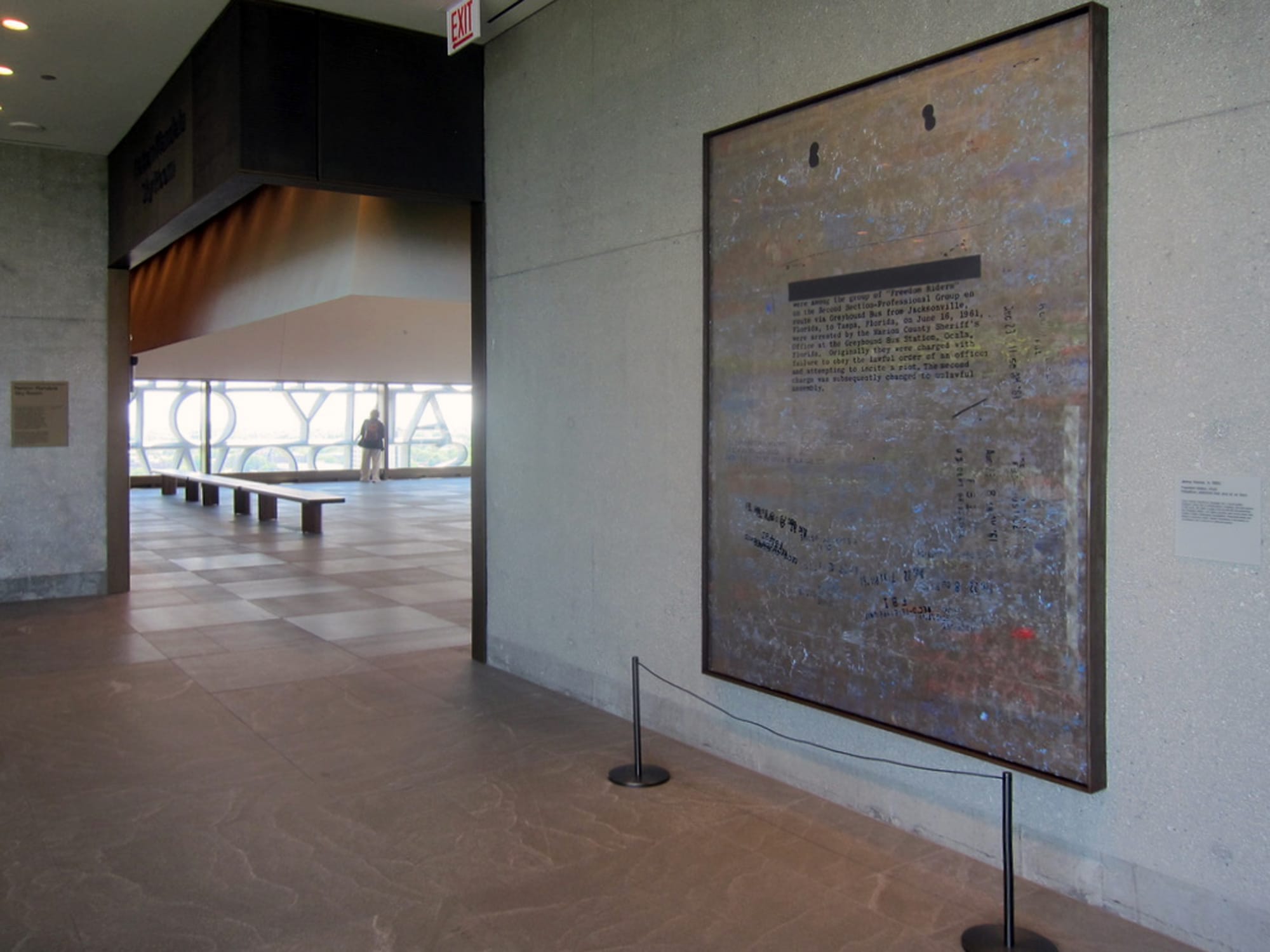
But in a masterful act of civic-mindedness, the top floor of the Museum Tower is free and open to the public. There, visitors will encounter a disarmingly beautiful text piece by Jenny Holzer: a declassified Civil Rights-era document from the FBI detailing surveillance of the Freedom Riders, blown up and rendered in platinum leaf that glimmers like the inside of an oyster shell. Beyond lies one of the most exquisite spaces in the entire city. The Sky Room features panoramic views not of the Loop or the Lake but of the South and West Sides, seen through some of the 5-foot-tall concrete letters that fill the top quadrant of the building with words from a speech Obama gave marking the 50th anniversary of the Selma to Montgomery marches against racism. From the pyramidal ceiling rain down tens of thousands more words from the former president, stamped in blue by Idris Khan, like a storm of belief and intelligence. Being there felt like being inside President Obama’s brain, seeing out through his eyes, a situation I experienced as radically inclusive, pointedly visionary, wildly inspirational, and unsettlingly uncanny.
The Sky Room marked the apex of my day at the Obama Presidential Center, and it clarified the spectacularity of the campus’s eloquence, tastefulness, and hubris. This is the Pyramids of Giza, styled for democratic rather than dynastic rule. I’d choose it over Trump Tower any day. But the success, and the palpable necessity, of the OPC connects inextricably to the fact that Hillary Clinton lost to Trump in 2016 and Kamala Harris lost to him in 2024. That’s startlingly circumstantial for an $850 million project described by the architects as a “500-year building.” How would I judge it if I had not spent the last many years living under the Trump Administration? I wish I knew.
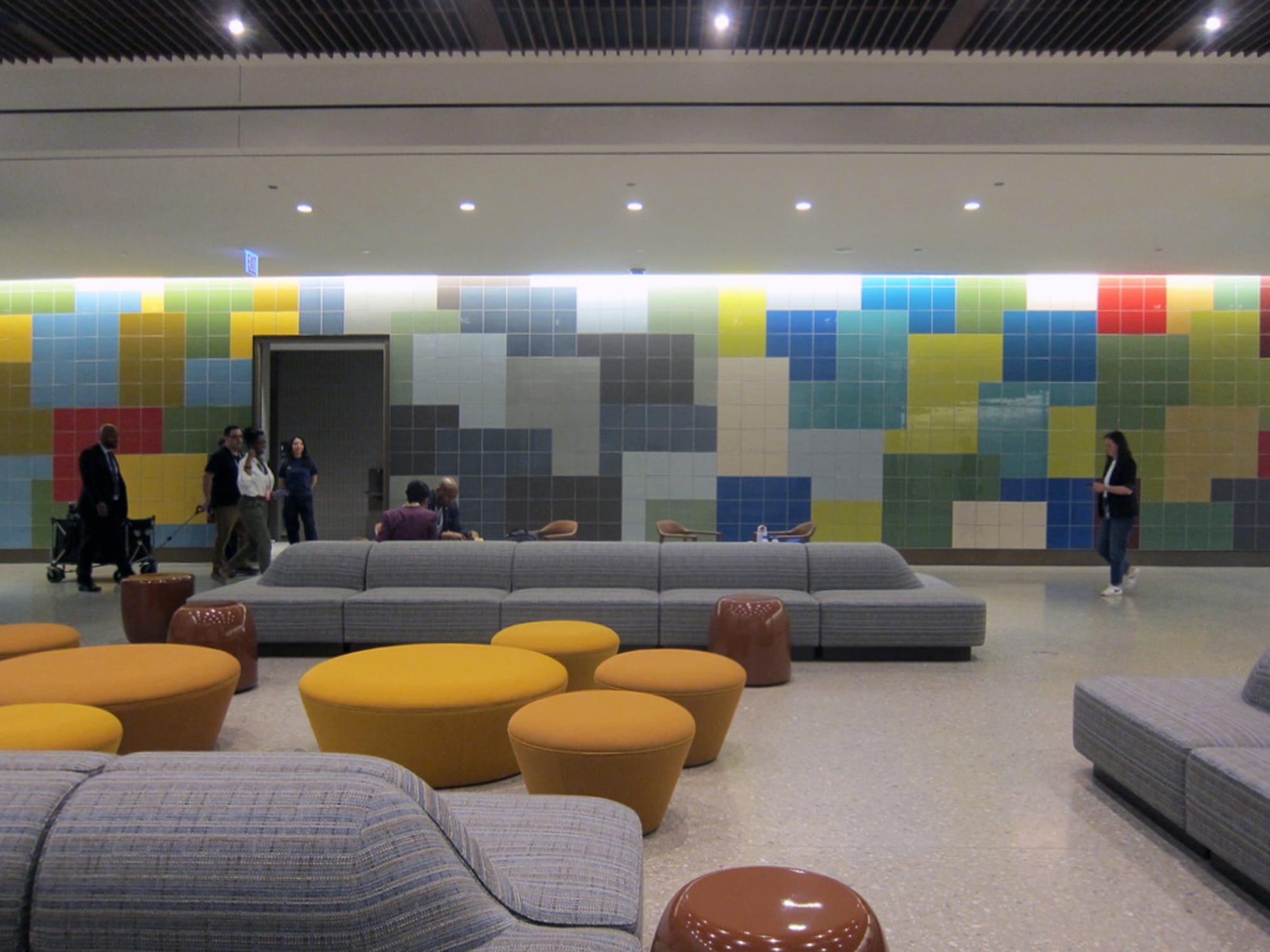
On the lower level of the Forum, between the bathrooms, Spencer Finch presents “Memory Landscape (Nairobi, Chicago, Honolulu, Jakarta),” a mosaic of ceramic tiles in colors chosen by President Obama to correspond with his formative locations
The Obama Presidential Center (6001 South Stony Island Avenue, Chicago, Illinois) opens to the public on June 19.