This is not Homer’s Odyssey. Let’s get that out of the way. As a Homerist, I had to remind myself of this throughout a film that reduces a narrative of 12,000 lines to just under three hours of airtime. The cuts are significant for someone who knows Homer well: The entire Phaeacian episode is gone; Matt Damon’s Odysseus never meets his father. Where the Homeric epic splits and gives its hero 12 books on Ithaca, the movie is about two-thirds journey and flashback with under an hour once Odysseus returns home.
The middle of Christopher Nolan’s The Odyssey (2026) delivers visceral discomfort. When the witch Circe (Samantha Morton) serves her transformative feast to Odysseus’s companions on the island of Aeaea, the camera tracks their voracious hunger, following their shift from greedily slurping, increasingly frantic men into squealing pigs. Circe physically wrests them out of one shape into another, later commenting that their appetites made them what they truly are.
This scene bears the promise of what the magic of modern film can do for ancient myth. It is physically affective, making vivid what could only be imagined before. And it also allows for the adaptation of the story: This Circe has been abused by travelers before. The animals who lurk on her island are the men who have met their comeuppance.
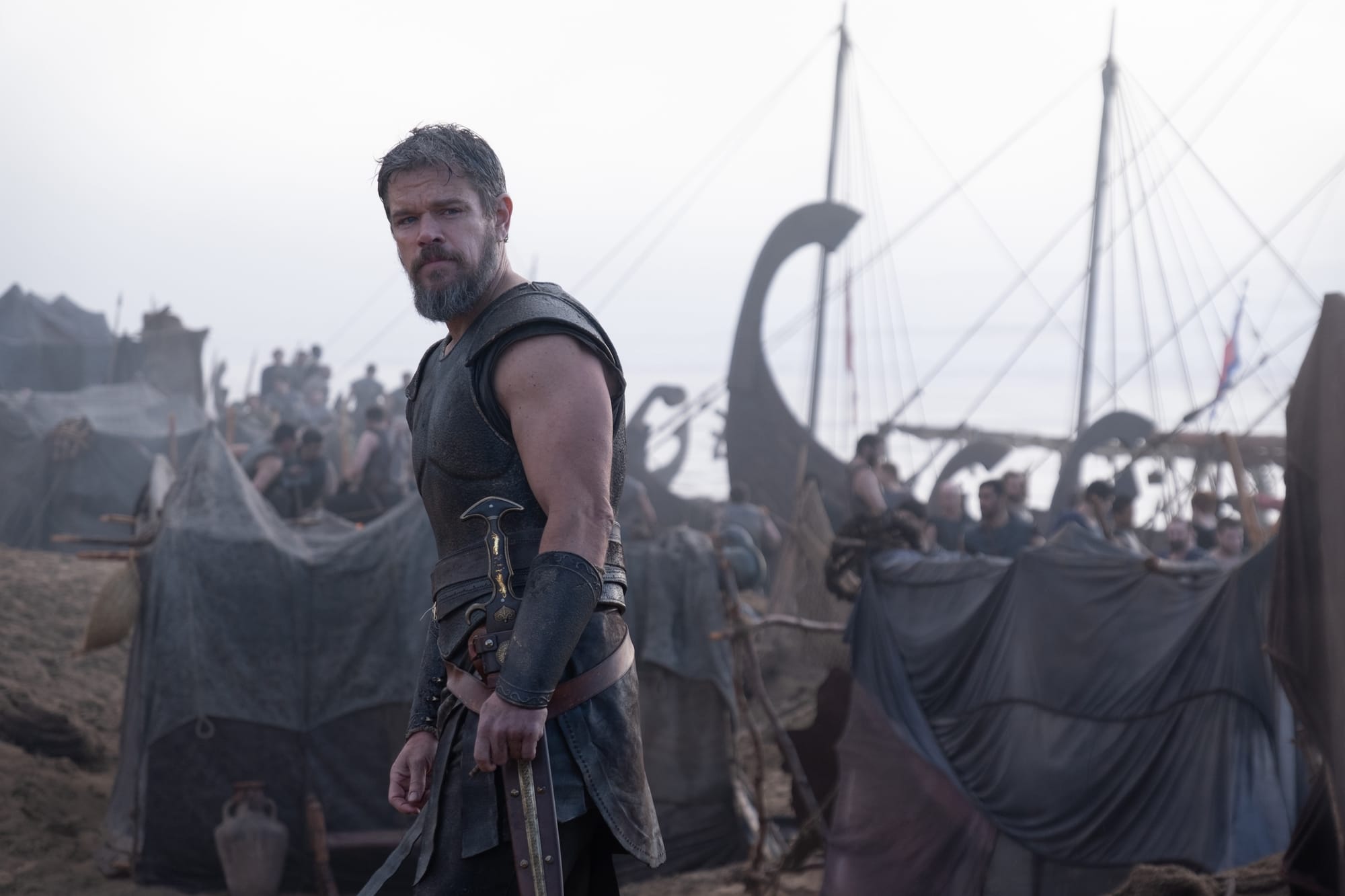
Stories of Odysseus are some of the most adapted and retold in the history of Europe and the so-called West. We keep returning to him not only because of his flexibility and adaptability, but because he is the closest of the heroes to us mortals. Odysseus stands in between us and the myth. When we remake him, we are also remaking the way we see ourselves in the mirror of the past.
Revenge, both its pursuit and consequences, is at the core of the Odyssey through time. Nolan picks up on one of the epic’s most important themes: human responsibility for our own suffering. In a cinematic world bereft of the gods that animate Homer, this is one of the threads that binds the narrative together, extending from individual choice to civilizational collapse.
Homer’s power is rooted in language — the song of Greek epic built through repeated notes that develop elegant contrasts through resonance and dissonance as the story unfolds. Nolan’s Odyssey relies on sound rather than words to worldbuild. It is loud and visually capacious. But his language leans away from the poetic. Conversation is prosaic and peppered with epigrammatic statements that could be proverbs or taglines for the film: “part of the greatest civilization ever known,” “the gods help those who help themselves.” The Sirens sing “the song of all the promises I failed to keep,” while Damon’s Odysseus laments, “It’s not always an easy thing, homecoming.” Soundbites rather than poetry.
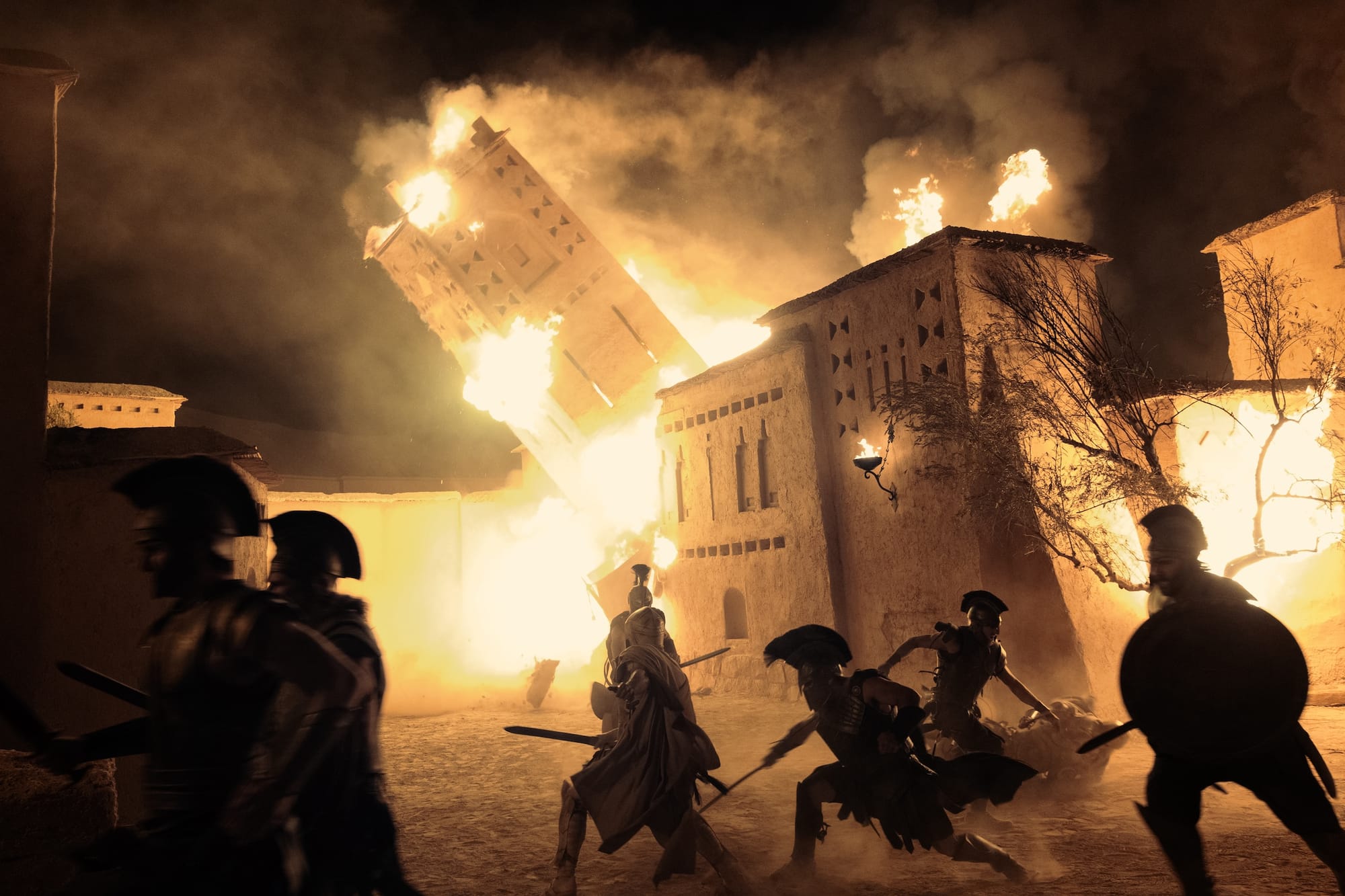
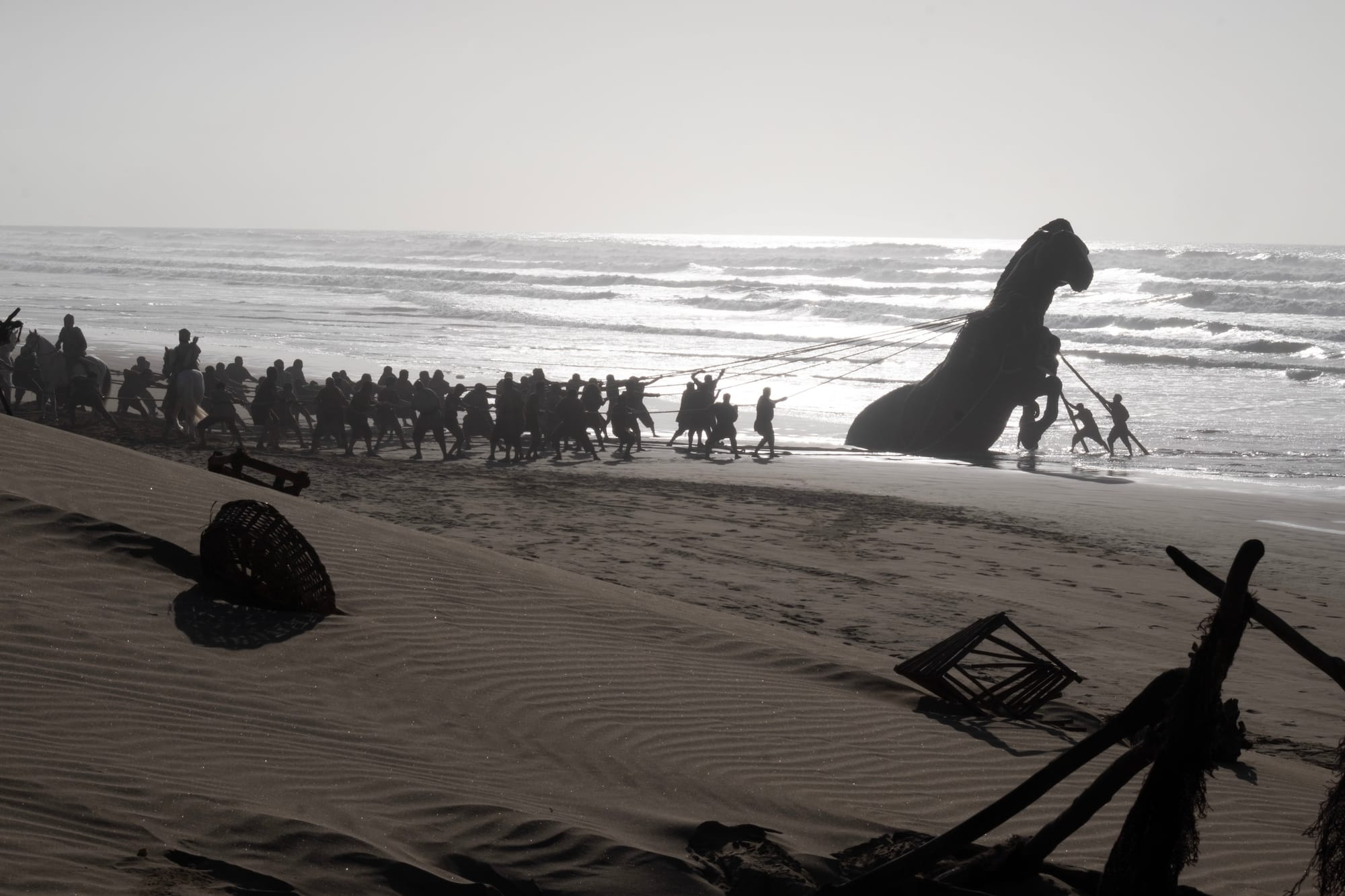
In Nolan’s hands, however, poetry emerges through image. The action sequences are breathtaking, as with the squirming pigs of Circe’s scene and the inventive use of the Trojan horse. The archery contest is well-paced, although the subsequent slaughter of the suitors is chaotic in a way that makes the calm, thudding murders of the same scene in The Return (2024) seem far more effective.
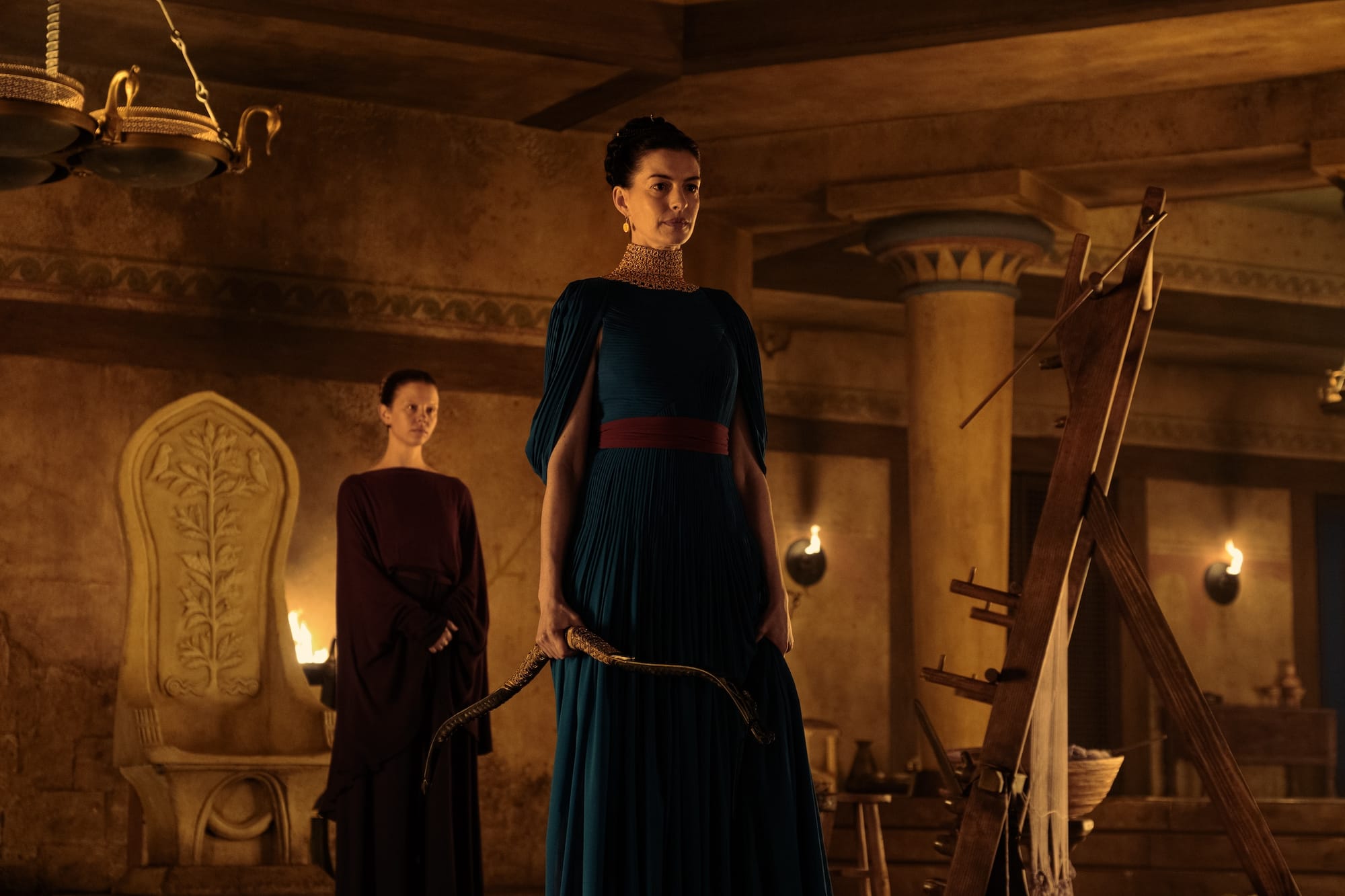
Nolan faced a difficult task in the narrative structure for this film. Where ancient audiences would have been familiar with plot points and conventional motifs, he could not rely on modern audiences to know about the Trojan War or other elements from the Odyssey, such as the hero’s dog Argos or his scar suffered on a boar hunt. The most epic feature Nolan adapts to address these issues is a ring structure that opens with Odysseus and Penelope (Anne Hathaway) before the war, establishing components for the return home. Instead of having Odysseus tell his own story to the Phaeacians, the hero spends his seven years with Calypso (Charlize Theron) eating the lotus flower, obliterating his memory. The story comes back to him piece by piece, as present and past overlap in the telling.
The flashback narrative is not Homer’s innovation, but it is in a way Homeric: It invites us to think about the relationship between the past and the present. Early on, Odysseus is told that his cleverness will destroy him, and we watch him struggle while realizing all his men are lost and recalling the sack of Troy. Damon’s Odysseus offers a take on the traditional hero that is rooted in the generational trend to see him as a traumatized veteran — although, to be fair, he also rings of a modern aging film hero who has a “particular set of skills.”
The story of returning home has long been linked to vengeance. In American cinema, Clint Eastwood’s Unforgiven (1992) is often regarded as the Western genre’s best Odysseus; but our modern Odysseus has more in common with John Rambo in First Blood (1982). Whether the influence comes from Jonathan Shay’s book Odysseus in America (2003) or a more immanent cultural acceptance of homecoming warriors as victims of trauma, Nolan’s Odysseus joins Ralph Fiennes’s from The Return and the central figure of Jorge Rivera Herrans’s EPIC: The Musical (2025) as a haunted figure, trying to understand what happened to him at war.
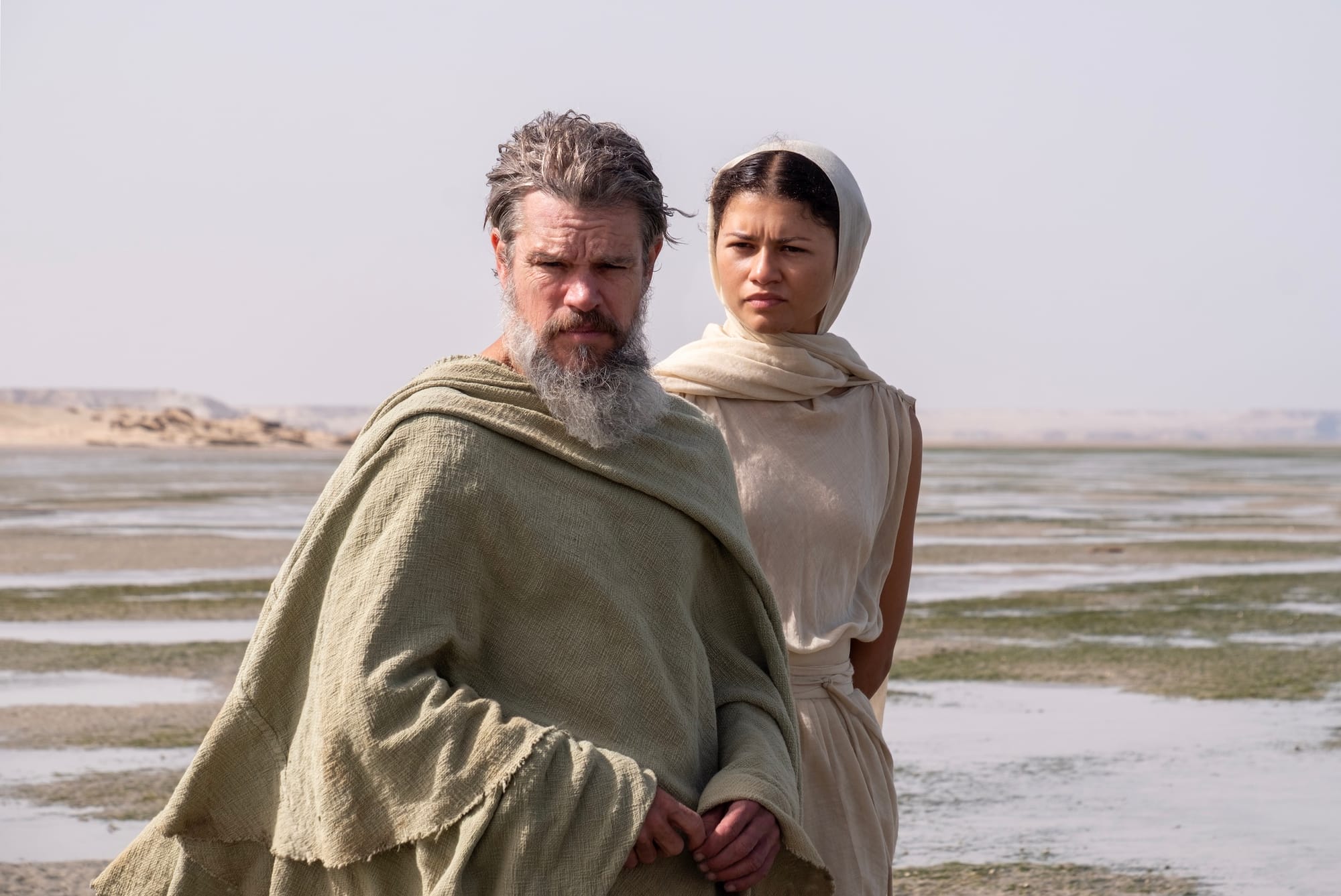
In a way, this too is Homeric. Misreadings of his Iliad and Odyssey often fail to grasp that Homeric heroes are not good guys. Achilles and Odysseus bring suffering to themselves and others. As Odysseus, Damon might be too likeable, but he tries hard to be gruff, at times inconsiderate to his men and even rude. But we learn too that he has a conscience: He is haunted by the success of the ruse of the Wooden Horse, that trick that brought down the walls of Troy. When he witnesses the unmitigated slaughter, he begins to see Athena (Zendaya) in the form of a young girl whose throat was cut during the carnage. Regret comes through stronger in Nolan’s version than in Homer’s.
Fiennes’s Odysseus or Sylvester Stallone’s Rambo bring all of that violence home. When this Odysseus returns to Ithaca, he does his fair share of killing, but instead of murdering all the suitors and then facing their families’ wrath, Damon spares dozens of men who kneel to him. Then he declares himself an exile for killing men in his home, makes Telemachus (Tom Holland, trying his best) king, and sails into the West with Penelope, an endless honeymoon echoing the journey he was supposed to take after the end of Homer’s poem.
What, then, do we have in this hero? He is a man who committed terrible acts of violence abroad. He suffered for a long time because he felt bad about it. He came home and rescued the princess in the castle, enacting just enough violence to show who’s boss, and left again because it was the right thing to do.
If this summary seems a bit too simple, it is because the movie pulls its punches in critical places. We hear about the violence meted out by the rage of the Greeks at the fall of Troy, but the Trojans who die are nearly all masked and anonymous; Odysseus’s emotional response seems almost pat as a result. Any Odyssey retelling should be steeped in moral ambiguity, but Nolan’s contains suitors who are nearly cartoonish in their villainy and a hero who, in the end, has a good heart and a wife who truly loves him. The Homeric Odyssey’s tale is one of testing and exploring identities — a nostos (homecoming) is a process of reunions and storytelling. This is a tale of a man affected by trauma, but without any sense that it changed him at all.
There’s been a lot of noise about how progressive this movie is and the anachronisms of its images. The imagery is fantasy and was rarely distracting for me. Cultural blending, like the repeated invocation of “Zeus’ Law” as a banal Judeo-Christian “do unto others,” is far more jarring. Ultimately, despite virtuosic filmmaking, this is a conservative film. Nolan actually reduces the roles for women and deprives them of heroic lives themselves by omitting the catalog of heroines Odysseus recites in Book 11. Stranger is the choice to have Helen (Lupita Nyong’o) mutilated. And while interesting, explaining Circe’s acts as a result of rape is reductive. To include these acts of violence while omitting the hanging of the enslaved women and rendering a merciful, law-abiding Odysseus at the end is to depart from the very complexity that makes Homer’s poem resonate nearly three millennia later.
Ultimately, Nolan’s Odyssey anticipates his modern audience, one perhaps less tolerant of ambiguity than Homer’s but still willing to confront how we relate to our own suffering. If there’s a twist to the film, it is a new villain: Multiple characters invoke the ambiguous Sea Peoples, that catchall name for the migration and waves of attacks that brought an end to an age, popularized in recent years by historian Eric Cline. In the film, we learn that the Greeks returning home are these very same marauders and that their crimes at the close of the Trojan War will bring about generational collapse.
The overall message of the twist, combined with Odysseus’s own narrative, seems muddy. This collapse echoes the end of the race of heroes that Zeus triggers with the Trojan War. But it also looks out to our world, perched at the edge of collapse thanks to climate change, technology (the wooden horse!), and the rise of politics so divisive that we cannot meet any challenges together. This, our generational comeuppance. Nolan’s heroes blithely accept it as a fact, before they leave for a nearly comical happy ending.
As a spectacle, the movie is a fantastic success. As a reflection of us, it fails. I worry that it resorts too quickly to a simple comfort: We did some bad things and we are going to suffer for it, but we will know right from wrong in the end. The movie’s harsher truth is stranded on Circe’s island, where we are unmasked as the animals we truly are: As Zeus says at the beginning of Homer’s Odyssey, we reckless mortals make our fates far worse than they had to be. The corollary — that we might make them better if we try — is lost in the voyage Nolan’s Odysseus takes into the setting sun.
The Odyssey (2026), directed by Christopher Nolan and produced by Universal Pictures and Syncopy, is screening at theaters worldwide.