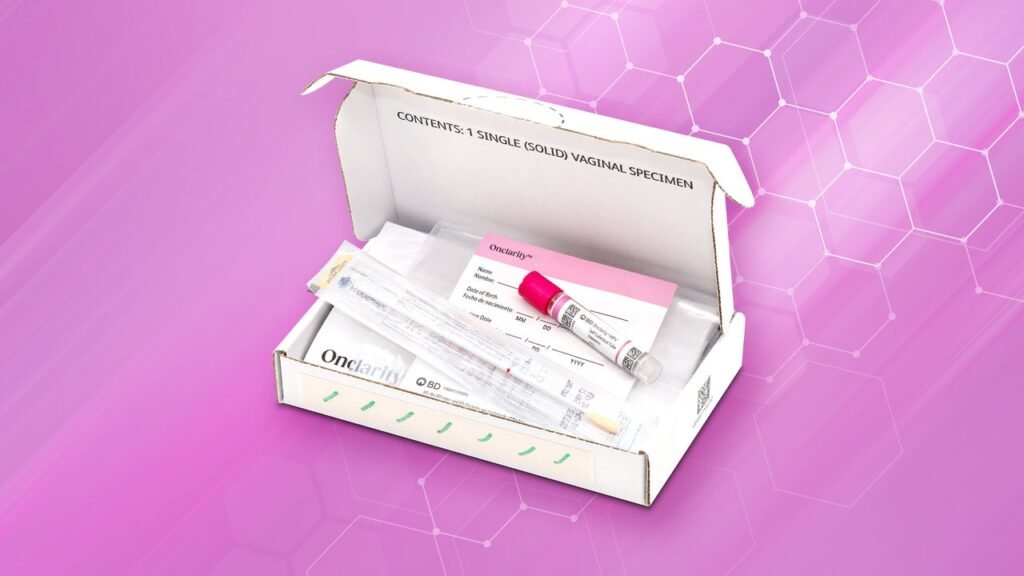
Patients across the U.S. will soon have access to a new cervical cancer test collected from the comfort of their own home—no stirrups, speculum, or in-person doctor’s visit needed.
The life sciences company Waters is partnering with Quest Diagnostics to make Waters’ BD Onclarity HPV assay test available for use at home. The partnership, announced Tuesday, will begin making self-collection kits available in early 2027. The kit was cleared by the Food and Drug Administration for at-home use in April 2026.
The test, which needs to be ordered by a clinician, will be delivered to patients. They can then collect a dry swab specimen and ship it back for testing, or drop it off at one of 2,000 Quest service centers.
The companies say the availability will allow cervical cancer screening to reach otherwise unserved or underserved populations.
A need for prevention
Infection with HPV—a virus typically transmitted through sexual activity—can be linked to nearly every case of cervical cancer. While most HPV types resolve on their own, certain high-risk genotypes can lead to cervical cancer when the infection persists.
Though it is the the fourth most common cancer in women—the American Cancer Society estimates there will be 13,490 new cases and 4,200 deaths in 2026—cervical cancer is among the most successfully treated forms of cancer, according to the World Health Organization. That makes regular testing crucial for prevention, but there are barriers to access.
Factors like geography, costs, lack of insurance, or lack of time to see a doctor can keep some patients from diagnostics and treatment. For others, it’s fear of a traditional pelvic exam that drives them away from testing. And for many others, it’s lack of awareness altogether.
“Of all the women who are eligible to be screened in the United States, only about 70% are screened. There’s 30% that are unscreened or underscreened,” says Dr. Jeff Andrews, VP of medical affairs for Waters Advanced Diagnostics, a division of Waters. “This self-collection is an effort to reach those women by getting around some of the barriers to that.”
While other self-collected at-home test kits exist on the market—like one from Teal Health, which offers a specially designed wand to make collection easier—Onclarity will offer extended genotyping for the first time, enabling more precise diagnostics and treatment.
Not just about convenience
Notably, Onclarity HPV assay tests genotyping beyond HPV 16 and 18, some of the highest-risk genotypes. Other tests combine the results or require a separate array run to deliver more precision and in-depth results for patients.
The test also differs from the traditional Pap test, the most widely used cervical cancer prevention tool. While the Pap test looks for cell abnormalities in the cervix, the HPV test looks for the presence of the virus that causes those abnormalities in the first place.
The new at-home test kit arrives at a time of growing demand for such testing, with mail-in kits available to screen anything from HIV and STDs to COVID-19 and colorectal cancer.
“We saw the importance of self-collection with COVID, where patients realized they can do this at home,” says Dr. Damian Alagia, senior medical director, women’s & reproductive health, at Quest Diagnostics. “That changed the way we were thinking about testing individuals in large populations.”
With a market primed for at-home collection and a reliable technology already approved, the only thing missing was distribution. That’s where Quest—and the inroads it has with half of the hospitals and physicians in the U.S.—came in.
“We already have an assay that was approved. We know that it works,” says Andrews at Waters Advanced Diagnostics. “Quest has the experience and the connections with the providers to get these kits to the home.”